Needless to say, Beethoven’s 250th birthday year experienced something of a damper, thanks to a coronavirus curveball. A year ago, who’d a thunk that 2020 would have brought so few public concerts?
Perhaps more dispiriting is how Beethoven was reduced to a straw man and political punching bag by angry axe-grinders who don’t seem to understand the first thing about the man or his music. Or indeed the very nature of classical music, beyond what is perceived as a kind of “gatekeeper” mentality – basically that there is a tradition of concert etiquette in place, so that people can actually listen to music. Essentially, this involves sitting quietly, which from long experience I assure you is hard to do even for the old white mummies they disdain. It’s a little sad, after all this time – when concertgoing is more open and democratic than ever – to be reminded that the broader perception of classical music is still of a type that believes in the exclusionary, stuffed-shirt, hoity-toity behavior once mocked in Three Stooges comedies.
But this is far from the worst ignorance we’ve had to endure in 2020, so I shouldn’t let it get me down. As long as there are people who love and perform music, Beethoven is not going anywhere. In particular, the grandest of Beethoven’s symphonies, the Symphony No. 9, with its choral finale, has been something of a New Year’s tradition for decades, especially in the Far East.
The practice of playing Beethoven’s Ninth in Japan has its roots in World War I, when German POWs rehearsed and performed the work during their internment. After the war, they carried it with them as they were absorbed into the nation’s orchestras. In an ordinary year, Beethoven’s Ninth now resounds throughout Tokyo, a city with more Western-style orchestras than Berlin.
Also forever etched in my memory is an impromptu Christmas Day broadcast of the Ninth, with Leonard Bernstein conducting an international coalition of musicians, following the fall of the Berlin Wall in 1989. For the occasion, Schiller’s climactic text, “Ode to Joy,” was transformed into an ode to freedom – literally, as “freiheit” (freedom) was substituted for “freude” (joy). Schiller’s message, and Beethoven’s, after all, had always been one of universal brotherhood.
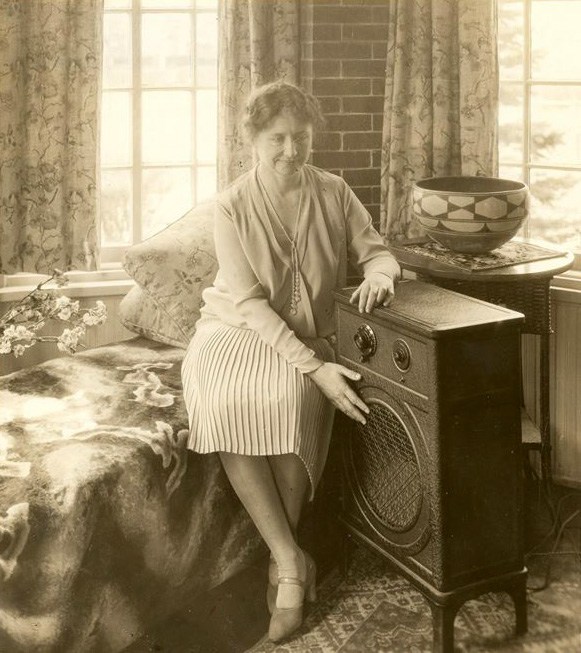
Here is what activist and author Helen Keller wrote to the New York Symphony Orchestra following a Carnegie Hall broadcast of the Ninth in 1924. Keller, blind and deaf since she was a toddler, was able to experience the piece by placing her hands on a radio speaker. Of course, Beethoven never heard it himself, as he was stone deaf at the time of its premiere in 1824. He had to be turned around by one of the performers so that he could witness the audience’s wild applause. Here is Keller’s reaction, one hundred years later, to this inspiring gift that an alleged elitist, dead white male composer-of-privilege left to her and anyone else open to receive it.
Dear Friends:
I have the joy of being able to tell you that, though deaf and blind, I spent a glorious hour last night listening over the radio to Beethoven’s “Ninth Symphony.” I do not mean to say that I “heard” the music in the sense that other people heard it; and I do not know whether I can make you understand how it was possible for me to derive pleasure from the symphony. It was a great surprise to myself. I had been reading in my magazine for the blind of the happiness that the radio was bringing to the sightless everywhere. I was delighted to know that the blind had gained a new source of enjoyment; but I did not dream that I could have any part in their joy. Last night, when the family was listening to your wonderful rendering of the immortal symphony someone suggested that I put my hand on the receiver and see if I could get any of the vibrations. He unscrewed the cap, and I lightly touched the sensitive diaphragm. What was my amazement to discover that I could feel, not only the vibration, but also the impassioned rhythm, the throb and the urge of the music! The intertwined and intermingling vibrations from different instruments enchanted me. I could actually distinguish the cornets, the roil of the drums, deep-toned violas and violins singing in exquisite unison. How the lovely speech of the violins flowed and plowed over the deepest tones of the other instruments! When the human voices leaped up thrilling from the surge of harmony, I recognized them instantly as voices more ecstatic, upcurving swift and flame-like, until my heart almost stood still. The women’s voices seemed an embodiment of all the angelic voices rushing in a harmonious flood of beautiful and inspiring sound. The great chorus throbbed against my fingers with poignant pause and flow. Then all the instruments and voices together burst forth – an ocean of heavenly vibration – and died away like winds when the atom is spent, ending in a delicate shower of sweet notes.
Of course this was not “hearing,” but I do know that the tones and harmonies conveyed to me moods of great beauty and majesty. I also sense, or thought I did, the tender sounds of nature that sing into my hand-swaying reeds and winds and the murmur of streams. I have never been so enraptured before by a multitude of tone-vibrations.
As I listened, with darkness and melody, shadow and sound filling all the room, I could not help remembering that the great composer who poured forth such a flood of sweetness into the world was deaf like myself. I marveled at the power of his quenchless spirit by which out of his pain he wrought such joy for others – and there I sat, feeling with my hand the magnificent symphony which broke like a sea upon the silent shores of his soul and mine.
Happy New Year, everyone, and may 2021 be a better one for music. And may it bring greater harmony and understanding between nations, between Americans, between races, and between all people.