Tag: Berlioz

  • Berlioz at Bard Music Festival Beyond Our World

    Berlioz at Bard Music Festival Beyond Our World

    This article appeared in yesterday’s New York Times, calculated to whet the appetite for the impending Bard Music Festival, “Hector Berlioz and His World.”

    It concludes with a great assessment of the composer by his contemporary, Ferdinand Hiller. I like the thought that Berlioz doesn’t belong in our solar system. It’s a very Berliozian observation.

    https://www.nytimes.com/2024/08/06/arts/music/hector-berlioz-bard.html?unlocked_article_code=1.BU4.gbDn.2Q7ZYb3t6L4y&smid=url-share

    The festival begins tomorrow night, August 9, at Bard College in Annandale-on-Hudson, NY, and runs through Sunday, August 18.

    For more information, visit https://fishercenter.bard.edu/whats-on/programs/bard-music-festival/

    Fisher Center at Bard

  • Gluck’s Influence on Berlioz & Beyond

    Gluck’s Influence on Berlioz & Beyond

    I’ve been reading Berlioz’s “Evenings with the Orchestra” in preparation for next month’s Bard Music Festival. (“Hector Berlioz and His World” is the focus. You’ll find more information at a link at the bottom of this post.) The book is a loose collection of tales, anecdotes, and observations shared among bored musicians in the pit over 25 nights of opera performances. Many of the operas and composers come in for Berlioz’s satiric barbs. One of the few exceptions is Christoph Willibald Gluck. In fact, about two thirds of the way through, a Gluck festival becomes the focus of some bizarre sci-fi reflection – complete with air ships – set in the year 2344. The book was written in 1852. Berlioz always was a visionary and quirky fellow!

    I’m sure I will offer further impressions of the book in the coming days. For my purposes this morning, I am merely using it as prelude to celebrate the anniversary of Gluck’s birth, on this date in 1714.

    We are forever hearing about Christoph Willibald Gluck – if we hear about him at all, that is – as his being a reformer, and in truth his influence on the future of opera was incalculable. He shunned floridity for its own sake. Despite his evident love of nature (at least once, he had his piano carried out to a field), he was not a sensualist. He rebelled against the superficial effects of “opera seria,” with its showy arias ornamented beyond recognition by star castrati, to arrive at something closer to naturalism.

    With Gluck, words and music bore equal weight. Drama was of the foremost importance. He tossed out the dry recitative to create a more continuous flow in the action. Performers took a back seat to emotional truth. The effect was kind of a chaste grandeur, simplicity at the service of theatrical power. Works such as “Orfeo ed Euridice” and “Alceste” were radical for their time.

    Gluck’s influence runs through Mozart to Weber, Berlioz, and Wagner. Yet today his works are less frequently performed than those of any of his followers. In fact, of his dozens of operas (about 35 survive), he’s pretty much remembered by your average classical music Joe for but a single work, “Orfeo ed Euridice” – especially the “Dance of the Blessed Spirits.” Think you don’t know it? Click here:

    On the other side of the coin is his “Dance of the Furies.” I wonder if Gluck would find the diablerie of this interpretation as intriguing as I do?

    Also from “Orfeo,” Dame Janet Baker sings “Che farò senza Euridice?”

    Here’s Wagner’s arrangement of the overture to Gluck’s “Iphigénie en Tauride,” conducted by Otto Klemperer:

    The overture will be performed in Wagner’s arrangement on an August 10 concert at this year’s Bard Music Festival, “Hector Berlioz and His World,” to be held at Bard College in Annandale-on-Hudson, NY, August 9-18. You’ll find more information here:

    https://fishercenter.bard.edu/whats-on/programs/bard-music-festival/

    Berlioz was notably ambivalent about the artistry of another successful opera composer, Giacomo Meyerbeer. As preamble to the festival, and as part of its broader “SummerScape” celebration of the arts, Bard will present Meyerbeer’s rarely-staged “La prophète,” in its first U.S. production in 47 years, July 26-August 1.

    https://www.bard.edu/news/july-26august-4-bard-summerscape-presents-first-new-us-production-of-meyerbeers-grand-opera-le-prophete-in-47-years-2024-04-17

    Fisher Center at Bard

    “There are two supreme gods in the art of music: Beethoven and Gluck. The former’s realm is that of infinite thought, the latter’s that of infinite passion; and though Beethoven is far above Gluck as a musician, there is so much of each in the other that these two Jupiters form a single god, and all we can do is to lose ourselves in admiration and respect for him.” – Hector Berlioz

    Learn more about Gluck in “Gluck the Reformer” (featuring John Eliot Gardiner, William Christie and others) here:

  • Gershwin & Berlioz in Princeton

    Gershwin & Berlioz in Princeton

    Gershwin and Berlioz are “in” this weekend at the Princeton Symphony Orchestra. The orchestra will present “An American IN Paris” and “Harold IN Italy,” IN Richardson Auditorium IN Alexander Hall, this Saturday evening at 8:00 and Sunday afternoon at 4:00.

    By merest coincidence, “Harold in Italy” received its first U.S. performance on this date, 160 years ago. In 1863, it was presented in New York by the Theodore Thomas Orchestra, sharing a program with Mozart’s overture to “The Magic Flute” and Beethoven’s Symphony No. 5, interspersed with some shorter musical interludes.

    Berlioz’s symphony is unusual for, among other things, its prominent role for an instrumental soloist – a flourish usually reserved for the concerto. The work was written for Niccolò Paganini, the legendary violinist who was hoping for a showcase for his new Stradivarius viola.

    Unfortunately, when Paganini received the score, his face dropped, as the composer was evidently more interested in Harold’s meditations – admittedly punched up by some colorful musical evocations, of a religious pilgrimage, a mountaineer’s serenade, and a brigands’ orgy – than in the virtuosic flights Paganini had envisioned. In the event, the world premiere took place in Paris in 1834, with Chrétien Urhan as the soloist.

    Though Paganini never played the piece, he did come to appreciate its genius. When he finally heard the work performed in 1838, he ascended the stage, dropped to his knees, and before a cheering crowd, kissed Berlioz’s hand. Perhaps even more gratifying for the composer, Paganini later sent him a bank draft for 20,000 francs.

    As Berlioz stated in his “Memoirs,” “My intention was to write a series of orchestral scenes, in which the solo viola would be involved as a more or less active participant while retaining its own character. By placing it among the poetic memories formed from my wanderings in the Abruzzi, I wanted to make the viola a kind of melancholy dreamer in the manner of Byron’s Childe-Harold.”

    Although “Harold” is probably the composer’s second most-popular symphony, after the weird and wonderful “Symphonie fantastique,” concert performances are comparatively rare, due to a scarcity of star violists – that is to say, violists who are able to sustain a career as soloists. If the work is done, it’s generally with an orchestra principal in the spotlight. In fact, I believe the last time I heard the piece in person was over 30 years ago, with Joseph de Pasquale and the Philadelphia Orchestra. That’s not to say it hasn’t been played, but rather in my decades of concertgoing, it’s the last time I personally encountered it. Indeed, De Pasquale was the orchestra’s principal violist, but he had quite an association with the piece, having performed it in Boston, where he had also been principal, with Charles Munch, and recorded it in Philadelphia with Eugene Ormandy.

    Princeton’s soloist will be De Pasquale’s successor, Roberto Diaz, who was Philadelphia’s principal violist for ten years. In 2006, he left to become director of the Curtis Institute of Music.

    The weekend’s concerts will also include Julia Perry’s “Study for Orchestra.” Perry, a graduate of Princeton’s Westminster Choir College in 1948, continued her studies with Luigi Dallapiccola at the Berkshire Music Center at Tanglewood, at the Juilliard School in New York, and with Nadia Boulanger in Paris. With the recent push to reevaluate neglected music by minority composers, Perry’s “Study” has become a focus of renewed interest, with a number of performances popping up on orchestra schedules this season and next.

    The other American on the program requires little introduction. “An American in Paris” even became the subject of an Academy Award winning movie, starring Gene Kelly, with the show-stopping climax a 17-minute ballet inspired by Gershwin’s by turns eager, melancholy, and exuberant score.

    It’s an American IN Paris and Harold IN Italy IN Princeton, with one of Westm-IN-ster’s own, IN concert this Saturday and Sunday with the Princeton Symphony Orchestra. Rossen Milanov will conduct. For tickets and information, visit princetonsymphony.org.


    Berlioz, stylin’, in 1832 (portrait attributed to Emile Signol)

  • Remembering John Aler American Tenor

    Remembering John Aler American Tenor

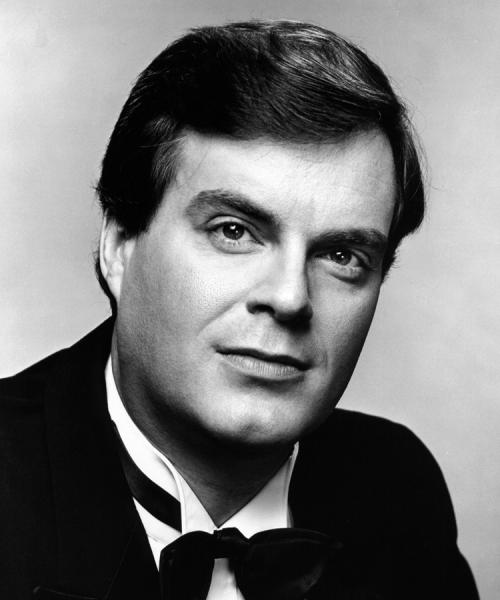
    I am sorry to learn that the American tenor John Aler has died. Aler appeared with major orchestras and performed in some of the world’s great opera houses. A notable exception was the Met, whose gargantuan hall he regarded as unsuited to his leggiero voice.

    I heard him in person once, when he came to Philadelphia back in 1986, to participate in a series of concerts of Berlioz’s 90-minute symphony-of-sorts “Roméo et Juliette,” with Riccardo Muti conducting the Philadelphia Orchestra and the Westminster Choir. Rounding out the triumvirate of soloists were Jessye Norman and Simon Estes. Happily, everyone reconvened at Memorial Hall in Fairmount Park to record the piece for EMI. If I remember correctly, there is a poster from this very series of concerts adorning the stairwell of Westminster Choir College’s Bristol Chapel in Princeton.

    Aler made some fine recordings: he was recognized with four Grammy Awards, including those for Best Vocal Soloist Performance and Best Classical Album (both for Berlioz’s Requiem) in 1986, Best Opera Recording (Handel’s “Semele”) in 1994, and Best Classical Album (Bartok’s “The Wooden Prince” and “Cantata Profana”) also in 1994.

    Certainly these were impressive achievements, and by no means isolated peaks in his discography. However, Aler makes it clear in a conversation with Bruce Duffie (linked below) that while recordings are a great resource, they are no substitute for the real thing.

    “…[T]here is nothing like being in a performance,” he says. “There’s no recording, there is no television, there is nothing like being in that hall, even when you listen to it on the radio, or when you hear a tape of it. Hearing it you think, well gee, that was great but gosh I’d have loved to have been there. I’ll never forget how really sad I felt when I heard a tape of a great performance of Turandot from San Francisco from ’70-something with Pavarotti and Caballé. It’s some of the greatest singing I’ve ever heard. As great as that tape was, I wanted to be there! That’s the exciting thing about music, about art really. I went to see the Monet exhibit at the Baltimore Museum of Art recently. We’re so used to seeing these images on posters, on postage stamps, on mugs, God, they’re everywhere! But when you go and actually see the paintings, it’s just really staggering; it’s incredible. It’s so important because it makes you remember that the work is the thing, no matter how many reproductions are made and how many calendars you pin up on your wall. You think it is pretty, but it’s not! The real thing is primarily stunning, and that’s what a great performance is.”

    Aler died on Saturday at the age of 73. R.I.P.


    “Where’er you walk” from Handel’s “Semele”

    From Rameau’s “Les Boreades”

    In duet with Mariana Cioromila (Cioromila died in June)

    From Adolphe Adam’s, “Le Postillon de Lonjumeau”

    Vaughan Williams (“On Wenlock Edge”), Bach, and Schumann

    “The Green-Eyed Dragon” by Charles Wolsely & Greatrex Newman, from a fun album called “Songs We Forgot to Remember”

    A conversation with Bruce Duffie

    http://www.bruceduffie.com/aler.html

  • Berlioz’s Faust: Opera or Concert Piece?

    Berlioz’s Faust: Opera or Concert Piece?

    Arrigo Boito takes a lot of heat for his opera “Mefistofele” being so episodic. But I must say, Boito is a model of continuity next to Hector Berlioz, whose “La damnation de Faust” – let’s face it – really has no business at all being staged.

    That assessment has no bearing on the quality of the music, which has plenty of the hallmarks of quintessential Berlioz we mad Romantics hold so dear. Certainly, it has its share of standout moments. Alongside the recognizable orchestral highlights – “Minuet of the Will o’ the Wisps,” “Dance of the Sylphs,” the “Rákóczy March” – there’s the episode in Auerbach’s Cellar, Marguerite’s melancholy “Autrefois un roi de Thulé,” and the climactic ride to the Abyss. But I’m sorry, these disparate tableaux just don’t add up to much of an opera.

    “Faust” tanked horribly during its premiere run at Paris’ Opéra-Comique in 1846. It’s sad that the composer didn’t live to see the work redeemed – and his talent vindicated – at its first concert performance, decades later, in 1877.

    I won’t deny being entertained by the Robert Lepage production, streamed on the website of the Metropolitan Opera on Monday night. The conception is undeniably engaging, even if the multi-tier structure at its heart sometimes put me in mind of “Hollywood Squares.” (I kept expecting to see Paul Lynde or Wayland Flowers.) The action also reminded me at times of “moving” images viewed through a massive zoetrope. All in all, I can’t imagine anyone in the house having very much opportunity to drift off.

    But it still doesn’t change my assessment that this is music best appreciated in the concert hall, of a piece with Berlioz’s “Romeo and Juliet.” The Met itself would seem to agree. Lepage’s staging was scrapped for its revival this season, in favor of concert version sung, in its purest form, from the Metropolitan stage. The extravagant apparatus – projections, pullies, and all – proved to be more trouble than it was worth.

    I have not yet seen the Met’s “Les Troyens,” Berlioz’s distillation of Virgil, but based on Susan Graham’s reputation as a Berlioz interpreter – and her standout Marguerite on Monday night – she could very well be the high point of the evening. (That is, if we discount the Trojan Horse.) I can only imagine what “Faust” would have been like had Berlioz allowed it to breathe at twice its length.

    Get ready for four hours of Berlioz. “Les Troyens” is tonight’s “HD Encore” stream from the Metropolitan Opera. A different opera is streamed each day for 23 hours, beginning around 7 p.m. EDT (though my experience has been that they actually make the switchover a little earlier than that). You’ll find more information at metopera.org.


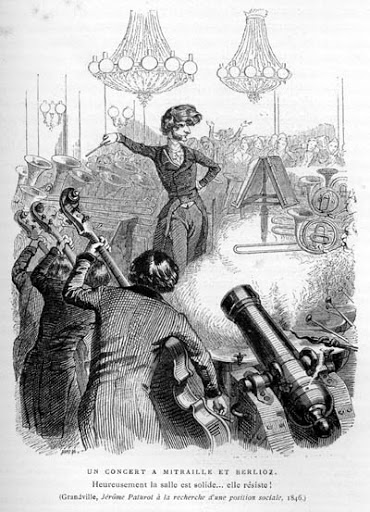
    IMAGE: Berlioz cartoon from 1845, “Un concert à mitraille et Berlioz” (“A concert of cannons and Berlioz”), by Jean Ignace Isidore Gérard (a.k.a. Grandville)

Tag Cloud

Aaron Copland (92) Beethoven (95) Composer (114) Film Music (120) Film Score (143) Film Scores (255) Halloween (94) John Williams (185) KWAX (229) Leonard Bernstein (100) Marlboro Music Festival (125) Movie Music (135) Opera (198) Philadelphia Orchestra (88) Picture Perfect (174) Princeton Symphony Orchestra (106) Radio (87) Ralph Vaughan Williams (85) Ross Amico (244) Roy's Tie-Dye Sci-Fi Corner (290) The Classical Network (101) The Lost Chord (268) Vaughan Williams (103) WPRB (396) WWFM (881)

DON’T MISS A BEAT

Receive a weekly digest every Sunday at noon by signing up here


RECENT POSTS