Tag: Berlioz

  • Met Opera Week: Free Berlioz Operas!

    Met Opera Week: Free Berlioz Operas!

    TWO Berlioz operas in one week!

    Here’s a complete schedule of this week’s Met “Live in HD” encores. You know the drill. The operas stream free, for approximately 23 hours, beginning each day around 7:30 p.m. EDT at metopera.org. Though I have noticed that the switch more often takes place around 6:00. That said, once you hit play, even if it’s 5:00 or 5:30, it’s been my experience that you can watch until the end, provided you don’t try to break. “Manon” is available, allegedly, through 6:30 this evening.

    Here’s a complete schedule of this week’s offerings. You’ll find teasers and bonus materials when following the link.

    https://www.metopera.org/user-information/nightly-met-opera-streams/week-11/

    Monday, May 25
    Berlioz’s La Damnation de Faust
    Starring Susan Graham, Marcello Giordani, and John Relyea, conducted by James Levine. From November 22, 2008.

    Tuesday, May 26
    Verdi’s Ernani
    Starring Angela Meade, Marcello Giordani, Dmitri Hvorostovsky, and Ferruccio Furlanetto, conducted by Marco Armiliato. From February 25, 2012.

    Wednesday, May 27
    Puccini’s Manon Lescaut
    Starring Renata Scotto, Plácido Domingo, and Pablo Elvira, conducted by James Levine. From March 29, 1980.

    Thursday, May 28
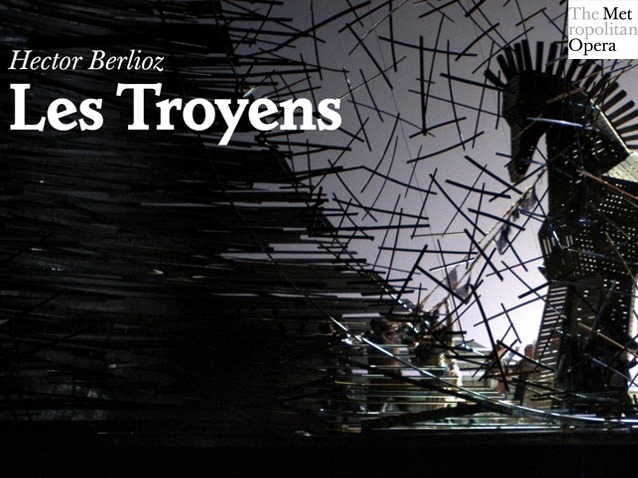
    Berlioz’s Les Troyens
    Starring Deborah Voigt, Susan Graham, Bryan Hymel, and Dwayne Croft, conducted by Fabio Luisi. From January 5, 2013.

    Friday, May 29
    Viewers’ Choice: Bellini’s La Sonnambula
    Starring Natalie Dessay and Juan Diego Flórez, conducted by Evelino Pidò. From March 21, 2009.

    Saturday, May 30
    Donizetti’s L’Elisir d’Amore
    Starring Pretty Yende, Matthew Polenzani, Davide Luciano, and Ildebrando D’Arcangelo, conducted by Domingo Hindoyan. From February 10, 2018.

    Sunday, May 31
    Strauss’s Salome
    Starring Karita Mattila, Ildikó Komlósi, Kim Begley, Joseph Kaiser, and Juha Uusitalo, conducted by Patrick Summers. From October 11, 2008.
  • Remembering Jessye Norman Her Superpowers

    Remembering Jessye Norman Her Superpowers

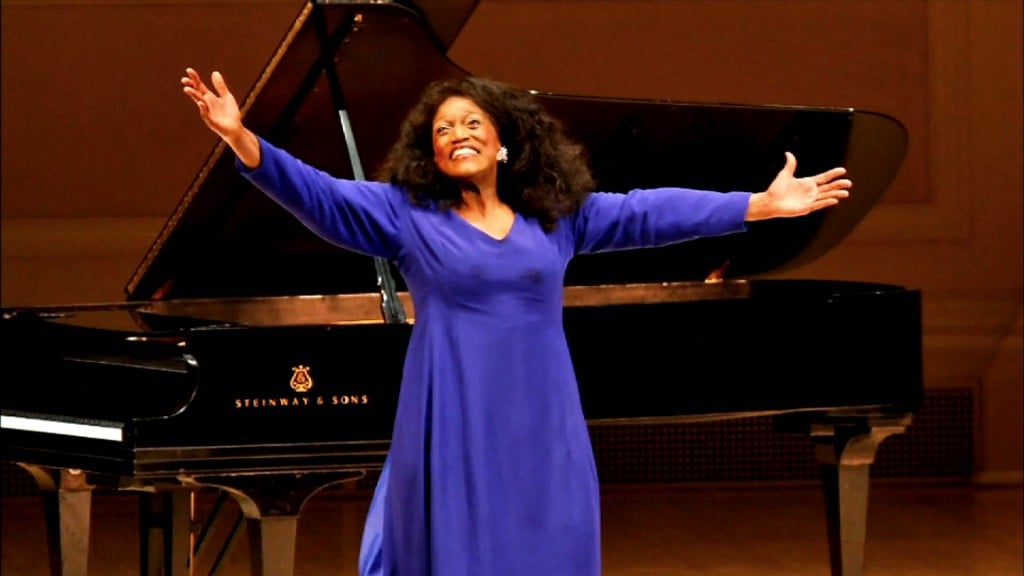
    We all know that Jessye Norman had superpowers, but does anyone else remember her actually foiling a crime? It’s on the cusp of memory, something that happened within the past decade or so (unfortunately too recent to be within my wheelhouse), but I just can’t find anything right now, doing an internet search, beyond her countless obituaries. Norman, of course, died yesterday at the age of 74.

    This afternoon on The Classical Network, we’ll celebrate this great soprano’s artistry through a number of her recordings, including – to coincide with the Jewish High Holidays – Maurice Ravel’s “Deux mélodies hébraïques.”

    For variety’s sake, we’ll also enjoy performances by pianist Paul Badura-Skoda and hornist Myron Bloom, both of whom also died within the past several days.

    Norman’s voice was powerful yet creamy, at once opulent and seductive. She never made an ugly sound. I was lucky enough to hear her live a couple of times with the Philadelphia Orchestra, back in the 1980s. It seems as if I have the uncanny ability to remember everything from 30 years ago (that’s MY superpower), but I can’t remember what happened last week.

    In particular, her performance of Berlioz’s “Les nuits d’été” (“Summer Nights”), part of an all-Berlioz evening I attended at the height of my Berlioz mania, was exquisite. And boy, did she have presence.

    Her recordings are presents I can’t wait to share.

    First, on today’s Noontime Concert, we’ll have something completely different. We’ll travel the Silk Road from China to Spain with the Eurasia Consort in a program titled “On the Road through Dunhuang: Music from the Dunhuang Caves, the Ottoman Empire, and Medieval Spain.”

    The concert was recorded on January 3, 2018, at St. Bartholomew’s Church, 325 Park Avenue, in New York City. Free Midtown Concerts are held at St. Bart’s every Thursday at 1:15 p.m.

    Today’s broadcast is another made possible in part by Gotham Early Music Scene, or GEMS. GEMS is a non-profit corporation that supports and promotes artists and organizations in New York devoted to Early Music. For more information and a complete events calendar, visit gemsy.org.

    It’s all silk and velvet this afternoon. Prepare yourself for another Norman conquest, from 12 to 4 p.m. EDT (with more to follow with David Osenberg, from 4 to 7 p.m.), on WWFM – The Classical Network and wwfm.org.

  • Shakespeare Berlioz Love and Loss on WWFM

    Shakespeare Berlioz Love and Loss on WWFM

    As I said yesterday, we don’t really know when Shakespeare was born (he was baptized on April 26, 1564). Traditionally his birthday is celebrated on April 23, since that also happens to mark the anniversary of his death, in 1616, and by nature man is a compulsive creature, seeking order in all things.

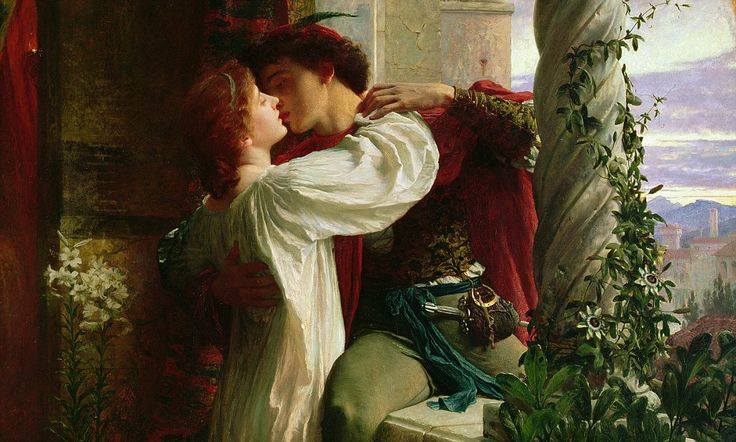
    Though we’ve manufactured a birthday for the Bard it is quite possible he could have been born at any time between now and Thursday. So why not take advantage of the broad blank canvas provided me on a Tuesday afternoon to present Hector Berlioz’s mad, ramshackle symphony, “Romeo and Juliet?”

    Berlioz adored Shakespeare. His “Symphonie Fantastique,” remember, was inspired by his passion for the actress Harriet Smithson, whom he had seen in Paris as Ophelia and fell instantly under her spell. He would woo and win her with his macabre, at times hysterical “symphonie.” At least, for as wild as his opium-induced vision of rejection, dejection, and, ultimately, damnation, would become, the work somehow clung to a semblance of “symphonic,” its romanticism bubbling out over the top of its somewhat classical structure.

    “Romeo and Juliet,” on the other hand, is neither fish nor fowl – a veritable Frankenstein’s monster assembled from the components of symphony, symphonic poem, opera, and oratorio. Unwieldy and flamboyant, Berlioz’s “symphony” unfolds as a collage of the play’s emotional high points – plus a scherzo inspired by Mercutio’s Queen Mab exposition, which is the symphony’s best known movement. In fact, it is rare to hear anything else, except perhaps the love music. Listen for a complete performance of this perplexing masterpiece, this afternoon at 2 p.m. EDT.

    First, on today’s Noontime Concert, it’s a program of new music with the American Modern Ensemble. The group’s founder, composer Robert Paterson, will be represented by two works – a collection of arias from the opera “Three Way” (2017), which explores the present and future of sex and love, and “In Real Life” (2015-16) for soprano and chamber orchestra, which examines the humor and heartbreak of what it means to join a dating website. In between, we’ll hear Robert Maggio’s “Forgetfulness” (2015), a setting for baritone and chamber ensemble of Billy Collins’ poem about Alzheimer’s Disease and dementia. The concert took place at Merkin Concert Hall at Kaufman Music Center in New York City.

    The course of true love never did run smooth. Being caught between warring houses in old Verona seems almost attractive, by comparison. It’s an afternoon of romance, androids, and BDSM (I’m not kidding), from 12 to 4 p.m. EDT, on WWFM – The Classical Network and wwfm.org.

  • Carlos Païta Rediscovered Firebrand Conductor

    Carlos Païta Rediscovered Firebrand Conductor

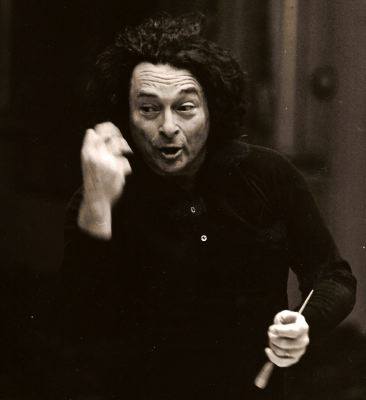
    Even somebody who knows a lot about a subject learns something new all the time. One of my latest “discoveries” is the conductor Carlos Païta (1932-2015), the Argentinean firebrand who made some breathtaking records during the era of London “Phase 4,” but has since largely fallen through the cracks.

    Païta settled in Switzerland, where he was attended to by Furtwängler’s widow, and a special label, Lodia, was founded to reissue both his studio-forged treasures and live concert recordings.

    His recordings of Wagner and Berlioz, which I discovered while sorting through a box of duplicates culled from donations to WWFM, knocked me back on my heels. Who is this guy? There is abundant evidence posted on YouTube. Païta’s conducting technique while rehearsing Beethoven’s 5th symphony is way, way over the top, but another video of his conducting Weber’s “Oberon Overture” suggests he may have dialed it down a bit during his actual concerts. His Janáček is stunning.

    In fact, everything I have sampled with him has been exceptional, yet somehow this musical colossus never settled in with a major orchestra. How could he not have enjoyed a major career?

    Païta would have been 85 this year. Head over to YouTube, search under his name, and prepare for a “wasted” Saturday.

    Or tune in to WWFM – The Classical Network on Monday, from 4 to 7 p.m. EDT, to hear his extraordinary Wagner recordings on Richard Wagner’s birthday. Really, he will spoil it for you when you try to return to many of your previous favorites.


    Carlos Païta, keeping the warhorses fresh:

  • Nicolai Gedda Dies at 91

    Nicolai Gedda Dies at 91

    Like Mark Twain, reports of his death were greatly exaggerated. In 2015, legendary Swedish tenor Nicolai Gedda became the subject of a death hoax that sent panic and despair rippling through the opera-loving community. Alas, today is no hoax. Gedda has died at the age of 91. One of the most widely-recorded tenors in history, he made his final opera recording in 2003 at 77 years-old. R.I.P.

    https://www.francemusique.fr/opera/nicolai-gedda-est-32119


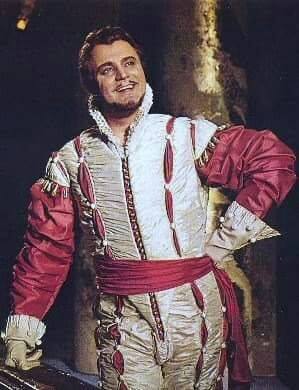
    A devil-may-care Gedda as Berlioz’s Benvenuto Cellini

Tag Cloud

Aaron Copland (92) Beethoven (95) Composer (114) Film Music (120) Film Score (143) Film Scores (255) Halloween (94) John Williams (185) KWAX (229) Leonard Bernstein (100) Marlboro Music Festival (125) Movie Music (135) Opera (198) Philadelphia Orchestra (88) Picture Perfect (174) Princeton Symphony Orchestra (106) Radio (87) Ralph Vaughan Williams (85) Ross Amico (244) Roy's Tie-Dye Sci-Fi Corner (290) The Classical Network (101) The Lost Chord (268) Vaughan Williams (103) WPRB (396) WWFM (881)

DON’T MISS A BEAT

Receive a weekly digest every Sunday at noon by signing up here


RECENT POSTS