With America on the verge of its 250th birthday next year, it’s time to get our heads around “semiquincentennial.” That’s a 20-dollar word for “250th anniversary.” Cumbersome, yes, and likely to be reduced in the media and by harried events promoters to something like “America 250.”
Sound it out: semi (half) quin (from “quinque,” or 5) centennial (from “centum,” 100, and “annus,” year). Bicentennial is 200 years. Quincentennial, 500 years. Semiquincentennial, 250. Thank you, Romans.
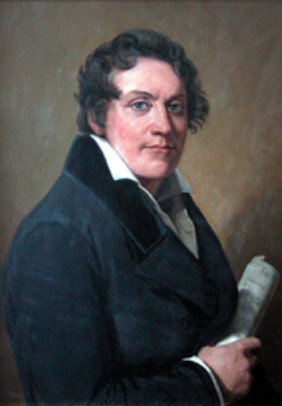
In the way of a practice run, today is the semiquincentennial of Bernhard Crusell, who lived from 1775 to 1838. The most prominent achievements on Crusell’s resume, the things you will find in the most concise entries in any of the standard music references, is that he was an outstanding clarinetist and that he was the most important Finnish composer before Sibelius.
Of course, Finland at the time did not exist as a country. Rather it was part of the kingdom of Sweden. Stockholm was where all the action was, so young Crusell arrived in his teens and hung his shingle, announcing himself to the world as a teacher and a composer. Soon, he was principal clarinetist at the Royal Court.
His reputation rests mostly on three clarinet concertos and three clarinet quintets, all published in 1822 and all agreeable enough music for morning air play (which is how I first encountered them). He also wrote some variations on a Swedish air, at ten minutes in length, again, for a broadcaster, very handy filler.
His opera, “The Little Slave Girl,” based on a tale from the Arabian Nights, is a brief, three-acter of about an hour’s length. (Add to his other accomplishments that Crusell was the first Finnish composer to write an opera.) Crusell was at work on incidental music for “Ali Baba and the Forty Thieves” by French playwright René-Charles Guilbert Pixerécourt, when he discovered the germ for what would become his only opera. In the meantime, he translated many important operas of Italian, French, and German origin for performance in Sweden, including Mozart’s “The Marriage of Figaro.”
“The Little Slave Girl” was given its premiere in Stockholm in 1824 and was revived 34 more times in the next 14 years. Sadly, it was the end result of great personal heartache. Crusell’s daughter, Maria, had been engaged to be married at the time she caught cold and died in 1823 at the age of 17. Crusell himself had been in ill-health. Compounded by despondency at her loss, much time was to pass during which he composed nothing.
The prospect of the Ali Baba opera restored Crusell’s creative impulse and allowed him to work through his grief. Through the character of the resourceful slave girl Marjana, he was able to realize his daughter’s wishes to marry and live happily ever after.
I confess, although I own this recording, made for Finnish Radio, with Osmo Vänskä conducting, I am not overly familiar with the work, but at 42 minutes in, there is an aria with clarinet obbligato – perhaps a symbolic reunion of sorts between father and daughter.
Don’t approach Crusell’s music expecting anything remotely “Finnish” sounding, as we’ve come to expect from the works of Sibelius and his followers, beeginning some 70 years later. Crusell wrote in the international style of early, conservative, Germanic “Romanticism.” You would be forgiven for identifying him more with the musical language of the 18th, as opposed to the 19th, century. His output is no less the enjoyable for it.
Happy semiquincentennial, Bernhard Crusell!