Tag: Beverly Sills

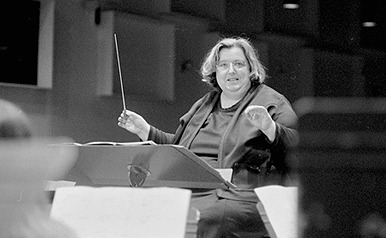
  • Sarah Caldwell Opera Pioneer at 100

    Sarah Caldwell Opera Pioneer at 100

    While soprano Dame Kiri Te Kanawa rightly takes center stage today, as the musical world showers her with rose petals for her 80th birthday, spare a piece of cake for Sarah Caldwell.

    Today marks the 100th anniversary of Caldwell’s birth. With her own hands, she molded the Opera Company of Boston, for 32 years an organization distinguished by its bold programming, insightful productions, and esteemed singers (including Beverly Sills, Joan Sutherland, Shirley Verrett, Marilyn Horne, Jon Vickers, and James McCracken).

    Caldwell tackled works that struck fear in the hearts of major companies, operas such as Prokofiev’s “War and Peace,” Schoenberg’s “Moses und Aaron,” Roger Sessions’ “Montezuma,” Peter Maxwell Davies’ “Taverner,” and Rodion Shchedrin’s “Dead Souls.” She spearheaded the first complete American staging of Berlioz’s “Les Troyens.” She was also the first in the U.S. to employ Mussorgsky’s original orchestrations for “Boris Godunov.”

    She had her detractors, to be sure. For many of her productions in Boston, she served not only as conductor, but as stage director. Some felt this diluted her powers, but there is no questioning her magnificent ambition. On a shoestring budget, she drove her team as hard as she pushed herself, which was very hard indeed. Often it led to its share of backstage drama and cost overruns.

    Caldwell became the first woman to conduct at the Metropolitan Opera (in “La traviata” in 1976, with Sills). The same year, a production of “The Barber of Seville” (again with Sills) was televised over PBS. In 1978, she returned to the Met to conduct “L’elisir d’amore,” with José Carreras and Judith Blegen.

    A non-operatic highlight, surely, was when she joined the New York Philharmonic for a program of women composers – in 1974! – as only the second woman ever to conduct the orchestra (Nadia Boulanger was the first, in 1939 and 1962), presenting works by Ruth Crawford Seeger, Lili Boulanger, and Thea Musgrave. Time Magazine dubbed her “Music’s Wonder Woman.”

    She also conducted the Pittsburgh Symphony Orchestra, the Saint Paul Chamber Orchestra, and the Boston Symphony Orchestra.

    Caldwell founded the organization that became the Opera Company of Boston (originally known as the Opera Group) in 1958, with $5000.

    She didn’t have the best head for money and she could be politically naïve. In Boston, a cultural exchange with the Soviet Union tanked at the box office. Later, she entered into an agreement with the Marcos regime to bring opera to the Philippines. To her credit, she pulled out of the deal, but it brought her some bad publicity.

    In 1993, at 68, she became principal guest conductor of the Sverdlovsk Philharmonic Orchestra of Ekaterinburg, Russia.

    Clearly, Caldwell was a force of nature.

    She died in 2006 at the age of 82.


    Caldwell conducts “The Barber of Seville” at the Met (with Sills, Alan Titus, Donald Gramm, Henry Price, and Samuel Ramey)

    Hindemith, again with Sills, in Boston – oh my goodness, unless I’m very much mistaken, Aaron Copland provides the spoken addendum, at around 12:20!

    “Otello” with Vickers and Verrett

    “Norma” excerpts with Sills and John Alexander

    A Musical Adventure in Siberia

    Shostakovich Cello Concerto

    Interviewed by Bruce Duffie

    https://www.bruceduffie.com/caldwell.html

  • Remembering Douglas Moore American Composer

    Remembering Douglas Moore American Composer

    Today is the 50th anniversary of the death of American composer Douglas Moore. Does anyone remember him?

    Moore was born into an old Long Island family that had lived there since the island’s settling in the 17th century. He attended, among other institutions, Yale University, where he earned two degrees; then he was off to Paris to study with Vincent d’Indy, Ernest Bloch, and Nadia Boulanger (lending credence to Ned Rorem’s famous observation, “Myth credits every American town with two things: A 10-cent store and a Boulanger student”).

    Moore went on to serve as president of the National Institute and American Academy of Arts and Letters and director of music at the Cleveland Museum of Art. In 1926, he joined the faculty of Columbia University, where he remained until his retirement in 1962. With Otto Luening and Oliver Daniel, he cofounded the CRI (Composers Recordings, Inc.) label.

    In addition to his work in the classical world, he also dabbled in the popular realm. He wrote the Yale fight song, “Goodnight, Harvard.” He also authored two books: “Listening to Music” (1932) and “From Madrigal to Modern Music” (1942).

    As a composer, Moore must have seemed, even then, a little old-fashioned. He worked mostly in a Romantic idiom. Though sometimes hinting at American folk song and occasionally popular trends, his works lack the kind of zest evident in, say, Aaron Copland’s distillation of French neoclassicism into his much snappier frontier ballets. On the other hand, Moore enjoyed more success on the operatic stage than Copland ever did.

    He collaborated with Stephen Vincent Benet on an adaptation of Benet’s short story, “The Devil and Daniel Webster.” (He would dedicate his Symphony No. 2 to Benet’s memory.) “Giants in the Earth” was the recipient of the Pulitzer Prize for Music in 1951.

    But his most enduring and beautiful music might just be that for “The Ballad of Baby Doe,” which was championed and recorded by Beverly Sills.

    Also, some may dimly recollect Howard Hanson’s performance of “The Pageant of P.T. Barnum,” part of Hanson’s series of recordings of American music set down with the Eastman-Rochester Orchestra for the Mercury label.

    At the time of his death, Moore was 75 years old. Sadly, now, at a half century’s distance, it seems that Moore is less.


    Douglas Moore introduces Beverly Sills in “The Willow Song” from “The Ballad of Baby Doe.”

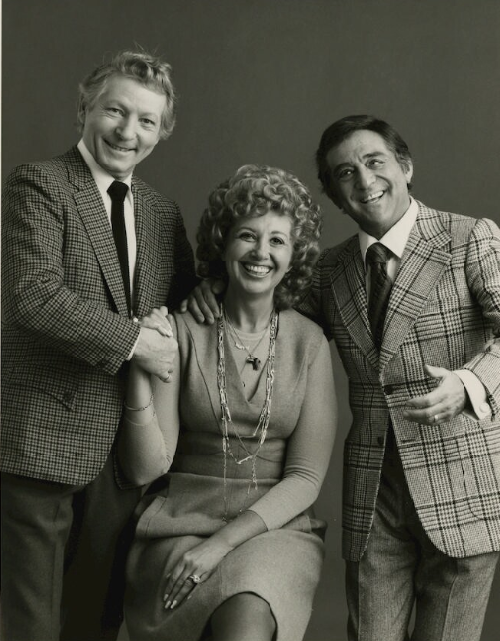
  • Kaye Sills & Merrill: Opera Meets Comedy

    Kaye Sills & Merrill: Opera Meets Comedy

    When opera singers were still a part of the fabric of American popular culture – Beverly Sills with Danny Kaye. Does Bubbles really pay tribute to Jimmie Walker?

    Here’s the entire broadcast in color (with Turkish subtitles and intro!). The extracted Sills-Kaye routine begins around the 38 minute mark.


    Oh, Kaye! Kaye, Sills, and Robert Merrill

Tag Cloud

Aaron Copland (92) Beethoven (94) Composer (114) Film Music (117) Film Score (143) Film Scores (255) Halloween (94) John Williams (185) KWAX (228) Leonard Bernstein (99) Marlboro Music Festival (125) Movie Music (132) Opera (197) Philadelphia Orchestra (86) Picture Perfect (174) Princeton Symphony Orchestra (106) Radio (86) Ralph Vaughan Williams (85) Ross Amico (244) Roy's Tie-Dye Sci-Fi Corner (290) The Classical Network (101) The Lost Chord (268) Vaughan Williams (101) WPRB (396) WWFM (881)

DON’T MISS A BEAT

Receive a weekly digest every Sunday at noon by signing up here


RECENT POSTS