Tag: British Composers

  • Daniel Day-Lewis’ Surprising Godfather: Vaughan Williams

    Daniel Day-Lewis’ Surprising Godfather: Vaughan Williams

    Sure, Daniel Day-Lewis played a wicked Lincoln, but did you know his godfather was… Ralph Vaughan Williams?

    I was stunned to learn this myself, but it makes perfect sense, as Day-Lewis’ father, Cecil Day Lewis was a friend and associate of the composer.

    He wrote the following letter to Vaughan Williams on the eve of his 80th birthday, October 12, 1952:

    Dear R.V.W.

    Will you accept this, as a very small return for all the pleasure & inspiration your music has given me? If you were ever moved to set the sonnet-sequence here, O Dreams O Destinations, (I’ve often thought it might interest a composer), it would be a wonderful thing for me.

    Yours sincerely

    C. Day Lewis

    It’s speculated the letter accompanied a copy of “The Poems of C. Day Lewis,” in the Penguin Poets series, which Vaughan Williams selected as one of the books of the year for an article in London’s The Sunday Times.

    You’ll find the text of “O Dreams, O Destinations” at the link:

    https://www.poetryexplorer.net/poem.php?id=10006142

    Around the same time, Day Lewis stepped up to take the role of speaker in “An Oxford Elegy” at a Vaughan Williams birthday concert.

    The poet also narrated the belated first performance of Vaughan Williams’ “Epithalamion,” which was composed in 1938-9 (as “The Bridal Day”). With the outbreak of World War II, the work was put away in a trunk, receiving its televised premiere, finally, on June 5, 1953.

    At Vaughan Williams’ 85th birthday celebration, Day Lewis provided the following encomium. I could not find a printed copy (I transcribe from the audio), so the format and punctuation are my own.

    O Prospero,

    You have made for us

    A brave new world of harmony,

    Where discords are resolved by art,

    Born of true magnanimity.

    Ancient Ariel,

    Your music shall fly on,

    As now it flies,

    Girdling with joy our trouble earth,

    From Wenlock to the Antarctic skies.

    Sir,

    You have many friends;

    Accept their birthday wish:

    May God keep safe and bless

    Our 85 year-old Ariel,

    Prospero,

    Uncle Ralph!

    Daniel Daniel Day-Lewis was born in April 29, 1957, 16 months before Vaughan Williams’ death. Cecil Day Lewis served as Poet Laureate of the United Kingdom from 1968 until his own passing in 1972.

    The actor restored the hyphen to his double-barreled surname, originally a pretense on the part of his grandfather, who combined the surnames of his own birth father (Day) and adoptive father (Lewis) in a bid for greater respectability. It is a bid C. Day Lewis symbolically rejected.
  • Malcolm Williamson Master of Music

    Malcolm Williamson Master of Music

    One of the things I love about foreign countries is that, historically, their composers haven’t been blackballed for writing film music. In fact, some of the most esteemed have made significant contributions to the form: Prokofiev, Shostakovich, Honegger, Milhaud, Vaughan Williams, and Walton, to name a few. In America, Aaron Copland or John Corigliano aside, there has been a sharp, critical divide between “serious” composer and “film composer,” as if the latter somehow automatically implies hack work. And depending on a musician’s ability and artistic freedom, I suppose it all-too-frequently does.

    I’m sure there are plenty of foreigners that only wish they could make the kind of money writing film music they could here in the U.S. It’s easy to romanticize when you’re not the one breaking your back for a modest pay day! Composers don’t come any more esteemed, in England anyway, than the Master of the Queen’s Music. Yet, in having to earn a living, even a Master’s candidate may sometimes find it necessary to get his hands dirty.

    Since the 17th century, Masters have assumed their post with the expectation that they would write music for important milestones in the lives of the Royal Family and for ceremonial occasions. Past Masters of the Queen’s (or King’s) Music have included John Eccles (who served four monarchs), William Boyce, John Stanley, Sir Edward Elgar, Sir Arnold Bax, and Sir Arthur Bliss. The appointment is an honor, to be sure, but the responsibility brings with it a certain amount of pressure.

    When Malcolm Williamson, Australian by birth, was appointed as the successor to Bliss in 1975, there was grumbling among his colleagues. Sir William Walton attributed the choice to a utilitarian need for “cementing the cracks in the Commonwealth.” He confided to Sir Malcolm Arnold (who most certainly would have brought his own set of problems) that “they had got the wrong Malcolm.” Arnold, a sporadically brilliant composer, was also a manic depressive (and possibly bipolar), who survived alcoholism and multiple suicide attempts.

    Williamson’s great sin was that he was very bad with deadlines (and for that, he certainly has my sympathy). Most particularly, he failed to complete a symphony in time for the Queen’s Golden Jubilee in 1977. His ambitious “Mass for Christ the King,” also intended for the occasion, was also delivered late. Significantly, he was the first Master of the Queen’s (or King’s) Music in over a century not to be knighted.

    Following the Jubilee debacle, his output slowed, though he was seldom unproductive. In all, he wrote seven symphonies, concertos for piano, violin, organ, harp and saxophone, and numerous other orchestral, choral, chamber and instrumental works.

    Williamson suffered from ill health in his later years. He too turned to the bottle, and it can only be speculated if depression and the stress of trying to hold his head high as a colonial outsider at the Royal court contributed to his decline. Those close to him assert that toward the end of his life, Williamson never drank, but rather struggled with aphasia, the result of a series of strokes.

    What’s certain is that he was the first non-Briton to be named Master. Following his death in 2003, the parameters of the appointment were revised. The position is no longer one for life, but rather a fixed, ten-year term. Sir Peter Maxwell Davies was the first to serve under the new guidelines. He was succeeded in 2015 by Judith Weir, the first woman to hold the post (and yes, she is still referred to as “Master”).

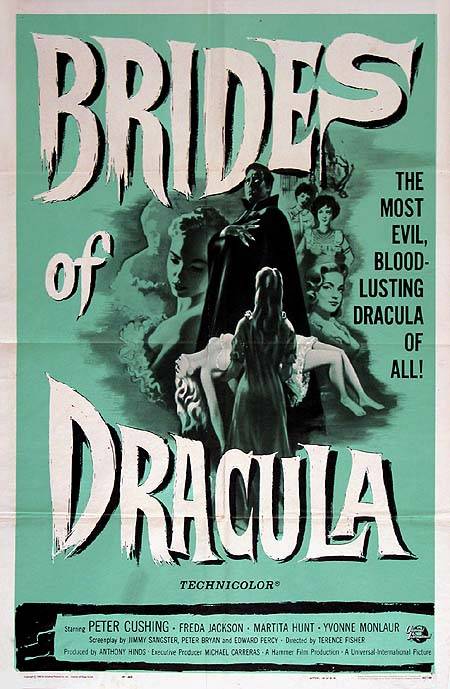
    Like many of his colleagues (Bliss and Bax did it too), Williamson wrote a fair amount of music for the cinema, admittedly for films of varying quality. It’s always amusing to discover his name in the opening credits of Hammer productions like “The Brides of Dracula” and “The Horror of Frankenstein.” But, as the prehistoric appliances on “The Flintstones” often remarked… it’s a living.

    Happy birthday, Malcolm Williamson!


    Malcolm Williamson in conversation with Bruce Duffie:
    http://www.kcstudio.com/williamson2.html

    Williamson performs his attractive Piano Concerto No. 2:

    A rare recording of his Symphony No. 6:

    Theme music for “The Brides of Dracula”

    End credits for “The Horror of Frankenstein”

    “Nothing But the Night,” starring Christopher Lee and Peter Cushing:

  • Richard Arnell Rediscovered Neglected Composer

    Richard Arnell Rediscovered Neglected Composer

    Certainly, you all know by now how enthusiastic I am about unusual, neglected, and worthwhile repertoire. Here’s a composer who is so neglected, he didn’t even turn up in my birthday references for today – or at any rate, those I checked – Richard Arnell (1917-2009), known to his friends as Tony.

    A few years ago, when WPRB 103.3 FM still had five hours a day devoted to classical music, I hosted a marathon tribute to Arnell on the occasion of the 100th anniversary of his birth. To this end, I had the support of two of the composer’s younger friends – Patrick Jonathan, who now makes his home in Malaysia, and Warren Cohen, who is music director of the MusicaNova Orchestra, based in Phoenix, Arizona. Both of them were very generous with their time, sharing anecdotes, recordings, and, in the case of Patrick, historic documents. As luck would have it, Cohen actually makes his home in New Jersey, just about hour away. So he was able to drive down and join me for an in-studio interview.

    If you missed it, here’s a link to our conversation. MusicaNova is a fascinating organization whose mission it is to present “the greatest music you’ve never heard – yet.” In fact, Cohen has conducted first American performances of a number of Arnell’s major works. The sound file includes a MusicaNova performance of Arnell’s Symphony No. 5 – subtitled “The Gorilla” (!) – and Cohen’s gorgeous arrangement for string orchestra, sanctioned by the composer, of the “Elegy” from Arnell’s String Quartet No. 3.

    Learn more about this neglected English master, who was championed by Beecham, Stokowski, and Bernard Herrmann, by listening here:

    Happy birthday, Tony Arnell!

  • Vaughan Williams A Birthday & Symphony No 5

    Vaughan Williams A Birthday & Symphony No 5

    Happy birthday, Ralph Vaughan Williams, one of my favorite composers!

    Thank you so much for the “Serenade to Music,” “The Lark Ascending,” the “Fantasia on a Theme by Thomas Tallis,” “Five Variants of Dives and Lazarus,” “The Wasps,” the “Norfolk Rhapsody No. 1,” the “English Folk Song Suite,” the “Fantasia on Christmas Carols,” “Five Mystical Songs,” the “Charterhouse Suite,” the “Concerto Grosso,” the “Old King Cole” ballet, “Household Music,” “Hugh the Drover,” “Sir John in Love,” and too many others to enumerate.

    Of your nine symphonies, I certainly have my preferences. Each of them holds its own particular delight – even the ones that are served up harsh or leave us hanging, with big questions about their, and our, ultimate destinations. Collectively, they form a surprisingly disparate body of work, belying your reputation as a pastoralist.

    That said, if I want to find solace or to be uplifted, I always gravitate to the Fifth.

    For me, the facts surrounding the Fifth’s creation make it all the more moving. It’s frequently been remarked upon that the symphony shares a certain kinship with your opera, “The Pilgrim’s Progress,” which you worked at for decades and still remained incomplete.

    At first, when you heard the symphony played by friends in its two-piano reduction, you had doubts as to its value. That’s a little ironic for a work that is so imbued with the power of faith. And by faith, I don’t mean religion. It’s well-known to most that in your maturity you embraced what you described as a “cheerful agnosticism” (downgraded from earlier assertions of atheism). When it was finally performed by an orchestra, you realized your reservations were unfounded.

    You dedicated the work to Jean Sibelius, “without permission.” However, when Sibelius heard the piece, he too was delighted. He wrote to Adrian Boult, “This symphony is a marvelous work… the dedication made me feel proud and grateful… I wonder if Dr. Williams has any idea of the pleasure he has given me?”

    The symphony was introduced in June of 1943, at the height of the blitz. German bombs rained down on London after dark, so the concert had to be held in the afternoon. We can only imagine what that must have been like – the nightly danger, the disruption of conveniences, the loss of life, the injuries, the rationing, the rubble, the noise, the fear – and then the power of this music, music of fortitude and optimism, and what affect it must have had on its first audiences. Here was assurance that everything was going to be all right. This too would pass. Beyond the bombs, beyond Hitler, England would endure, as would other things. Larger things. Immutable things.

    Who knew that you, the cheerful agnostic, would turn out to be a prophet?

    Here you are conducting, at the age of 80, your Symphony No. 5.

  • British Composers Abroad on The Lost Chord

    British Composers Abroad on The Lost Chord

    This Sunday night on “The Lost Chord,” the only thing missing will be a dour Dame Maggie Smith, as we holiday on the Continent with the British. It’s an hour of music by English composers inspired by their travels abroad.

    Elisabeth Lutyens must have been a rather prickly personality herself. She wrote principally in a modified twelve tone idiom. While she despised the modal melodies of the English pastoralists (in reference to whose works, she coined the term “cow-pat music”), she was equally dismissive of strict serialism.

    It’s interesting that someone who made so many enemies could turn around and write a piece like “En Voyage,” a delightful suite of British Light Music. But I suppose it served to keep Lutyens in cucumber sandwiches.

    Lennox Berkeley met Benjamin Britten at a contemporary music festival in Barcelona in 1936. While there, the pair witnessed some Catalan folk dancing in a park. Britten jotted down some of the melodies onto an envelope, and the two composers worked closely to create an orchestral suite called “Mont Juic.”

    Finally, it was the remembrance of a trip to Upper Bavaria that inspired the Elgars to collaborate on a set of part-songs, which would be called “Scenes from the Bavarian Highlands.” Edward Elgar (not yet knighted), set texts of his wife, C. Alice Elgar. Three of the movements would later be published separately, in a purely orchestral version, much better known, as “Three Bavarian Dances.”

    Send word for the valet to pack up your steamer trunk. We’ll be “Channel Hopping,” with the English abroad, this Sunday night at 10:00 EDT, on WWFM – The Classical Network and wwfm.org.

Tag Cloud

Aaron Copland (92) Beethoven (95) Composer (114) Film Music (120) Film Score (143) Film Scores (255) Halloween (94) John Williams (185) KWAX (229) Leonard Bernstein (100) Marlboro Music Festival (125) Movie Music (135) Opera (198) Philadelphia Orchestra (88) Picture Perfect (174) Princeton Symphony Orchestra (106) Radio (87) Ralph Vaughan Williams (85) Ross Amico (244) Roy's Tie-Dye Sci-Fi Corner (290) The Classical Network (101) The Lost Chord (268) Vaughan Williams (103) WPRB (396) WWFM (881)

DON’T MISS A BEAT

Receive a weekly digest every Sunday at noon by signing up here


RECENT POSTS