Tag: British Composers

  • Whitman’s British Isles Influence

    Whitman’s British Isles Influence

    While Walt Whitman has attained a venerable status here in the United States, as essentially America’s national poet, more surprising, perhaps, was his impact on composers of the British Isles.

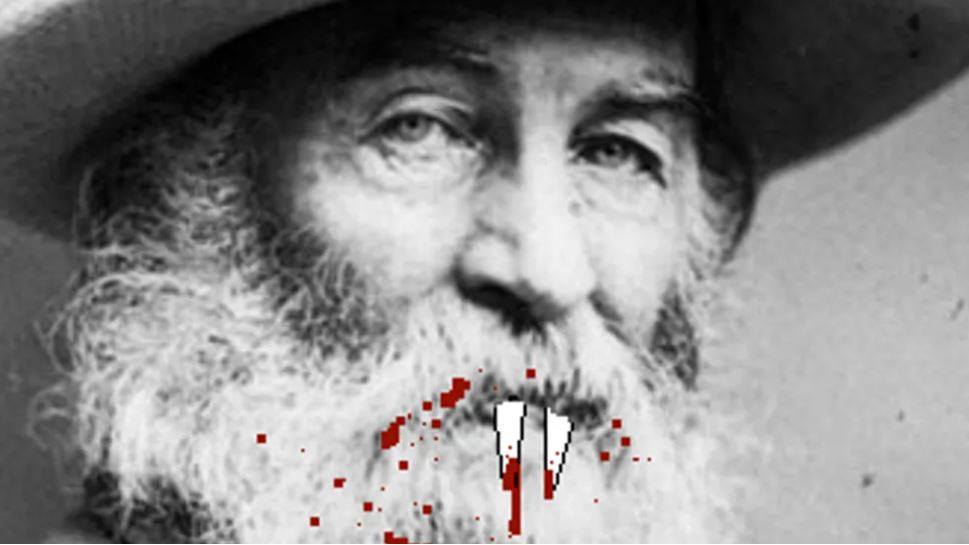
    Whitman was beloved by artists in the U.K. Interestingly, I learned in doing some reading in preparation for these shows that writer Bram Stoker was so taken with Whitman, the man, that allegedly he modeled his characterization of Dracula upon him (for more, follow the links below). And he meant it as a compliment! Stoker viewed Whitman as the quintessential man and kept up a correspondence with him until the poet’s death.

    More to our purposes, this Sunday night on “The Lost Chord,” we’ll hear two works by Gustav Holst, composer of “The Planets:” the “Walt Whitman Overture,” written in 1899, when Holst was about 25 years-old, and “The Mystic Trumpeter” from 1904.

    Holst first encountered Whitman’s poetry while still a student at the Royal College of Music. He would go on to set a number of Whitman texts. “The Mystic Trumpeter” made a particularly strong impression on him. His musical response was an important stepping stone in the composer’s artistic development, emerging as he was from a decade of Wagner worship and not yet giving himself over to the absorption of folk English material. Still, there are certainly glimpses of the mature artist to come.

    Holst’s good friend and colleague, Ralph Vaughan Williams, was also influenced by Whitman, not only in the writing of his frequently recorded “A Sea Symphony,” portions of his cantata “Dona nobis pacem,” and his work for chorus and orchestra, “Toward the Unknown Region,” but also in the less frequently encountered mini song cycle, “Three Poems by Walt Whitman.” The set consists of “Nocturne,” “A Clear Midnight,” and “Joy, Shipmate, Joy!” Written in 1925, the songs are products of Vaughan Williams’ maturity. The composer was around 53 years-old.

    Frederick Delius was yet another English composer deeply influenced by Whitman. Delius’ settings for baritone, chorus, and orchestra, titled “Sea Drift,” from 1903-04, are collectively regarded as one of the composer’s finest achievements. “Sea Drift” was composed at the peak of Delius’ vitality.

    His “Songs of Farewell,” however, were produced under quite different circumstances. Delius was both blind and paralyzed, suffering from the effects of advanced syphilis, when he received an unexpected gift in the arrival of a young musician by the name of Eric Fenby, who offered his services as an amanuensis. The result was a rekindling of Delius’ creativity.

    “Songs of Farewell,” a cycle of dreamy choral settings after Whitman, was dictated to Fenby by Delius in 1929-30. There are five songs: “How sweet the silent backward tracings;” “I stand as on some mighty eagle’s beak;” “Passage to you;” “Joy, shipmate, joy!;” and “Now finale to the shore.”

    We continue our celebration of “the good gray poet,” all month long, for the occasion of the bicentennial of his birth. Whitman was born in Huntingdon, NY, on Long Island, on May 31, 1819, and he died in Camden, NJ, on March 26, 1892.

    “Walk out with me toward the unknown region…” Join me for “The Mystic Trumpeter,” the second of four programs, this Sunday night at 10:00 EDT, on WWFM – The Classical Network and wwfm.org.


    Read Bram Stoker’s effusive letter to Whitman here:

    https://www.brainpickings.org/2019/01/09/bram-stoker-walt-whitman-letter/

    Walt Whitman’s influence on “Dracula” and (possibly) the 1931 “Frankenstein:”

    https://bigthink.com/book-think/walt-whitman-frankenstein-dracula-and-the-afterlife

  • Britannia Rules Waves WPRB English Music

    Britannia Rules Waves WPRB English Music

    Rule, Britannia! Britannia rules the waves – the air waves, at any rate, as this morning on WPRB we present a full playlist of English music.

    The show will be anchored by three English symphonies: George Lloyd’s 6th, Edmund Rubbra’s 3rd, and William Alwyn’s 4th. What’s that you say? You don’t know them? Then the greater should be your enjoyment at their acquaintance.

    We’ll also hear ballet music by Richard Arnell, film music by Sir Malcolm Arnold, and a world premiere recording of a violin sonata by Cyril Scott (with Westminster Conservatory faculty member Clipper Erickson at the keyboard). In between, we’ll fill in with some British Light Music and some early English dances.

    It’s a varied menu of ham, lamb and strawberry jam, from 6 to 11 ET, on WPRB 103.3 FM and at wprb.com. Join me for a spot of tea, won’t you, on Classic Ross Amico.

  • November Music Bax & Lloyd Autumnal Tones

    November Music Bax & Lloyd Autumnal Tones

    November already?

    This Sunday night on “The Lost Chord,” we celebrate the eleventh month with music of an autumnal nature. We’ll open with Sir Arnold Bax’s ravishing tone poem, “November Woods,” of 1917. Then we’ll hear a symphony composed in 1981 by the criminally underrated George Lloyd.

    Lloyd’s music is invariably well-crafted, even infectious, yet stubbornly tonal. It can often seem a bit old-fashioned, yet compositional integrity and musical good taste never go out of style. He’s certainly a composer well worth getting to know.

    Lloyd’s Symphony No. 10, “November Journeys,” was commissioned by the BBC for the Northern Brass Ensemble. The commission coincided with the composer’s exploration by rail of a number of cathedrals. The sounds of the brass in the composer’s head paralleled his experience of taking in the magnificent buildings. At no point was he attempting to conjure an ecclesiastical air, yet he conceded that the second movement reminded him of a Christmas carol.

    We’ll have just a little bit of time at the end of the hour, so I’m tossing in Bax’s “Red Autumn,” for two pianos, for good measure. The piece was originally composed in 1912, and though he never orchestrated it, it’s thought that his original intention had been to do so. In any case, it is marked by Bax’s characteristic opulence.

    I hope you’ll join me for “Notions Eleven,” music for the eleventh month, this Sunday night at 10 ET, with a repeat Wednesday evening at 6; or that you’ll listen to it later as a webcast at wwfm.org.

  • British Composers Abroad on The Lost Chord

    British Composers Abroad on The Lost Chord

    This Sunday night on “The Lost Chord,” we holiday on the Continent with the British. We’ll have works by English composers inspired by their travels abroad.

    Elisabeth Lutyens must have been a prickly personality. She wrote principally in a modified twelve tone idiom. While she despised the modal melodies of the English pastoralists (in reference to whose works, she coined the term “cow-pat music”), she was equally dismissive of strict serialism.

    It’s interesting that someone who made so many enemies could turn around and write a piece like “En Voyage,” a delightful suite of British light music. But I suppose it served to keep Lutyens in cucumber sandwiches.

    Lennox Berkeley met Benjamin Britten at a contemporary music festival in Barcelona in 1936. While there, they witnessed some Catalan folk dancing in a park. Britten jotted down some of the melodies onto an envelope, and the two composers worked closely to create an orchestral suite called “Mont Juic.”

    Finally, it was the remembrance of a trip to Upper Bavaria that inspired the Elgars to collaborate on a set of part-songs, which would be called “Scenes from the Bavarian Highlands.” Edward Elgar (not yet knighted), set texts of his wife, C. Alice Elgar. Three of the movements would later be published separately, in a purely orchestral version, much better known, as “Three Bavarian Dances.”

    I hope you’ll join me for “Channel Hopping” – the English abroad – this Sunday night at 10 ET, with a repeat Wednesday evening at 6; or that you’ll listen to it later as a webcast at wwfm.org.

Tag Cloud

Aaron Copland (92) Beethoven (95) Composer (114) Film Music (120) Film Score (143) Film Scores (255) Halloween (94) John Williams (185) KWAX (229) Leonard Bernstein (100) Marlboro Music Festival (125) Movie Music (135) Opera (198) Philadelphia Orchestra (88) Picture Perfect (174) Princeton Symphony Orchestra (106) Radio (87) Ralph Vaughan Williams (85) Ross Amico (244) Roy's Tie-Dye Sci-Fi Corner (290) The Classical Network (101) The Lost Chord (268) Vaughan Williams (103) WPRB (396) WWFM (881)

DON’T MISS A BEAT

Receive a weekly digest every Sunday at noon by signing up here


RECENT POSTS