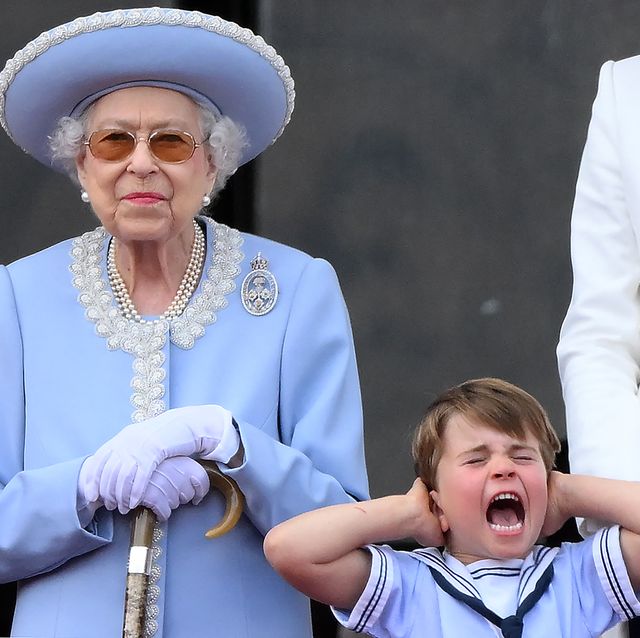
Naturally, the death Queen Elizabeth II this week had me reflecting on all the music that was written for her. The coronation music alone could fill many hours, to say nothing of all the ceremonial and occasional pieces churned out over the course of her 70-year reign. It’s crazy to think that Sir Edward Elgar, so much an historical figure in our minds, wrote his “Nursery Suite” for then-Princess Elizabeth and her sister, Margaret.
Eric Coates. Sir Arnold Bax. Sir William Walton. Ralph Vaughan Williams. Herbert Howells. Sir Arthur Bliss. Sir William Walton. Benjamin Britten. Malcolm Williamson. Judith Weir. Many, many others, all wrote music for the Queen.
Be that as it may, this Sunday night on “The Lost Chord,” we’ll broaden our scope even further to listen to music written for the Royal Family.
We’ll hear the “Suite for the Birthday of Prince Charles” by Sir Michael Tippett, the “Naxos” Quartet No. 8, composed for the Queen’s 80th birthday by Sir Peter Maxwell Davies, and “The Thistle and the Rose,” commissioned by Charles for the 90th birthday of the Queen Mother, by Patrick Doyle – a composer best known for his film scores, especially those for Kenneth Branagh.
This is a rebroadcast from 2009, so don’t be scandalized if you hear King Charles III referred to as “Prince Charles” or Maxwell Davies alluded to as the “current Master of the Queen’s Music.” (Max died in 2016.)
I hope you’ll join me for a diadem of music for the House of Windsor. That’s “Sounds Imperial,” this Sunday night at 10:00 EDT, on WWFM – The Classical Network and wwfm.org.
With Netflix having “dropped” (or made available for streaming) its third season of “The Crown,” and with the first episode having already included a subplot involving Sir Anthony Blunt, Surveyor of the Queen’s Pictures, one can only hope for an appearance by Malcolm Williamson.
If you haven’t seen the series, and you’re a little rusty on your Royals history, I’ll leave it at that, re: Blunt, but suffice it to say that there is plenty of drama inherent in Williamson’s relationship to Buckingham Palace.
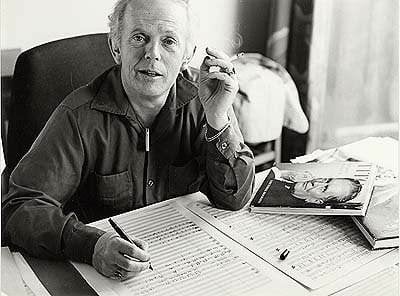
Malcolm Williamson was installed as Master of the Queen’s Music in 1975. Since the 17th century, musicians have held the post with the expectation that they would write music for important milestones in the lives of the Royal Family and for ceremonial occasions. Past Masters of the Queen’s (or King’s) Music have included John Eccles (who served four monarchs), William Boyce, John Stanley, Sir Edward Elgar, Sir Arnold Bax, and Sir Arthur Bliss. The appointment is an honor, to be sure, but the responsibility brings with it a certain amount of pressure.
When Williamson, Australian by birth, was named the successor to Bliss in 1975, there was grumbling among his colleagues. Sir William Walton attributed the choice to a utilitarian need for “cementing the cracks in the Commonwealth.” He confided to Sir Malcolm Arnold (who most certainly would have brought his own set of problems) that “they had got the wrong Malcolm.” Arnold, a sporadically brilliant composer, was also a manic depressive (and possibly bipolar), who survived alcoholism and multiple suicide attempts.
Williamson’s great sin was that he was very bad with deadlines (and for that, he certainly has my sympathy). Most particularly, he failed to complete a symphony in time for the Queen’s Golden Jubilee in 1977. His ambitious “Mass for Christ the King,” also intended for the occasion, was also delivered late. Significantly, he was the first Master of the Queen’s (or King’s) Music in over a century not to be knighted.
Following the Jubilee debacle, his output slowed, though he was seldom unproductive. In all, he wrote seven symphonies, concertos for piano, violin, organ, harp and saxophone, and numerous other orchestral, choral, chamber and instrumental works. Like many of his colleagues, he also composed music for the cinema, for films of varying quality. It’s always amusing to find his name in the opening credits of Hammer productions like “The Brides of Dracula” and “The Horror of Frankenstein.”
Williamson suffered from ill health in his later years. He too turned to the bottle, and it can only be speculated if depression and the stress of trying to hold his head high as a colonial outsider at the Royal court contributed to his decline. Those close to him assert that toward the end of his life, Williamson never drank, but rather struggled with aphasia, the result of a series of strokes.
What’s certain is that he was the first non-Briton to be named Master. Following his death in 2003, the parameters of the appointment were revised. The position is no longer one for life, but rather a fixed, ten-year term. Sir Peter Maxwell Davies was the first to serve under the new guidelines. He was succeeded in 2015 by Judith Weir, the first woman to hold the post (and yes, she is still referred to as “Master”).
Season 3 of “The Crown” dramatizes the Windsor saga up through 1976. Might Season 4 bring a supporting role for Malcolm Williamson? Or will Princess Margaret continue to steal the limelight? If you were the casting director, who would you nominate for the role?
In the meantime, happy birthday, Malcolm Williamson!