
When autumn arrives this morning at 8:43 EDT, I’ll be shaking the moths out of my sweaters and layering on the flannels and devouring fruit pies and Spiced Wafers and swilling pots of coffee and pans of hot cider and quaffing mugs of soup and bowls of chili and inciting leaf battles and soaping windows and watching monster movies and poring over events calendars for library book sales and hurling peanuts at squirrels and cavorting with Bacchus and building a playlist of wistful Brahms, energetic Baroque, and cloudy day Bruckner. From now until Thanksgiving life will be very good indeed. Welcome, Autumn, season of Cockaigne, Dionysian paradise, wonderland of revelry and solitude!
Tag: Bruckner
-

Polish Music Legends: Skrowaczewski & Szymanowski
Big day in Polish music today, which marks the 100th anniversary of the birth of Stanislaw Skrowaczewski and, somewhat more randomly, the celebration via Google Doodle of the 141st birthday of Karol Szymanowski.
Skrowaczewski, born in Lwów, was forced to abandon his dream to become a concert pianist after sustaining a hand injury during World War II. Nevertheless, music served him well. By 1946, he had already begun his conquest of the great Polish orchestras, becoming music director in turn of the Wrocław, Katowice, and Krakow Philharmonics. He also studied composition in Paris with Nadia Boulanger.
He made his American debut conducting the Cleveland Orchestra at the invitation of George Szell. This led to a music directorship with the Minneapolis Symphony, beginning in 1960 (the organization was rebranded the Minnesota Orchestra during his tenure, against his protests). After 1979, he maintained a long relationship with the orchestra as conductor laureate. For many, it would have been considered an honorary title, but Skrowaczewski really did return just about every season to conduct.
He was also principal conductor of the Hallé Orchestra from 1983 to 1992. He served as artistic adviser to the Milwaukee Symphony Orchestra from 1995 to 1997, and in 1988 he was composer-in-residence for the Philadelphia Orchestra’s summer season at Saratoga. His composition, “Passacaglia Immaginaria,” was nominated for the Pulitzer Prize for Music in 1997.
As a budding record collector, I cut my teeth on a number of Skrowaczewski’s recordings that were issued on the Vox label. I still find his Ravel to be particularly fine. I am also partial to his recordings for Mercury, including an “Italian Symphony” framed by some unusually fleet outer movements. In concertos, he accompanied the label’s most distinguished soloists, artists such as Gina Bachauer, Byron Janis, and János Starker.
Later, I discovered his Bruckner recordings with the Deutsche Radio Philharmonie Saarbrücken Kaiserslautern (now on Oehms Classics), interpretations that render the composer’s student symphonies with as much logic and dignity as his mature works.
Skrowaczewski lived a long and productive life. He died in 2017 at the age of 93. He conducted his last series of concerts in Minnesota less than four months before his death. On the program was Bruckner’s grandest symphonic edifice, the Symphony No. 8, which clocks in, depending on performance, at around 80 or 90 minutes in length. While there are plenty of maestros who’ve conducted Bruckner into their 90s (I saw Herbert Blomstedt do so only last season), I venture to guess there are few who have been able to do it without the aid of chair. Skrowaczewski remained on his feet the entire time.
Karol Szymanowski is regarded as the most important Polish composer between Chopin and the generation that yielded Witold Lutoslawski. He absorbed the musical influences of Richard Strauss, Alexander Scriabin, and Claude Debussy, but put them through his own creative refinery.
Listening to Szymanowski can be a bit like submerging oneself too long in a hot bath – the same low blood-pressure, the increased heart rate, the wooziness. Though the harmonies and melodies suggest the familiar patterns of tonality, the traditional framework has been almost wholly eaten away by the hothouse atmosphere. The music is seductive and dangerous, and one risks being overcome by languor, even as one is overrun by fast-growing vegetation.
It may be in poor taste to suggest that so much humidity was bad for the acute tuberculosis that eventually claimed him at the age 55. Find out more about him in this biographical sketch on Google’s website. You’ll note the “Doodle’s Reach” map at the bottom of the page indicates that the artwork is only visible in the U.K. and Poland!
https://www.google.com/doodles/karol-szymanowskis-141st-birthday
Parenthetically, I knew the composer’s nephew in Philadelphia.
Wszystkiego najlepszego z okazji urodzin, boys!
Szymanowski, Violin Concerto No. 1 (1916)
The brigand ballet “Harnaisie” (1923-31)
Symphony No. 3 “Song of the Night” (1914)
Skrowaczewski conducts Bruckner’s 9th in Frankfurt
Ravel, “Mother Goose” (transferred at a low level, so turn it up!)
Mendelssohn, Symphony No. 4 “Italian”
-

Weekend Music Bruckner Handel Diversions
With the weekend nearly upon us, here are two musical diversions for your consideration.
The first is an absorbing conversation about Bruckner’s Symphony No. 4. Dr. Benjamin Korsvedt chats with MusicaNova Orchestra music director Warren Cohen. Cohen and the orchestra would go on to present the world premiere of the rediscovered 1878 version of Bruckner’s most popular symphony – 144 years after it was composed! To experience the performance, you have to order the CD or BluRay, but the tantalizing conversation is free. You’ll find all the information here:
MusicaNova Orchestra has a reputation for its truly remarkable programming. You will find music performed there that you won’t encounter anywhere else. Bookmark their homepage, and if you happen to find yourself in Arizona, definitely check them out.
Then head back to the East Village to enjoy a hit of Handel in Campos Community Garden. Here’s H. Paul Moon’s concert film of Handel’s “Orlando.” The distillation is by Metropolitan Opera countertenor Jeffrey Mandelbaum, who also assumes the title role. Plenty of greenery and bird song with lovely music, and without the sun and bugs.
https://zenviolence.com/orlando
Zen Violence Films
Here’s to a beautiful, musical weekend!
-

Otto Klemperer A Life of Genius and Madness
You were an associate, friend and disciple of Gustav Mahler. You championed new works by Schoenberg, Stravinsky, and Hindemith. You stood 6-foot-6 and wore a look of granitic intensity. You tolerated no coughing or sneezing from your audience. You suffered from severe cyclothymic bipolar disorder. You answered the door to your dressing room in your boxers and covered in lipstick. You were horsewhipped at the Hamburg Opera for stealing a man’s wife (the soprano Elisabeth Schumann). You underwent surgery to remove a brain tumor “the size of a small orange.” You were placed in an institution, only to escape. You took a severe spill, requiring you to conduct from a chair. You set yourself on fire and tried to douse the flames with spirits of camphor. You sired the actor who became Colonel Klink. When you weren’t offered the music directorship of the New York Philharmonic, you fired off a scathing rebuke, then moved to London where a new orchestra (the Philharmonia) was founded for you. You embarked on a glorious Indian Summer that spanned 20 years. Somehow, incredibly, you made it to the age of 88. In all, you lived a life worthy of one of the 20th century’s great conductors.
Happy birthday, Otto Klemperer!
Klemperer in Philadelphia: I love how, as soon as this video gets taken down, somebody else just puts it right back up.
Live Bruckner from 1947, quite at variance with recordings of the elder Klemperer:
Klemp conducting Beethoven’s 7th at 85:
Good Klemperer documentary
https://www.youtube.com/watch?v=Mqz-qUiCgbQ
“Klemperer the Immoralist”
-
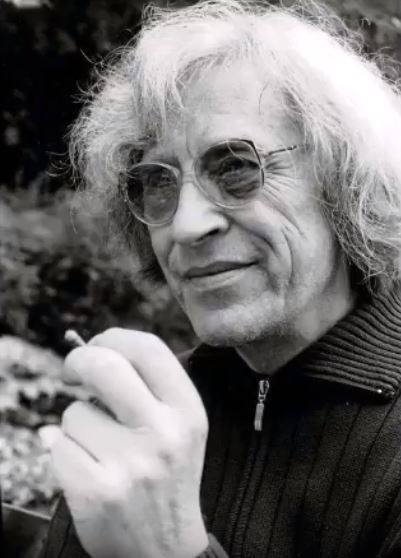
Heinz Winbeck A Lost Symphony Found
The German composer Heinz Winbeck has died. I’m ashamed to say, before today I knew nothing about this man, who forged five epic symphonies. It would seem, upon listening to the Fifth, that my existence up until now has been a barren one.
The symphony, composed in 2009, bears the subtitle “Jetzt und der Stunde des Todes” nach Motiven insbesondere des Finales der IX. Symphonie von Anton Bruckner (“Now and in the hour of death” on motives particularly from the finale of the 9th Symphony of Anton Bruckner).
So much wonderful music in the world. It is one of life’s great tragedies that one will never be able to hear all of it. If you like Bruckner, prepare to be totally blissed out.
https://www.youtube.com/watch?v=TmLmpqI2UX4&feature=youtu.be&t=2895
Tag Cloud
Aaron Copland (93) Beethoven (95) Composer (114) Film Music (144) Film Score (143) Film Scores (255) Halloween (94) John Williams (195) KWAX (229) Leonard Bernstein (104) Marlboro Music Festival (125) Movie Music (159) Mozart (90) Opera (212) Philadelphia Orchestra (89) Picture Perfect (174) Princeton Symphony Orchestra (109) Radio (88) Ross Amico (244) Roy's Tie-Dye Sci-Fi Corner (290) The Classical Network (101) The Lost Chord (269) Vaughan Williams (105) WPRB (397) WWFM (881)