Tag: Bruckner

  • Celibidache Bruckner Viola Fever?

    Celibidache Bruckner Viola Fever?

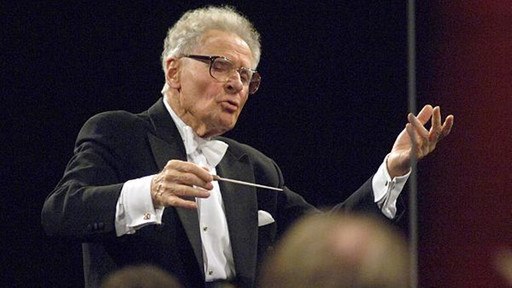
    Celibidache has a fever, and the only prescription is more viola!

    We’ll have one of Celi’s divisive Bruckner performances this afternoon. Is it visionary, transcendent… or just painfully self-indulgent? If you’re up for a Brucknerian challenge, tune in, beginning around 2:25 EDT, to WWFM – The Classical Network or wwfm.org.

    VIOLA!

  • Arnell’s Bruckner Symphony on WWFM Today

    Arnell’s Bruckner Symphony on WWFM Today

    I know, I play an awful lot of Bruckner on WWFM on Tuesday afternoons. It’s a way for me to regroup as I come down off the adrenaline rush of hosting the live noon concerts, which are unscripted and basically improvised from a sheaf of papers handed to me, which I do my best to assimilate in advance.

    I also know I have been going on an awful lot about Richard Arnell, the neglected English master, in connection with the centenary of his birth, which was last Friday. (Yesterday I played his String Quintet No. 3.)

    So, in the interest of mixing it up, today I will offer something a little different: Arnell’s Bruckner-inflected Symphony No. 3. Arnell’s wartime symphony bears other diverse influences – some Sibelius here, a dash of Nielsen there; perhaps even some Shostakovich – but try listening to it with Bruckner in mind, especially the earlier movements.

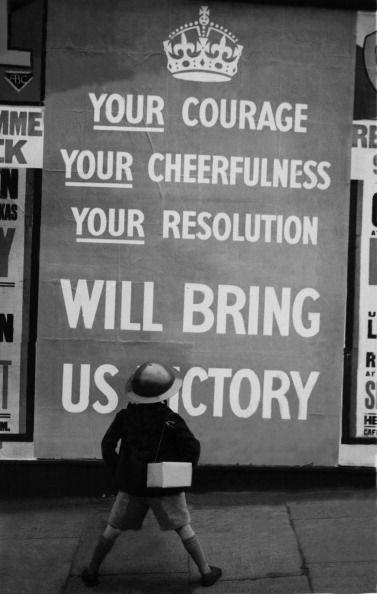
    The six-movement piece was composed in the United States, where Arnell found himself stranded while visiting the World’s Fair in 1939, his return home cut off by the outbreak of the Second World War. His mother would be killed in the Blitz in 1942. Arnell dedicated his symphony “to the political courage of the British people.”

    It certainly achieves an ambitious scale, running to over an hour in length. And don’t get me wrong: despite the multiplicity of influences – there’s even a kind of barn dance that recalls American symphonic music of the era – it is English, and most certainly Arnell, to the core. I think you’ll agree, it works up a good head of steam and achieves passages of genuine nobility. Judge for yourself; I’ll be playing it around 2:00.

    First, today’s Noontime Concert will be made up of performances by the New York Chamber Ensemble, drawn from this summer’s Cape May Music Festival. We’ll hear selections from two programs. The first will include music by Philippe Hersant (“Héliades” for flute and strings), Johan Kvandal (from his Hardanger fiddle quintet) and Felix Mendelssohn (his String Quartet No. 2 in B-flat major). Then saxophonist Eddie Barbash will join the group for riffs on a variety of old favorites by Cole Porter, Ruben Fuentes, Manuel Ponce, Vincenzo Bellini, Harry Warren, and the ever-prolific Anonymous. Next year’s Cape May Music Festival will run from May 27 to June 14. Further developments, as they become available, will be posted at the festival’s website, capemaymac.org.

    I hope you’ll join me today, from 12 to 4 p.m. EDT, for chamber music, an epic symphony and more, on WWFM – The Classical Network and wwfm.org.
  • Astral Artists Shine with Shaw & Bruckner on WWFM

    Astral Artists Shine with Shaw & Bruckner on WWFM

    Today’s Noontime Concert will come our way courtesy of Philadelphia’s Astral Artists. Astral laureates the Jasper String Quartet will be joined by Annie Wu, flutist, for a program of music by Mozart, Debussy, Takemitsu, Ginastera, and Pulitzer Prize winner (and Princeton University PhD candidate) Caroline Shaw. The concert was recorded in Benjamin Franklin Hall at the American Philosophical Society. Tune in this Tuesday at 12 p.m.

    Then stick around for a recent recording of Shaw’s “To the Hands,” her contribution to a project initiated by the Philadelphia-based chorus, The Crossing, which invited seven contemporary composers to come up with musical responses to Dietrich Buxtehude’s 1680 collection, “Membra Jesu nostri patientis sanctissima” (“Most Holy Limbs of Our Suffering Jesus”), often referred to, affectionately, as the “limb” cantatas.

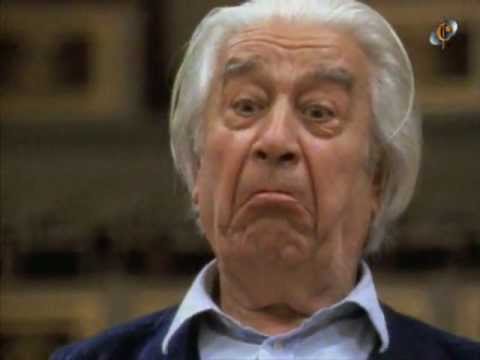
    At around 2:00, our featured work will be a symphony by Anton Bruckner, which we’ll hear in a transcendent performance conducted by Sergiu Celibidache.

    We’ll go out on a limb today, and more, from noon to 4 p.m. EDT, on WWFM – The Classical Network and wwfm.org.


    PHOTO: Composer Caroline Shaw – in 2013, at the age of 30, she became the youngest recipient of the Pulitzer Prize for Music

  • Georg Tintner A Centennial Rediscovery

    Georg Tintner A Centennial Rediscovery

    Yesterday would have been conductor Georg Tintner’s 100th birthday. Already at the age of 20, Tintner was one of Vienna’s rising stars. Following the Anschluss, however, he had to sue his employers in an attempt to retain his post at the Vienna Volksoper, then wound up fleeing for his life.

    The bulk of his career played out outside the international limelight of the great capitals of Europe and the United States. He labored mostly in obscurity in New Zealand, Australia, and finally Canada. (His last post was as music director of Symphony Nova Scotia.) Then, suddenly, late in life, he recorded a Bruckner cycle that struck the critics like a thunderbolt. After 60 years, Tintner was an overnight success.

    Stick around following today’s Noontime Concert (a program from Brooklyn’s Concerts on the Slope) to enjoy one of Tintner’s acclaimed Bruckner recordings. It will be among our featured works this afternoon, between 12 and 4 p.m. EDT, on WWFM – The Classical Network and wwfm.org.
  • Remembering Skrowaczewski: A Life in Music

    Remembering Skrowaczewski: A Life in Music

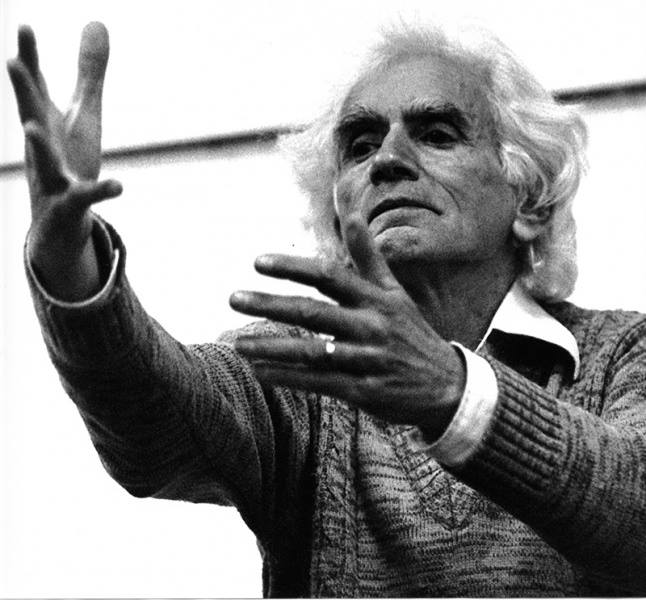
    Stanisław Skrowaczewski has been part of my life for over 30 years. The conductor and composer died yesterday at the age of 93.

    Skrowaczewski, born in Lwów (then in Poland), was forced to abandon his dream to become a concert pianist after sustaining a hand injury during World War II. Nevertheless, music served him well. By 1946, he had already begun his conquest of the great Polish orchestras, becoming music director in turn of the Wrocław, Katowice, and Krakow Philharmonics. He also studied composition in Paris with Nadia Boulanger.

    He made his American debut conducting the Cleveland Orchestra at the invitation of George Szell. This led to a music directorship with the Minneapolis Symphony, beginning in 1960 (the organization was rebranded the Minnesota Orchestra during his tenure, against his protests). After 1979, he maintained a long relationship with the orchestra as conductor laureate. For many, it would have been considered an honorary title, but Skrowaczewski really did return just about every season to conduct.

    He was also principal conductor of the Hallé Orchestra from 1983 to 1992. He served as artistic adviser to the Milwaukee Symphony Orchestra from 1995 to 1997, and in 1988 he was composer-in-residence for the Philadelphia Orchestra’s summer season at Saratoga. His composition, “Passacaglia Immaginaria,” was nominated for the Pulitzer Prize for Music in 1997.

    As a budding record collector, I cut my teeth on a number of Skrowaczewski’s recordings that were issued on the Vox label. I still find his Ravel to be particularly fine. I am also partial to his recordings for Mercury, including an “Italian Symphony” framed by some unusually fleet outer movements. In concertos, he accompanied the label’s most distinguished soloists, artists such as Gina Bachauer, Byron Janis, and János Starker.

    Later, I discovered his Bruckner recordings with the Deutsche Radio Philharmonie Saarbrücken Kaiserslautern (now on Oehms Classics), interpretations that render the composer’s student symphonies with as much logic and dignity as his mature works.

    Skrowaczewski lived a long and productive life. He conducted his last concert (in Minnesota) in October. I will do my best to honor him today, from 4 to 7 p.m. EST, on WWFM – The Classical Network and at wwfm.org.


    Skrowaczewski conducts Bruckner’s 9th in Frankfurt:

Tag Cloud

Aaron Copland (92) Beethoven (95) Composer (114) Film Music (120) Film Score (143) Film Scores (255) Halloween (94) John Williams (185) KWAX (229) Leonard Bernstein (100) Marlboro Music Festival (125) Movie Music (135) Opera (198) Philadelphia Orchestra (88) Picture Perfect (174) Princeton Symphony Orchestra (106) Radio (87) Ralph Vaughan Williams (85) Ross Amico (244) Roy's Tie-Dye Sci-Fi Corner (290) The Classical Network (101) The Lost Chord (268) Vaughan Williams (103) WPRB (396) WWFM (881)

DON’T MISS A BEAT

Receive a weekly digest every Sunday at noon by signing up here


RECENT POSTS