Tag: Burt Lancaster

  • Hemingway’s Hollywood: Scores for Classic Film Adaptations

    Hemingway’s Hollywood: Scores for Classic Film Adaptations

    This week on “Picture Perfect,” as I continue to cultivate my Corona beard, we’ll get in touch with our masculine side, with music from movies inspired by the writings of Ernest Hemingway.

    Seemingly at odds with Hemingway’s minimalist, “iceberg” style, big screen adaptations of the writer’s work show what the stories don’t tell. In the case of “The Killers” (1946), the screenwriters, unapologetically, just made stuff up, an entire back story explaining the motivations for the hit of boxer “Swede” Anderson. Fortunately, those screenwriters happened to include an uncredited John Huston, who virtually codified noir with “The Maltese Falcon.”

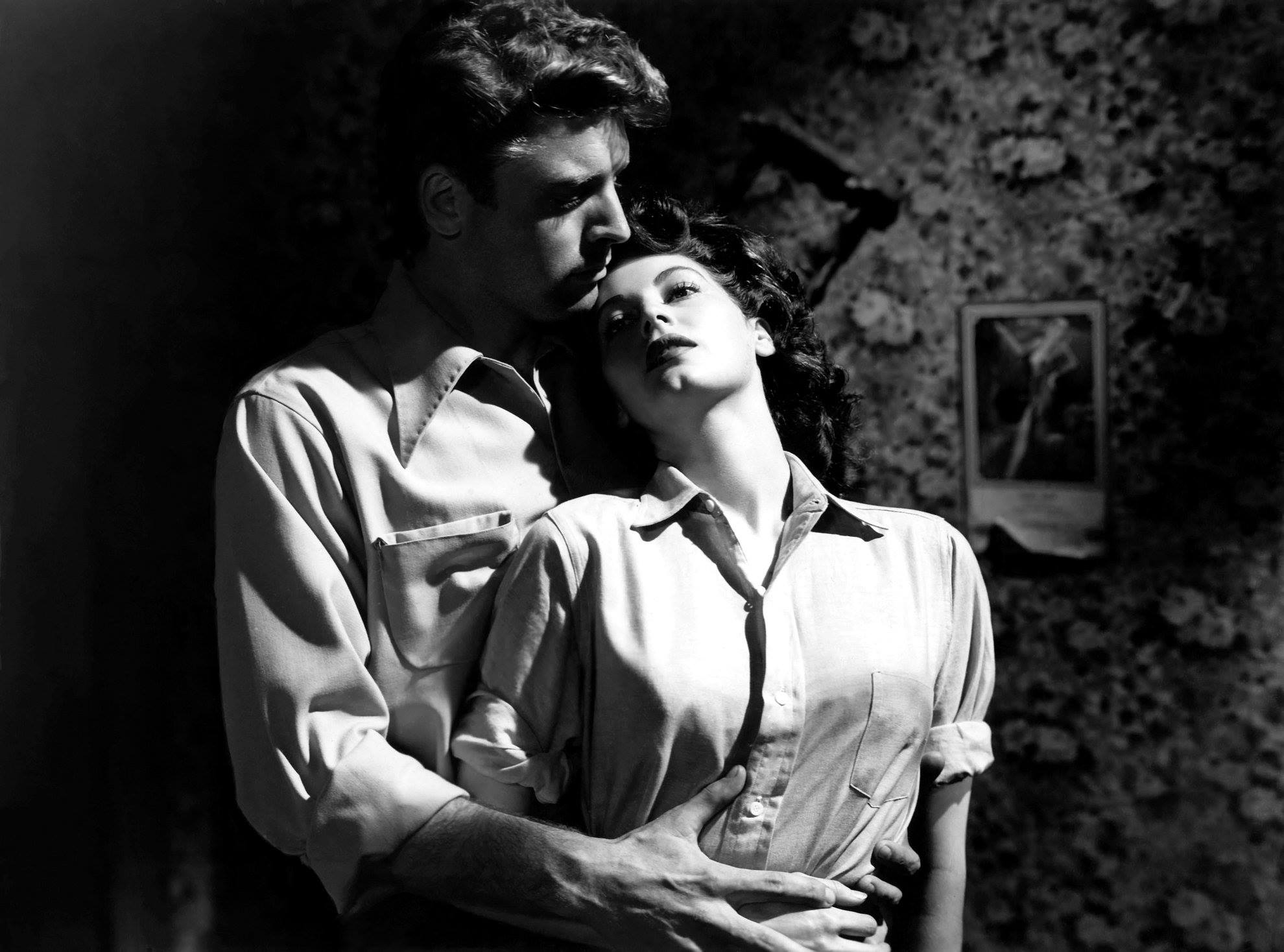
    “The Killers” provided Burt Lancaster with his break-out role. It also features a knock-out score by Miklós Rózsa, in which he uses the dum-dee-dum-dum motto later made famous by the television series “Dragnet.”

    George C. Scott reunited with his “Patton” director, Franklin J. Schaffner, for an adaptation of Hemingway’s posthumously published novel, “Islands in the Stream” (1977). Scott gives one of his best performances as a Hemingway-like figure living on a Caribbean island. “Patton” composer Jerry Goldsmith wrote the music. Goldsmith spoke of it often as his favorite score.

    Hemingway himself handpicked the leads for “For Whom the Bell Tolls” (1943), with Gary Cooper and Ingrid Bergman falling in love against the backdrop of the Spanish Civil War. The music was written by the prolific and versatile Victor Young.

    Finally, Spencer Tracy is the whole show, as he faces off against a large marlin, in the “The Old Man and the Sea” (1958). Dimitri Tiomkin’s music earned him his fourth Academy Award.

    I hope you’ll join me for an hour of laconic grace and stoic manliness on “Picture Perfect,” music for the movies. Everyone, come to Papa, this Friday evening at 6:00 EDT, on WWFM – The Classical Network and wwfm.org.


    PHOTO: Burt Lancaster and Ava Gardner – infinitely more attractive than my Corona beard
  • Trains in the Movies: Drama on Rails

    Trains in the Movies: Drama on Rails

    Trains have always been very good for drama. They are symbols of departures and arrivals. They are conveyors of prisoners and vehicles of escape. They are objects of romance and objects to “hobo around” on. They are harbingers of civilization, and they are transports be robbed. You can fight on top of them. You can make out with Eva Marie Saint, or you can protect Marie Windsor so that she can testify against the mob. You can shuffle off to Buffalo.

    From the beginning, trains have provided good escapist fun at the movies. This week on “Picture Perfect,” we’ve got an hour of music from four memorable films in which trains play an important role.

    In “Strangers on a Train” (1951), arguably Alfred Hitchcock’s most underrated film of the 1950s, Farley Granger plays a tennis pro who unwittingly becomes involved in a double-murder plot (criss-cross!) through a chance encounter on a passenger train with a psychopath named Bruno (probably Robert Walker’s finest performance). The music is by Dimitri Tiomkin, who scored four films for Hitch – including “Shadow of a Doubt,” “I Confess,” and “Dial M for Murder.”

    Burt Lancaster stars in a film titled, simply, “The Train” (1964), as a reluctant railroad inspector who is persuaded to join the French Underground’s efforts to delay the transport of masterpieces looted from the museums of Paris by the Nazis, since Allied liberation of France is imminent. Paul Scofield plays the art-loving German officer determined to move the art at all costs. Real trains were destroyed in the making of the film, real dynamite was employed, and Lancaster, as was often the case, did all his own stunts. The score is by Maurice Jarre.

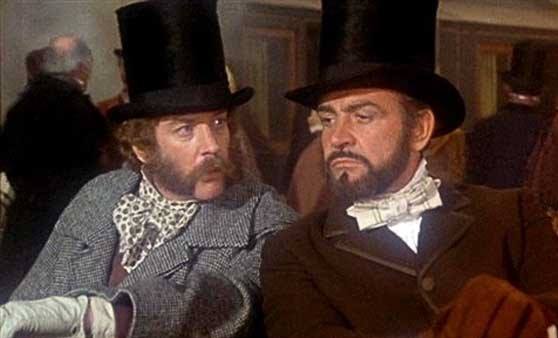
    “Murder on the Orient Express” (1974) is based on one of the best-known Agatha Christie vehicles involving her recurring character, celebrated detective Hercule Poirot. The late Albert Finney portrays Poirot most memorably in this, the first and best of the all-star Christie thrillers, set on a long-distance passenger train connecting Paris to Istanbul. The list of suspects includes Lauren Bacall, Martin Balsam, Ingrid Bergman, Sean Connery, John Gielgud, Anthony Perkins, Richard Widmark, and Michael York. The unforgettable score is by Richard Rodney Bennett (whose birthday it is today).

    Finally, we turn to the lighthearted caper “The Great Train Robbery” (1979), starring Sean Connery, Donald Sutherland, and Leslie-Anne Down. Michael Crichton wrote the screenplay, after his own novel, which in turn was based on an actual historical incident – an 1855 heist, in which an unbelievable amount of gold disappeared from a moving train. Crichton also directed the film. The music is by the great Jerry Goldsmith.

    All aboard! We’ll be taking the train today, on “Picture Perfect,” music for the movies, this Friday evening at 6:00 EDT, on WWFM – The Classical Network and wwfm.org.


    (Top) Sutherland and Connery; (bottom, left to right) Farley Granger and Alfred Hitchcock pass in the night; Finney as Hercule Poirot; Lancaster means business

  • Hemingway’s Hollywood Soundtracks

    Hemingway’s Hollywood Soundtracks

    This week on “Picture Perfect,” we get in touch with our masculine side, with music from movies inspired by the writings of Ernest Hemingway.

    Seemingly at odds with Hemingway’s minimalist, “iceberg” style, big screen adaptations of the writer’s work show what the stories don’t tell. In the case of 1946’s “The Killers,” the screenwriters unapologetically just made stuff up, an entire back story explaining the motivations for the hit of boxer “Swede” Andreson. Fortunately those screenwriters happened to include an uncredited John Huston, who virtually codified noir with “The Maltese Falcon.”

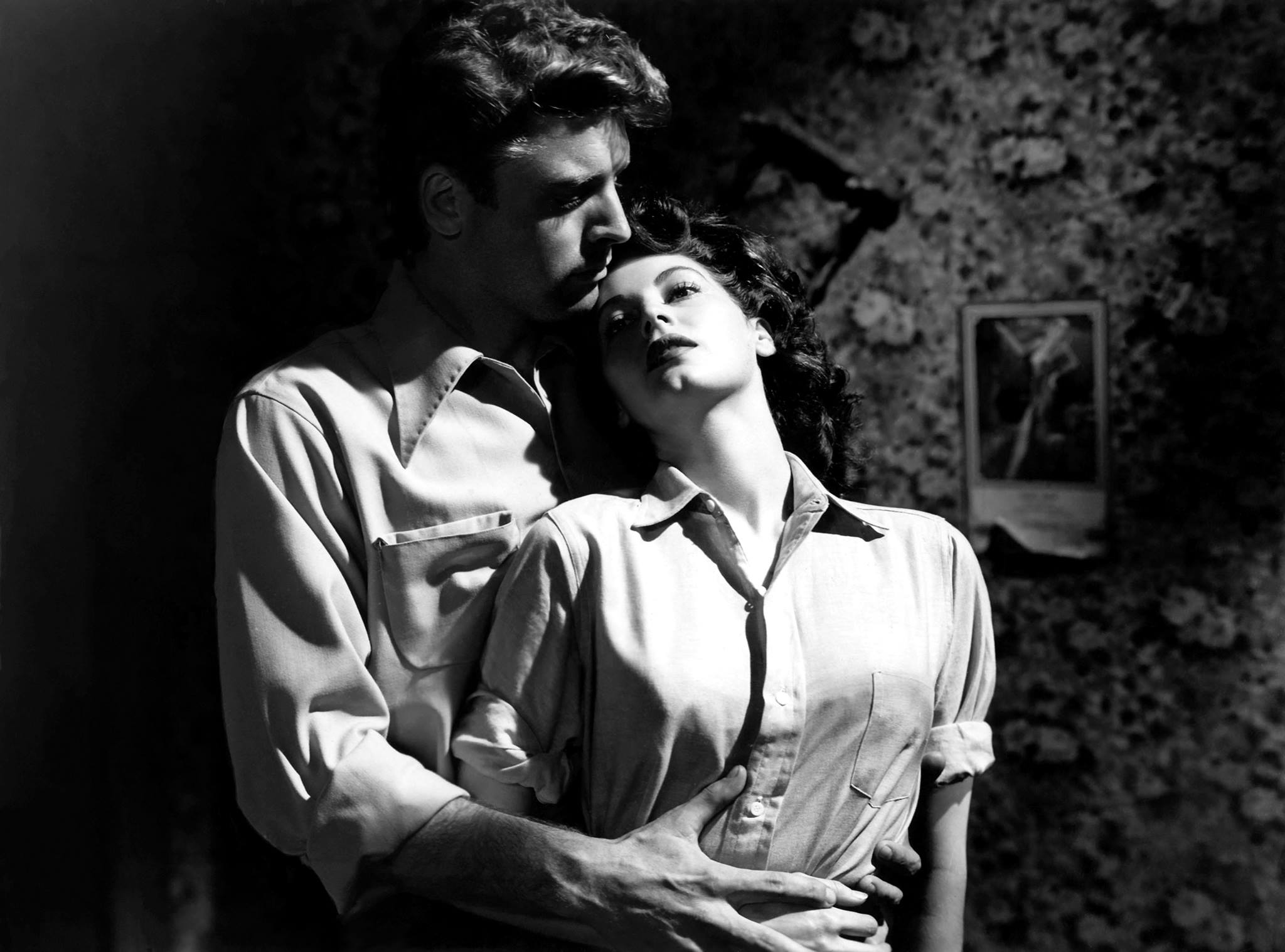
    “The Killers” provided Burt Lancaster with his break-out role. It also features a knock-out score by Miklós Rózsa, in which he uses the dum-dee-dum-dum motto later made famous by the television series “Dragnet.”

    In 1977, George C. Scott reunited with his “Patton” director, Franklin J. Schaffner, for an adaptation of Hemingway’s posthumously published novel, “Islands in the Stream.” Scott gives one of his best performances as a Hemingway-like figure living on a Caribbean island. “Patton” composer Jerry Goldsmith wrote the music. Goldsmith spoke of it often as his favorite score.

    Hemingway himself handpicked the leads for the 1943 adaptation of “For Whom the Bell Tolls,” with Gary Cooper and Ingrid Bergman falling in love against the backdrop of the Spanish Civil War. The music was by the prolific and versatile Victor Young.

    And finally, Spencer Tracy is the whole show, as he faces off against a large marlin, in the 1958 version of “The Old Man and the Sea.” Dimitri Tiomkin’s music earned him his fourth Academy Award.

    Join me for an hour of laconic grace and stoic manliness on “Picture Perfect,” music for the movies, this Friday evening at 6:00 EDT, on WWFM – The Classical Network and wwfm.org.


    PHOTO: Burt Lancaster and Ava Gardner killing it in “The Killers”

  • Hemingway on Film: Music for Stoic Manliness

    Hemingway on Film: Music for Stoic Manliness

    This week on “Picture Perfect,” we get in touch with our masculine side, with music from movies inspired by the writings of Ernest Hemingway.

    Seemingly at odds with Hemingway’s minimalist, “iceberg” style, big screen adaptations of the writer’s work show what the stories don’t tell. In the case of 1946’s “The Killers,” the screenwriters unapologetically just made stuff up, an entire back story explaining the motivations for the hit of boxer “Swede” Andreson. Fortunately those screenwriters happened to include an uncredited John Huston, who virtually codified noir with “The Maltese Falcon.”

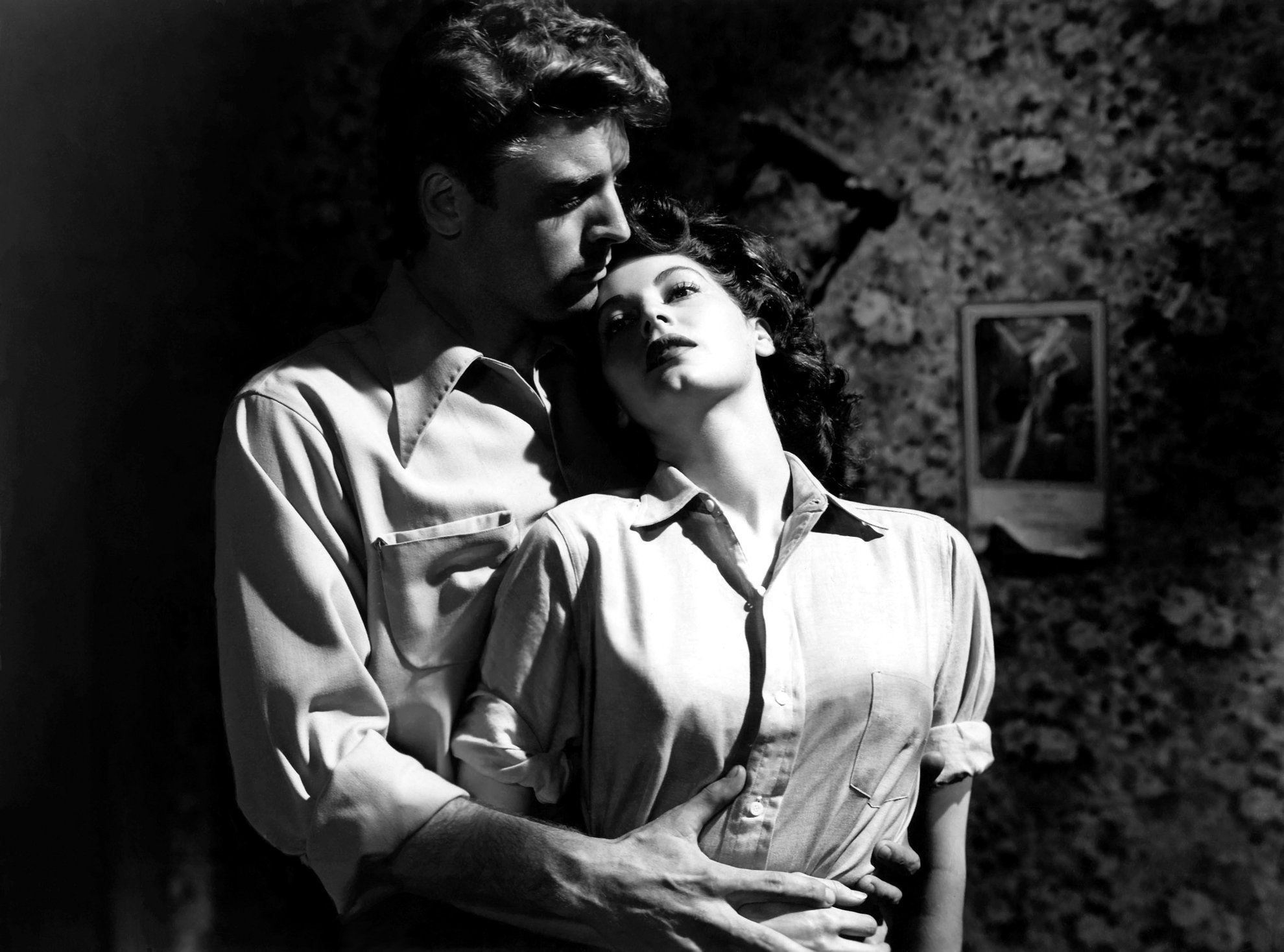
    “The Killers” provided Burt Lancaster with his break-out role. It also features a knock-out score by Miklós Rózsa, in which he uses the dum-dee-dum-dum theme later made famous by the television series “Dragnet.”

    In 1977, George C. Scott reunited with his “Patton” director, Franklin J. Schaffner, for an adaptation of Hemingway’s posthumously published novel, “Islands in the Stream.” Scott gives one of his best performances as a Hemingway-like figure living on a Caribbean island. “Patton” composer Jerry Goldsmith wrote the music. Goldsmith spoke of it often as his favorite score.

    Hemingway himself handpicked the leads for the 1943 adaptation of “For Whom the Bell Tolls,” with Gary Cooper and Ingrid Bergman falling in love against the backdrop of the Spanish Civil War. The music was by the prolific and versatile Victor Young.

    And finally, Spencer Tracy is the whole show, as he faces off against a large marlin, in the 1958 version of “The Old Man and the Sea.” Dimitri Tiomkin’s music earned him his fourth Academy Award.

    Join me for an hour of laconic grace and stoic manliness on “Picture Perfect,” music for the movies, this Friday evening at 6. Or listen to it later as a webcast, at http://www.wwfm.org.

    PHOTO: Burt Lancaster and Ava Gardner killing it in “The Killers”

  • TCM Pirate Movies All June Long Arrr!

    TCM Pirate Movies All June Long Arrr!

    All right, I know I already posted today, but Turner Classic Movies: TCM is showing pirate movies every Friday night in June. No Douglas Fairbanks, Sr., alas, though tonight offers the rare opportunity to see the original silent version of “The Sea Hawk” (8 p.m. ET), which hews much closer to the Rafael Sabatini novel than the classic version with Errol Flynn.

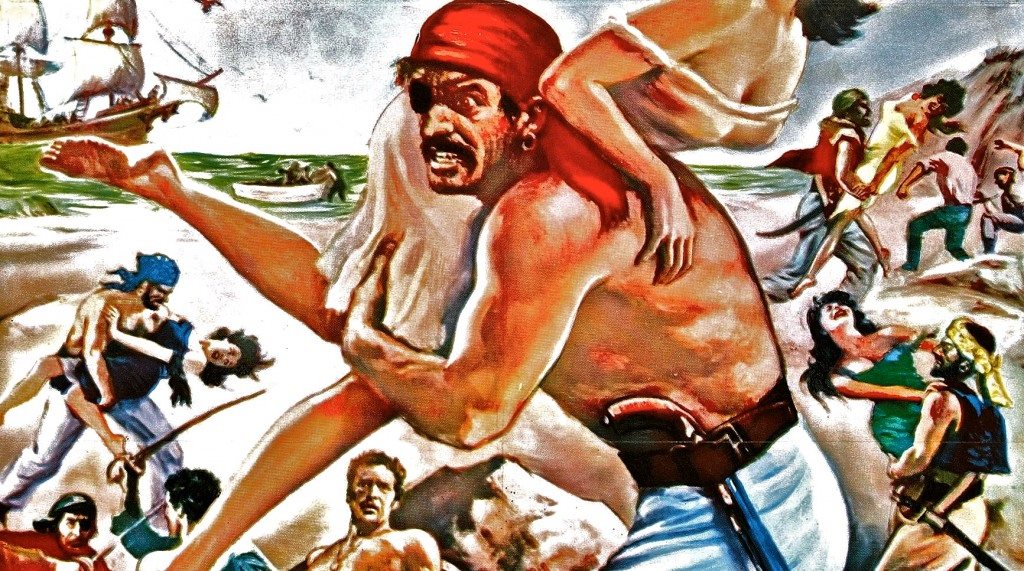
    Next Friday offers a smiley, bare-chested Burt Lancaster as “The Crimson Pirate” (also 8 p.m.). Lancaster’s equally toothy, mute sidekick is none other than Nick Cravat, who he’d met as a boy at summer camp. The two literally ran away and joined the circus, creating an acrobatic act called Lang and Cravat in 1930s. Cravat later appeared in nine of Lancaster’s films. He also played the gremlin in the classic “Twilight Zone” episode, “Nightmare at 20,000 Feet.”

    June 20 is all-Flynn, at least until 3:45 a.m., which means I will finally get a chance to see “Against All Flags” (8 p.m.) Doubtful that it is one of Flynn’s better vehicles, though it does offer the opportunity to see Maureen O’Hara in pirate garb.

    I’m also curious to see “The Boy and the Pirates” (June 27, 10 p.m.), directed by B-movie sci-fi/horror maestro Bert I. Gordon. Gordon’s house composer, Albert Glasser, though very much on a budget, clearly attempts to channel Erich Wolfgang Korngold’s pirate scores of the classic era.

    I may have to do something on “Picture Perfect” soon!

    AAAAAAAARRRRRRRRGGGGGHHHHHHH!!!!!!!!!!!!!

Tag Cloud

Aaron Copland (92) Beethoven (94) Composer (114) Film Music (117) Film Score (143) Film Scores (255) Halloween (94) John Williams (185) KWAX (228) Leonard Bernstein (99) Marlboro Music Festival (125) Movie Music (132) Opera (197) Philadelphia Orchestra (86) Picture Perfect (174) Princeton Symphony Orchestra (106) Radio (86) Ralph Vaughan Williams (85) Ross Amico (244) Roy's Tie-Dye Sci-Fi Corner (290) The Classical Network (101) The Lost Chord (268) Vaughan Williams (101) WPRB (396) WWFM (881)

DON’T MISS A BEAT

Receive a weekly digest every Sunday at noon by signing up here


RECENT POSTS