Tag: Carnival

  • Vivaldi’s Genius Innovation & Recycling

    Vivaldi’s Genius Innovation & Recycling

    Igor Stravinsky famously quipped that Antonio Vivaldi composed the same concerto 500 times. But when one is so much in demand, what’s one to do?

    For much of his adult life, to add to his crushing workload, Vivaldi labored at Venice’s Ospedale della Pietà. The Ospedale was a home set up for abandoned children, orphaned or illegitimate, all female, in part to stem surreptitious drownings in the area canals. Many of the children, in fact, were the offspring of noblemen, who generously endowed the institution, so that the young ladies were well looked after in comfortable surroundings.

    At the Ospedale, Vivaldi instructed the girls in music. He oversaw the formation of an orchestra, which was by no means commonplace, and the excellence of the young musicians, playing instruments usually reserved for men, became a much remarked-upon tourist attraction. A number of his disciples distinguished themselves by their virtuosity so that visiting politicians and poets were astonished.

    For 30 years, Vivaldi composed most of his major works at the Ospedale. Did he have help? With so much talent at hand, and so many young minds thirsting to improve and express themselves, it would be foolish not to have employed their assistance, and there is evidence that Vivaldi actually entrusted some of his more talented charges to cobble together “new” concertos from some of his older works. Then he would go in and make alterations and smooth them out himself. It was the sanest method for a musician who was churning out not only concertos for every instrument, but also sacred choral works and more than 50 operas. All this, on top of his obligations as a performer.

    The lead-up to Carnival season in particular must have been insanity, as Vivaldi was commissioned to provide evening-length entertainments. One of these was the opera “Il Giustino” of 1724. I’ve posted a link to a live performance below, along with a direct link to an example within the work of some flagrant Vivaldi recycling. Another opera for Carnival, “Bajazet” (also linked), lifts generously from other Vivaldi operas.

    The fame of some of Vivaldi’s soloists extended well beyond Venice. The best known of these was Anna Maria della Pietà, for whom Vivaldi wrote many of his violin concertos. By 24, she was addressed as “Maestra.” In her early 40s, she assumed the posts of maestra di violino and maestra di coro.

    Anna Maria also played the cello, oboe, lute, mandolin, harpsichord, and viola d’amore. She composed and performed publicly for more than 60 years. She died in Venice in 1782 at 86, a ripe old age for the day.

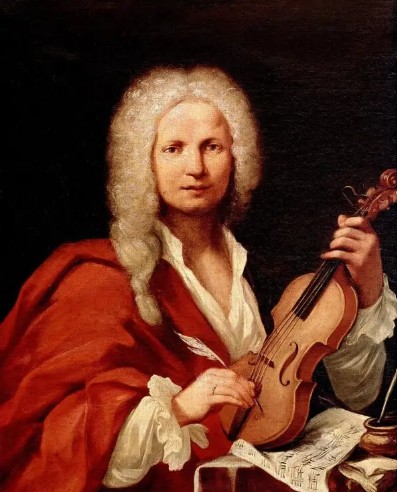
    A tip of the hat to the Red Priest, Antonio Vivaldi, on his birthday, and buon Carnevale!


    Vivaldi concertos composed for Anna Maria

    “Il Giustino” (complete), written for Carnival season

    A flagrant example of Vivaldi recycling!

    “Bajazet” (concert performance) – a pastiche, with extensive borrowing from other Vivaldi operas, also first performed during Carnival

    https://www.youtube.com/watch?v=YiAC0ehNbME

    Did Vivaldi write the same concerto 500 times? Or is are same few concertos just played over and over again? Of course, even the warhorses can be freshened up. With spring just around the corner, here’s the ensemble Sinfonity to play “The Four Seasons” – on electric guitars!
  • Carnival Music Feast on The Classical Network

    Carnival Music Feast on The Classical Network

    Shrove Tuesday. Mardi Gras. Fastnacht Day.

    The last day to stuff down as many doughnuts as you can before the start of Lent.

    To mark the occasion, this afternoon on The Classical Network, we’ll glut ourselves with music related to Carnival.

    Among the featured highlights will be Heitor Villa-Lobos’ fantasy for piano and orchestra, “Momôprecóce” (“Carnival of the Brazilian Children”); Robert Schumann’s cryptogrammatic “Faschingsschwank aus Wien” (“Carnival Jest from Vienna”); and Igor Stravinsky’s Shrovetide ballet “Petrouchka,” in a recording conducted by Princeton Symphony Orchestra music director Rossen Milanov.

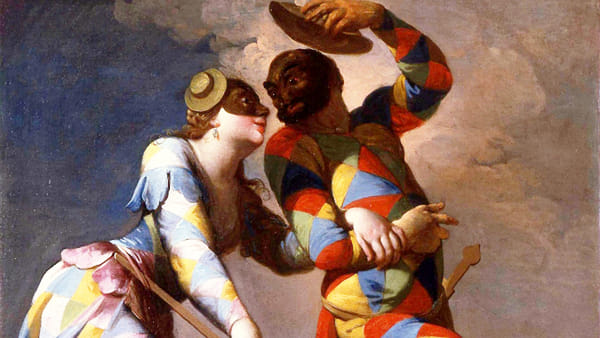
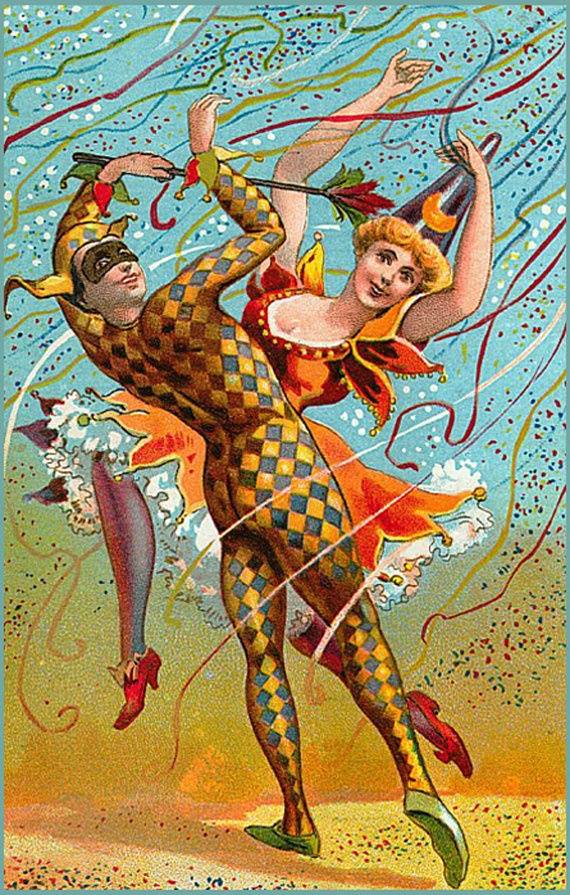
    We’ll also enjoy a touch of Mardi Gras, with some pieces on Creole themes; a set of variations on “Carnival of Venice;” musical depictions of stock characters of the commedia dell’arte; and “Manhã de Carnaval,” from the film “Black Orpheus.”

    First, on today’s Noontime Concert, it’s a Telemann blow-out. Tempesta di Mare – Philadelphia Baroque Orchestra will present “Fire and Invention,” part of its Telemann 360° project.

    Georg Philipp Telemann (1681-1767) left behind an enormous catalogue of monumental compositions in every style and genre (with 3000 works to his credit, the Guinness Book lists him as the most prolific composer of all time), yet so much of it remains unrecognized, or even unperformed.

    The sheer volume of his output has made it difficult for posterity to wrap its collective head around the full scope of his accomplishments. Tempesta is doing its best to change all that. Today’s concert will include a Concerto for Orchestra, a collection of Entr’actes, and a Violin Concerto, featuring Tempesta principal violinist Emlyn Ngai.

    Tell your friends to tune in for Telemann. Then stick around for plenty of fried, buttery goodness. Abandon yourself to the debauchery of Carnival, from 12 to 4 p.m. EST, on WWFM – The Classical Network and wwfm.org.

  • Fat Tuesday Carnival Music & Sustaining Members

    Fat Tuesday Carnival Music & Sustaining Members

    Fat Tuesday! Time to stuff ourselves with doughnuts and alcohol, and to carry on with mad abandon. Tomorrow the streets will be strewn with bottles and bodies, and Lent will be upon us.

    Get ready to live hard, this afternoon on The Classical Network, as we present music appropriate for the day, with a veritable orgy of carnivals, dances, and masked balls, and ample depictions of beloved characters of the commedia dell’arte.

    We’ll hear Edward Joseph Collins’ “Mardi Gras,” Hershy Kay’s arrangements of music by New Orleans-born pianist Louis Moreau Gottschalk into the ballet “Cakewalk,” Robert Schumann’s “Faschingsschwank aus Wien” (“Carnival Jest from Vienna”), and Igor Stravinsky’s ballet “Petrouchka,” about love and jealousy among puppets at the Shrovetide Fair.

    This level of intensity can only be sustained for so long. On the other hand, a sustaining membership to The Classical Network could go on in perpetuity.

    This week is Sustaining Member Appreciation Week at The Classical Network. I hope you will consider making a monthly commitment to the station in the form of automatic withdrawals from your debit card, credit card, or bank account in whatever amount you decide. It could be $5, $10, $20 – you fix the amount. The donation will continue, once a month, until you tell us to stop. This will save us paperwork, it will save us man hours, and it will save us from losing revenue during the period after which a traditional, yearly membership will have lapsed. You can cancel or change your sustaining membership at any time.

    We also encourage those of you who are already sustaining members to consider bumping up to the next level. If you’re already committed to $5 a month, do you think you can bump it up to $10? I mean, you’ll be abstaining from something during Lent anyway. Think about it – for the price of a doughnut and a coffee, you could double a $5-a-month investment in The Classical Network. You’d be strengthening the classical music service you love – and it’s a lot less fattening!

    Call us now at 1-888-232-1212, or visit our website at wwfm.org and click on the “We love our Sustaining Members” link at the top of the page.

    Thank you to all of you who have kept us strong over the past 35 years. I hope you’ll join me today – as a sustaining member – for a carnival blow-out, from 12 to 4 p.m. EST, on WWFM – The Classical Network and wwfm.org.

  • I Vitelloni Fellini’s Carnival Scene

    I Vitelloni Fellini’s Carnival Scene

    God bless the internet! Somebody posted the carnival scene from “I Vitelloni.” Although Fellini still had his feet planted firmly in reality, you could definitely tell what was coming.

    https://www.youtube.com/watch?v=Q-rp_gadBBE

    Fat Tuesday. One last blow-out before Lent (until St. Patrick’s Day).

    PHOTO: Alberto Sordi and date

Tag Cloud

Aaron Copland (92) Beethoven (94) Composer (114) Film Music (117) Film Score (143) Film Scores (255) Halloween (94) John Williams (185) KWAX (228) Leonard Bernstein (99) Marlboro Music Festival (125) Movie Music (132) Opera (197) Philadelphia Orchestra (86) Picture Perfect (174) Princeton Symphony Orchestra (106) Radio (86) Ralph Vaughan Williams (85) Ross Amico (244) Roy's Tie-Dye Sci-Fi Corner (290) The Classical Network (101) The Lost Chord (268) Vaughan Williams (101) WPRB (396) WWFM (881)

DON’T MISS A BEAT

Receive a weekly digest every Sunday at noon by signing up here


RECENT POSTS