Tag: Cello Concerto

  • Elgar Remastered Accidental Stereo

    Elgar Remastered Accidental Stereo

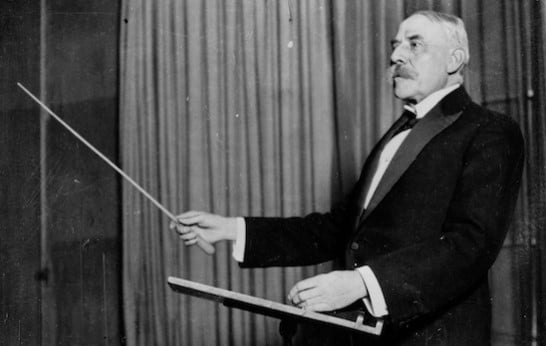
    This Sunday night on “The Lost Chord,” there may not be glorious Technicolor or breathtaking Cinemascope, but what would Cole Porter say, to hear Sir Edward Elgar in stereophonic sound?

    Elgar was one of the first of the great composers to endeavor to set down “definitive” interpretations of his own works on recordings. Or so it has been thought. But did Elgar really regard these performances as definitive? In fact, Elgar took great care to “grade” the various takes from his recording sessions. Some of these, he instructed, were to be destroyed outright; others were held, as the composer took the time to consider.

    What emerges, upon listening to a 4-CD set, “Elgar Remastered,” on the SOMM Recordings label, are the impressions that (1) Elgar was fairly meticulous when it came to preserving his legacy, and (2) he also understood that there’s more than one way to skin a cat. Rediscovered alternative takes make clear that the composer was amenable to looking at his own works from a variety of perspectives.

    For their parts, the conscientious engineers at EMI employed multiple machines to guard against technological failure. This was back in the late 1920s and early ‘30s. Now, for the first time, the elements have been brought together and skillfully combined to create a kind of “accidental” stereo.

    Engineer Lani Spahr has worked wonders with these recordings, from the private collection of Arthur Reynolds, chairman of the North American Branch of the Elgar Society. He also goes into considerable detail in his liner notes – in fact, to a degree that would be impractical to relate here.

    A good deal of the set is devoted to recordings and alternative takes of Elgar’s Cello Concerto. As on the composer’s authorized recording, issued on EMI, Beatrice Harrison is the soloist. These include the first complete electrical recording, from 1928 – the one which would ultimately be published, in mono – with previously unissued, alternative takes from the same sessions. There is also an earlier, truncated recording from 1920, set down using the acoustic process, and a performance of the concerto’s Adagio movement alone, with Harrison accompanied at the keyboard by Princess Victoria.

    The gem of the set is Harrison’s celebrated 1928 recording, heard here for the first time entirely in stereo, or what passes for stereo.

    Harrison was Elgar’s preferred soloist. He lavished praise on her performances, even as she took liberties with the score. At the session for this particular recording, he was overheard to say, “Give it ‘em, Beatrice, give it ‘em. Don’t mind about the notes or anything. Give ‘em the spirit.”

    Worlds away from the effusive, heart-on-the-sleeve approach of Jacqueline du Pré, Harrison’s interpretation is nonetheless riveting on its own terms. As with the other recordings in the collection, it is a kind of time capsule of period performance practice – with swooping portamenti (audible slides between notes) – and the musicians’ flexibility in regard to both tempo and phrasing.

    And Elgar can be such a volatile conductor! In addition, we’ll hear a cracking rendition of the “Cockaigne Overture” and a performance of the prelude to the oratorio “The Kingdom,” which really takes flight.

    Hear Elgar as you’ve never heard him before – in “accidental” stereo – on “Pomp and Happenstance,” this Sunday night at 10:00 EDT, on WWFM – The Classical Network and wwfm.org.

  • 7 Facts About Dvořák: Cello Concerto & More

    7 Facts About Dvořák: Cello Concerto & More

    Over the years, I’ve written a number of program notes for Sinfonietta Nova, a community orchestra based in West Windsor, New Jersey (on the outskirts of Princeton). In 2015, I was asked by its artistic director and conductor, Gail Lee, to submit seven interesting facts about Antonin Dvořák, to be shared on the orchestra’s Facebook page, as kind of a countdown to a performance of his Symphony No. 7. On the first half of the concert was Dvořák’s Cello Concerto. I reproduce those Facebook contributions here, for the occasion of the 180th anniversary of the composer’s birth. Happy birthday, Antonin Dvořák!

    DVOŘÁK FACT #1

    It’s hard to believe, but before writing his famous Cello Concerto in B minor, Dvořák wasn’t particularly fond of the cello as a solo instrument. He disliked its nasal high register and rumbling bass. However, after he heard a performance of the Cello Concerto No. 2 in E minor by his colleague at the National Conservatory of Music, Victor Herbert, Dvořák changed his mind. Herbert, best-remembered for his operettas, including “Babes in Toyland” and “Naughty Marietta,” was principal cello at New York’s Metropolitan Opera. He also led the cello section of the New York Philharmonic at the world premiere of Dvořák’s “New World” Symphony, when it was played at Carnegie Hall in 1893.

    Victor Herbert’s Cello Concerto No. 2:

    DVOŘÁK FACT #2

    The slow, wistful passage just before the Cello Concerto’s triumphant conclusion was added by Dvořák as a tribute to his sister-in-law, Josefina Kaunitzova, who died during the work’s composition. Dvořák was actually in love with her for many years. When she refused his proposal, the composer married her younger sister, Anna, instead. The passage quotes from the composer’s Four Songs, Op. 82, of which Kaunitzova was particularly fond.

    “Kéž duch můj sám” (“Leave Me Alone”), Op. 82, No. 1:

    Transcribed for cello:

    DVOŘÁK FACT #3

    The Cello Concerto in B minor, completed in 1896, is Dvořák’s final concerto for solo instrument and orchestra. Previously, he had written a Violin Concerto in A minor and a seldom-performed Piano Concerto in G minor, both published in 1883. The Cello Concerto is widely regarded as one of the greatest – if not THE greatest – ever written for the instrument.

    Of the three, the Piano Concerto has been the poor stepchild. This has been blamed in large part on the writing for piano. Pianist and Liszt authority Leslie Howard notes, “… there is nothing in Liszt that is anywhere near as difficult to play as the Dvořák Piano Concerto – a magnificent piece of music, but one of the most ungainly bits of piano writing ever printed.” Rudolf Firkušný was the work’s greatest champion. He recorded the piece three times.

    Firkušný performs Dvořák’s Piano Concerto:

    Dvořák’s Violin Concerto performed by his great-grandson, Josef Suk:

    DVOŘÁK FACT #4

    Like William Shakespeare, Antonin Dvořák was the son of a butcher. He was the first of fourteen children, eight of whom survived infancy. As a violist in the Bohemian Provisional Theater Orchestra, he performed under Bedřich Smetana and visiting conductor Richard Wagner. It was Johannes Brahms who was the first outside of Bohemia to recognize Dvořák’s genius as a composer. Brahms labored on his behalf to secure a grant, so that Dvořák could rise above impoverished circumstances and devote himself to composition full-time. In gratitude, Dvořák dedicated his String Quartet No. 9 to his new friend and champion. Brahms also provided an introduction to his publisher, Simrock, who commissioned Dvořák to compose something in the vein of Brahms’ “Hungarian Dances.” The resulting “Slavonic Dances” became an international smash.

    Dvořák’s “Slavonic Dances”

    String Quartet No. 9 in D minor, Op. 34

    DVOŘÁK FACT #5

    Dvořák was crazy for trains. During his tenure at the National Conservatory of Music in New York, he was frequently seen “trainspotting,” and when at home he took daily walks to the train station in Prague. So perhaps it is hardly surprising that on one such walk the first subject of a brand-new symphony flashed into his mind. The impetus was the arrival of a festive train full of countrymen returning from Pest. He sketched the first movement of his 7th Symphony in only five days. It was Dvořák’s intention for the work to reflect the political struggles of the Czech nation and his own feelings of patriotism. An atmosphere of obstinate defiance seems to hang over the piece. It is the most cosmopolitan of his last three great symphonies, with the composer keeping the reins tight on his penchant to bubble over into folk-inflected rhapsody. The work’s classic formal structure makes it arguably the greatest of his symphonies, though it has never achieved the popularity of the 8th or 9th, which wear their charms like the vibrant colors and patterns of Bohemian traditional dress.

    Dvořák’s Symphony No. 7:

    DVOŘÁK FACT #6

    Earlier in his career, Dvořák composed another concerto for cello, in the key of A major. He wrote it for Ludevit Peer, a fellow musician in the Bohemian Provisional Theatre Orchestra (with which Dvořák played viola). It didn’t go anywhere, and in fact it lay undiscovered until 1925. Its existence remains obscure enough that whenever anyone refers to “the Dvořák Cello Concerto,” they mean the famous concerto in B minor – which, in fact, is the Cello Concerto No. 2!

    Dvořák’s “forgotten” cello concerto:

    DVOŘÁK FACT #7

    “God grant that this Czech music will move the world,” Dvořák said of his 7th Symphony. He was riding high on the euphoria of composing at white heat. He completed the sketch of the symphony’s first movement in five days.

    Ten days later, he finished the second. It is said that the sadness of the passing of his mother and possibly the recent death of his eldest child are reflected in this music. However, he also intimated to a friend, “What is in my mind is Love, God and my Fatherland.”

    He completed the third and fourth movements over the next month or so. Dvořák suggested that the fourth movement enshrines the capacity of the Czech people to display stubborn resistance to political oppressors.

    With the publication of his Symphony No. 7 in 1885, it could be said that Dvořák experienced the struggle for Czech independence in a deeply personal way.


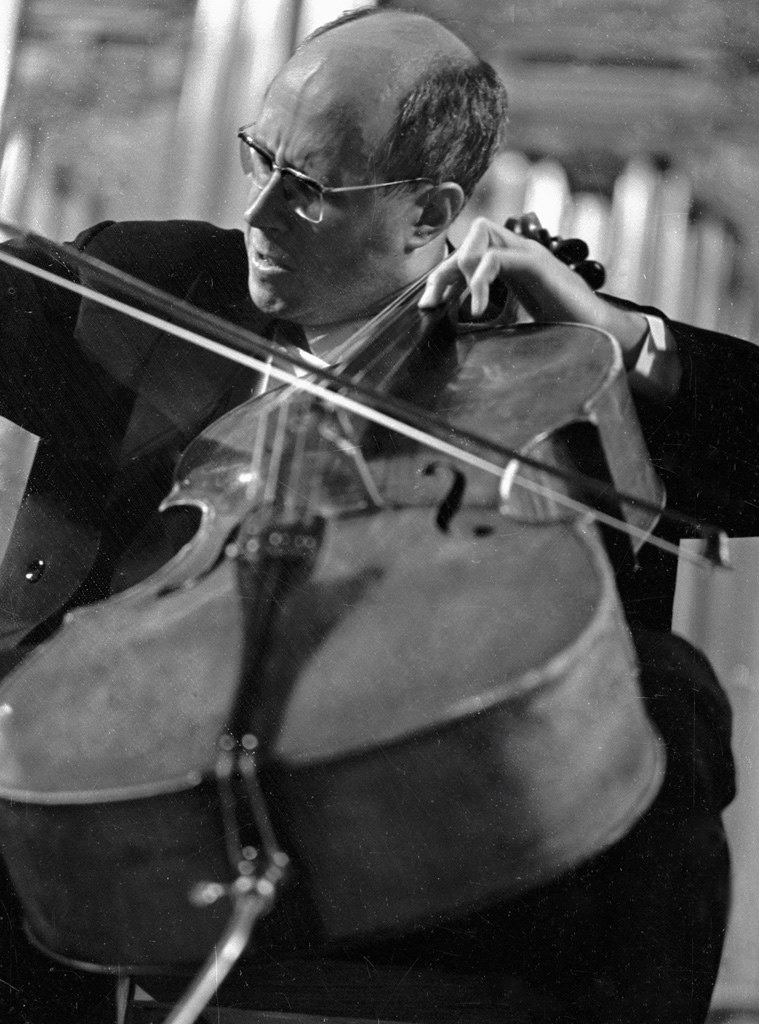
    PHOTOS (left to right): Well-trained composer Antonin Dvořák, Victor Herbert, and Josefina Kaunitzova

  • Russian Cello Concertos Davidoff & Weinberg

    Russian Cello Concertos Davidoff & Weinberg

    Cello, da!

    This Sunday night on “The Lost Chord,” we’ll hear two works for cello and orchestra, written by composers of Eastern European origin, both of whom attained fame in Russia.

    Carl Davidoff (sometimes spelled Karl Davydov) was born in Latvia in 1838. He became head of the St. Petersburg Conservatory, where Tchaikovsky was a colleague. Tchaikovsky dubbed him “The Tsar of the Cello.” Davidoff wrote four cello concertos, all of which have been recorded on the CPO label. We’ll be listening to the first of these, performed by Wen-Sinn Wang.

    Mieczyslaw Weinberg (also known as Moisei Vainberg) was of Polish-Jewish origin. Despite having suffered the loss of much of his family in the Holocaust and being singled out for persecution in the Soviet Union under Stalin, Weinberg was a dizzyingly productive composer. He wrote 22 symphonies, 7 operas, and an enormous amount of chamber and instrumental music, including 17 string quartets, 8 violin sonatas, 6 cello sonatas, and 6 piano sonatas, to say nothing of dozens of film scores. Yet Weinberg’s achievements were eclipsed by those of Shostakovich and Prokofiev.

    Shostakovich took a special interest in the younger composer, frequently interceding on his behalf, and promoting him as “one of the most outstanding composers of the present day.” We’ll hear Weinberg’s Cello Concerto of 1948, performed by the work’s dedicatee, Mstislav Rostropovich.

    Join me for “A Russian Cellobration,” this Suunday night at 10:00 EDT, on WWFM – The Classical Network and wwfm.org.
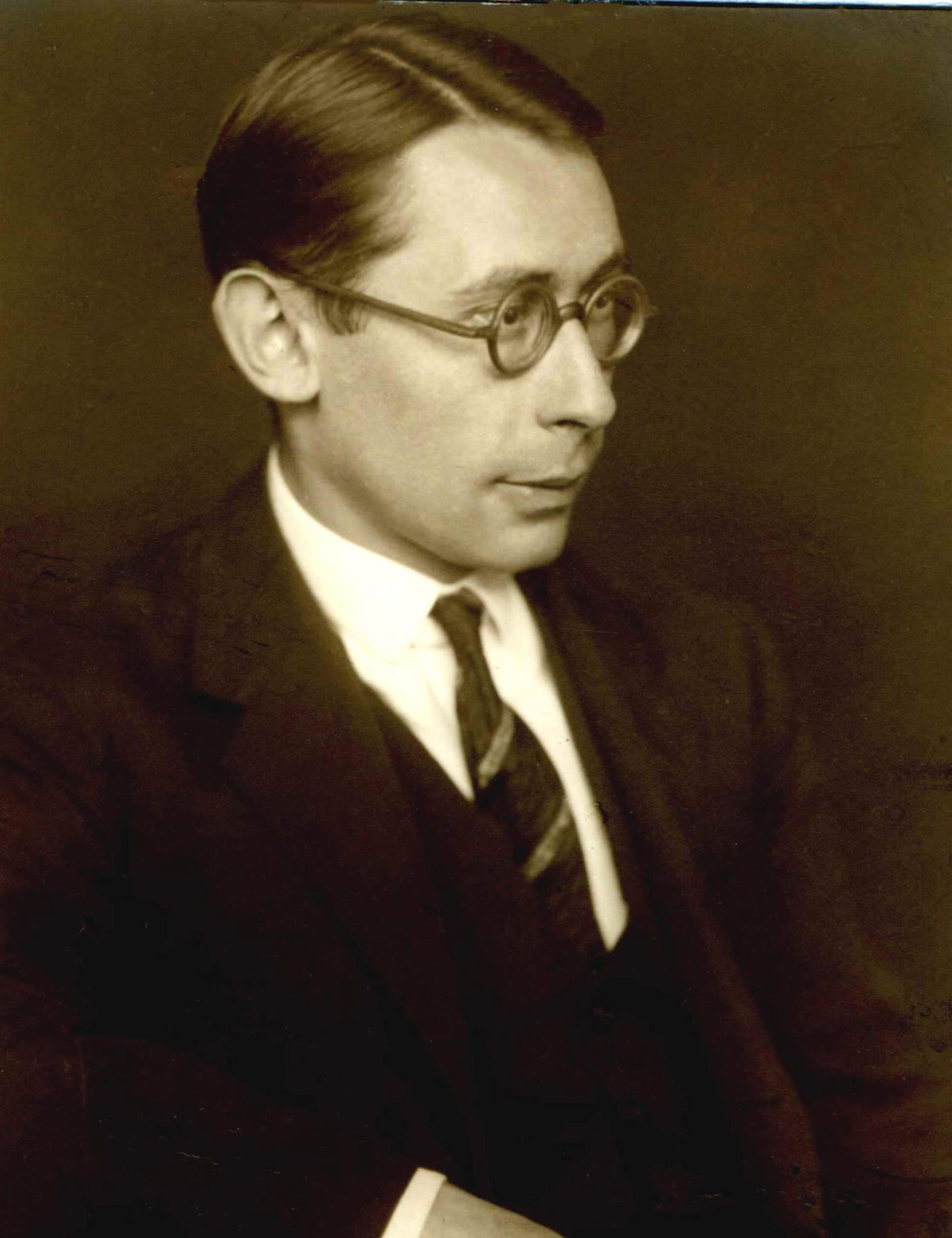

    PHOTO: Slava rocks the cello

  • Hans Gál Rediscovered Composer

    Hans Gál Rediscovered Composer

    Composer, pianist and teacher Hans Gál was born outside Vienna in 1890. He studied with, among others, Eusebius Mandyczewski, lifelong friend of Johannes Brahms and a key figure in Brahms’ circle. Gál himself became a serious Brahms scholar, co-editing the master’s complete works, in cooperation with Mandyczewski, in ten volumes. He edited other scholarly volumes on Brahms, as well.

    It was while Gál was director of the Mainz Conservatory of Music that the Nazis came to power. Forced out of his position, he returned to Austria. Then the Anschluss drove him to Great Britain.

    He was held in an internment camp during the war. However, before that, he had managed to make friends with the Scottish musicologist Donald Francis Tovey. And although Tovey suffered a fatal heart attack, Gál was at last able to find permanent employment at Endinburgh University. He died in 1987 at the age of 97.

    Gál composed in nearly every genre. He was an influential teacher in Great Britain, and was lauded by many of the greatest musicians of his day. Yet his music and reputation haven’t really pervaded the wider musical consciousness.

    This Sunday night on “The Lost Chord,” we’ll hear two works by this neglected composer, issued on the Avie label, which has done much to document Gál’s orchestral, chamber and instrumental music.

    First, we’ll have the Piano Sonata, Op. 28, from a complete, 3-CD set devoted to Gál’s output for the keyboard. Gál was about 37 years-old at the time of the sonata’s composition. It’s sobering to think he yet had 60 years of life ahead of him!

    Then we’ll hear Gál’s Cello Concerto, from 1944. Gál’s mother died in 1942. Shortly after that, his aunt and sister took their own lives to avoid deportation to Auschwitz. Unable to bear up under the strain, the composer’s youngest son also committed suicide at 18 years-old. The concerto is elegiac, lyrical and deeply personal. For all the personal turbulence and tragedy in Gál’s life, he managed to craft a rewarding and mellifluous work, which on occasion offers glimpses of his beloved Brahms.

    I hope you’ll join me for music by this remarkable figure, who weathered much to create works of lasting beauty. Gál went on to flourish in Great Britain. He was an influential teacher, a respected member of the faculty at Edinburgh University, where he remained for the rest of his very long life.

    I hope you’ll join me for “Gál’s Worthy,” worthwhile music of Hans Gál, this Sunday night at 10:00 EDT, on WWFM – The Classical Network and wwfm.org.

  • Castelnuovo-Tedesco Rediscovered After Decades

    Castelnuovo-Tedesco Rediscovered After Decades

    Earlier this week, I posted about the birthday of Mario Castelnuovo-Tedesco, the Jewish Italian composer who was fortunate to make it to America before he could be packed off to a concentration camp.

    Things had already been heating up at home for some time, with Castelnuovo-Tedesco being banned from radio and performances of his works being cancelled, well before the passage of Italian racial laws in 1938. He didn’t leave until 1939, when Arturo Toscanini (who was not Jewish, but had had enough of Mussolini by 1933) agreed to sponsor his immigration to the United States.

    I always wind up playing Castelnuovo-Tedesco’s Violin Concerto No. 2, subtitled “The Prophets,” during Passover. Written for Heifetz in 1931, its three movements are named for the Old Testament prophets Isaiah, Jeremiah, and Elijah. Of course, we hear his guitar pieces – many of them written for Segovia – all the time. But I always wondered what happened to his Cello Concerto.

    The Cello Concerto, written for Gregor Piatigorsky, was given its premiere under Toscanini’s direction in 1935. I have read about it, but I have never actually heard it. Now I learn that the reason is because Piatigorsky had exclusive performance rights to the piece during his lifetime, much as Paul Wittgenstein held exclusive performance rights to the works he commissioned (which is why, for instance, a major work by Paul Hindemith, “Klaviermusik mit Orchester,” went unheard until its revival in 2004 – Wittgenstein didn’t like the piece and locked it up in a trunk).

    Fascinatingly, the Castelnuovo-Tedesco concerto has reemerged in Texas, to be performed by the Houston Symphony over Easter weekend. Allegedly it will be the first time the work will have been heard since the 1930s. Hear excerpts, with lots of fascinating background, at the Houston Symphony’s website:

    http://www.houstonsymphony.org/tickets/production/detail?id=7346&utm_source=Facebook&utm_medium=social+media&utm_campaign=17CLS14&utm_content=17CLS14+FB+Ad+Brinton+Music+Clip+5

    How many more of these musical treasures await rediscovery, I wonder, having been jealously guarded by performers who opted not to promote them, or who were given better offers for yet another whirl through that well-worn crowd-pleaser by Dvořák?

Tag Cloud

Aaron Copland (92) Beethoven (95) Composer (114) Film Music (119) Film Score (143) Film Scores (255) Halloween (94) John Williams (185) KWAX (229) Leonard Bernstein (99) Marlboro Music Festival (125) Movie Music (134) Opera (198) Philadelphia Orchestra (86) Picture Perfect (174) Princeton Symphony Orchestra (106) Radio (87) Ralph Vaughan Williams (85) Ross Amico (244) Roy's Tie-Dye Sci-Fi Corner (290) The Classical Network (101) The Lost Chord (268) Vaughan Williams (102) WPRB (396) WWFM (881)

DON’T MISS A BEAT

Receive a weekly digest every Sunday at noon by signing up here


RECENT POSTS