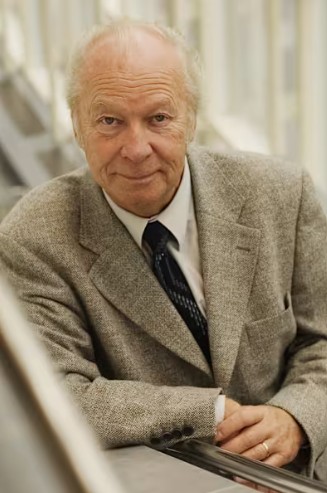
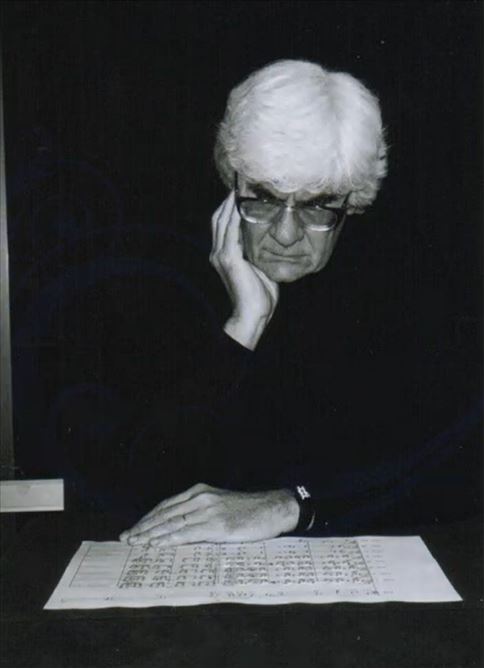
Today is the 90th birthday of Finnish master Aulis Sallinen. Sallinen is the composer of seven operas, eight symphonies, concertos for various instruments, and numerous chamber works.
Those living in the area will have a chance to check-out his rarely-heard Cello Concerto on a pair of concerts to be performed by the Allentown Symphony Orchestra. The soloist will be the orchestra’s 2024 Schadt String Competition winner, Gaeun Kim. (Kim, a Juilliard graduate, won the prize for playing this very concerto.) Hats off to the ASO for allowing her to play something other than the “Rococo Variations.”
Also on the program will be the world premiere of Clarice Assad’s “Frankenstein,” a 25-minute ASO commission, an orchestral narrative stitched together from fragments conceived for the purpose by 50 other composers; and, to send everyone home happy, Tchaikovsky’s Symphony No. 5. Music director Diane Wittry will conduct.
The concerts will be held at Miller Symphony Hall in Allentown, PA, on April 26 & 27, It’s a 90-minute drive from Princeton and Philadelphia, perhaps just a tad longer from NYC. For tickets and information, visit https://www.millersymphonyhall.org/
Happy birthday, Aulis Sallinen!
“Sunrise Serenade” for 2 trumpets, piano and string orchestra
String Quartet No. 3 played by the Kronos Quartet
Symphony No. 7 “The Dreams of Gandalf”
Kim playing the second movement of Sallinen’s concerto
The Brazilian composer Marlos Nobre died yesterday at the age of 85. This Cello Concerto was given its world premiere in 2019. The soloist is Antonio Meneses, who died of a brain tumor in August, two months after sharing his diagnosis and announcing his retirement. It’s been a hard year for Brazilian music.
Meneses performs another work written for him, Nobre’s “Cantoria”
Without Meneses, Nobre’s Percussion Concerto
Nobre plays an improvisation on Antonio Carlos Jobim’s “Dindi”
This week on “The Lost Chord,” there may not be glorious Technicolor or breathtaking Cinemascope, but what would Cole Porter say, to hear Sir Edward Elgar in stereophonic sound?
Elgar was one of the first of the great composers to endeavor to set down “definitive” interpretations of his own works on recordings. Or so it has been thought. But did Elgar really regard these performances as definitive? In fact, Elgar took great care to “grade” the various takes from his recording sessions. Some of these, he instructed, were to be destroyed outright; others were held, as the composer took the time to consider.
What emerges, upon listening to a 4-CD set, “Elgar Remastered,” on the SOMM Recordings label, are the impressions that (1) Elgar was fairly meticulous when it came to preserving his legacy, and (2) he also understood that there’s more than one way to skin a cat. Rediscovered alternative takes make clear that the composer was amenable to looking at his own works from a variety of perspectives.
For their parts, the conscientious engineers at EMI employed multiple machines to guard against technological failure. This was back in the late 1920s and early ‘30s. Now, for the first time, the elements have been brought together and skillfully combined to create a kind of “accidental” stereo.
Engineer Lani Spahr has worked wonders with these recordings, from the private collection of Arthur Reynolds, chairman of the North American Branch of the Elgar Society. He also goes into considerable detail in his liner notes – in fact, to a degree that would be impractical to relate here.
A good deal of the set is devoted to recordings and alternative takes of Elgar’s Cello Concerto. As on the composer’s authorized recording, issued on EMI, Beatrice Harrison is the soloist. These include the first complete electrical recording, from 1928 – the one which would ultimately be published, in mono – with previously unissued, alternative takes from the same sessions. There is also an earlier, truncated recording from 1920, set down using the acoustic process, and a performance of the concerto’s Adagio movement alone, with Harrison accompanied at the keyboard by Princess Victoria.
The gem of the set is Harrison’s celebrated 1928 recording, heard here for the first time entirely in stereo, or what passes for stereo.
Harrison was Elgar’s preferred soloist. He lavished praise on her performances, even as she took liberties with the score. At the session for this particular recording, he was overheard to say, “Give it ‘em, Beatrice, give it ‘em. Don’t mind about the notes or anything. Give ‘em the spirit.”
Worlds away from the effusive, heart-on-the-sleeve approach of Jacqueline du Pré, Harrison’s interpretation is nonetheless riveting on its own terms. As with the other recordings in the collection, it is a kind of time capsule of period performance practice – with swooping portamenti (audible slides between notes) – and the musicians’ flexibility in regard to both tempo and phrasing.
And Elgar can be such a volatile conductor! In addition, we’ll hear a cracking rendition of the “Cockaigne Overture” and a performance of the prelude to the oratorio “The Kingdom,” which really takes flight.
Yes, this is the same Elgar who wrote that ubiquitous graduation march. Join me to hear him as you’ve never heard him before – in “accidental” stereo – on “Pomp and Happenstance,” on “The Lost Chord,” today, on the eve of the anniversary of his birth, now in syndication on KWAX, the radio station of the University of Oregon!
Clip and save the start times for all three of my recorded shows:
PICTURE PERFECT, the movie music show – Friday at 8:00 PM EDT/5:00 PM PDT
SWEETNESS AND LIGHT, the light music program – ALL NEW! – Saturday at 11:00 AM EDT/8:00 AM PDT
THE LOST CHORD, unusual and neglected rep – Saturday at 7:00 PM EDT/4:00 PM PDT
Victor Herbert died 100 years ago today. Although perhaps we don’t hear very much of his music now, unless you’re a nostalgia buff with a sweet-tooth like mine, audiences of our grandmothers’ and great-grandmother’s generations were crazy for him. My grandmother was always singing his stuff. He was simply part of the cultural consciousness, as were the operettas of Gilbert & Sullivan. You didn’t have to love them (in the case of G&S, I did and I do), but everyone knew them.
And of course there were film adaptations of Herbert’s musicals, which, as they slipped further out of fashion, were ripe for parody. Haha, look at Nelson Eddy, singing this fruity song…!
But guess what? There’s a reason this stuff resonated the way it did. Herbert was a master of his craft and finely attuned to the tastes of his public. Even on those occasions when he displayed more ambition, he never did come across as “putting on airs.”
Born on the island of Guernsey in 1859, Herbert was told by his mother that he was born in Dublin – no doubt because of complications surrounding his parentage (apparently he was conceived out of wedlock) – and Herbert believed it for the rest of his life. He spent his early years in the home of his grandfather, Irish novelist and poet Samuel Lover. This ensured his continued affinity for Irish lore and culture.
When his mother remarried, Herbert followed her to Germany. His stepfather was a physician, and Herbert himself seemed destined for a medical career. But medical studies were expensive, so, possibly recollecting the colorful visitors of his grandfather’s circle, he decided to take up music instead.
The cello was his instrument. He performed in a number of orchestras, including that of Eduard Strauss, and he was selected by Johannes Brahms to play in a chamber orchestra for a concert celebrating the life and career of Franz Liszt. In meantime, he had begun to compose.
He married the soprano Therese Förster, and when she was invited to join the Metropolitan Opera in New York City, Herbert followed her to the United States. Förster, singing in German, became the Met’s first “Aida.” Anton Seidl conducted. Seidl would become an important mentor, fostering Herbert’s interest in conducting. In 1888, Herbert was installed as Seidl’s assistant conductor with the New York Philharmonic for its summer season at Brighton Beach. In 1898, he became principal conductor of the Pittsburgh Symphony Orchestra.
In the meantime, he continued to compose concertos, works for chorus and orchestra, symphonic poems, and lighter music. He was acutely aware of the importance of being properly compensated for his work. He became an activist for composers’ rights, testifying before Congress and influencing the development of the Copyright Act of 1909. This allowed composers to collect royalties for sound recordings. As a founding member of ASCAP (in 1914), and its director until his death in 1924, he also brought a landmark lawsuit before the U.S. Supreme Court, securing the right for composers to charge fees for public performance of their music.
Herbert composed two grand operas. One of them, “Natoma” (set in Santa Barbara, California, in 1820), allowed him to fabricate both Native American and Spanish motifs. The work was given its first performance in Philadelphia (by the Chicago Grand Opera Company) in 1911, with Mary Garden (Debussy’s Melisande) and John McCormack as the leads.
Here, the great Risë Stevens sings some of it.
The other opera, a one-acter called “Madeleine,” received its premiere at the Met in 1914.
But it was with his operettas that he struck gold. He would write 43 in all, beginning in the 1890s. By World War I, detecting Americans’ shifting tastes, he shrewdly transitioned to musical comedies. Composers like Irving Berlin and Jerome Kern would ask him to write ballet music for their shows, and he was a regular contributor to the Ziegfeld Follies.
After his death, the tiniest selection of his concert works may have lingered in a dusty corner of the repertoire, but beginning with the compact disc era, a few of these began to experience a resurgence. While Herbert was enormously successful as a musical theater composer, his most enduring contribution to the concert hall has proved to be his Cello Concerto No. 2.
Herbert was serving on the faculty of the National Conservatory of Music in New York at the time that Antonin Dvořák was its director. It’s said that Dvořák was not overly-fond of the cello as an instrument. It was a performance of Herbert’s dramatic piece that caused the scales to drop from his eyes, and Dvořák was spurred to compose his own masterful Cello Concerto in B minor, which remains the benchmark for all performers on the instrument and for any composer with the hubris to attempt their own.
Dvořák, of course, was the spiritual godfather of American music, advising our native artists to look no further than their own soil for inspiration, specifically to the music of Black and Native Americans. He led by example in writing works like his own “New World” Symphony. Victor Herbert was principal cello in the New York Philharmonic for the work’s world premiere at Carnegie Hall in 1893.
Rest well, Victor Herbert. Your music may have inspired snickers of derision from those of us who found fun in the treasures of our forebears, but in the end, you have the last laugh on us all.
Victor Herbert, Cello Concerto No. 2
For this holiday weekend, here’s Herbert wrapping himself in the flag as proudly as any American native-born. Be sure to read the comments under the video, as they offer some interesting insights into the recording.
Undeniably, Herbert had his vulgar streak, but I must too, because I can’t help but love his “Irish Rhapsody.”
Jeanette MacDonald sings “Ah! Sweet Mystery of Life” from “Naughty Marietta” (ruined forever by “Young Frankenstein”)
Madeline Kahn sings it, without the assistance of “the Monster”
Given the Ernie Kovacs treatment
Beverly Sills and Sherill Milnes sing “Thine Alone” from “Eileen”
Mario!
“March of the Toys” from “Babes in Toyland,” given the Laurel and Hardy treatment
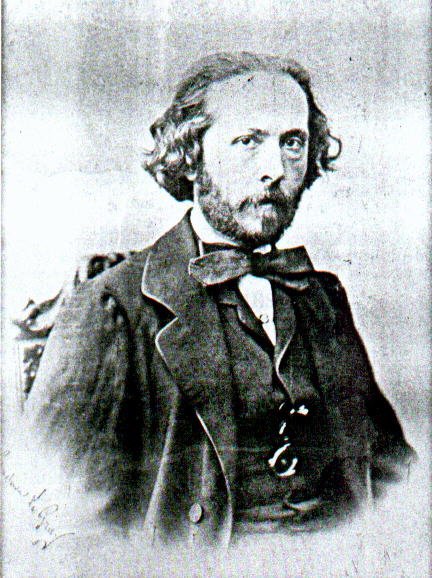
Not that anyone seems to care, as the music world prostrates itself yet again at the feet of the unassailable Amadeus, but today also happens to be the 200th anniversary of the birth of Édouard Lalo. Lalo may not have possessed the same level of extraordinary facility exhibited by Mozart, but he is a thoroughly accomplished and enjoyable composer, with a number of his works still hanging on around the periphery of the active repertoire. In particular, if I’m to judge by the frequency with which it is abused on public radio, his “Symphonie espagnole” remains very well known.
I don’t care how great you are; even genius can wear out its welcome. Thank god for the Édouard Lalos of this world. Joyeux bicentenaire, mon ami!