Tag: Chamber Music

  • Marlboro Music Festival Beethoven & Spohr

    Marlboro Music Festival Beethoven & Spohr

    Caution! Musicians at play!

    The Marlboro Music Festival will present this summer’s opening concerts this weekend, in Marlboro, VT. Extraordinarily talented young performers will share the stage with seasoned veterans when presenting music by Mozart, Copland and Schumann (Saturday) and Beethoven, Schubert, Nielsen and Schumann (Sunday). For the complete schedule and to plan your visit, look online at marlboromusic.org.

    Then join me this Wednesday evening on The Classical Network, for performances by Marlboro musicians of works by Ludwig van Beethoven and Ludwig “Louis” Spohr.

    In his day, Spohr was as highly regarded as Beethoven. A triple threat – a violinist, a conductor, and a composer – he churned out music in all genres. He wrote nine symphonies, ten operas, fifteen violin concertos, four clarinet concertos, and 36 string quartets. Add to that, innumerable chamber works for all sorts of instrumental combinations – with a special emphasis on the harp, since it was the instrument of his wife, with whom he often appeared in concert.

    Following his death, in 1859, his reputation plummeted. It wasn’t until the late 20th century that his music underwent a significant revival.

    We’ll hear Spohr’s Sextet in C major, Op. 140, a comparatively late work, but one infused with a remarkably youthful spirit. A supporter of German unification, republicanism, and democratic causes, Spohr was inspired by the revolutions that swept across Europe in 1848.

    From the 1980 Marlboro Music Festival, we’ll enjoy a performance by violinists Pina Carmirelli and Veronica Knittel, violists Philipp Naegele and Karen Dreyfus, and cellists Peter Wiley and Georg Faust.

    Spohr was a friend and colleague of Beethoven. He participated in a memorable run-through of Beethoven’s “Ghost” Trio, with the composer banging away at an out-of-tune piano. He also played in the premiere of Beethoven’s Seventh Symphony.

    With their association in mind, we’ll also hear Beethoven’s Wind Octet in E-flat major, Op. 103, from 1792. The 1957 recording will feature Marlboro cofounder Marcel Moyse as director of an ensemble made up of oboists Alfred Genovese and Earl Schuster, clarinetists Harold Wright and Richard Lesser, bassoonists Anthony Checchia and Roland Small, and hornists Myron Bloom and Richard Mackey.

    I hope you’ll join me for music by the two Ludwigs, this Wednesday evening at 6:00 EST, on WWFM – The Classical Network and wwfm.org.

    Marlboro School of Music and Festival: Official Page

  • Respighi & Pizzetti: Italian Masters at Marlboro

    Respighi & Pizzetti: Italian Masters at Marlboro

    We’re headed back to the ‘80s for this week’s “Music from Marlboro” – the 1880s, that is.

    We’ll hear music by two composers of “la generazione dell’Ottanta” (literally, “the Generation of the ‘80s”), artists of the post-Puccini era, born around 1880, who made their reputations largely in the concert halls, as opposed to in the opera houses. This would have been a change of pace for Italy.

    The best known of these, of course, was Ottorino Respighi. Respighi may have written twelve operas – can you name them? – but unquestionably it is for his roof-raising tone poems and time-traveling suites for chamber orchestra that he is most celebrated.

    Respighi’s “Il Tramonto” (or “The Sunset”), composed in 1918, was inspired by a poem of Shelley, which tells of a pair of crepuscular lovers who meet in the woods at twilight. The young woman wakes to find that the man has passed in the night.

    We’ll hear a performance by Marlboro musicians on tour at the Isabella Stewart Gardner Museum in Boston, in 2010, including Metropolitan Opera mezzo-soprano Jennifer Johnson Cano, violinists Ira Levin and Yonah Zur, violist Beth Guterman, and cellist Saeunn Thorsteindottir.

    Ildebrando Pizzetti was best known as an associate of the poet and playwright Gabriele d’Annunzio, providing incidental music for a number of d’Annunzio’s plays and setting his drama “Fedra” as an opera. Pizzetti’s Piano Trio in A major, written in 1925, is big music with big things to say. There is plenty of drama, lyricism, and warmth throughout the 30 minute piece, which is almost never heard.

    It was performed, however, at the Marlboro Music Festival in 1968, by violinist Pina Carmirelli, cellist Leslie Parnas, and that venerable poet of the keyboard, Mieczyslaw Horszowski.

    Temperatures will rise into the ‘80s, on this week’s “Music from Marlboro” – chamber music performances from the legendary Marlboro Music Festival – this Wednesday evening at 6:00 EDT, on WWFM – The Classical Network and wwfm.org.

    Marlboro School of Music and Festival: Official Page
  • Wagner Mendelssohn Feud & Chamber Music

    Wagner Mendelssohn Feud & Chamber Music

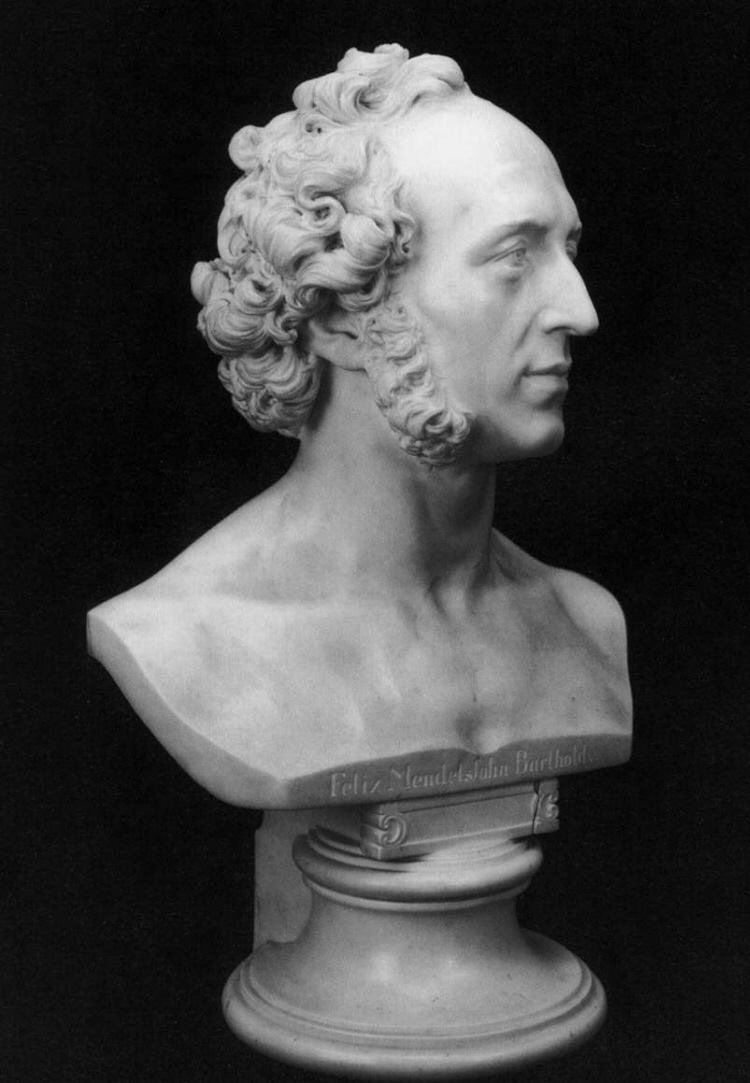
    Richard Wagner, of course, was not very fond of Felix Mendelssohn. He had given the manuscript of his early Symphony in C major to Mendelssohn as a “gift” in 1836, and then became resentful when Mendelssohn didn’t make a special case for the work in his position as kapellmeister of the Leipzig Gewandhaus Orchestra. For this, Wagner never forgave him. Nevermind the fact that the symphony had been performed by the Leipzig orchestra in 1833.

    Okay, so Wagner may have been a little disappointed, but he could have stopped short of his notorious screed “Judaism in Music,” first published in 1850, in which Mendelssohn was singled out for preferential treatment. But at least he was in good company. Wagner also targeted Giacomo Meyerbeer, who had helped secure the first performance of Wagner’s break-out success, “Rienzi,” in 1842. (The conductor Hans von Bülow joked that “Rienzi” was Meyerbeer’s best opera.) Mendelssohn had already been dead for three years, and Wagner published his essay under a pseudonym. Not exactly fair play, by any standard.

    Ironically, the tract wound up damaging his own reputation more than Mendelssohn’s. It’s a good thing for Wagner that his genius was such that we still revere his innovative music dramas even in the shadow of his own psychological frailty.

    Mendelssohn, too, remains in the canon, his own genius undiminished. Mendelssohn’s String Quintet No. 1 in A minor will be the concluding work on today’s Noontime Concert on The Classical Network, which will be made up of performances by the Manhattan Chamber Players.

    Also on the program will be Maurice Ravel’s Introduction and Allegro for Harp, Flute, Clarinet, and String Quartet, Johannes Brahms’ Clarinet Trio, and John Blasdale’s Elegy in F sharp minor, a work for string quartet inspired by Beethoven’s Piano Sonata in E major, Op. 109. The broadcast will be drawn from two concerts given at the Baruch Performing Arts Center in December and April. The Baruch Performing Arts Center is located on 25th Street, between Lexington and 3rd Avenues, in New York City.

    This Thursday, the Manhattan Chamber Players will be joined by formidable cellist Peter Wiley. Wiley is a veteran of both the Beaux Arts Trio and the Guarneri Quartet. The program, titled “Cello Power,” will include Wolfgang Amadeus Mozart’s String Quartet in B flat major, K. 589, and the String Quintets by Alexander Glazunov and Franz Schubert. The concert will take place at 7:30 p.m. at Holy Trinity Lutheran Church, New York City, 3 West 65th Street, at the corner of 65th and Central Park West. For more information, visit manhattanchamberplayers.com.

    Following today’s Noontime Concert broadcast, I’ll mark Wagner’s birthday anniversary with some unusual works and exceptional performances – maybe even the Symphony in C. We’ll find beauty in the beast, between 12 and 4 p.m. EDT, on WWFM – The Classical Network and wwfm.org.

  • British Composers at Marlboro: Vaughan Williams & Bax

    British Composers at Marlboro: Vaughan Williams & Bax

    On this week’s “Music from Marlboro,” we’ll be doing some real Channel surfing – the English Channel, that is – with two works by British composers who were steeped in cross-cultural currents.

    Ralph Vaughan Williams studied in Paris with Maurice Ravel for three months in 1907-08. Ravel took few pupils, but he said of Vaughan Williams, “he is my only pupil who does not write my music.” For his part, Vaughan Williams credited Ravel with helping him to overcome a heavy Germanic influence. Ravel had the effect of lightening the textures in Vaughan Williams’ music and sharpening his focus.

    Vaughan Williams’ “Phantasy Quintet” of 1912 was one of numerous works commissioned from England’s great composers by one Walter Wilson Cobbett, a businessman and amateur musician whose dual passions were chamber music and music of the Elizabethan era. (“Phantasy” was Cobbett’s preferred spelling.) The quintet is full of Tudor inflections and stamped by Vaughan Williams’ tell-tale love of folk music. The composer doubles his violas, and the instrument is heard to great effect throughout the piece. We’ll hear a performance from the 1975 Marlboro Music Festival, with James Buswell and Sachiko Nakajima, violins; Philipp Naegele and Caroline Levine, viola; and Anne Martindale, cello.

    Sir Arnold Bax composed his evocative “Elegiac Trio” in 1916. The work, scored for flute, viola, and harp, appeared the year after Claude Debussy’s trio for the same instrumental combination. Its alluring melancholy emerged from a world at war. Bax was especially affected by escalating tensions between England and his beloved Ireland, which had just boiled over into violence with the Easter Rising. We’ll hear a performance of the trio from 1978, with Carol Wincenc, flute; Caroline Levine, viola; and Moya Wright, harp.

    Ravel too had his influences. His String Quartet in F major, composed in 1903, when he was 28 years-old, bears a superficial resemblance to Debussy’s famous quartet. But whereas Debussy’s aim was to obscure the rules of classical harmony in a sensual pursuit of greater artistic freedom – he confided to his diary, “Any sounds in any combination and in any succession are henceforth free to be used in a musical continuity” – Ravel returned to classical standards, revealing his mastery through quiet innovation within traditional forms. We’ll hear a performance from 2007, with Soovin Kim and Jessica Lee, violins; Jonathan Vinocour, viola; and Scott Bae, cello; from a concert that took place at the Isabella Stewart Gardner Museum in Boston, MA.

    Musicians from Marlboro tour several times throughout the year. The final tour of this season will take place from April 29 to May 6, with stops in Greenwich, CT (at Greenwich Library); New York City (Weill Recital Hall at Carnegie Hall); Philadelphia (Perleman Theater at the Kimmel Center for the Performing Arts); Washington, DC (Freer Gallery’s Meyer Auditorium); and Boston (the Isabella Stewart Gardner Museum). On the program will be Haydn’s String Quartet in D major, Op. 20, No. 4; Krzysztof Penderecki’s String Trio; and Johannes Brahms’ String Quintet No. 1 in F major, Op. 88. You’ll find more information at marlboromusic.org.

    It’s a Franco-British alliance this week, on “Music from Marlboro.” Join me Wednesday at 6 p.m. EDT, on WWFM – The Classical Network and wwfm.org.

    Marlboro School of Music and Festival: Official Page


    A bewhiskered Maurice Ravel in 1907, the year he met Ralph Vaughan Williams

  • Michael Tree: Guarneri Quartet’s Legacy at Marlboro

    Michael Tree: Guarneri Quartet’s Legacy at Marlboro

    A Tree grew at Marlboro. And so did everyone around him.

    Michael Tree, of course, was violist of the landmark Guarneri Quartet that did so much to foster a love of chamber music in generations of musicians and audiences. Tree died on March 31 at the age of 84. He was preceded in death by Guarneri founding cellist David Soyer in 2010.

    All the Guarneri personnel – including violinists Arnold Steinhardt and John Dalley – have ties to the Marlboro Music School and Festival. Indeed, the quartet got its start at Marlboro in 1964. The four young men (all, except Soyer, in their early 20s) had played together at the festival in various permutations for two summers, when they were convinced by Rudolf Serkin and Alexander Schneider to form a more permanent union. Soyer retired from the ensemble in 2001. He was replaced by pupil-made-good Peter Wiley, formerly of the Beaux Arts Trio. Wiley has been active at Marlboro since the 1970s.

    The quartet officially disbanded in 2009, after a 45 year run. Even so, its members would occasionally reunite to play with various ad hoc ensembles.

    Unfortunately the Guarneri Marlboro concerts were not formally recorded. The Marlboro recording studio was not set up until 1965. Some recordings surfaced many years later, but these have not been vetted for broadcast. How fascinating it would have been to hear the Guarneri in Hindemith’s String Quartet No. 3! Happily, most of the quartet’s early repertoire was later documented on commercial releases.

    What made this Tree especially great is that he nurtured the countless seedlings around him. He shared his invaluable insights and experience as a senior artist at Marlboro for 18 seasons. We’ll celebrate his legacy with performances of works by two very different composers. Tree will lend his violistic talents to Beethoven’s Serenade in D major, Op. 25, with flutist Christine Nield and violinist Young Uck Kim, at the 1980 Marlboro Music Festival, and Frank Bridge’s String Quartet No. 1 in E minor, with violinists Timothy Fain and Tien Hsin Cindy Wu and cellist Peter Myers, recorded in 2009.

    Michael Tree remembers his roots even as he branches out, on the next “Music from Marlboro,” this Wednesday evening at 6:00 EDT, on WWFM – The Classical Network and wwfm.org.

    Marlboro School of Music and Festival: Official Page

Tag Cloud

Aaron Copland (92) Beethoven (95) Composer (114) Film Music (120) Film Score (143) Film Scores (255) Halloween (94) John Williams (185) KWAX (229) Leonard Bernstein (100) Marlboro Music Festival (125) Movie Music (135) Opera (198) Philadelphia Orchestra (88) Picture Perfect (174) Princeton Symphony Orchestra (106) Radio (87) Ralph Vaughan Williams (85) Ross Amico (244) Roy's Tie-Dye Sci-Fi Corner (290) The Classical Network (101) The Lost Chord (268) Vaughan Williams (103) WPRB (396) WWFM (881)

DON’T MISS A BEAT

Receive a weekly digest every Sunday at noon by signing up here


RECENT POSTS