
Going through Marlboro withdrawal? “Music from Marlboro” may be on hiatus at WWFM – The Classical Network, but while we wait out the Coronavirus, there’s plenty in the larder to indulge your appetite for great chamber music performances at the website of the Marlboro Music School and Festival.
Tag: Chamber Music
-
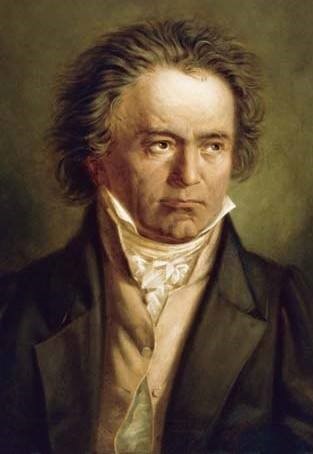
Two Ludwigs at Marlboro
It’s a tale of two Ludwigs, on this week’s “Music from Marlboro.”
For a time, Ludwig Spohr (1784-1859) – recognized everywhere, outside of his native Germany, as Louis (pronounced “Louie,” as in the French) – was as highly regarded as Ludwig van Beethoven (1770-1827).
A triple threat – a violinist, a conductor, and a composer – he churned out music in all genres. He wrote 9 symphonies, 10 operas, 15 violin concertos, 4 clarinet concertos, and 36 string quartets. Add to those, innumerable chamber works for all sorts of instrumental combinations, with a special emphasis on the harp – since the harp was the instrument of his wife, with whom he often appeared in concert.
Following his death, in 1859, Spohr’s reputation plummeted. It wasn’t until the late 20th century that his music underwent a significant revival.
Today, we’ll have chance to enjoy his Sextet for Strings in C major, Op. 140, a comparatively late work, but one imbued with a remarkably youthful spirit. A supporter of German unification, republicanism, and democratic causes, Spohr was inspired by the revolutions that swept across Europe in 1848.
From the 1980 Marlboro Music Festival, we’ll hear it performed by violinists Pina Carmirelli and Veronica Knittel, violists Philipp Naegele and Karen Dreyfus, and cellists Peter Wiley and Georg Faust.
A friend of Beethoven, Spohr participated in a memorable run-through of his colleague’s “Ghost” Trio, with the composer banging away at an out-of-tune piano. He also played in the premiere of Beethoven’s Seventh Symphony.
By way of contrast, but also honoring their association, we’ll open the hour with Beethoven’s Octet for Winds in E-flat major, Op. 103, from 1792. Despite the high opus number, the work was actually written in the composer’s hometown of Bonn, prior to his move to Vienna.
We’ll hear it in a 1957 recording featuring Marlboro cofounder Marcel Moyse, as director of an ensemble made up of oboists Alfred Genovese and Earl Schuster, clarinetists Harold Wright and Richard Lesser, bassoonists Anthony Checchia and Roland Small, and hornists Myron Bloom and Richard Mackey.
Get ready to flip your wig for two Ludwigs, on this week’s “Music from Marlboro,” this Wednesday evening at 6:00 EST, on WWFM – The Classical Network and wwfm.org.
Marlboro School of Music and Festival: Official Page
When the cravat was king: Beethoven (left) and Louis Spohr
-
Schubert’s Octet Marlboro Music Festival
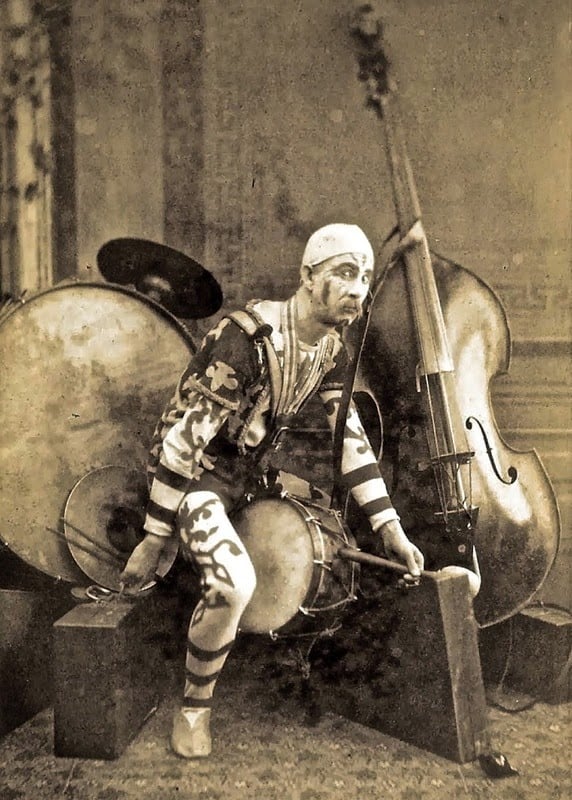
It’s foolish to attempt to play something like the Schubert Octet all by yourself. Many have tried – mad dreamers! – only to come up looking ridiculous. Not even the gloss of extraneous percussion instruments or transposition to the banjo can disguise the bald fact of the matter – that to really enjoy this work as Franz Schubert intended, you can’t do better than eight superb musicians from the Marlboro Music Festival.
On the next “Music from Marlboro,” we’ll hear Schubert’s Octet in F major, D. 803, performed in its entirety, by violinists Joseph Genualdi and Felix Galimir, violist Steven Tenenbom, cellist Peter Wiley, double-bassist Peter Lloyd, clarinetist Shannon Scott, bassoonist Alexander Heller, and hornist David Jolley. Marlboro musicians toured the piece, alongside Mozart’s “Eine kleine Nachtmusik,” in 1987.
Tune in for this expansive masterwork a little earlier than usual – there’s too much melody and charm to be confined within a single hour – this Wednesday evening at 5:50 EST. It pays to be a team player. One can’t outscore the Octet, on WWFM – The Classical Network and wwfm.org.
Marlboro School of Music and Festival: Official Page
-
Beyond String Quartets: Marlboro’s Chamber Music Hour
String quartets, we bite our thumbs at thee!
On this week’s “Music from Marlboro,” we smash the hegemony of chamber music’s most prevalent foursome to bring you an hour of contumely quartets.
Wolfgang Amadeus Mozart spent five months in Mannheim in 1777, hoping to chase down a steady position there. He didn’t get the job, but he did receive a fistful of commissions from gentleman-flutist Willem van Britten Dejong. The 21 year-old composer was broke, in love, and, as usual, being badgered by his old man to make something of himself already. These external pressures may explain, in part, Mozart’s alleged aversion to the flute. He certainly responded to the new commissions as if they were more of a burden than a godsend. Still, he had too much integrity not to lend the works his usual polish.
We’ll hear the Flute Quartet No. 1 in D major, K. 285, performed at the 1989 Marlboro Music Festival, by flutist Marina Piccinini, violinist Scott St. John, violist Christof Huebner, and cellist Peter Wiley.
Bernard Garfield was longtime principal bassoonist of the Philadelphia Orchestra. He served with the orchestra for 43 years, from 1957 to 2000. Concurrently, he taught at Temple University and, for over three decades, at the Curtis Institute of Music. He also founded the New York Woodwind Quintet.
It’s hardly surprising that a career bassoonist would write music for his own instrument. Garfield composed three bassoon quartets. We’ll hear the first of these, from 1950. It was performed at Marlboro in 2010 by bassoonist Natalya Rose Vrbsky, violinist David McCarroll, violist Dmitri Murrath, and cellist Judith Serkin.
Finally, Carl Maria von Weber earned his place in the history books as one of the progenitors of German Romantic opera. With its lurid Wolf’s Glen sequence, “Der Freischutz” reverberated in its nightmarish extravagance, making it one of the most influential operas of the 19th century.
Twelve years before “Freischutz,” in 1809, Weber, then 22, wrote a comparatively benign Piano Quartet in B flat major. His model was clearly Mozart, but already his head had grown too hot for his tricorn, as he also indulges in flights of post-Beethovenian temperament.
We’ll hear Weber’s quartet, as played at Marlboro in 1989, by pianist Igor Ardašey, violinist Takumi Kubota, violist Ulrich Eichenauer, and cellist Siegfried Palm.
Strike a blow against the tyranny of the string quartet! It’s an hour of revolting chamber music on the next “Music from Marlboro,” this Wednesday evening at 6:00 EDT, on WWFM – The Classical Network and wwfm.org.
Marlboro School of Music and Festival: Official Page
-
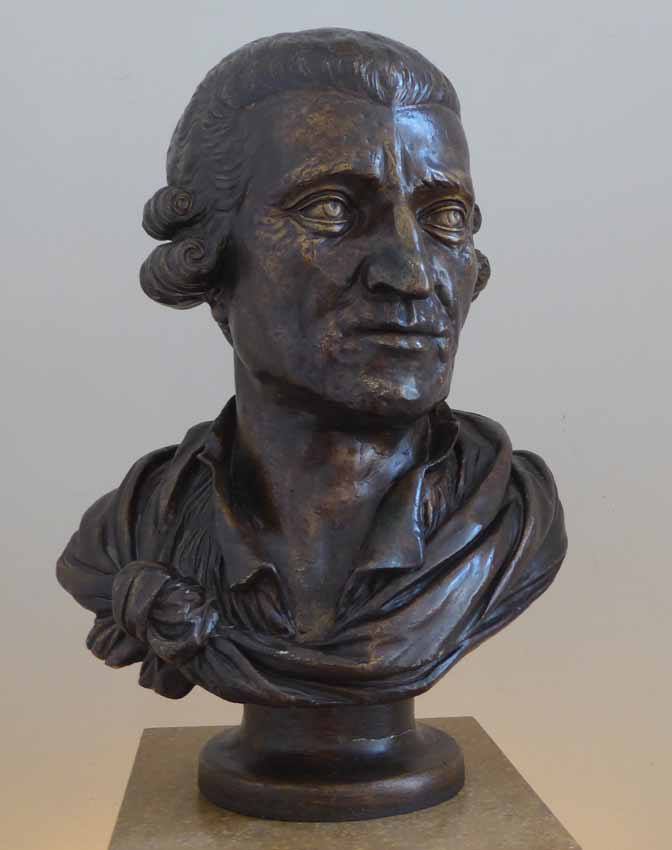
Haydn, Rochberg & Marlboro’s Musical Rebellion
On this week’s “Music from Marlboro,” you may be good at Haydn, but there’s no escaping the Roch. And I don’t mean Alcatraz.
George Rochberg’s big claim to fame – or, in some circles, notoriety – is that he was one of the first composers to emerge from the predominant serialism of the 1960s to embrace a new tonality, a shift brought on, it is said, by the untimely death of his son.
Rochberg found the brand of expressionism he had been exploring at mid-career inadequate to convey the strong emotional upheaval he felt. The reintroduction of tonal passages into his works acted as a kind of balm, even as it lit a slow fuse that would blow wide open the future for up-and-coming composers. At the time, this would have been viewed by some as a criminal offense.
Rochberg is often credited with having ushered in the Age of Pluralism. Now a composer can write any way he or she wants and still be taken seriously. It’s easy to forget that that was not always the case.
Rochberg’s desire to communicate must have been a latent one, since his Trio for Clarinet, Horn, and Piano, from 1947 (predating his “twelve tone” period), is direct and, in its second movement adagio, introspective and full of feeling. We’ll hear it performed at the 2007 Marlboro Music Festival by clarinetist Charles Neidich, hornist José Vicente Castelló, and pianist Igor Levit.
The trio will be bookended by two works associated with Franz Joseph Haydn – the String Quartet in B flat major, Op. 33, No. 4, by turns puckish and transporting, and Johannes Brahms’ “Variations on a Theme of Haydn.”
Who cares that the theme that inspired Brahms to write his variations isn’t by Haydn at all? The “Saint Anthony Chorale” that forms the basis of the slow movement of Haydn’s Divertimento No. 1 in B flat major, Hob. II: 46, is a preexisting melody. In fact, the composer of the divertimento itself has been disputed. A clear case of forgery?
A lenient judge would understand that none of that really matters in music this well-crafted, especially when performed at the 1976 Marlboro Music Festival by pianists Stephanie Brown and Cynthia Raim.
Haydn’s Op. 33, No. 4, will open the hour. We’ll hear it played by a band on the run, from 1990, made up of violinists Chee-Yun Kim and Felix Galimir, violist Caroline Levine, and cellist Jean-Guihen Queyras.
Haydn and Rochberg get busted on this week’s “Music from Marlboro,” Wednesday evening at 6:00 EDT, on WWFM – The Classical Network and wwfm.org.
Marlboro School of Music and Festival: Official Page
Tag Cloud
Aaron Copland (93) Beethoven (95) Composer (114) Film Music (145) Film Score (143) Film Scores (255) Halloween (94) John Williams (195) KWAX (229) Leonard Bernstein (104) Marlboro Music Festival (125) Movie Music (160) Mozart (91) Opera (213) Philadelphia Orchestra (89) Picture Perfect (174) Princeton Symphony Orchestra (109) Radio (88) Ross Amico (244) Roy's Tie-Dye Sci-Fi Corner (290) The Classical Network (101) The Lost Chord (269) Vaughan Williams (105) WPRB (397) WWFM (881)