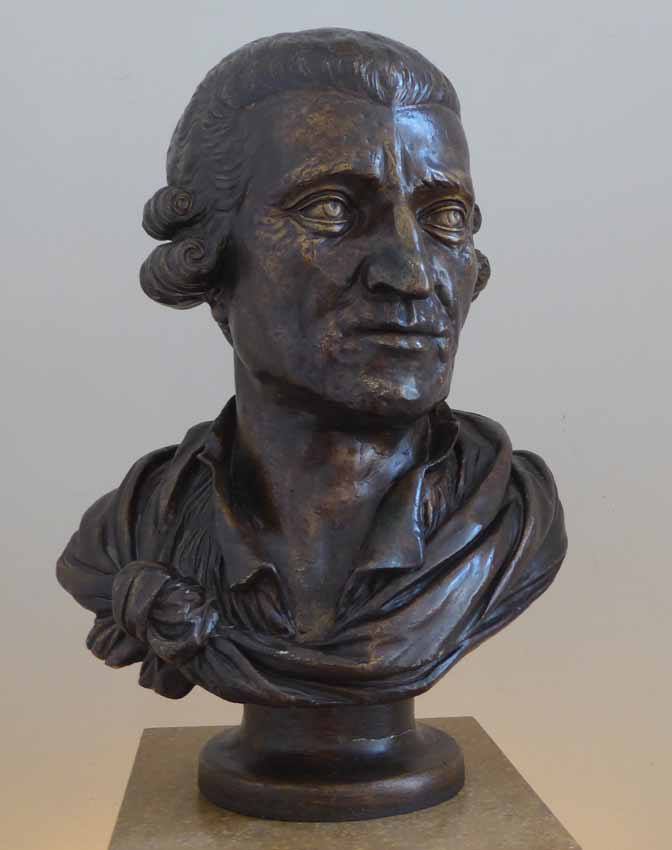
On this week’s “Music from Marlboro,” you may be good at Haydn, but there’s no escaping the Roch. And I don’t mean Alcatraz.
George Rochberg’s big claim to fame – or, in some circles, notoriety – is that he was one of the first composers to emerge from the predominant serialism of the 1960s to embrace a new tonality, a shift brought on, it is said, by the untimely death of his son.
Rochberg found the brand of expressionism he had been exploring at mid-career inadequate to convey the strong emotional upheaval he felt. The reintroduction of tonal passages into his works acted as a kind of balm, even as it lit a slow fuse that would blow wide open the future for up-and-coming composers. At the time, this would have been viewed by some as a criminal offense.
Rochberg is often credited with having ushered in the Age of Pluralism. Now a composer can write any way he or she wants and still be taken seriously. It’s easy to forget that that was not always the case.
Rochberg’s desire to communicate must have been a latent one, since his Trio for Clarinet, Horn, and Piano, from 1947 (predating his “twelve tone” period), is direct and, in its second movement adagio, introspective and full of feeling. We’ll hear it performed at the 2007 Marlboro Music Festival by clarinetist Charles Neidich, hornist José Vicente Castelló, and pianist Igor Levit.
The trio will be bookended by two works associated with Franz Joseph Haydn – the String Quartet in B flat major, Op. 33, No. 4, by turns puckish and transporting, and Johannes Brahms’ “Variations on a Theme of Haydn.”
Who cares that the theme that inspired Brahms to write his variations isn’t by Haydn at all? The “Saint Anthony Chorale” that forms the basis of the slow movement of Haydn’s Divertimento No. 1 in B flat major, Hob. II: 46, is a preexisting melody. In fact, the composer of the divertimento itself has been disputed. A clear case of forgery?
A lenient judge would understand that none of that really matters in music this well-crafted, especially when performed at the 1976 Marlboro Music Festival by pianists Stephanie Brown and Cynthia Raim.
Haydn’s Op. 33, No. 4, will open the hour. We’ll hear it played by a band on the run, from 1990, made up of violinists Chee-Yun Kim and Felix Galimir, violist Caroline Levine, and cellist Jean-Guihen Queyras.
Haydn and Rochberg get busted on this week’s “Music from Marlboro,” Wednesday evening at 6:00 EDT, on WWFM – The Classical Network and wwfm.org.
Marlboro School of Music and Festival: Official Page
Leave a Reply