Tag: Charles Koechlin

  • Forgotten French Orchestral Masters

    Forgotten French Orchestral Masters

    Vive les orchestrateurs de musique classique français!

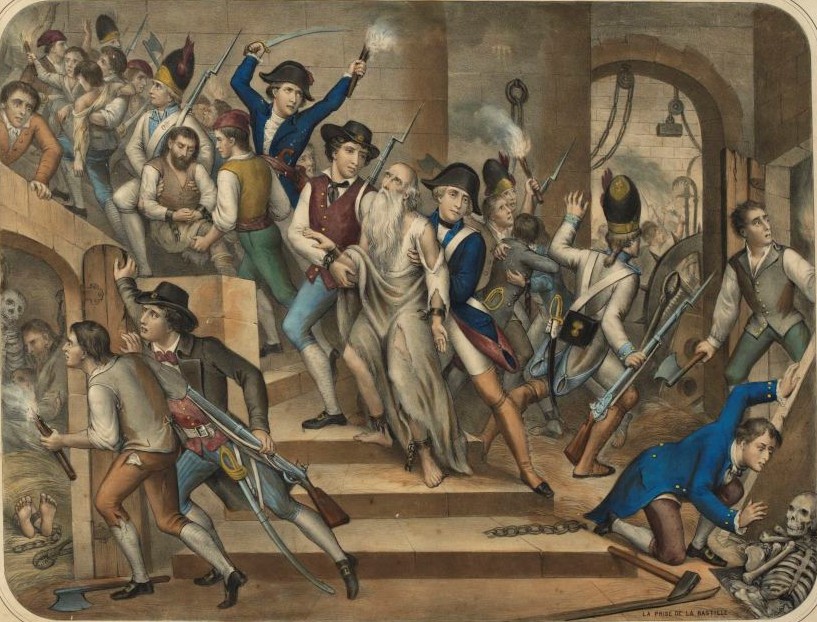
    This Sunday night on “The Lost Chord,” for Bastille Day, enjoy original works by figures who employed their skills as orchestrators in the service of more celebrated French composers.

    Henri Rabaud (1873-1949) was, variously, conductor at the Paris Opéra Comique, director of the Paris Opera, and director of the Paris Conservatory. For a season, he ever led the Boston Symphony Orchestra. Though he wrote several operas and two symphonies, as well as choral, chamber and instrumental music, Rabaud’s own original output is very seldom heard. However, his orchestration of Gabriel Fauré’s charming “Dolly Suite,” originally for piano four-hands, endures. We’ll hear Rabaud’s symphonic poem “La Procession nocturne,” inspired by Nicolas Lenau’s “Faust.”

    André Caplet (1878-1925) directed the Boston Opera from 1910 to 1914. He was gassed while serving in the First World War, which resulted in the pleurisy that plagued him for the remainder of his short life. Caplet died at the age of 44. His harp quintet, “Conte fantastique,” after Edgar Allan Poe’s “The Masque of the Red Death” is occasionally heard. But his tenuous grip on fame is really through his association with another composer, Claude Debussy, for whom he orchestrated “Children’s Corner,” “Clair de lune,” “Le Martyrdom de saint Sébastien” and “La boîte à joujoux.” Tonight we’ll have the opportunity to enjoy Caplet’s lovely Septet for Voices and String Quartet.

    Henri Büsser (1872-1973) acted as secretary to Charles Gounod. He also became a protégé and friend of Jules Massenet. At Debussy’s request, Büsser conducted the fourth performance of “Pélleas and Mélisande” and numerous performances thereafter. He died in Paris less than three weeks shy of his 102nd birthday! Büsser’s own output includes much music for the stage, including 14 operas, a ballet, and incidental music. Yet his name is kept alive principally as the orchestrator of Debussy’s “Petite Suite” and “Printemps.” He’ll be represented tonight by “Andalucia,” an original work for flute, on Spanish themes.

    Charles Koechlin (1867-1950) had many enthusiasms: medieval music, Bach, travel, stereoscopic photography, communism, pantheism, sports. He was especially interested in early film stars (he wrote works in tribute to Ginger Rogers, Douglas Fairbanks, Charles Chaplin, and Lillian Harvey) and the “Jungle Books” of Rudyard Kipling. Despite enjoying an astonishingly prolific career as a composer himself, Koechlin is associated in most people’s minds with his orchestration of Fauré’s “Pélleas and Mélisande.” He also worked as an orchestrator on Debussy’s “Khamma.”

    Koechlin’s series of orchestral works, inspired by Kipling, span most of his creative life. These were composed in a broad array of styles, encompassing impressionism, neo-classicism, polytonality, and even quasi-serialism. We’ll hear the last of his Kipling cycle, “Les Bandar-Log,” ostensibly about a barrel of chattering monkeys, but the term has also come to be used to describe anyone who irresponsibly prattles.

    I hope you’ll join me in liberating these overlooked composers from the Bastille of neglect on “French Connections,” this Sunday night at 10:00 EDT, on WWFM – The Classical Network and wwfm.org.
  • Kipling’s Muse Koechlin & Martinu

    Kipling’s Muse Koechlin & Martinu

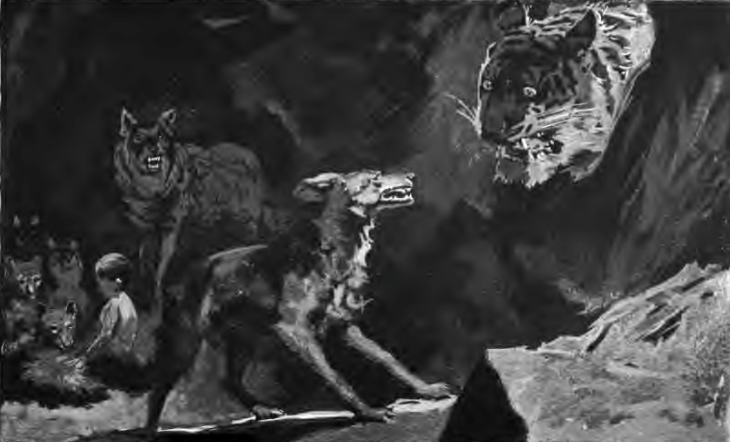
    Many composers have been inspired by the writings of Rudyard Kipling, but few more so than Charles Koechlin.

    Koechlin is probably better recognized these days as the orchestrator who assisted Fauré and Debussy than for any of his own music. He was fascinated by the movies and wrote works inspired by a number of cinematic celebrities. This yielded, among other things, his “Seven Stars Symphony,” with movements dedicated to Douglas Fairbanks, Charlie Chaplin and others. The figure he most adored is the now largely-forgotten actress Lillian Harvey, who he admired from afar and honored with a number of compositions.

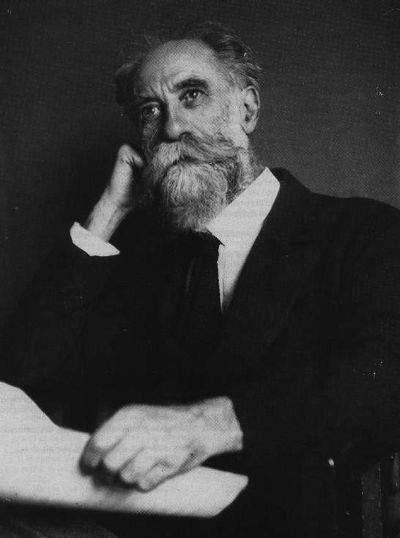
    In addition, Koechlin was an amateur astronomer and an accomplished photographer. He became quite the athlete, in order to keep up his strength after a youthful brush with tuberculosis. As I know I’ve pointed out before, he also had one of the most enviable beards in all of classical music.

    Like Percy Grainger, Koechlin harbored a lifelong affection for Kipling’s “The Jungle Book,” and returned to the subject often throughout his career – beginning with some song settings in 1899 and running through the symphonic poem “The Bandar-Log,” completed in 1940.

    This Sunday night on “The Lost Chord,” we’ll hear his symphonic poem, “The Law of the Jungle.” Then we’ll turn to the ballet, “The Butterfly that Stamped,” by the Czech composer Bohuslav Martinu.

    Like Koechlin, Martinu was prolific by anyone’s standards. And like Koechlin there is so much Martinu nobody has ever heard. In addition to six symphonies, which at least get some play, he wrote concertos of every stripe, as well as 15 operas, a large body of orchestral, chamber, vocal and instrumental works, and – believe it or not – 14 ballets.

    “The Butterfly that Stamped” was inspired by a tale from Kipling’s “Just So Stories.”

    Get ready to go wild! It’s a Kipling double-bill. Join me for “Kipling Coupling” – this Sunday night at 10:00 EDT, on WWFM – The Classical Network and wwfm.org.
  • Emiko Edwards Plays Beethoven in Plainsboro

    Emiko Edwards Plays Beethoven in Plainsboro

    Around 8:00 this Thursday morning, we’ll pause in our five-hour sesquicentennial celebration of the music of neglected French composer Charles Koechlin on WPRB to speak with pianist Emiko Edwards.

    Edwards will join the Bravura Philharmonic Orchestra and its music director Chiu-Tze Lin in Beethoven’s “Emperor” Concerto. The performance will be the centerpiece of a holiday concert to be given this Sunday night at 7:00 at Princeton Alliance Church in Plainsboro, NJ. Also on the program will be the “Polovtsian Dances” by Alexander Borodin, the “Toy Symphony” attributed to Franz Joseph Haydn, and selections from Handel’s “Messiah,” along with a holiday audience sing-along. More information is available at bravuraphil.org.

    Then I hope you’ll stick around, following our conversation, as we’ve got a cornucopia of Koechlin, including his “Seven Stars Symphony” – its individual movements inspired by legendary actors of classic cinema (Douglas Fairbanks, Greta Garbo, Marlene Dietrich, Charlie Chaplin, etc.), who were his contemporaries – until 11:00 EST, on WPRB 103.3 FM and wprb.com.

  • Charles Koechlin: Impossible Dreamer

    Charles Koechlin: Impossible Dreamer

    Music is a quixotic profession, but few of its practitioners were as quixotic as Charles Koechlin. This Thursday morning on WPRB, we’ll play Sancho Panza to the impossible dreamer of French music.

    Here was an idealist of passionate enthusiasms. A pantheist and a communist, Koechlin’s sophisticated naïveté carried over into works like the mostly stagnant piano cycle “Les Heures persanes,” a dreamy sojourn across Persia, which in performance spans well over an hour. He staked out the home of (much younger) movie actress Lilian Harvey, hoping to propose. Prior to that, he had attempted to court her with reams of music, including alternate scores to scenes in her movies. It’s fascinating to contemplate that this footnote of world cinema (Harvey) has been kept alive for music-lovers by a footnote of classical music.

    Koechlin wrote whatever he pleased. His music is difficult to pigeon-hole. Some of his works are kind of impressionist, some are polytonal. He loved Bach, and even wrote a 50-minute meditation on the composer’s name, which stands as a kind of 20th century “Art of Fugue” (employing the ondes martenot!). In some of his works, he crosses over into serialism. He didn’t seem to care for boundaries, whether in his personal relationships, his religious and political convictions, or his music. What he did care for was following his muse, wherever it happened to lead him. Of course, he paid the price – beyond his work as an orchestrator for famous composers such as Gabriel Fauré, Claude Debussy, and Cole Porter (!), he is almost wholly forgotten.

    I hope you’ll join me as we tilt at windmills with Charles Koechlin, on the occasion of the 150th anniversary of his birth (November 27, 1867), this Thursday morning from 6 to 11 EST, on WPRB 103.3 FM and wprb.com. The ideal becomes real, on Classic Ross Amico.

  • Charles Koechlin Sesquicentennial on WPRB

    Charles Koechlin Sesquicentennial on WPRB

    The recordings of his music shall be as numerous as the strands of his beard. This Thursday morning on WPRB, we’ll celebrate the sesquicentennial of Charles Koechlin.

    Koechlin, the forgotten French composer who assisted Gabriel Fauré (his teacher) and Claude Debussy, was born on November 27, 1867. We’ll mark the anniversary in high style, with a five hour playlist of representative works – which won’t be easy, since Koechlin composed in such a wide variety of styles. His musical language encompassed impressionism, neo-classicism, polytonality, even quasi-serialism – occasionally within the same piece!

    His life was like his music, with many diverse interests jostling for primacy – medieval music, Bach, travel, stereoscopic photography, sports, politics, pantheism, the movies. He was especially interested in early film stars. He wrote works in tribute to Ginger Rogers, Douglas Fairbanks, Charles Chaplin and especially Lillian Harvey (who he basically stalked). Another source of endless fascination was Rudyard Kipling’s “The Jungle Book,” which inspired a series of orchestral works that span most of Koechlin’s creative life.

    For as much as he composed – he was very prolific – sadly, Koechlin has been relegated to a footnote in music histories, remembered, if at all, for his orchestrations for others, especially for Fauré’s “Pélleas and Mélisande” and Debussy’s “Khamma.” He also orchestrated Cole Porter’s ballet “Within the Quota.” (Porter was a Koechlin student.) In addition, he wrote a classic treatise on orchestration.

    We’ll hear Koechlin’s “Seven Stars Symphony,” each movement inspired by luminaries of the silver screen, complete with ondes martenot, as well as his orchestration of Schubert’s “Wanderer Fantasy,” among other oddities.

    Join me for music by the composer everyone forgot to remember, this Thursday morning from 6 to 11 EST, on WPRB 103.3 FM and wprb.com. We go kooky for Koechlin, on Classic Ross Amico.

Tag Cloud

Aaron Copland (92) Beethoven (95) Composer (114) Film Music (120) Film Score (143) Film Scores (255) Halloween (94) John Williams (185) KWAX (229) Leonard Bernstein (100) Marlboro Music Festival (125) Movie Music (135) Opera (198) Philadelphia Orchestra (88) Picture Perfect (174) Princeton Symphony Orchestra (106) Radio (87) Ralph Vaughan Williams (85) Ross Amico (244) Roy's Tie-Dye Sci-Fi Corner (290) The Classical Network (101) The Lost Chord (268) Vaughan Williams (103) WPRB (396) WWFM (881)

DON’T MISS A BEAT

Receive a weekly digest every Sunday at noon by signing up here


RECENT POSTS