Tag: Charles Koechlin

  • Kipling’s Classical Connection

    Kipling’s Classical Connection

    Many composers have been inspired by the writings of Rudyard Kipling, but few more so than Charles Koechlin.

    Koechlin is probably better recognized these days as the orchestrator who assisted Fauré and Debussy than for any of his own music. He was fascinated by the movies and wrote works inspired by a number of cinematic celebrities. This yielded, among other things, his “Seven Stars Symphony,” with movements dedicated to Douglas Fairbanks, Charlie Chaplin and others. The figure he most adored is the now largely-forgotten actress Lillian Harvey, whom he admired from afar and honored with a number of compositions.

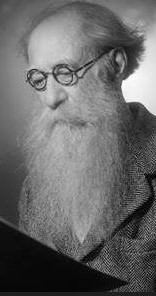
    In addition, Koechlin was an amateur astronomer and an accomplished photographer. He became quite the athlete, in order to keep up his strength after a youthful brush with tuberculosis. As I know I’ve pointed out before, he also had one of the most enviable beards in all of classical music.

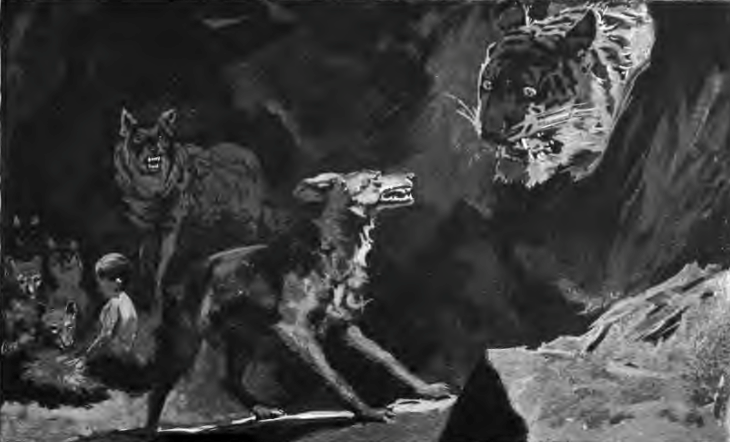
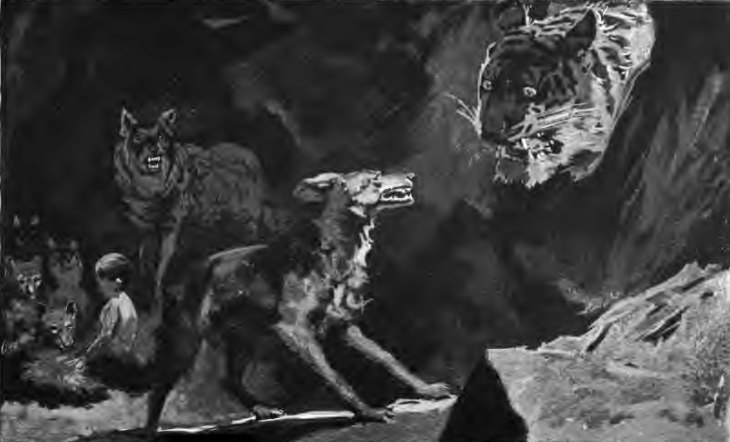
    Like Percy Grainger, Koechlin harbored a lifelong affection for Kipling’s “The Jungle Book,” and returned to the subject often throughout his career – beginning with some song settings in 1899 and running through the symphonic poem “The Bandar-Log,” completed in 1940.

    This week on “The Lost Chord,” we’ll hear his symphonic poem, “The Law of the Jungle.” Then we’ll turn to the ballet, “The Butterfly that Stamped,” by the Czech composer Bohuslav Martinů.

    Like Koechlin, Martinů was prolific by anyone’s standards. And like Koechlin there is so much Martinů nobody has ever heard. In addition to six symphonies, which at least get some play, he wrote concertos of every stripe, as well as 15 operas, a large body of orchestral, chamber, vocal and instrumental works, and – believe it or not – 14 ballets.

    “The Butterfly that Stamped” was inspired by a tale from Kipling’s “Just So Stories.”

    Get ready to go wild! It’s a Kipling double-bill. Join me for “Kipling Coupling,” on “The Lost Chord,” now in syndication on KWAX, the radio station of the University of Oregon!


    Clip and save the start times for all three of my recorded shows:

    PICTURE PERFECT, the movie music show – Friday at 8:00 PM EDT/5:00 PM PDT

    SWEETNESS AND LIGHT, the light music program – Saturday at 11:00 AM EDT/8:00 AM PDT

    THE LOST CHORD, unusual and neglected rep – Saturday at 7:00 PM EDT/4:00 PM PDT

    Stream them, wherever you are, at the link!

    https://kwax.uoregon.edu/


    A reminder that there will be lots more Martinů at this year’s Bard Music Festival, “Martinů and His World,” to be held at Bard College in Annandale-on-Hudson, NY, August 8-10 and 14-17. Take a gander at the complete schedule here:

    Bard Music Festival

    Fisher Center at Bard

  • French Orchestrators Behind the Music

    French Orchestrators Behind the Music

    Vive les orchestrateurs de musique classique français!

    This week on “The Lost Chord,” for Bastille Day, enjoy original works by figures who employed their skills as orchestrators in the service of more celebrated French composers.

    Henri Rabaud (1873-1949) was, variously, conductor at the Paris Opéra Comique, director of the Paris Opera, and director of the Paris Conservatory. For a season, he even led the Boston Symphony Orchestra. Though he wrote several operas and two symphonies, as well as choral, chamber and instrumental music, Rabaud’s own original output is very seldom heard. However, his orchestration of Gabriel Fauré’s charming “Dolly Suite,” originally for piano four-hands, endures. We’ll hear Rabaud’s symphonic poem “La Procession nocturne,” inspired by Nicolas Lenau’s “Faust.”

    André Caplet (1878-1925) directed the Boston Opera from 1910 to 1914. He was gassed while serving in the First World War, which resulted in the pleurisy that plagued him for the remainder of his short life. Caplet died at the age of 44. His harp quintet, “Conte fantastique,” after Edgar Allan Poe’s “The Masque of the Red Death” is occasionally heard. But his tenuous grip on fame is really through his association with another composer, Claude Debussy, for whom he orchestrated “Children’s Corner,” “Clair de lune,” “Le Martyrdom de saint Sébastien,” and “La boîte à joujoux.” Today, we’ll have the opportunity to enjoy Caplet’s lovely Septet for Voices and String Quartet.

    Henri Büsser (1872-1973) acted as secretary to Charles Gounod. He also became a protégé and friend of Jules Massenet. At Debussy’s request, Büsser conducted the fourth performance of “Pélleas and Mélisande” and numerous performances thereafter. He died in Paris less than three weeks shy of his 102nd birthday! Büsser’s own output includes much music for the stage, including 14 operas, a ballet, and incidental music. Yet his name is kept alive principally as the orchestrator of Debussy’s “Petite Suite” and “Printemps.” He’ll be represented today’s program by “Andalucia,” an original work for flute, on Spanish themes.

    Charles Koechlin (1867-1950) had many enthusiasms: medieval music, Bach, travel, stereoscopic photography, communism, pantheism, sports. He was especially interested in early film stars (he wrote works in tribute to Ginger Rogers, Douglas Fairbanks, Charles Chaplin, and Lillian Harvey) and the “Jungle Books” of Rudyard Kipling. Despite enjoying an astonishingly prolific career as a composer himself, Koechlin is associated in most people’s minds with his orchestration of Fauré’s “Pélleas and Mélisande.” He also worked as an orchestrator on Debussy’s “Khamma.”

    Koechlin’s series of orchestral works, inspired by Kipling, span most of his creative life. These were composed in a broad array of styles, encompassing impressionism, neo-classicism, polytonality, and even quasi-serialism. We’ll hear the last of his Kipling cycle, “Les Bandar-Log,” ostensibly about a barrel of chattering monkeys, but the term has also come to be used to describe anyone who irresponsibly prattles.

    I hope you’ll join me in liberating these overlooked composers from the Bastille of neglect on “French Connections,” on “The Lost Chord,” now in syndication on KWAX, the radio station of the University of Oregon!


    Clip and save the start times for all three of my recorded shows:

    PICTURE PERFECT, the movie music show – Friday at 8:00 PM EDT/5:00 PM PDT

    SWEETNESS AND LIGHT, the light music program – ALL NEW! – Saturday at 11:00 AM EDT/8:00 AM PDT

    THE LOST CHORD, unusual and neglected rep – Saturday at 7:00 PM EDT/4:00 PM PDT

    Stream them, wherever you are, at the link!

    https://kwax.uoregon.edu/

  • Rediscovering My Lost Vinyl Record Collection

    Rediscovering My Lost Vinyl Record Collection

    For the past number of months, I’ve been in the process of clearing out my former attic bedroom at my parents’ house. It’s hard to believe we only moved into the house the summer before my senior year of high school in 1983. Given that, you would think I wouldn’t have a lot of personal connection to it. But I went to college within a 90-minute drive, and I was home any weekend I could be there, certainly every holiday, and for as much of the summers as possible. I opened my first bookstore in 1995, the same time I was hired at WWFM. All at once, seven days of employment ensured I wouldn’t be an attic-dwelling fixture anymore, and gradually my Greg Brady-style room-at-the-top was transformed into a convenient dumping ground for my folks.

    The attic has basically been non-climate-controlled for decades, beyond whatever heat happened to find its way up from downstairs in the winter. There is an independent thermostat, but there’s so much stuff crammed into the space, surely the baseboard heating would wind up melting something. And of course, once it’s summer, the windows are never open, so it’s like walking into the raging fiery furnace of Nebuchadnezzar. All excavation must be put on hold from June through August. In what kind of condition, I wondered, would be all of my things, in particular my record collection, which, for reasons of space and lack of a turntable, have been stored there unattended for nearly 30 years.

    I hasten to add, I’ve already got hundreds of LPs in my current living space, accumulated during my bookstore days and as cast-offs from the radio station. One particular client, a thorough collector, had recently transferred all of his records to other media, and he offered to let me have the originals. This guy was serious. His LP collection was basically the equivalent of my CD collection, many of the albums out of print or on labels rarely seen outside of their native countries. The riches of an audiophile Aladdin had basically been dropped into my lap, and I would have been a fool to let them go. But where to store them? At the time, I had a rather packed apartment, and the same could be said for my book shop backstock. But I made due, as he dropped off boxes or I picked them up in trunk-sized increments.

    At a point, he must have gotten impatient, because I wandered into a rummage sale at the corner church and found more albums from what transparently was his collection. (I immediately bought them all.) In the end, I had to close the shop, and we lost touch. I have to say, the guy looked a bit like the French composer Charles Koechlin and he rather intimidated me. All told, I think I have about half of his records. Looking back, I can’t decide if the fact that I don’t have all of them is a blessing or a curse. But a couple of exhausting moves have a way of tamping down any sense of regret. Sometimes it’s best just to cut your losses and not look back.

    Even with all that’s available on compact disc, I’m pretty sure only a fraction of the repertoire on those LPs is duplicated in my collection, which I estimate to be around 10,000 CDs. Among the albums I absorbed are rare recordings of neglected repertoire from every corner of the globe, including the Louisville Orchestra’s fabled First Edition series; Melodiya releases of Russian music, identified in the original Cyrillic; Howard Hanson’s mono Mercury recordings, never released on CD; Mack Harrell’s recording with the Philadelphia Orchestra of Virgil Thomson’s “Five Blake Songs,” including the later-suppressed “The Little Black Boy;” Arthur Fiedler’s recording of Milhaud’s “A Frenchman in New York;” the complete works of Carl Ruggles; the 1951 EMS Recordings’ issue of the “complete works” of Edgard Varese, Vol. 1 (there never was a Volume 2), and a whole lot of 10-inch microgroove records.

    I’m telling you, lots of really quirky, interesting stuff. My show, “The Lost Chord,” is the tamer for my seldom really delving into it. But from a radio standpoint, it’s not the most convenient format to work with. Records require cleaning. Furthermore, I am distrustful of the condition of the studio playback equipment, including turntables without hard protective covers. And many of the record jackets do not include timings. It’s hard enough to write and produce two recorded shows a week. On top of my regular air-shifts, drawing from the collection on a regular basis would have added to an already dizzying workload.

    In any case, I hasten to add, so as not to confuse the issue, that what I exhumed from my parents’ yesterday was my own, original collection, minus only a few specimens I sold but will always be easy enough to obtain (Szell’s Brahms cycle, for instance, already replaced).

    I have to say, I had pretty damn good instincts for a kid who didn’t know anything, or at least not very much.

    Abravanel, Barbirolli, Bernstein, Böhm, Dorati, Giulini, Horenstein, Karajan, Kertész, Kubelik, Maag, Martinon, Munch, Jochum, Ormandy, Reiner, Schippers, Skrowaczewski, Szell, Walter.

    Arrau, Brendel, Francescatti, Gould, Kovacevich, Leonhardt, Lipatti, Lupu, Novaes, Perlman, Richter, Ricci, Rostropovich, Rubinstein, Suk, Wild, Zukerman.

    I certainly learned from the best!

    My film score collection was also mightily impressive, even on LP. There’s a clear demarcation at 1985, the year I purchased my first CD player. My last soundtrack LPs are probably “Silverado” and “Young Sherlock Holmes,” both by Bruce Broughton.

    I love my CD collection. It’s been a valuable resource, certainly in my work at the radio; it gives me pleasure to add to it and to curate it; and it’s brought me countless hours of enjoyment. But nothing will ever supplant the bloom of “first love” I felt – and still feel – for those records, which I listened to incessantly during my free time, especially after school, in the “magic hour” between my paper route and the call to dinner. In my memory, it was always deep autumn. Perhaps that’s why yesterday I felt so very nostalgic. I would clean the vinyl, I would lie back on my bed, I would hold the liner notes before me or moon over the cover art, and I would just listen to the music and dream the most romantic, grandiose dreams.

    I remember when Beethoven’s “Eroica,” Brahms’ Symphonies, Tchaikovsky’s “Pathétique,” Mussorgsky’s “A Night on Bald Mountain,” and Holst’s “The Planets” were fresh discoveries, the center of my world, and listening to “Also sprach Zarathustra” actually made me woozy.

    Further, I pounded the pavement for the rarer items, back when getting your hands on Korngold, beyond the Heifetz recording of the Violin Concerto, was not so easy. Hunting down out-of-print records was a lot of fun in the days before the internet.

    Man, I love these records. Just looking at the covers brings back the excitement. Those were the days.

    Feel free to flip through the gallery to gaze upon some of my earliest classical records. I also accrued lots of reissues on the budget label Quintessence and CBS’ Great Performances series – you know, the one with the newsprint design – not shown, but lots of good stuff (Bernstein, Szell, Ormandy, etc.).


    PHOTOS: Intimidating Koechlin, with some of my early LPs
  • French Orchestral Masters Rediscovered

    French Orchestral Masters Rediscovered

    Vive les orchestrateurs de musique classique français!

    This Sunday night on “The Lost Chord,” we’ll hear original works by musicians who employed their skills as orchestrators in the service of more celebrated French composers.

    Henri Rabaud (1873-1949) was, variously, conductor at the Paris Opéra Comique, director of the Paris Opera, and director of the Paris Conservatory. For a season, he ever led the Boston Symphony Orchestra. Though he wrote several operas and two symphonies, as well as choral, chamber and instrumental music, Rabaud’s own original output is very seldom heard. However, his orchestration of Gabriel Fauré’s charming “Dolly Suite,” originally for piano four-hands, endures. We’ll hear Rabaud’s symphonic poem “La Procession nocturne,” inspired by Nicolas Lenau’s “Faust.”

    André Caplet (1878-1925) directed the Boston Opera from 1910 to 1914. He was gassed while serving in the First World War, which resulted in the pleurisy that plagued him for the remainder of his short life. Caplet died at the age of 44. His harp quintet, “Conte fantastique,” after Edgar Allan Poe’s “The Masque of the Red Death,” is occasionally heard. But his tenuous grip on fame is really through his association with another composer, Claude Debussy, for whom he orchestrated “Children’s Corner,” “Clair de lune,” “Le Martyrdom de saint Sébastien” and “La boîte à joujoux.” Tonight we’ll have the opportunity to enjoy Caplet’s lovely Septet for Voices and String Quartet.

    Henri Büsser (1872-1973) acted as secretary to Charles Gounod. He also became a protégé and friend of Jules Massenet. At Debussy’s request, Büsser conducted the fourth performance of “Pélleas and Mélisande” and numerous performances thereafter. He died in Paris less than three weeks shy of his 102nd birthday! Büsser’s own output includes much music for the stage, including 14 operas, a ballet, and incidental music. Yet his name is kept alive principally as the orchestrator of Debussy’s “Petite Suite” and “Printemps.” He’ll be represented tonight by “Andalucia,” an original work for flute, on Spanish themes.

    Charles Koechlin (1867-1950) had many enthusiasms: medieval music, Bach, travel, stereoscopic photography, communism, pantheism, sports. He was especially interested in early film stars (he wrote works in tribute to Ginger Rogers, Douglas Fairbanks, Charles Chaplin, and Lillian Harvey) and the “Jungle Books” of Rudyard Kipling. Despite having enjoyed an astonishingly prolific career as a composer himself, Koechlin is associated in most people’s minds with his orchestration of Fauré’s “Pélleas and Mélisande.” He also worked as an orchestrator on Debussy’s “Khamma.”

    Koechlin’s series of orchestral works inspired by Kipling span most of his creative life. These were composed in a broad array of styles, encompassing impressionism, neo-classicism, polytonality, and even quasi-serialism. We’ll hear the last of his Kipling cycle, “Les Bandar-Log,” ostensibly about a barrel of chattering monkeys, but the term has also come to be used to describe anyone who irresponsibly prattles.

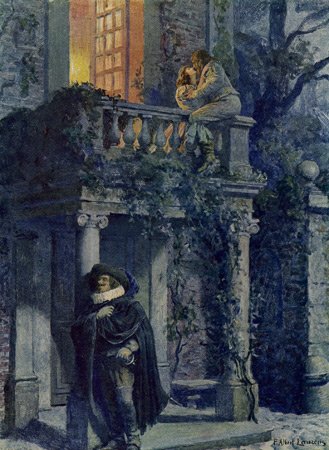
    I hope you’ll join me as these musical Cyranos emerge from the shadow of Roxane’s balcony, on “French Connections,” this Sunday night at 10:00 EDT, on WWFM – The Classical Network and wwfm.org.

  • Kipling’s Muse Koechlin & Martinu

    Kipling’s Muse Koechlin & Martinu

    Many composers have been inspired by the writings of Rudyard Kipling, but few more so than Charles Koechlin.

    Koechlin is probably better recognized these days as the orchestrator who assisted Fauré and Debussy than for any of his own music. He was fascinated by the movies and wrote works inspired by a number of cinematic celebrities. This yielded, among other things, his “Seven Stars Symphony,” with movements dedicated to Douglas Fairbanks, Charlie Chaplin and others. The figure he most adored is the now largely-forgotten actress Lillian Harvey, who he admired from afar and honored with a number of compositions.

    In addition, Koechlin was an amateur astronomer and an accomplished photographer. He became quite the athlete, in order to keep up his strength after a youthful brush with tuberculosis. As I know I’ve pointed out before, he also had one of the most enviable beards in all of classical music.

    Like Percy Grainger, Koechlin harbored a lifelong affection for Kipling’s “The Jungle Book,” and returned to the subject often throughout his career – beginning with some song settings in 1899 and running through the symphonic poem “The Bandar-Log,” completed in 1940.

    This Sunday night on “The Lost Chord,” we’ll hear his symphonic poem, “The Law of the Jungle.” Then we’ll turn to the ballet, “The Butterfly that Stamped,” by the Czech composer Bohuslav Martinu.

    Like Koechlin, Martinu was prolific by anyone’s standards. And like Koechlin there is so much Martinu nobody has ever heard. In addition to six symphonies, which at least get some play, he wrote concertos of every stripe, as well as 15 operas, a large body of orchestral, chamber, vocal and instrumental works, and – believe it or not – 14 ballets.

    “The Butterfly that Stamped” was inspired by a tale from Kipling’s “Just So Stories.”

    Get ready to go wild! It’s a Kipling double-bill. Join me for “Kipling Coupling” – this Sunday night at 10:00 EDT, on WWFM – The Classical Network and wwfm.org.

Tag Cloud

Aaron Copland (92) Beethoven (95) Composer (114) Film Music (120) Film Score (143) Film Scores (255) Halloween (94) John Williams (185) KWAX (229) Leonard Bernstein (100) Marlboro Music Festival (125) Movie Music (135) Opera (198) Philadelphia Orchestra (88) Picture Perfect (174) Princeton Symphony Orchestra (106) Radio (87) Ralph Vaughan Williams (85) Ross Amico (244) Roy's Tie-Dye Sci-Fi Corner (290) The Classical Network (101) The Lost Chord (268) Vaughan Williams (103) WPRB (396) WWFM (881)

DON’T MISS A BEAT

Receive a weekly digest every Sunday at noon by signing up here


RECENT POSTS