Many composers have been inspired by the writings of Rudyard Kipling, but few more so than Charles Koechlin.
Koechlin is probably better recognized these days as the orchestrator who assisted Fauré and Debussy than for any of his own music. He was fascinated by the movies and wrote works inspired by a number of cinematic celebrities. This yielded, among other things, his “Seven Stars Symphony,” with movements dedicated to Douglas Fairbanks, Charlie Chaplin and others. The figure he most adored is the now largely-forgotten actress Lillian Harvey, who he admired from afar and honored with a number of compositions.
In addition, Koechlin was an amateur astronomer and an accomplished photographer. He became quite the athlete, in order to keep up his strength after a youthful brush with tuberculosis. As I know I’ve pointed out before, he also had one of the most enviable beards in all of classical music.
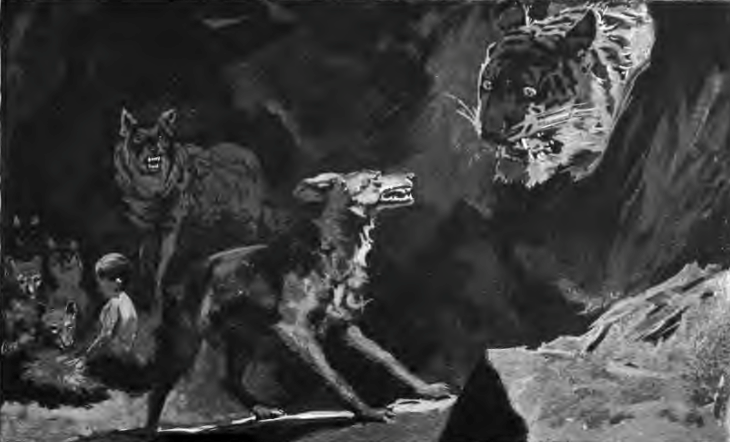
Like Percy Grainger, Koechlin harbored a lifelong affection for Kipling’s “The Jungle Book,” and returned to the subject often throughout his career – beginning with some song settings in 1899 and running through the symphonic poem “The Bandar-Log,” completed in 1940.
This Sunday night on “The Lost Chord,” we’ll hear his symphonic poem, “The Law of the Jungle.” Then we’ll turn to the ballet, “The Butterfly that Stamped,” by the Czech composer Bohuslav Martinu.
Like Koechlin, Martinu was prolific by anyone’s standards. And like Koechlin there is so much Martinu nobody has ever heard. In addition to six symphonies, which at least get some play, he wrote concertos of every stripe, as well as 15 operas, a large body of orchestral, chamber, vocal and instrumental works, and – believe it or not – 14 ballets.
“The Butterfly that Stamped” was inspired by a tale from Kipling’s “Just So Stories.”
Get ready to go wild! It’s a Kipling double-bill. Join me for “Kipling Coupling” – this Sunday night at 10:00 EDT, on WWFM – The Classical Network and wwfm.org.
Leave a Reply