This week on “Picture Perfect,” I invite you to get lost! It’s all music from movies about lost worlds and forgotten civilizations.
While the concept of the “Lost World” dates at least as far back as Plato’s Atlantis, it wasn’t until the Victorian Era that the idea really blossomed in the public consciousness. At the time, of course, lost civilizations were genuinely being discovered – which might help explain, in part, the incredible success of “King Solomon’s Mines.” The author, H. Rider Haggard, wrote the book on a bet that he could churn out an adventure story half as good as Robert Louis Stevenson’s “Treasure Island,” which had been published two years earlier.
“King Solomon’s Mines” became the literary sensation of 1885. Its protagonist, Allan Quatermain, is a direct ancestor of Indiana Jones. The book inspired reams of sequels and at least five film adaptations.
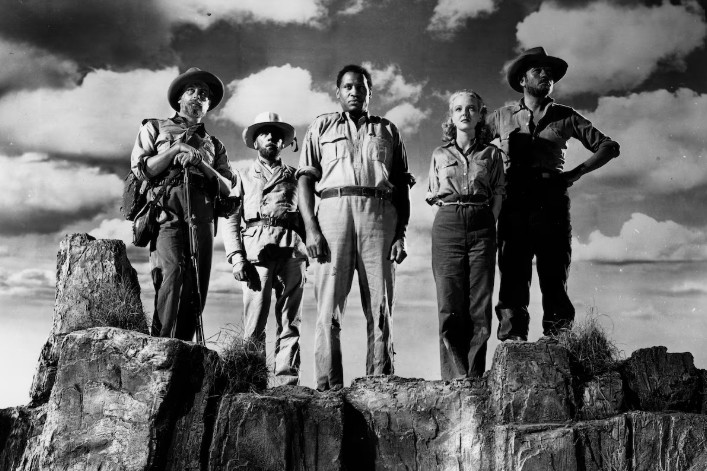
The two best known starred Stewart Granger, in 1950, and Paul Robeson, in 1937. Robeson, who played Umbopa, a king in disguise, received top billing. The score was by Mischa Spoliansky.
Haggard achieved another “Lost World” hit with “She,” first issued in book form in 1887 – another adventure about Europeans in Africa, who meet a seemingly immortal white queen known as the all-powerful She, or She-Who-Must-Be-Obeyed.
“She” has been adapted to film six times. The 1965 version starred Ursula Andress, Peter Cushing, and Christopher Lee. The music was by Hammer Studios house composer, James Bernard. It’s nice to hear Bernard, who mostly wrote horror scores for the likes of Dracula and Frankenstein, provide something a little more nuanced for a change.
Rudyard Kipling’s “The Man Who Would Be King,” published in 1888, was clearly influenced by the writings of Haggard. In this case, two British adventurers in India strike out for a remote corner of Afghanistan to set themselves up as kings. The story was made into one of the great adventure films of the 1970s, directed by John Huston, and starring Sean Connery and Michael Caine. That Christopher Plummer appears as Kipling himself is only icing on the cake. Maurice Jarre wrote the rousing score.
Finally, James Hilton’s “Lost Horizon,” published in 1933, imagines Shangri-La, a Utopian society nestled in a sheltered valley somewhere in the mountains of Tibet. A British diplomat is one of a handful of passengers who survives a plane crash to be taken into the lamasery.
“Lost Horizon” was made into a film twice. The less said about the 1973 version, a musical with songs by Burt Bacharach, the better. Frank Capra directed the classic 1937 version, which starred Ronald Colman, Jane Wyatt, and outstanding character actors of the day, people like Edward Everett Horton, Thomas Mitchell, Sam Jaffe, and H.B. Warner.
The score, Dimitri Tiomkin’s first major contribution, was also one of his most ambitious. Seldom was it so obvious that he had studied at the St. Petersburg Conservatory under Alexander Glazunov.
I hope you’ll lose yourself in music for lost civilizations this week, on “Picture Perfect,” music for the movies, now in syndication on KWAX Classical Oregon!
——-
Clip and save the start times for all three of my recorded shows:
PICTURE PERFECT, the movie music show – Friday at 8:00 PM EDT/5:00 PM PDT
SWEETNESS AND LIGHT, the light music program – Saturday at 11:00 AM EDT/8:00 AM PDT
THE LOST CHORD, unusual and neglected rep – Saturday at 7:00 PM EDT/4:00 PM PDT
Stream them, wherever you are, at the link!
https://kwax.uoregon.edu
——-
PHOTO: Paul Robeson headlines “King Solomon’s Mines”
Tag: Rudyard Kipling
-
Kipling’s Classical Connection
Many composers have been inspired by the writings of Rudyard Kipling, but few more so than Charles Koechlin.
Koechlin is probably better recognized these days as the orchestrator who assisted Fauré and Debussy than for any of his own music. He was fascinated by the movies and wrote works inspired by a number of cinematic celebrities. This yielded, among other things, his “Seven Stars Symphony,” with movements dedicated to Douglas Fairbanks, Charlie Chaplin and others. The figure he most adored is the now largely-forgotten actress Lillian Harvey, whom he admired from afar and honored with a number of compositions.
In addition, Koechlin was an amateur astronomer and an accomplished photographer. He became quite the athlete, in order to keep up his strength after a youthful brush with tuberculosis. As I know I’ve pointed out before, he also had one of the most enviable beards in all of classical music.
Like Percy Grainger, Koechlin harbored a lifelong affection for Kipling’s “The Jungle Book,” and returned to the subject often throughout his career – beginning with some song settings in 1899 and running through the symphonic poem “The Bandar-Log,” completed in 1940.
This week on “The Lost Chord,” we’ll hear his symphonic poem, “The Law of the Jungle.” Then we’ll turn to the ballet, “The Butterfly that Stamped,” by the Czech composer Bohuslav Martinů.
Like Koechlin, Martinů was prolific by anyone’s standards. And like Koechlin there is so much Martinů nobody has ever heard. In addition to six symphonies, which at least get some play, he wrote concertos of every stripe, as well as 15 operas, a large body of orchestral, chamber, vocal and instrumental works, and – believe it or not – 14 ballets.
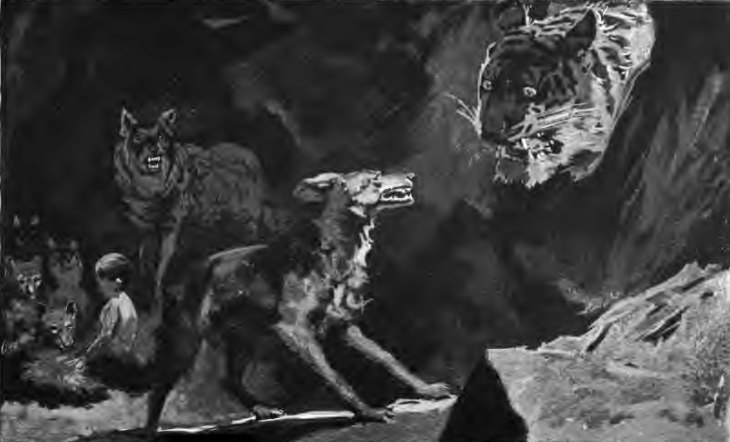
“The Butterfly that Stamped” was inspired by a tale from Kipling’s “Just So Stories.”
Get ready to go wild! It’s a Kipling double-bill. Join me for “Kipling Coupling,” on “The Lost Chord,” now in syndication on KWAX, the radio station of the University of Oregon!
Clip and save the start times for all three of my recorded shows:
PICTURE PERFECT, the movie music show – Friday at 8:00 PM EDT/5:00 PM PDT
SWEETNESS AND LIGHT, the light music program – Saturday at 11:00 AM EDT/8:00 AM PDT
THE LOST CHORD, unusual and neglected rep – Saturday at 7:00 PM EDT/4:00 PM PDT
Stream them, wherever you are, at the link!
A reminder that there will be lots more Martinů at this year’s Bard Music Festival, “Martinů and His World,” to be held at Bard College in Annandale-on-Hudson, NY, August 8-10 and 14-17. Take a gander at the complete schedule here:
Fisher Center at Bard
-
Kipling’s Muse Koechlin & Martinu
Many composers have been inspired by the writings of Rudyard Kipling, but few more so than Charles Koechlin.
Koechlin is probably better recognized these days as the orchestrator who assisted Fauré and Debussy than for any of his own music. He was fascinated by the movies and wrote works inspired by a number of cinematic celebrities. This yielded, among other things, his “Seven Stars Symphony,” with movements dedicated to Douglas Fairbanks, Charlie Chaplin and others. The figure he most adored is the now largely-forgotten actress Lillian Harvey, who he admired from afar and honored with a number of compositions.
In addition, Koechlin was an amateur astronomer and an accomplished photographer. He became quite the athlete, in order to keep up his strength after a youthful brush with tuberculosis. As I know I’ve pointed out before, he also had one of the most enviable beards in all of classical music.
Like Percy Grainger, Koechlin harbored a lifelong affection for Kipling’s “The Jungle Book,” and returned to the subject often throughout his career – beginning with some song settings in 1899 and running through the symphonic poem “The Bandar-Log,” completed in 1940.
This Sunday night on “The Lost Chord,” we’ll hear his symphonic poem, “The Law of the Jungle.” Then we’ll turn to the ballet, “The Butterfly that Stamped,” by the Czech composer Bohuslav Martinu.
Like Koechlin, Martinu was prolific by anyone’s standards. And like Koechlin there is so much Martinu nobody has ever heard. In addition to six symphonies, which at least get some play, he wrote concertos of every stripe, as well as 15 operas, a large body of orchestral, chamber, vocal and instrumental works, and – believe it or not – 14 ballets.
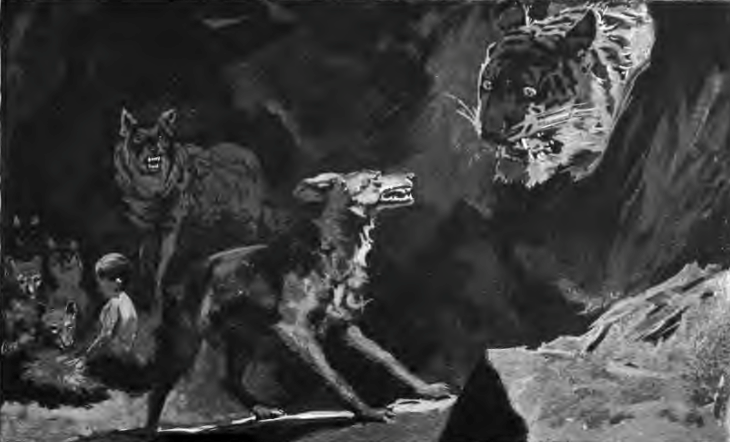
“The Butterfly that Stamped” was inspired by a tale from Kipling’s “Just So Stories.”
Get ready to go wild! It’s a Kipling double-bill. Join me for “Kipling Coupling” – this Sunday night at 10:00 EDT, on WWFM – The Classical Network and wwfm.org.
-
Kipling’s Muse Koechlin & Martinu
Many composers have been inspired by the writings of Rudyard Kipling, but few more so than Charles Koechlin.
Koechlin is probably better recognized these days as the orchestrator who assisted Fauré and Debussy than for any of his own music. He was fascinated by the movies and wrote works inspired by a number of cinematic celebrities. This yielded, among other things, his “Seven Stars Symphony,” with movements dedicated to Douglas Fairbanks, Charlie Chaplin and others. The figure he most adored is the now largely-forgotten actress Lillian Harvey, who he admired from afar and honored with a number of compositions.
In addition, Koechlin was an amateur astronomer and an accomplished photographer. He became quite the athlete, in order to keep up his strength after a youthful brush with tuberculosis. As I know I’ve pointed out before, he also had one of the most enviable beards in all of classical music.
Like Percy Grainger, Koechlin harbored a lifelong affection for Kipling’s “The Jungle Book,” and returned to the subject often throughout his career – beginning with some song settings in 1899 and running through the symphonic poem “The Bandar-Log,” completed in 1940.
This Sunday night on “The Lost Chord,” we’ll hear his symphonic poem, “The Law of the Jungle.” Then we’ll turn to the ballet, “The Butterfly that Stamped,” by the Czech composer Bohuslav Martinu.
Like Koechlin, Martinu was prolific by anyone’s standards. And like Koechlin there is so much Martinu nobody has ever heard. In addition to six symphonies, which at least get some play, he wrote concertos of every stripe, as well as 15 operas, a large body of orchestral, chamber, vocal and instrumental works, and – believe it or not – 14 ballets.
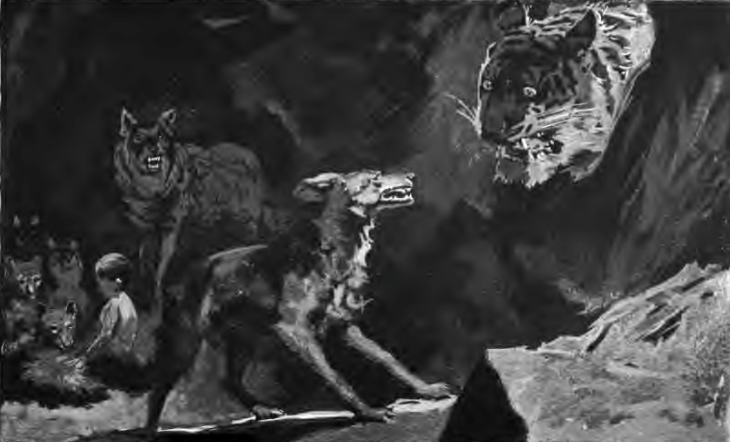
“The Butterfly that Stamped” was inspired by a tale from Kipling’s “Just So Stories.”
Get ready to go wild! It’s a Kipling double-bill. Join me for “Kipling Coupling” – this Sunday night at 10:00 EDT, on WWFM – The Classical Network and wwfm.org.
Tag Cloud
Aaron Copland (94) Beethoven (95) Composer (114) Film Music (152) Film Score (143) Film Scores (255) Halloween (102) John Williams (198) KWAX (233) Leonard Bernstein (105) Marlboro Music Festival (125) Movie Music (167) Mozart (91) Opera (215) Philadelphia Orchestra (90) Picture Perfect (174) Princeton Symphony Orchestra (110) Radio (90) Ross Amico (244) Roy's Tie-Dye Sci-Fi Corner (290) The Classical Network (101) The Lost Chord (269) Vaughan Williams (107) WPRB (397) WWFM (881)