Grab a second cup of coffee and join me, if you haven’t already. It’s a morning of spooky classics, as we look ahead to Hallowe’en.
Among our tricks and treats will be recordings of Boris Karloff and Christopher Lee, revered for their onscreen personifications of classic movie monsters. Karloff will narrate Prokofiev’s “Peter and the Wolf” – you need to tune in if only to hear how he relishes his final line, giving it a delightfully macabre spin – and Lee will prove himself a quick-change artist in his portrayal of all the characters (including the Princess!) in Igor Stravinsky’s take on the Faust legend, “The Soldier’s Tale.”
It’s a steady diet of jack o’lanterns and candy corn until 11:00 EDT, on WPRB 103.3 FM and at wprb.com.
James Bernard’s music for “The Devil Rides Out” will be one of four scores that we’ll be sampling as part of a Christopher Lee tribute on “Picture Perfect,” this evening at 6 ET, with a repeat tomorrow morning at 6. You can listen to it then, or save it for later, after it’s posted as a webcast, at http://www.wwfm.org.
Well, as you undoubtedly know by now, the great Christopher Lee died on June 7, at the age of 93. This week on “Picture Perfect” – after making allowances for the 40th anniversary of “Jaws” and the observance of Father’s Day – we finally get around to honoring him, with music from four of his well-over-200 features.
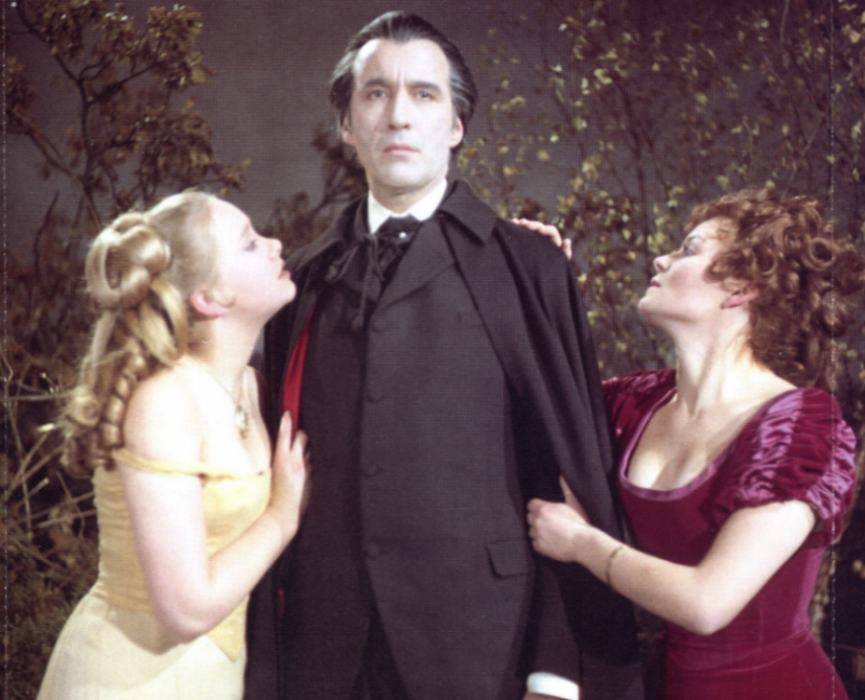
Lee, of course, is best remembered for his work in a number of lurid horror classics produced by Hammer Films. Of these, his portrayal of Count Dracula is justifiably celebrated. “Taste the Blood of Dracula” (1970) may not have been the strongest installment in the series, since it barely had any reason to be a vampire movie (the Count avenges one of his servants who dies at at the hands of thrill-seeking gentlemen); but it could be argued that it had the strongest music, by Hammer house composer James Bernard.
Though Lee could never truly be said to have gone out of fashion, he experienced a remarkable late-career resurgence, becoming part of Tim Burton’s repertory company, giving a lovely turn as a bookseller in Martin Scorsese’s “Hugo,” and playing Count Dooku in the otherwise execrable “Star Wars” prequels – which almost succeed in making Peter Jackson’s “The Lord of the Rings” movies look good by comparison. Lee plays the power-hungry Saruman the White, who raises Orcs from muck and makes Gandalf spin on his ear like Curly Howard. Peter Jackson being Peter Jackson, he even managed to work Saruman into his heavily-padded screen adaptations of “The Hobbit.” We’ll be listening to music from the second “Rings” film, “The Two Towers” (2002) in which Saruman has to deal with irascible walking trees roused by his environmental crimes.
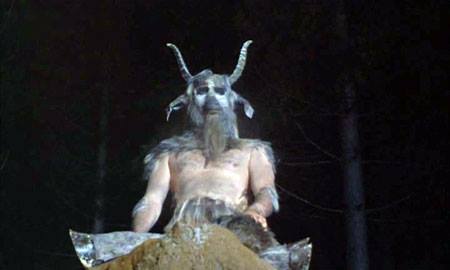
“The Wicker Man” (1973) has to be one of the bleakest movies ever made, with an absolutely unforgettable ending. Lee plays one of his most disturbing roles as Lord Summerisle, who cheerily presides over legions of antlered mummers in his squash-colored turtleneck and blazer, while Britt Ekland haunts police officer Edward Woodward’s fever dreams. Paul Giovanni wrote the whacked out, folk-inflected score.
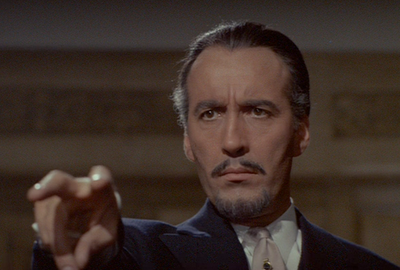
My favorite Lee role has to be that of the aristocratic occultist, the Duc de Richelieu, who combats the forces of darkness in “The Devil Rides Out” (1968). Lee takes it all very seriously – knit-browed, goateed and stentorian – even as he confronts the Goat of Mendes (“The devil himself!”). The villain, a black magician by the name of Mocata, is played by Charles Gray of James Bond and “Rocky Horror” fame. Richard Matheson’s screenplay is far superior to the Dennis Wheatley’s novel – or maybe Lee just makes it seem so. Again, the music is by James Bernard.
I hope you’ll join me, as we remember Christopher Lee, on “Picture Perfect,” music for the movies, this Friday evening at 6 ET, with a repeat Saturday morning at 6; or that you’ll listen to it later as a webcast, at http://www.wwfm.org.
PLEASE NOTE: A tribute to the late James Horner will follow, on July 3 and 4.
Christopher Lee, who died on Sunday – but whose passing was only just announced today (in order to allow time for the notification of family) – was a lifelong opera lover. In fact, in his autobiography, “Lord of Misrule” (previously released as “Tall, Dark and Gruesome”), he relates how he relished a stint in Scandinavia early in his career, since it gave him the opportunity to steal away with a regional opera company.
On the recommendation of Jussi Björling, he auditioned for the Swedish Opera, and was accepted, but unfortunately he could not afford the training.
He liked to claim his singing talent was genetic. His great grandparents founded the first opera company in Australia.
In recent years, he stated his one regret in life was that he had not pursued singing professionally. But then he added philosophically that if he had, he most certainly would have had to give it up years ago, whereas as an actor, he just kept right on going.
Opportunities to hear Lee employ his singing voice in film are sadly rare. Here’s a clip from 1970:
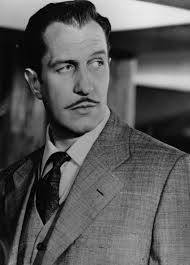
What are the odds of two horror icons being born on the same day? It’s like Jascha Heifetz and Fritz Kreisler sharing a birthday (February 2), or Ferruccio Busoni and Sergei Rachmaninoff (April 1). Today is the birthday of both Vincent Price (1911-1993) and Christopher Lee (born 1922).
Though he’d been a professional actor since the 1930s (he appeared as Sir Walter Raleigh in “The Private Lives of Elizabeth and Essex,” with Bette Davis and Errol Flynn, in 1939), Price settled into the horror genre in the 1950s, with films like “House of Wax,” “The Fly,” “The House on Haunted Hill,” and “The Tingler.”
In the 1960s, he became closely associated with Roger Corman, appearing in a series of films loosely inspired by the stories of Edgar Allan Poe.
Of course, he turned in great performances in a number of extra-genre classics, such as “Laura,” “The Baron of Arizona,” and the rib-tickling “Champagne for Caesar,” but he will always be remembered as Prince Prospero, Dr. Phibes and the narrator on Michael Jackson’s “Thriller.”
He was an actor blessed with campy self-awareness (though he could dial it down when required), and he was quick to capitalize on both his image and his indelible voice.
Though he too has played a broad range of roles over the course of a career which has spanned more than six decades, Christopher Lee will always be linked to the Hammer Studios horror explosion of the 1950s and ‘60s. Younger fans will recognize him as Count Dooku, from the even more horrid “Star Wars” prequel trilogy, and as the turncoat wizard Saruman, in Peter Jackson’s self-indulgent “The Lord of the Rings.”
When Lee determined to become an actor, his plan was to model himself on Conrad Veidt, the German Expressionist icon who had created Cesare the Somnambulist in “The Cabinet of Doctor Caligari” and later played a string of refined though despicable Nazis – notably Major Strasser in “Casablanca” – in Warner Brothers films of the 1940s.
Lee’s imposing stature and bass-baritone voice make him a natural for screen villainy – though some of my favorite Lee roles are heroic (for instance, that of the Duke de Richelieu, the gentleman occultist who matches wits with a band of Satanists in “The Devil Rides Out”).
Thankfully, at 92, Lee is still very much with us, with recent appearances in “The Hobbit,” Martin Scorsese’s “Hugo,” and Tim Burton’s “Alice in Wonderland.”
Fun fact: it had at one point been Lee’s ambition to become an opera singer. In fact, it was Jussi Björling who recommended Lee audition for the Swedish Opera. Lee did just that and was accepted. Unfortunately, he was unable to afford the training, but whenever he filmed in Scandinavia, he made it a point to go slumming with Swedish amateur companies under an assumed name.
His singing talent has been sinfully underutilized on film, though he does get to belt out a couple of numbers in “The Return of Captain Invincible,” also starring Alan Arkin. The film, with songs by the composer and lyricist of “The Rocky Horror Picture Show,” was widely panned.
Happy birthday, Vincent Price and Christopher Lee!
Lee in “The Return of Captain Invincible:”
Price playing Mendelssohn’s “The War March of the Priests” in “The Abominable Dr. Phibes:”