A “Christmas” piece I look forward listening to every year is “Karolju” by American composer Christopher Rouse (1949-2019).
It really has very little to do with authentic Christmas, when you get right down to it. Rather, Rouse deliberately attempts to emulate the spirit of Old World midwinter celebrations. The music is multicultural, alluding to a number of classical music favorites, such as “Carmina Burana,” “The Nutcracker,” and “Greensleeves” (which I know is a folk tune, but I’m going with “classical” because of the Vaughan Williams association).
The texts themselves are equally eclectic, as the composer assembles words and phrases related to Christmas in various languages, though he concedes that if they were translated into English they wouldn’t come out making a lot of coherent sense. Rather, again, it is the spirit of the words and their sounds that inspired.
Even the name “Karolju” is nonsense. Rouse wanted “carol” in the title, but he changed the “c” to a “k” and added the “ju” at the end, just to give it an Old European flavor.
The different sections are related to Latin, Swedish, French, Spanish, Russian, Czech, German, and Italian.
The work was commissioned by the Baltimore Symphony Orchestra in 1989 and dedicated to Rouse’s daughter, who was about to celebrate her first Christmas. It certainly does make a festive noise!
On this first day of winter, I hope you’ll enjoy “Karolju” by Christopher Rouse.
Tag: Christopher Rouse
-

Midwinter “Karolju” Makes a Festive Noise
-

Happy Festivus Airing Grievances with Karolju
December 23rd. Happy Festivus! Let the airing of grievances begin.
Then enjoy this postmodern, pandenominational, mid-winter concoction by Christopher Rouse, called “Karolju.” The title, fabricated by the composer, puts an Old World spin on the word “carol.” The “ju” is merely because, as Rouse states, he happens to like words that end in “u.” The text is totally pidgin, and the musical allusions to Orff, Tchaikovsky, Vaughan Williams, Prokofiev, and others only add to the fun.
Limber up for the feats of strength, then gather ‘round the Festivus pole. Truly, it’s a Festivus for the rest of us.
-

Festivus Karolju a Holiday Music Treat
December 23rd. Happy Festivus! Let the airing of grievances begin.
Then enjoy this postmodern, pandenominational, mid-winter concoction by Christopher Rouse, called “Karolju.” The title, fabricated by the composer, puts an Old World spin on the word “carol.” The “ju” is merely because, as Rouse states, he happens to like words that end in “u.” The text is totally pidgin, and the musical allusions to Orff, Tchaikovsky, Vaughan Williams, Prokofiev, and others only add to the fun.
To hear the complete piece, click the link and allow the videos to play continuously. (There are eleven movements.) The album also contains Witold Lutoslawski’s “Polish Christmas Carols” and Joaquin Rodrigo’s “Retablo de Navidad.”
-
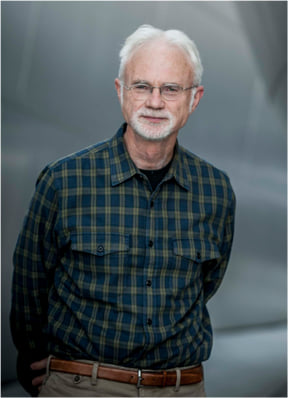
Presidents Day: Adams, Rouse & Albert
It could hardly be more appropriate to celebrate a composer named John Adams on Presidents Day.
No relation to our second president, Adams is considered by some to be America’s preeminent living composer. He emerged from the haze of minimalism to become the most versatile and substantial of early proponents of the style. In 2003, he was awarded the Pulitzer Prize for Music for his 9/11 memorial “On the Transmigration of Souls.”
Personally I’ve always been divided on Adams’ music. Some of it I find fun (“Short Ride in a Fast Machine,” “Grand Pianola Music”), some of it I find to be quite good (“Shaker Loops,” “El Niño”), some of it I find to be boring, clumsy, or downright embarrassing (“Harmonium,” for as much as I could stand of “Doctor Atomic”).
I concede that these are subjective evaluations. There’s no arguing against Adams’ influence or his standing. Happy birthday to John Adams on his 74th birthday, and congratulations on his long-term success.
“Shaker Loops” (1983):
Also born on this date was Christopher Rouse. Rouse was the recipient of a Pulitzer Prize for his Trombone Concerto in 1993. In 2002, his guitar concerto, “Concerto de Gaudi,” was recognized with a Grammy, in the category of Best Classical Contemporary Composition. He served as composer-in-residence with the New York Philharmonic from 2012 to 2015, the year of his death at the age of 70. His music was quoted extensively in a 2017 documentary, “The Devil and Father Amorth,” by “The Exorcist” director William Friedkin.
Rouse’s Flute Concerto (1993) is dedicated to the memory of James Bulger, a toddler murdered by two ten year-old boys.
Finally, on this American holiday, I also wanted to acknowledge composer Stephen Albert, whose birthday anniversary I noticed on February 6, but didn’t get around to sharing news of it here.
Albert would have been 80 years-old this year. His Symphony No. 1, “RiverRun,” earned him the Pulitzer Prize in 1985. Sadly, he was killed in an automobile accident seven years later. In 1995, a posthumous Grammy was awarded, for Best Classical Contemporary Composition, for Yo-Yo Ma’s recording of Albert’s Cello Concerto.My favorite Albert piece also happens to be his last, the Symphony No. 2 (1992), commissioned by the New York Philharmonic. It doesn’t hurt that it reminds me of Sibelius and, at times, even John Williams. The orchestration was left incomplete at the time of Albert’s death, so it fell to Sebastian Currier to supply the finishing touches. It’s a beautiful, valedictory work, from a composer who, at 51, left us in his prime.
Interestingly, the slow movement of Rouse’s own Symphony No. 2 is dedicated to Albert’s memory.
All worthwhile music to enjoy on this Presidents Day.
Clockwise from left: John Adams, Christopher Rouse, and Stephen Albert (with Mstislav Rostropovich)
-
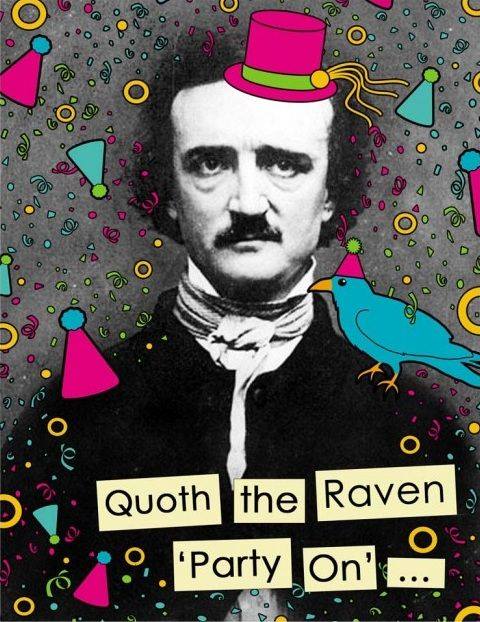
Happy Birthday Poe Masque of Red Death & Music
Today is the birthday of Edgar Allan Poe.
Poe’s classic story, “The Masque of the Red Death,” has particular resonance in this time of COVID, with the seemingly blithe indifference of a decadent ruler to the sufferings of his people. Instead, Prince Prospero invites those loyal to him to party on the brink of disaster, with inevitably horrifying consequences. The hour of reckoning arrives as the ebony clock strikes twelve.
The story, first published in 1842, has inspired a number of pieces of music over the years, but this one is new to me. Christopher Rouse was composer-in-residence with the New York Philharmonic when he wrote “Prospero’s Rooms” in 2011. Rouse was the recipient of the Pulitzer Prize for Music for his Trombone Concerto in 1993. He died in 2015 at the age of 70.
Rouse talks about the story and his music:
My favorite setting of the piece is still the “Conte fantastique” (“Fantastic Tale”) by Debussy associate André Caplet:
Raise a glass of amontillado to Edgar Allan Poe.
Tag Cloud
Aaron Copland (92) Beethoven (94) Composer (114) Film Music (117) Film Score (143) Film Scores (255) Halloween (94) John Williams (185) KWAX (228) Leonard Bernstein (99) Marlboro Music Festival (125) Movie Music (132) Opera (197) Philadelphia Orchestra (86) Picture Perfect (174) Princeton Symphony Orchestra (106) Radio (86) Ralph Vaughan Williams (85) Ross Amico (244) Roy's Tie-Dye Sci-Fi Corner (290) The Classical Network (101) The Lost Chord (268) Vaughan Williams (101) WPRB (396) WWFM (881)