Tag: Christus

  • Where Have All the Oratorios Gone?

    Where Have All the Oratorios Gone?

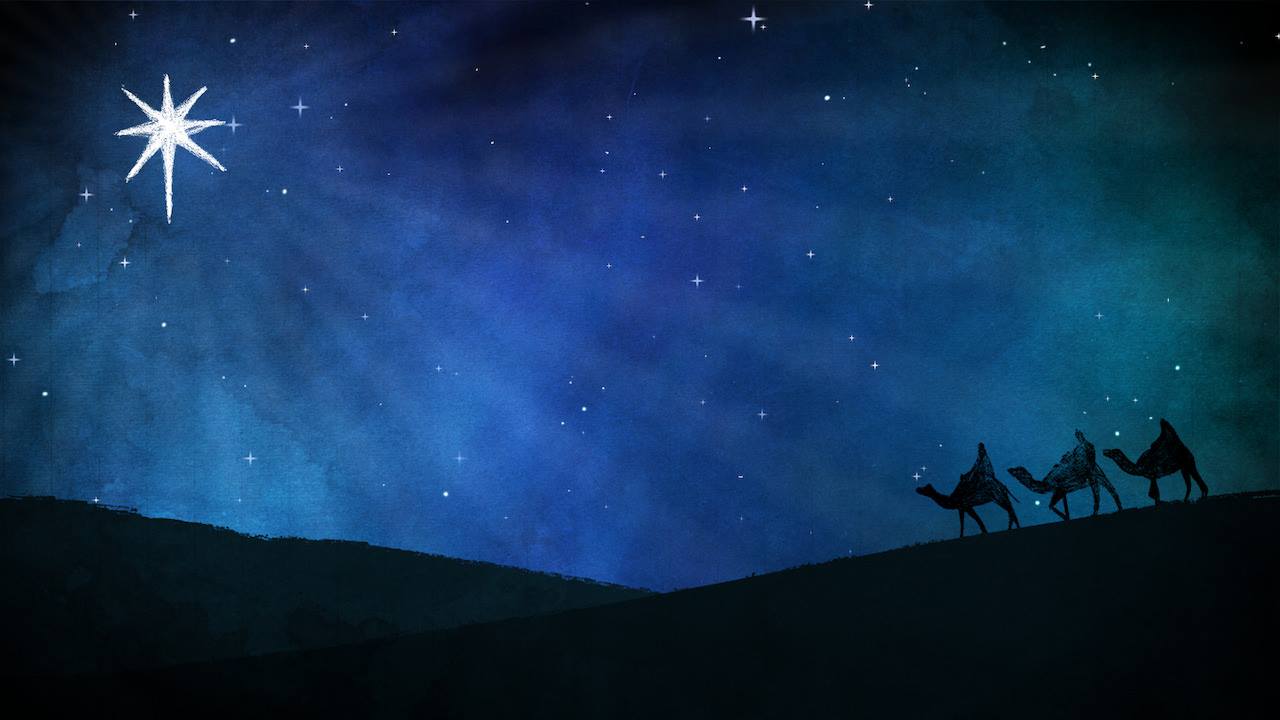
    It’s January 6. Epiphany. The Feast of the Three Kings. The Christian feast day that marks, among other things, the Magi’s visit to the Christ Child.

    I know I’ve lamented in the past about how so many of the magnificent classical music Christmas works of the past millennium have disappeared from the airwaves. Of the larger works, it seems only Handel’s “Messiah,” Bach’s “Christmas Oratorio,” and of course Tchaikovsky’s (secular) “The Nutcracker” are guaranteed.

    Thankfully, I have an enormous record library with at least three shelves devoted exclusively to Christmas music, so I’m able to work through a lot of the forgotten and/or neglected masterworks at home and in the car. But it’s not the same as somebody else pulling and programming the music and knowing that I am part of a unified listening community.

    I feel the same way when watching a movie that is broadcast, or actually in a theater, as opposed to playing it from my own collection or streaming it. It’s wonderful to live in an age when these things are possible, but it is just not the same as knowing that I’m a part of a communal experience. (That said, I’m certainly not going to watch “It’s a Wonderful Life” on network television with a thousand commercial breaks!)

    I must give a tip of the Ebenezer Scrooge top hat to Yle Klassinen in Helsinki for airing Franz Liszt’s “Christus” complete. That station really is a marvel. Oh how I love my digital radio! Of course, I don’t speak Finnish, but I can usually make out the performers when they are announced and the playlists are posted online.

    Anyway, I had already listened to the Dorati recording on my own time. I’ve done so for many, many years. It’s enriched my Christmases ever since I first encountered it on the air, broadcast on Philadelphia’s late, lamented WFLN, back in the early 1980s. Time was, when serious classical Christmas music commenced with Advent. Yes, it was leavened with gems like Victor Hely-Hutchinson’s “Carol Symphony,” the aforementioned “Nutcracker,” and Leopold Mozart’s “A Musical Sleigh-Ride,” in the hilarious recording by the Eduard Melkus Ensemble that includes the neighing horses and barking dogs. I looked forward to hearing that every year. I snapped it up when it was reissued on compact disc and have included it in my own broadcasts for decades.

    Those works have their place, but it seems the serious, large-scale choral works are all going away. Commerce, secularism, short attention spans, ignorance, and grievance all work against the simple enjoyment of a lot of masterful music. It’s much safer to play three-minute arrangements of familiar Christmas carols. Over and over and over again.

    I grant you, three hours is a lot of radio real estate to give up to Liszt’s “Christus.” But can’t anyone even carve out an hour for Vaughan Williams’ “Hodie?” I suppose I should just shut up and be thankful that RVW’s “Fantasia on Christmas Carols” is still in rotation.

    I count myself very fortunate to have been able to share “Christus” many times over the years. I know I’ve played it complete on WXLV, WPRB, and WWFM – once I even preempted the weekly opera broadcast – and excerpted the purely orchestral movements even more frequently, working them into my morning and afternoon playlists. “The March of the Three Holy Kings” is a high point.

    I am sorry I don’t have a stretch of air-time during which to play it for you now, but the entire Dorati recording of the oratorio (one of three recordings I own, and still my preferred) is posted on YouTube.

    If you want to cut to the chase, here’s the march of the Kings.

    Think it sounds an awful lot like Wagner’s Wotan? There’s likely a reason for that. I’ve posted about it before.

    https://rossamico.com/2023/01/06/three-kings-music-mystery-wagner-liszt/

    I try to be sensitive to other people’s faiths and belief systems, and frankly I am no zealot, but when it comes to music, I am very much a fundamentalist. This is not about pushing Christianity down anyone’s throat as much as a desire to preserve and disseminate the sublime Christmas works, many of them by top-tier composers, presented, like the classic movies on TCM, complete and uncut.

    Of course, most of these recordings I’ve played over the years are from my own collection. I was very fortunate to be able to do my own programming, for hours at a time, for the better part of three decades. In such a situation, when a radio host loses his platform, countless hours of repertoire go with him. You’ll still get “Messiah,” but you probably won’t get Josef Rheinberger’s “The Star of Bethlehem” (here posted as a playlist of nine separate videos).

    Rutland Boughton’s “Bethlehem” is another Christmas work I’m crazy about. You won’t find it in many record libraries at radio stations here in the U.S. But I’ve got it, and I’ve aired it. Rather than write about it again, I’ll refer you to one of my teasers from a few years ago.

    https://rossamico.com/2017/12/21/merlin-in-bethlehem-a-christmas-music-surprise/

    If you’re a Vaughan Williams fan, I think you will find it delightful. For a long time, I was unable to share any of the audio online, due to Hyperion Records’ justifiably Draconian practice of not allowing any its recordings on YouTube. But the company is now in other hands, so here it is, finally, as a playlist – albeit with the tracks posted separately, so prepare to have to skip an occasional ad.

    On the Twelfth Day of Christmas, your resident classical music curmudgeon gives to you… three Christmas oratorios. If I splurged for a dozen, this post would be four times the length!

    Have yourself a merry “Little Christmas!”

    ——–

    IMAGE: Detail from Edward Burne-Jones’ “Adoration of the Magi”

  • Liszt’s Christus: A Christmas Oratorio You Need to Hear

    Liszt’s Christus: A Christmas Oratorio You Need to Hear

    I try to make it a point to listen to Franz Liszt’s oratorio, “Christus,” every year, whether I need it or not.

    It helps that I love Liszt, of course. Not all of his music – anyone as prolific as he was had to turn out a clunker now and then – but he was such a noble, well-intentioned guy. I’ve been a hardcore admirer ever since I read Alan Walker’s biography, now probably 23 years ago. The years, they do fly by! And having heard so many performances of his Piano Sonata certainly hasn’t hurt.

    Liszt was one of the most original musical thinkers of the 19th century. In fact, I’d go as far as to say that, after Beethoven, he was possibly the most influential musician of the 1800s. There was likely no composer who didn’t at some point make a decision to follow or to react against him.

    He was, admittedly, hit-and-miss. Liszt wrote a lot of astonishingly wonderful music, but also a fair amount that might charitably be described as slightly embarrassing. Arguably, he was more successful as a philosopher and an innovator than he was as a consistent executor of his ideas. Richard Wagner (who became Liszt’s son-in-law), to name only one, would have been a very different composer without Liszt. And we all know how influential Wagner was.

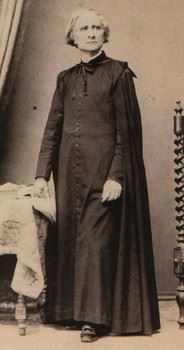
    Liszt’s flamboyance was legendary, but his reputation in that regard stemmed mostly from the overwhelming sensations he conjured in recital, and his audiences’ hysterical responses to them. He could also be introverted, thoughtful, and pious. He was so pious, in fact, that at a point he wound up taking minor orders and living in a cell in Rome, where he was known as the Abbé Liszt. His sacred works were not mere posturing.

    The magnificent “Christus” is an oratorio in three parts – spanning some three hours in length – that is really part oratorio, part loose collection of symphonic poems. Part I, the Christmas portion, contains two purely orchestral movements, which together comprise about half an hour. The concluding “March of the Three Holy Kings” is a corker. It’s also interesting in that one of the movement’s main themes is nearly identical to Wagner’s motif for Wotan. Which came first? Both “Christus” and “Das Rheingold” were written at just about the same time.

    I know it’s an extraordinarily busy time of year, but do yourself a favor: send your regrets to the office holiday party, seclude yourself in a quiet place with no distractions (a sofa, with the Christmas lights on, would do nicely), and marvel at this ambitious, romantic music.

    I own three recordings of the piece, and this one, conducted by Antal Dorati, is far and away the most satisfying.

    If you find you just can’t get enough, there’s also Liszt’s “Christmas Tree Suite.” Liszt dedicated the work to his granddaughter, Daniela von Bülow. Some of the early movements are reflections on familiar carols (including “Adeste Fideles,” in yet another evocation of the Three Holy Kings), but as the suite progresses, Liszt just kind of dreamily wanders off into the future the way only Liszt can. The suite was first performed on Christmas Day, 1881. All the movement titles are listed below the video at the link.

    What else is there to say, but Merry Liszt-mas!


    Liszt takes the cloth (left); Jesus gets frankincense and myrrh

  • Three Kings Music Mystery Wagner Liszt

    Three Kings Music Mystery Wagner Liszt

    January 6. Feast of the Epiphany. The Three Kings are here to make sure you’re taking down your Christmas decorations!

    Part One (i.e. the Christmas portion) of Franz Liszt’s ambitious, three-hour oratorio “Christus” contains two purely orchestral movements, which together comprise roughly half an hour. The concluding “March of the Three Holy Kings” is a corker.

    It’s interesting to note that one of the movement’s main themes is nearly identical to the motif for Valhalla, castle of the gods, from the Ring Cycle, composed by Liszt’s son-in-law, Richard Wagner. Which came first? Both “Christus” and “Das Rheingold” were written around the same time.

    I imagine Liszt and Wagner showing up at the office holiday party wearing identical sweaters. AWK-ward!!

    Three Kings

    Valhalla

  • Beyond the 20 Carols Christmas Music Rediscovered

    Beyond the 20 Carols Christmas Music Rediscovered

    A thousand years of Christmas music, and every year it’s just about reduced to the same old 20 carols.

    If, like me, you are frustrated by the countless regurgitations of “Hark! The Herald Angels Sing” for every conceivable vocal and instrumental combination, plugged in perfunctorily to a well-worn playlist, between Mozart and Dvořák, join me tomorrow morning on WPRB, when we’ll go completely anti-commercial, anti-ADD, and completely balls-out Christmas.

    Our featured work will be Franz Liszt’s “Christus,” three hours of hardcore Jesus music, of which only the first 70 minutes or so deal with the Christmas story. In fact, Part III contains a 40-minute setting of the “Stabat Mater dolorosa.” You won’t hear that at the shopping mall.

    Okay, so maybe it’s not for everyone, but the music does have its rewards. Forget “Jingle Bell Rock.” Brew yourself something strong, send your regrets to the office “holiday party,” if you can, and seclude your wittily antlered self in a quiet place with no distractions to marvel at this massive oratorio-cum-symphonic poem.

    Due to the length of this extraordinary work (almost exactly three hours, played uninterrupted), it will begin in the 7:00 hour. That will insure that the piece will have run its course by the time Will Constantine Jr. rolls in at 11:00 for “Blues, Bop and Beyond.”

    If you want jolly, call up Rankin-Bass. For the rest of you, join me tomorrow morning from 6 to 11 EST, on WPRB 103.3 FM and at wprb.com. Santa’s not the only one who’s got a little Liszt, on Classic Ross Amico.

  • Franz Liszt’s Merry Liszt-mas on WPRB

    Franz Liszt’s Merry Liszt-mas on WPRB

    Merry Liszt-mas!

    When you tune in to WPRB this morning, don’t be surprised to find the bulk of the programming devoted to the music of Franz Liszt. Liszt, who had a diabolical reputation both as a pianist and as a ladies’ man, was also quite devout. In fact, he eventually took minor orders and lived in a monastic cell in Rome, where he was known as the Abbé Liszt.

    We’ll be listening to his three-hour oratorio/symphonic poem, “Christus,” celebrating the life and legacy of Christ. However, Liszt being Liszt, there are times when he wholly dispenses with the frankincense and myrrh and piles on the tragic heroism. The “March of the Three Holy Kings” which concludes Part I sounds like it could have been lifted by Richard Wagner (and it may have been) for use in his “Ring” cycle. The music was written contemporaneously with Wagner’s “Das Rheingold.”

    As time allows, we’ll also enjoy Liszt’s “Christmas Tree Suite.” Liszt dedicated the work to his granddaughter, Daniela von Bülow, the daughter of Cosima Liszt and conductor Hans von Bülow. Some of the early movements are reflections on familiar carols, but as the suite progresses, the movements become dreamier and more introspective. The work was first performed on Christmas Day in 1881, the day Daniela’s birthday was always observed, though she was actually born on Christmas Eve.

    “Christus” begins at 7:00 EST. With luck, the “Christmas Tree Suite” will begin at 10:25. Join me at 6:00 for a bit of musical tailgating and some more selections for Christmas.

    Liszt-en all morning, in fact, from 6 to 11:00 on WPRB 103.3 FM and at wprb.com. They call me the Abbé Normal, on Classic Ross Amico.

Tag Cloud

Aaron Copland (92) Beethoven (94) Composer (114) Film Music (116) Film Score (143) Film Scores (255) Halloween (94) John Williams (185) KWAX (228) Leonard Bernstein (99) Marlboro Music Festival (125) Movie Music (131) Opera (197) Philadelphia Orchestra (86) Picture Perfect (174) Princeton Symphony Orchestra (106) Radio (86) Ralph Vaughan Williams (85) Ross Amico (244) Roy's Tie-Dye Sci-Fi Corner (290) The Classical Network (101) The Lost Chord (268) Vaughan Williams (99) WPRB (396) WWFM (881)

DON’T MISS A BEAT

Receive a weekly digest every Sunday at noon by signing up here


RECENT POSTS