With the grand cacophony of Christmas still fresh in everyone’s ears, I thought it only appropriate this week on “Picture Perfect” to focus on music from movies about toys.
Without giving anything away, in the unlikely event you don’t already know the story’s big pay-off, “Citizen Kane” (1941) is a film flanked by toys. There’s even a snow globe in the film’s opening montage. A certain memory of Kane’s childhood provides a poignant glimpse of the larger-than-life newspaper magnate’s lost innocence. “Kane” is often cited as one of the greatest films ever made. Orson Welles triumphed in his debut as writer-director-star, even if, ultimately, his creation proved to be a bottle rocket that blew up in his face. The film also marked the Hollywood debut of composer Bernard Herrmann.
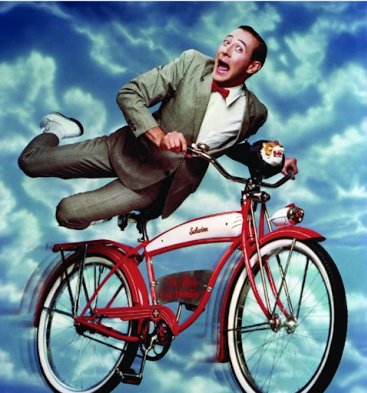
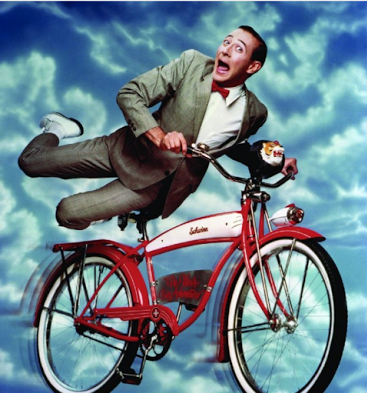
I’m not sure that “Pee-wee’s Big Adventure” (1985) could be described as the “Citizen Kane” of the ‘80s, exactly, but this endearingly goofy sojourn into the surreal does revolve around the recovery of a lost toy, as Pee-wee, the eternal boy, determines to make his way to “the basement of the Alamo” in an attempt to reclaim his stolen bike. The feature was director Tim Burton’s first. It was also his first collaboration with Danny Elfman, who is obviously a big fan of Nino Rota.
The husband-and-wife team of Charles and Ray Eames are better known for their contributions to architecture, industrial design, and manufacturing, but they also made short films. “Toccata for Toy Trains” (1957) was inspired by the Eames’ passion for vintage toys. The score was provided by their go-to composer, Elmer Bernstein.
Finally, in acknowledgement of the greatest toy series of our day, we’ll conclude with music from “Toy Story” (1995), the first full-length computer animated feature. The quality of the film propelled it beyond mere novelty status into the realm of instant classic, and the beloved “Toy Story” franchise has raked in hundreds of millions of dollars. Early on, it was decided by the filmmakers that they did not want “Toy Story” to be a musical, but that songs could be used to underline its emotional content. Randy Newman has provided the music for all the “Toy Story” films so far. He was recognized with an Academy Award for his work on “Toy Story 3,” for the song, “We Belong Together.”
Keep popping those aspirin. It’s “Toys Everywhere” this week, on “Picture Perfect,” music for the movies, now in syndication on KWAX, the radio station of the University of Oregon!
Clip and save the start times for all three of my recorded shows:
PICTURE PERFECT, the movie music show – Friday at 8:00 PM EST/5:00 PM PST
SWEETNESS AND LIGHT, the light music program – ALL NEW! – Saturday at 11:00 AM EST/8:00 AM PST
THE LOST CHORD, unusual and neglected rep – Saturday at 7:00 PM EST/4:00 PM PST
With the grand cacophony of Christmas still fresh in everyone’s ears, I thought it only appropriate this week on “Picture Perfect” to focus on music from movies about toys.
Without giving anything away, in the unlikely event you don’t already know the story’s big pay-off, “Citizen Kane” (1941) is a film flanked by toys. There’s even a snow globe in the film’s opening montage. A certain memory of Kane’s childhood provides a poignant glimpse of the larger-than-life newspaper magnate’s lost innocence. “Kane” is often cited as one of the greatest films ever made. Orson Welles triumphed in his debut as writer-director-star, even if, ultimately, his creation proved to be a bottle rocket that blew up in his face. The film also marked the Hollywood debut of composer Bernard Herrmann.
I’m not sure that “Pee-Wee’s Big Adventure” (1985) could be described as the “Citizen Kane” of the ‘80s, exactly, but this endearingly goofy sojourn into the surreal does revolve around the recovery of a lost toy, as Pee-Wee, the eternal boy, determines to make his way to “the basement of the Alamo” in an attempt to reclaim his stolen bike. The feature was director Tim Burton’s first. It was also his first collaboration with Danny Elfman, who is obviously a big fan of Nino Rota.
The husband-and-wife team of Charles and Ray Eames are better known for their contributions to architecture, industrial design, and manufacturing, but they also made short films. “Toccata for Toy Trains” (1957) was inspired by the Eames’ passion for vintage toys. The score was provided by their go-to composer, Elmer Bernstein.
Finally, in acknowledgement of the greatest toy series of our day, we’ll conclude with music from “Toy Story” (1995), the first full-length computer animated feature. The quality of the film propelled it beyond mere novelty status into the realm of instant classic, and the beloved “Toy Story” franchise has raked in hundreds of millions of dollars. Early on, it was decided by the filmmakers that they did not want “Toy Story” to be a musical, but that songs could be used to underline its emotional content. Randy Newman has provided the music for all the “Toy Story” films so far. He was recognized with an Academy Award for his work on “Toy Story 3,” for the song, “We Belong Together.”
Keep popping those aspirin. It’s “Toys Everywhere” this week, on “Picture Perfect,” music for the movies, this Saturday evening at 6:00 EST, on WWFM – The Classical Network and wwfm.org.
Remember that sequence in “Citizen Kane,” when newspaper magnate Charles Foster Kane forces his second wife, Susan Alexander – who has a modest singing voice at best – into the title role of a grand opera, with disastrous results?
In the original script, the opera was to have been Jules Massenet’s “Thaïs.” If I hadn’t read that in Steven C. Smith’s biography of Bernard Herrmann, “A Heart at Fire’s Center,” I may never have learned of the interesting connection between Massenet and William Randolph Hearst. Hearst, of course – as was well-known even at the time – was the model for Orson Welles’ Kane. Much of what I share below is not in the Herrmann biography. I was spurred to search for it myself. It is certainly worth noting.
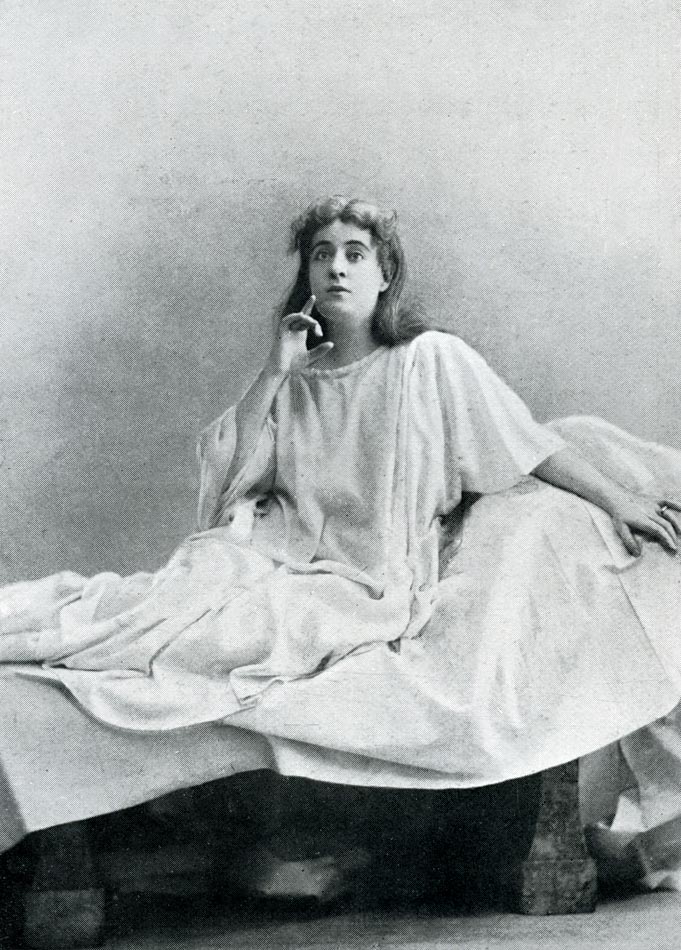
Massenet, like Hearst, had been infatuated with Sibyl Sanderson. Sanderson, unlike her shrill, overpowered “Kane” counterpart, was a naturally gifted singer, for whom Massenet created not only “Thaïs,” but also “Esclarmonde.” “Esclarmonde” provided her with what was then the highest note in all of opera, G above high C, preceded by an F# – which Sanderson nailed with aplomb. Saint-Saëns was also a fan, and likewise crafted one of his own operas, “Phryné,” specifically for her. She must have made for a very convincing courtesan! When asked her favorite role, Sanderson quipped, “The one that allows me to display the most decolletage.”
In her teenage years, Sanderson and Hearst had been engaged. If I had read about this before in one of the many Welles’ biographies, I had forgotten it, probably since, at the time, for me, Sanderson would have been just another name. Sanderson’s father was a politician and lawyer who became Chief Justice of the Supreme Court of California and, later, a legal advisor to the South Pacific Railroad. Hearst was still quite young, and Sanderson’s father opposed the match. Not long after, she was sent to Europe to study at the Paris Conservatory. Allegedly, Hearst continued to carry the torch for her for many years. Later, following her father’s death, she was joined by her sisters and her mother to live as expatriate socialites.
As a singer, Sanderson achieved popularity in her adopted city and throughout Europe – Puccini wanted her to sing “Tosca” – however, elsewhere, at London’s Covent Garden and New York’s Metropolitan Opera, she received lackluster reviews. She developed difficulties with her voice and eventually wound up marrying a Cuban sugar heir. At some point along the way, she began the sad descent into alcoholism, exacerbated by depression, and she was claimed by pneumonia at only 38.
I’ll have to refresh my memory about Welles and find out exactly how he may have learned of this particular Hearst connection. Surely, there were no tell-all biographies, at the time, of the man who threatened to crush everyone involved with the making of “Citizen Kane.”
As the shooting of the Susan Alexander sequence approached, Welles, characteristically, improvised. He decided it might be better for Herrmann to bypass Massenet’s existing opera, and perhaps create his own, more concise, Oriental pastiche.
In a telegram to Herrmann, Welles wrote, “Opera sequence is early in shooting, so must have fully orchestrated recorded track before shooting. Susie sings as curtain goes up in first act, and I believe there is no opera of importance where soprano leads with chin like this. Therefore suggest it be original… by you – Mary Garden vehicle… Suggest ‘Salammbo’ which gives us phony production scene of Ancient Rome and Carthage, and Susie can dress like Grand Opera neoclassic courtesan… Here is chance for you to do something witty and amusing – and now is the time for you to do it.”
The Mary Garden reference is also of interest, since she happened to be a Sanderson pupil. Sanderson introduced Garden to Massenet, who wrote his opera “Chérubin” for her. Garden also created the role of Debussy’s Mélisande. Later, she became director of the Chicago Opera Association and staged the world premiere, in Chicago, of Prokofiev’s “The Love for Three Oranges.”
The result of Welles’ telegram was the wholly fictional “Salammbô.” The faux opera’s subject is presumably lifted from Flaubert, but Welles’ associate, John Houseman, later revealed that the text was a pidgin creation he had cobbled together from Racine’s “Athalie” and “Phèdre.” As he put it, the result was fairly implausible and unintelligible, but dramatically effective.
Can you imagine any team of filmmakers today being capable of pulling this off? Welles and Herrmann were in their 20s; Houseman, a little older, was in his late 30s. The creation of this scene would have required a familiarity not only with the conventions of French opera of the Belle Époque (much more superficially parodied in Andrew Lloyd Webber’s “The Phantom of the Opera”), but also the literature that inspired it. Granted, all of the participants were much closer to that world, but they all would have had to have been very well-read and possessed very discerning ears to be able to effectively emulate the genre.
Here it is as it was seen in the film (with perhaps also a hint of “Salome”):
Opera 1
Opera 2
Already, back in the day, Eileen Farrell showed what could be done with it, when Herrmann conducted the aria on CBS radio. Check out this uncovered gem, which I had never heard in this performance until only a few minutes ago:
Kiri Te Kanawa goes for the D6 high note (optional) on this album of Herrmann hits, originally set down for RCA Records in the 1970s:
Incidentally, RCA’s Classic Film Scores series, a landmark of its kind – with individual volumes devoted to the music of Korngold, Steiner, Waxman, Rózsa, Newman, and Tiomkin, and a few additional ones devoted specifically to the films of Humphrey Bogart, Errol Flynn, and Bette Davis – has been reissued as a Sony box set. It’s the least expensive incarnation of the series so far. You won’t get the fancy packaging or the liner notes, but you will get hours of transporting music, in what are still the best performances of these scores available. And yes, Te Kanawa does sing Herrmann’s “Salammbô.” If you don’t already own these recordings, they are highly recommended.
That said, for audiophiles, a series of brand new remasterings of the original RCA material is quietly being undertaken by the Dutton/Vocalion label. So far, they have completed the volumes devoted to Tiomkin, Waxman, Herrmann, Rózsa, Flynn, and Bogart, with bonus tracks included from “Spectacular World of Fantastic Film Scores,” an addendum to the original RCA series, that, for some reason, is not included in the new Sony box. You can search here:
With the grand cacophony of Christmas still fresh in everyone’s ears, I thought it only appropriate this week on “Picture Perfect” to focus on music from movies about toys.
Without giving anything away, in the unlikely event you don’t already know the story’s big pay-off, “Citizen Kane” (1941) is a film flanked by toys. There’s even a snow globe in the film’s opening montage. A certain memory of Kane’s childhood provides a poignant glimpse of the larger-than-life newspaper magnate’s lost innocence. “Kane” is often cited as one of the greatest films ever made. Orson Welles triumphed in his debut as writer-director-star, even if, ultimately, his creation proved to be a bottle rocket that blew up in his face. The film also marked the Hollywood debut of composer Bernard Herrmann.
I’m not sure that “Pee-Wee’s Big Adventure” (1985) could be described as the “Citizen Kane” of the ‘80s, exactly, but this endearingly goofy sojourn into the surreal does revolve around the recovery of a lost toy, as Pee-Wee, the eternal boy, determines to make his way to “the basement of the Alamo” in an attempt to reclaim his stolen bike. The feature was director Tim Burton’s first. It was also his first collaboration with Danny Elfman, who is obviously a big fan of Nino Rota.
The husband-and-wife team of Charles and Ray Eames are better known for their contributions to architecture, industrial design, and manufacturing, but they also made short films. “Toccata for Toy Trains” (1957) was inspired by the Eames’ passion for vintage toys. The score was provided by their go-to composer, Elmer Bernstein.
Finally, in acknowledgement of the greatest toy series of our day, we’ll conclude with music from “Toy Story” (1995), the first full-length computer animated feature. The quality of the film propelled it beyond mere novelty status into the realm of instant classic, and the beloved “Toy Story” franchise has raked in hundreds of millions of dollars. Early on, it was decided by the filmmakers that they did not want “Toy Story” to be a musical, but that songs could be used to underline its emotional content. Randy Newman has provided the music for all the “Toy Story” films so far. He was recognized with an Academy Award for his work on “Toy Story 3,” for the song, “We Belong Together.”
Keep popping those aspirin. It’s “Toys Everywhere” this week, on “Picture Perfect,” music for the movies, this Friday evening at 6:00 EST, on WWFM – The Classical Network and wwfm.org.