Tag: Clara Schumann

  • Brahms’ “A German Requiem” on The Classical Network

    Brahms’ “A German Requiem” on The Classical Network

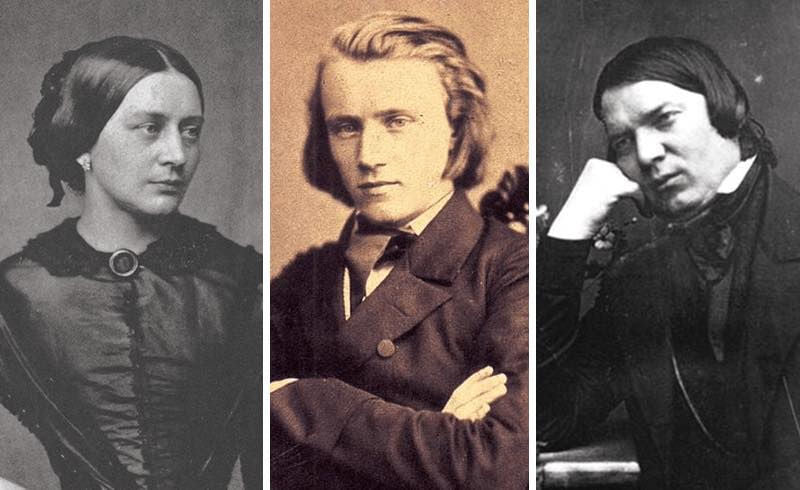
    Johannes Brahms had suffered a fair amount of loss at the time he embarked on his Requiem in 1865. His mother died in February of that year, and the death of his friend, Robert Schumann in 1856 also continued to resonate.

    On today’s Noontime Concert on The Classical Network, we’ll hear a performance of Brahms’ “Ein deutsches Requiem” by the New Jersey Master Chorale under the direction of William P. Gorton. Soprano Andrea Lauren Brown and baritone Timothy Renner will join organist Matt Smith and members of The Philadelphia Orchestra. The concert took place at Haddonfield United Methodist Church this past April.

    Brahms assembled the texts of the Requiem himself, eschewing the standardized Latin of the Roman Catholic Requiem Mass in favor of the vernacular German of the Luther Bible. He forgoes anything suggestive of terror, wrath, and hellfire, or even redemption through the sacrifice of Christ, to arrive at something more tender and humane. The modifications promote an atmosphere of solace and hope.

    Brahms may have titled his work “Ein deutsches Requiem” – “A German Requiem” – but there was nothing nationalistic intended by the designation. Rather he was suggesting something more direct and at the same time universal. In fact, he commented on one occasion that he would just as happily have called it “A Human Requiem.” The work is as much for the living, those who mourn, as it is for those who have passed.

    The second movement incorporates material composed as early as 1854, the year of Robert Schumann’s mental collapse and attempted suicide, when Brahms moved to Düsseldorf to be with Clara Schumann and her children. Brahms presented Clara with a four-hand piano version of the Requiem in 1866.

    Friday marks the 200th anniversary of Clara’s birth. We’ve been sampling some of her music during the course of my air shifts this month and celebrating the legacy of women composers in general. We’ll certainly continue in that vein this afternoon. Among today’s featured works will be the Piano Quintet No. 1 by Grazyna Bacewicz and the Violin Concerto of Margaret Brouwer.

    First, following close on the heels of the Requiem broadcast, we’ll enjoy a symphony dedicated to Brahms by his friend, Schumann student Albert Dietrich.

    I hope you’ll join me for “Ein deutsches Requiem” and more. In the end is our beginning, from 12 to 4 p.m. EDT, on WWFM – The Classical Network and wwfm.org.


    MÉNAGE À TRIPTYCH: Shoehorned between two Schumanns

  • Clara Schumann Bicentennial & Women Composers

    Clara Schumann Bicentennial & Women Composers

    Friday marks the bicentennial of the birth of Clara Schumann. Though her achievements as a pianist and a teacher outstripped her success as a composer, she, it must be remembered, was the product of a time when women did not receive the same advantages, in terms of education, opportunity, and acceptance, as their male counterparts.

    Be that as it may, Schumann proved to be a dynamo, caring for a family of eight children and a mentally ill husband, while earning the respect of her peers as a musician of impeccable taste and one of the outstanding keyboard interpreters of her day.

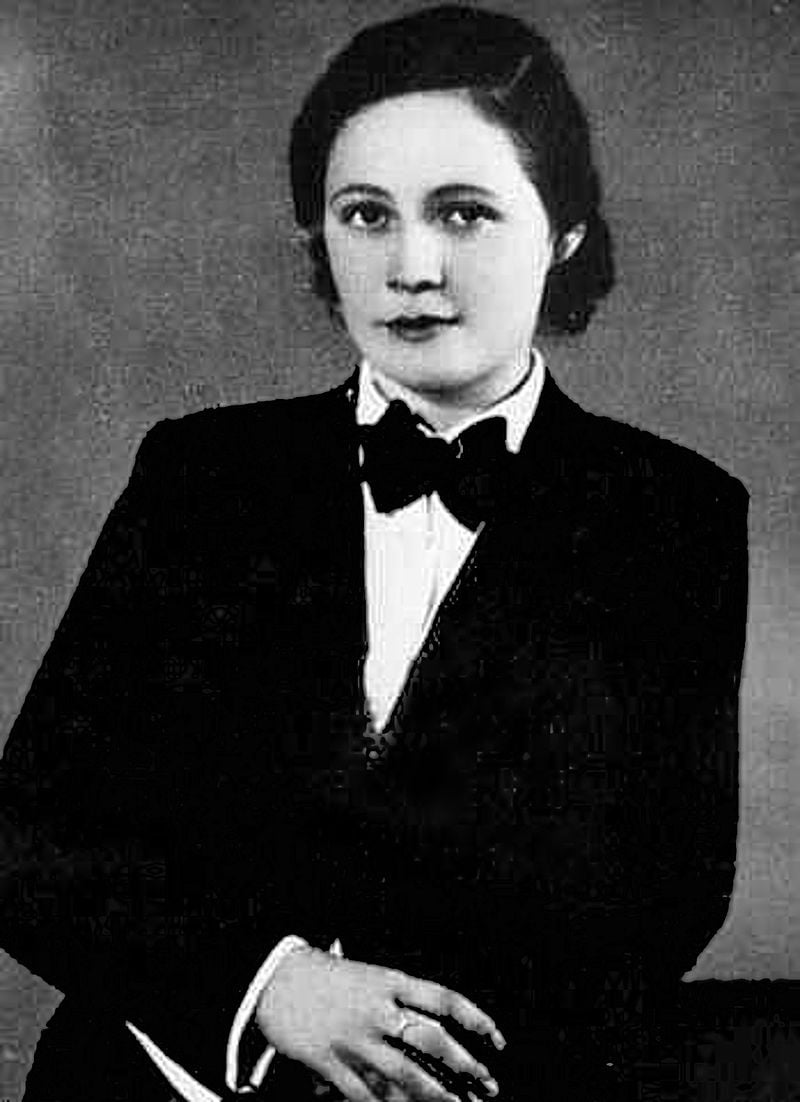
    To honor the contribution of women in music, I’ll be sharing recordings of works by female composers all month long, as part of my regularly scheduled air shifts. Tune in today to hear music by Vítězslava Kaprálová, Louise Talma, and Phyllis Tate.

    We’ll gain a little clarity for Clara, from 4 to 7 p.m. EDT, on WWFM – The Classical Network and wwfm.org.


    CLOCKWISE FROM LEFT: Vítězslava Kaprálová, Phyllis Tate and Louise Talma

  • Celebrating Women Composers

    Celebrating Women Composers

    September 13th marks the 200th anniversary of the birth of Clara Schumann. In celebration of this remarkable pianist, teacher, composer, wife, and mother of eight, I’ll be especially conscious of honoring the achievements of women in music all month long on The Classical Network, with works by female composers, ranging from the 12th century to the present.

    Of course, with few exceptions, women did not enjoy the same advantages as men, in terms of education and acceptance, so it is unlikely that many fulfilled their natural promise.

    Barbara Strozzi (1619-1677) and Francesca Caccini (1587-after 1641) were notable exceptions, at least to some extent.

    Today’s Noontime Concert on The Classical Network will be devoted to music by these two remarkable women. “Enchanting Voices: Music of Barbara Strozzi & Francesca Caccini” will be performed by the Canzonetta Duo, Elissa Edwards, soprano, and Richard Kolb, theorbo and archlute.

    The concert was presented on November 15, 2018, at St. Bartholomew’s Church, 325 Park Avenue, in Midtown Manhattan, where free concerts are held every Thursday at 1:15 p.m. The 2019-2020 season gets underway this Thursday, as The Vivaldi Project will perform a program of classical string trios.

    These concerts are made possible in part by Gotham Early Music Scene, or GEMS. GEMS is a non-profit corporation that supports and promotes artists and organizations in New York City devoted to Early Music. For more information and a look at GEMS’ events calendar, visit gemsny.org.

    Following today’s broadcast concert, stick around for an afternoon of works by musical women.

    Julia Wolfe was awarded the Pulitzer Prize for Music for “Anthracite Fields” in 2015. The oratorio, composed for the Bang on a Can All-Stars and the Mendelssohn Club Chorus, was given its premiere in Philadelphia the previous year. “Anthracite Fields” examines the plight of Northeastern Pennsylvania coal miners, a topic of particular interest to me, since my father’s father’s family labored in the mines of Pittston. The work was presented at the Roebling Wire Works in Trenton by Westminster Choir in 2017. On this day after Labor Day, we’ll hear a complete performance of the piece in its world premiere recording.

    We’ll also enjoy a very impressive Serenade in D – really more of a symphony – by composer and hell-raising suffragette Dame Ethel Smyth. Smyth served time in prison for putting out the windows of politicians who opposed a woman’s right to vote. When Sir Thomas Beecham went to visit her in jail, he found her conducting her associates through the bars of her window with a toothbrush as they sang “The March of the Women,” also composed by Smyth, while gathering for exercise in the prison courtyard.

    These women were nothing if not composed. Join me for musical contributions by women, all month long. They’ll punctuate my programming, beginning this afternoon from 12 to 4 p.m. EDT, on WWFM – The Classical Network and wwfm.org.


    CLOCKWISE FROM LEFT: Clara Schumann, Barbara Strozzi, Julia Wolfe, and Ethel Smyth (under arrest)

  • Woldemar Bargiel Clara Schumann’s Forgotten Brother

    Woldemar Bargiel Clara Schumann’s Forgotten Brother

    Today is the birthday of Woldemar Borgiel (1828-1897). Woldemar is not to be confused with He-Who-Must-Not-Be-Named from the “Harry Potter” series. Rather, he was the half-brother of Clara Schumann.

    His mother had been unhappily married to Clara’s father, Friedrich Wieck, who, judging from his role as the inflexible impediment to his daughter’s marriage to Robert Schumann, must have been a barrel of laughs.

    Woldemar, who was nine years younger than Clara, benefited from his brother-in-law’s advocacy. Schumann and Mendelssohn used their influence to gain him entrance into the Leipzig Conservatory. There, he studied with Ignaz Moscheles, Niels Wilhelm Gade and Julius Rietz.

    It was the Schumanns who arranged for the publication of some of Woldemar’s early works, including his Piano Trio No. 1. He would hold positions at several conservatories, the most prestigious of which was the Hochschule für Musik Berlin, where he taught for a good deal of his life. He also assisted Brahms as co-editor of complete editions of Schumann’s and Chopin’s works.

    Woldemar was not a prolific composer, but he was a reliable one. There is nothing to fear from saying his name.


    Bargiel’s Adagio for Cello and Orchestra: https://www.youtube.com/watch?v=Dg47SjRFVmo

  • Schumanns’ Forbidden Love Story & Musical Legacy

    Schumanns’ Forbidden Love Story & Musical Legacy

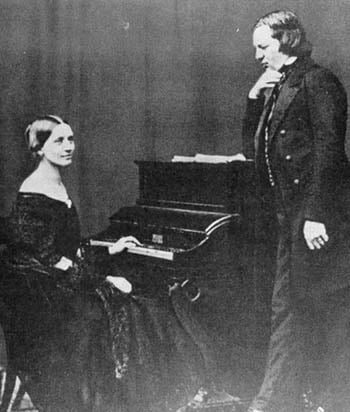
    On this date in 1840, the Schumanns finally got hitched. The couple had wanted to marry for years, but Clara’s father – Robert’s former teacher, Friedrich Wieck – bitterly opposed the match, so violently in fact that the matter landed everyone in court.

    At the time of their first meeting, Robert was 20 years-old and a live-in student at the Wiecks’. Clara was 11. Clearly circumstances were problematic. The minute Clara turned 18, she accepted Robert’s proposal of marriage. The elder Wieck declined to grant his permission, and the young couple was compelled to bring suit against him. In the end, the judge ruled in the lovers’ favor, and the two were at last able to wed – one day before Clara’s 21st birthday, at which point she would no longer have needed her father’s consent!

    Ah well. In the interim, after he had been tossed out of the house, Robert’s passion for Clara was sublimated into ardent love letters and bursts of creative energy. He composed reams of piano music at white heat up until the year of their marriage. Thereafter, he wrote for piano and orchestra, always with Clara in mind.

    The two maintained a joint diary, and the entries are frequently touching. The Schumanns, like any married couple, had their issues, but they clearly loved one another very much. They became one of the great power couples of their time, with Robert a composing dynamo and Clara one of the great concert pianists of her day. More than 20 years after Robert’s death, she became a professor at the Hoch Conservatory in Frankfurt. Her 61 year concert career played a huge role in molding public taste in so far as what we have come to expect, down to the present day, from a piano recital.

    Happy anniversary to the happy couple.


    Schumann’s “Widmung” (“Dedication”), written as a wedding present for Clara:

    Schumann’s love letters, read by Sting!

Tag Cloud

Aaron Copland (92) Beethoven (95) Composer (114) Film Music (120) Film Score (143) Film Scores (255) Halloween (94) John Williams (185) KWAX (229) Leonard Bernstein (100) Marlboro Music Festival (125) Movie Music (135) Opera (198) Philadelphia Orchestra (88) Picture Perfect (174) Princeton Symphony Orchestra (106) Radio (87) Ralph Vaughan Williams (85) Ross Amico (244) Roy's Tie-Dye Sci-Fi Corner (290) The Classical Network (101) The Lost Chord (268) Vaughan Williams (103) WPRB (396) WWFM (881)

DON’T MISS A BEAT

Receive a weekly digest every Sunday at noon by signing up here


RECENT POSTS