Tag: Composer Birthdays

  • Mendelssohn, Schubert, and Composer Birthdays

    Mendelssohn, Schubert, and Composer Birthdays

    Mozart’s birthday is always a signal to me that we are entering a season of great composer birthdays.

    Perhaps it is all coincidence, but for whatever reason, music history has arrayed itself in such a way that larger patterns can be discerned. Autumn is heavy with birthdays of significant American composers (Gershwin, Ives, Hanson, Copland, and Virgil Thomson, to name a few). Revered violinists Fritz Kreisler and Jascha Heifetz were born on the same day (February 2), as were venerated pianists Sergei Rachmaninoff and Ferruccio Busoni (April 1). Brahms and Tchaikovsky share a birthdate (May 7). So do two of the most prominent film composers, Max Steiner and Dimitri Tiomkin (May 10). After 34 years in radio, these natal serendipities are etched in my memory like tablets carved on Mount Sinai.

    Nonetheless, even as I anticipated the birthday of Franz Schubert (January 31), in my eagerness to pay tribute to Mario Lanza on the occasion of his centenary, I inadvertently let it slip by. Please forgive me, Schwammerl. Today, on the anniversary of the birth of Felix Mendelssohn (1809-1847), I hope to make amends.

    Mendelssohn, of course, was one of the most astonishing of musical prodigies. He composed his earliest masterpieces, the overture to “A Midsummer Night’s Dream” and the Octet for Strings in E-flat major, at the ages of 16 and 17 respectively. This is some of the “youngest” music in the entire repertoire. In their precocity and polish, both pieces are on a par with anything written by the teenaged Mozart.

    Of course, by then, Mendelssohn had already generated piles of manuscripts – dozens of works, including three piano quartets, a violin sonata, a piano sonata, a singspiel, songs and “Songs without Words,” twelve symphonies for strings, and his first symphony for full orchestra.

    And he would go on to write his “Italian” Symphony, his “Scottish” Symphony, the “Hebrides Overture,” the Violin Concerto in E minor, and the oratorio “Elijah,” all of which are still played in heavy rotation, both on radio and in the concert hall.

    As a conductor, there’s no question he was one of the most influential musicians in Europe, if not the world. For twelve years, he directed the Leipzig Gewandhaus Orchestra, many of whose players went on to distinction in their own right. His performances were especially admired for their precision. He also laid the groundwork for modern concerts in developing a musical “canon.”

    He gave important premieres of music by his contemporaries, while also reviving works of Mozart, Beethoven, and of course Johann Sebastian Bach. It was Mendelssohn who famously dusted off the “St. Matthew Passion,” reinvigorating Bach’s reputation.

    Another composer who benefited from Mendelssohn’s advocacy was Franz Schubert. In 1838, ten year’s after Schubert’s death, his brother, Ferdinand, shared an unpublished manuscript with Robert Schumann, during one of the latter’s visits to Vienna. Schumann returned to Leipzig with a copy of the piece, a Symphony in C major. Mendelssohn gave the symphony its first public performance in 1839.

    Schumann reviewed the concert in the Neue Zeitschrift für Musik, famously praising the work for its “heavenly length.” For this reason, and to distinguish it from an earlier, shorter Schubert symphony composed in the same key, it is usually identified as the “Great” C major.

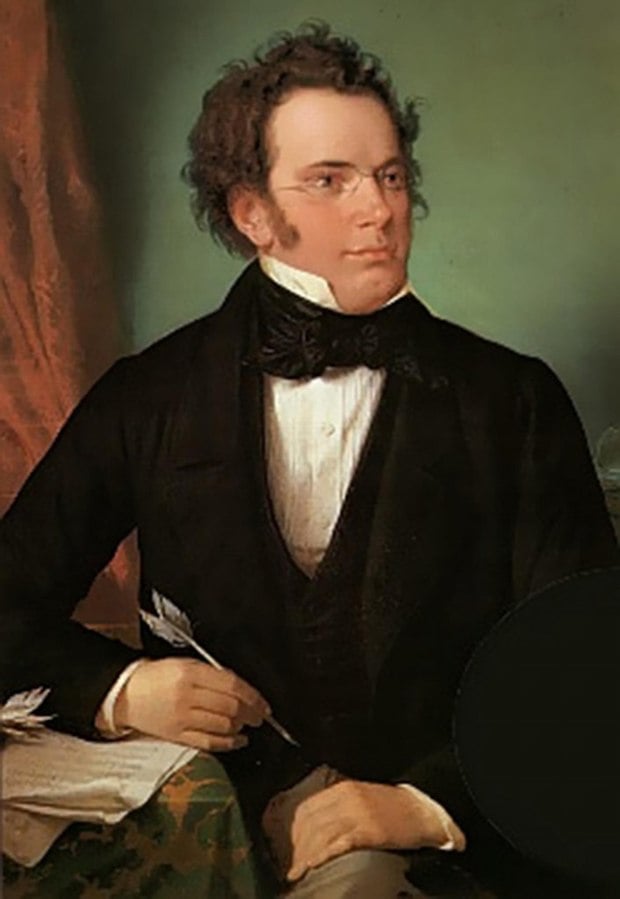
    Standing only five-foot-one, Schubert himself bore the nickname “Schwammerl” (“Little Mushroom”), bestowed upon him by his friends. Even a minute fungus, it would seem, is more than capable of creating something “Great.”

    Happy birthday, Felix Mendelssohn, and happy belated birthday, Franz Schubert.


    Mendelssohn, “Hebrides Overture”

    His first masterpiece, the Octet in E-flat major, composed at the age of 16:

    Live performance of Leonard Bernstein conducting Schubert’s Symphony No. 9 “Great”
    https://www.youtube.com/watch?v=hCuC8–m-98

  • Anton Reicha Beethoven’s Forgotten Friend

    Anton Reicha Beethoven’s Forgotten Friend

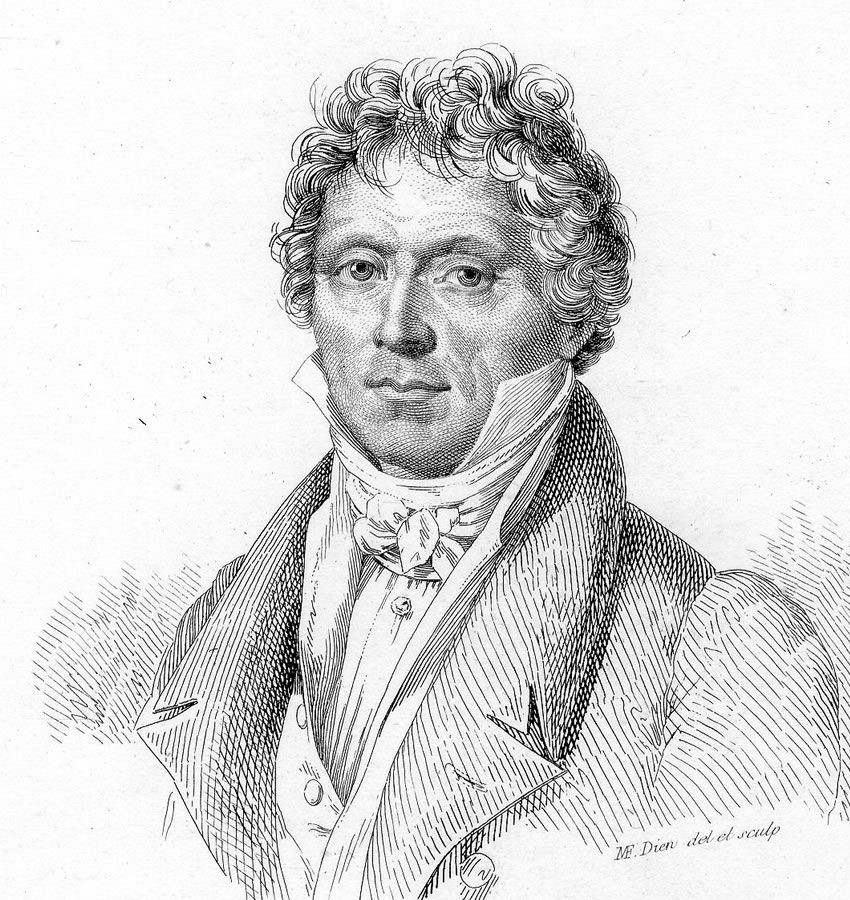
    He was a lifelong friend of Beethoven. They shared the same teachers and exchanged musical ideas. He taught Liszt, Berlioz, Franck, and Gounod. But, unless you happen to be a wind player, how many people really know the music of Anton Reicha? Perhaps a shade more than realize that today is his 250th birthday.

    Though he composed music in all genres – symphonies, concertos, operas, string quartets, choral music, vocal and instrumental works – Reicha is principally remembered, if at all, for his 25 wind quintets. Written in Paris between 1811 and 1820, the quintets came at a time when there was a dearth of good material for this particular configuration, so they were very successful. They also happen to comprise some of Reicha’s most traditional music.

    Earlier, during his years in Vienna – a time when he was closest to Beethoven – he espoused some pretty radical ideas, including polyrthyms, polytonality, and even microtones. These were innovations that would not make serious inroads in the world of classical music for over a hundred years.

    As the composer noted in his memoirs, “The number of works I finished in Vienna is astonishing. Once started, my verve and imagination were indefatigable. Ideas came to me so rapidly it was often difficult to set them down without losing some of them. I always had a great penchant for doing the unusual in composition. When writing in an original vein, my creative faculties and spirit seemed keener than when following the precepts of my predecessors.”

    Reicha was a prolific composer, whose music is full of novel ideas. His forward-looking string quartets influenced Beethoven – with whom, naturally, he shared many musical discussions – and Franz Schubert.

    Yet for some reason, he was often reluctant to publish. This led to the slapdash organization of his output, following his death, and lots of confusion, as pieces were lost, opus numbers were assigned willy-nilly, and some works were even counted more than once.

    So here we are, today, on Reicha’s 250th birthday, and the world is Beethoven-mad. I think his music deserves at least an occasional hearing. But you know how it is. Beethoven sells more tickets.

    It reminds me of the famous anecdote, related by Franz Liszt, in which he puckishly swapped trios by Beethoven and Johann Peter Pixis, presenting them opposite to the order in which they were advertised in the concert program. The audience reaction to the Pixis was stormy and enthusiastic, but when he came to perform the Beethoven, the response was tepid at best. It annoyed many in the hall when Liszt revealed the ruse.

    Reicha’s music is closer to Beethoven’s than is Pixis’. Get people in the chairs, and they will enjoy it.

    In the meantime, I’ll be sharing something by Reicha this afternoon, as I’ll also be observing the birthdays today of composers Richard Wetz and Frank Bridge, conductor Witold Rowicki, pianist Lazar Berman, and soprano Emma Kirkby.

    It will be music by Mozart and Schubert on tonight’s “Music from Marlboro,” at 6. That ought to sell some tickets. I hope you’ll join me from 4 to 7 p.m. EST, on WWFM – The Classical Network and wwfm.org.

  • Classical Music’s Birthday Shadows

    Classical Music’s Birthday Shadows

    As I am still sweeping up the crumbs from Mozart’s birthday cake, my thoughts light upon poor Edouard Lalo. Lalo was born on Mozart’s birthday in 1823. Chances are, if you were to stop by the Lalo residence on any January 27, you would find him sitting all alone with his party favors.

    This afternoon on The Classical Network, I thought we’d take a few hours to salute those who have lost classical music’s greatest popularity contests. In addition to Lalo, we’ll hear works by Modest Mussorgsky (born on Bach’s birthday, March 21, in 1839) and Zoltán Kodály (born on Beethoven’s birthday, December 16, in 1882) – all worthy composers, who have no hope of ever emerging from the shadows of Olympus.

    To fill in around the edges, we may also hear from Juan Crisóstomo Arriaga – described (facetiously?) as “The Spanish Mozart” – born February 27, 1806, François-Adrien Boieldieu, born December 16, 1775, and Rodion Shchedrin, born December 16, 1932.

    All were quite adept at their craft. Some were even historically important. Their only sins were not being Bach, Mozart or Beethoven – compounded by the fact that they happened to share their birthdays. Mediocrities everywhere, I absolve you!

    First, on today’s Noontime Concert, you’ll find nothing mediocre about flutist Carol Wincenc. She’s been delighting audiences with her musicianship for five decades. Among the composers with whom she has worked directly are Aaron Copland, Olivier Messiaen, and Philip Glass. She has also had music written specifically for her by Christopher Rouse, Henryk Górecki, Lukas Foss, Thea Musgrave, and Joan Tower.

    Wincenc’s 50th Anniversary Celebration took place at the Morgan Library and Museum on November 12. The program opened with Claude Debussy’s “Syrinx” for solo flute and included two world premieres – Wincenc commissions – by composers Jake Heggie and Pierre Jalbert. Heggie and Jalbert were on hand to offer commentary. Oh yeah, and there was also a flute quartet by MOZART!

    You’ll have a chance to hear this concert this afternoon. All in all, there’s much to celebrate, from 12 to 4 p.m. EST, on WWFM – The Classical Network and wwfm.org.

  • Marlboro Music Winds & Composer Birthdays

    This week on “Music from Marlboro,” we’re gone with the winds – woodwind instruments, that is. Tune in at 6 p.m. EDT for the Bassoon Quartet, Op. 40, No. 3, by Franz Danzi and the Quintet for Piano and Winds by Beethoven.

    For the remainder of the late afternoon, we’ll celebrate the birthdays today of composers Elisabetta Brusa, Mario Castelnuovo-Tedesco, Reginald De Koven, and Grigoras Dinicu, conductor Sixten Ehrling, and pianist Garrick Ohlsson.

    Hang on tight, from 4 to 7 p.m. EDT, on WWFM – The Classical Network and wwfm.org.

  • Classical Music Birthdays & Listener Appreciation

    Classical Music Birthdays & Listener Appreciation

    Unusually for me, I’ll have the conn this Thursday afternoon on The Classical Network. And what an assortment of birthdays to observe! Georges Auric, Jean Langlais, Michael Praetorius, Robert Fuchs, Friedrich Ernst Fesca, John Adams, Christopher Rouse, and Harold Arlen. Of course I’ll have a few other surprises along the way.

    Where else are you going to find an afternoon playlist made up of music by these composers? Remember, it’s all made possible because of listeners just like you.

    It’s Sustaining Member Appreciation Week at The Classical Network. I hope you will consider making a monthly commitment to the station in the form of an automatic charge to your credit card or bank account for whatever amount you decide. It could be $5, $10, $20 – you fix the amount. The donation will continue, once a month, until you tell us to stop. This will save us paperwork, it will save us man hours, and it will save us from losing revenue during the period after which a traditional, yearly membership will have lapsed. You can cancel or change your sustaining membership at any time.

    We also encourage those of you who are already sustaining members to consider bumping up to the next level. If you’re already committed to $5 a month, do you think you can bump it up to $10? I mean, you’ll be abstaining from something during Lent anyway. Think about it – for the price of a doughnut and a coffee, you could double a $5-a-month investment in The Classical Network. You’d be strengthening the classical music service you love – and it’s a lot less fattening (Shatner).

    Call us now at 1-888-232-1212, or visit our website at wwfm.org and click on the “We love our Sustaining Members” link at the top of the page, or the Valentine over to the right.

    Thank you to all of you who have kept us strong over the past 35 years. I hope you’ll join me today – as a sustaining member – for another stimulating and uplifting playlist, from 4 to 7 p.m. EST, on WWFM – The Classical Network and wwfm.org.

Tag Cloud

Aaron Copland (92) Beethoven (94) Composer (114) Film Music (117) Film Score (143) Film Scores (255) Halloween (94) John Williams (185) KWAX (228) Leonard Bernstein (99) Marlboro Music Festival (125) Movie Music (132) Opera (197) Philadelphia Orchestra (86) Picture Perfect (174) Princeton Symphony Orchestra (106) Radio (86) Ralph Vaughan Williams (85) Ross Amico (244) Roy's Tie-Dye Sci-Fi Corner (290) The Classical Network (101) The Lost Chord (268) Vaughan Williams (101) WPRB (396) WWFM (881)

DON’T MISS A BEAT

Receive a weekly digest every Sunday at noon by signing up here


RECENT POSTS