Tag: Conductor

  • Remembering Christoph von Dohnányi

    Remembering Christoph von Dohnányi

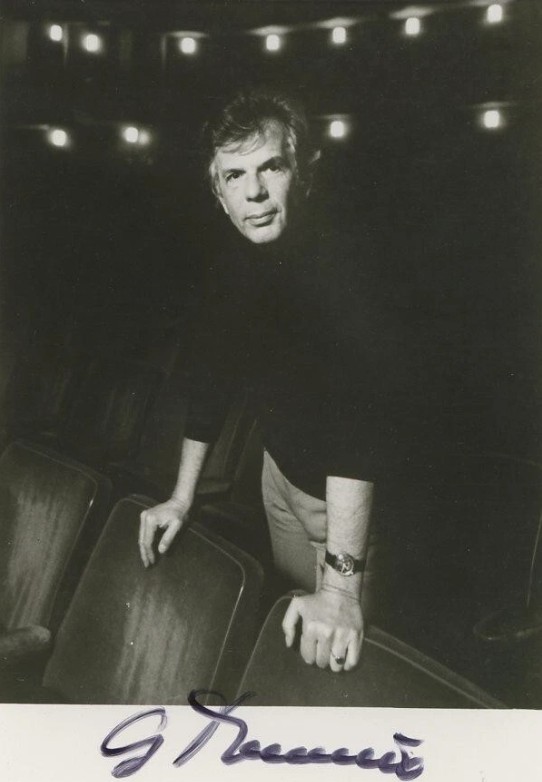
    For some reason, Christoph von Dohnányi didn’t come to Philadelphia much. I can recall he came through on tour once, probably with the Cleveland Orchestra. I’m sure he must have come through more than that, but if he did, I never heard him live. He was music director in Cleveland from 1984 to 2002 (having conducted the orchestra for the first time in 1981) – enough to keep anyone’s hands full, I suppose. But I knew him from his recordings, naturally.

    He had an interesting lineage. His grandfather was the eminent Hungarian composer, pianist, conductor, and educator Ernst von Dohnányi (born Ernő). His uncle, on his mother’s side (also his godfather), was the theologian and anti-Nazi dissident Dietrich Bonhoeffer. A number of his family members were part of the German Resistance movement during World War II. Several, including his father and uncle, were detained in concentration camps and executed when Dohnanyi was 15.

    The young Dohnányi set out on an academic career with an intention to study law, but in common with so many musicians who pursued that course, in the end succumbed to the siren lure of music.

    In 1951, he first came to the United States to study with his repatriated grandfather at Florida State University. The elder Dohnányi had actually met and played with Brahms.

    Christoph is now being widely lauded for having “restored” to the Cleveland Orchestra to its former excellence, following the lackluster tenure of Lorin Maazel, who succeeded George Szell (who of course made the orchestra). Maazel was appointed music director over the voluble protests of its musicians. Be that as it may (or may not; was the orchestra ever bad?), Dohnányi learned firsthand how difficult it was to emerge from the shadow of a legend. He once quipped, “We give a great concert, and George Szell gets a great review.”

    Dohnányi defined the difference between them: Szell, a notorious martinet (my words, not his), drilled the musicians mercilessly and drove them with a palpable sense of inner intensity. Dohnányi, on the other hand, assimilated the lessons he learned in the opera house, beginning as an assistant to Georg Solti in Frankfurt, not worrying so much about bar-lines, but following the example of singers in allowing the music to breathe.

    Eventually, he would become music director in Frankfurt. He also held posts at the opera houses of Lübeck and Hamburg. Later, he brought staged opera to Cleveland.

    Among his orchestra positions, he was chief conductor of the Staatsorchester Kassel and the WDR Symphony Orchestra Cologne. Following Cleveland, he was principal guest conductor, and then principal conductor, of London’s Philharmonia Orchestra. In 2004, he became chief conductor of the North German Radio Symphony Orchestra, a position he held until 2010.

    Of course, he guest conducted all the great orchestras of the United States (including Cleveland), as well as most of them in Europe, and also the Israel Philharmonic. Throughout, he remained active in opera.

    Although wholly devoted to music, he was not a flashy conductor and preferred to keep a low profile. He acknowledged that he was a strong leader, but he was never one for razzle dazzle.

    Dohnányi died on Saturday. Today would have been his 96th birthday. R.I.P.


    Interestingly, I note that I don’t have all that many of Dohnányi’s recordings in my own collection, although I have had dealings with many of them over the course of my career in radio. Of the ones I do own, I have great affection for his first recording of Mendelssohn’s “Die erste Walpurgisnacht,” with the Vienna Philharmonic Orchestra and Chorus. He’s the conductor on favorite recordings of the Busoni Piano Concerto (with Garrick Ohlsson) and the Philip Glass Violin Concerto (with Gidon Kremer). I also have the recording of Alban Berg’s “Wozzeck” he made with his wife, Anja Silja. I’m sure there are more, but not many. The comparative neglect is attributable to my deficiency and not his.

    Dohnányi made a number of recordings of the works of Antonin Dvořák (including the Symphonies Nos. 6, 7, 8 & 9, the Piano Concerto, and the “Slavonic Dances”). These received heavy air play for decades, especially by a certain host who shall remain nameless, during my years at the local classical music radio station. Since today is also Dvořák’s birthday anniversary, here’s a link to his recording of the Symphony No. 7.

    He was also a champion of Hans Werner Henze. Thanks to Mather Pfeiffenberger for directing me to this link to orchestral fragments (Adagio, Fugue and Maenads’ Dance) from “The Bassarids.” In 1965, Dohnányi conducted the premiere of Henze’s “Der junge Lord” (which he also recorded).

    https://www.youtube.com/watch?v=lJd8EQZc7XY

    Of course, he was widely acclaimed for his Brahms. Here’s a live performance of Brahms’ 1st in Hamburg, from 2007:
  • Happy 90th Birthday Jorge Mester!

    Happy 90th Birthday Jorge Mester!

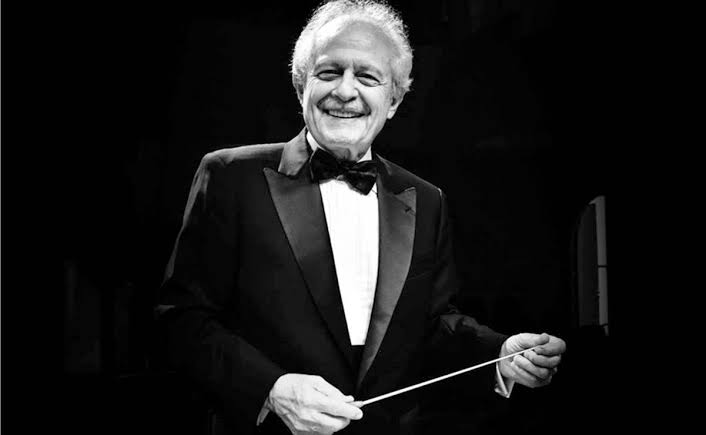
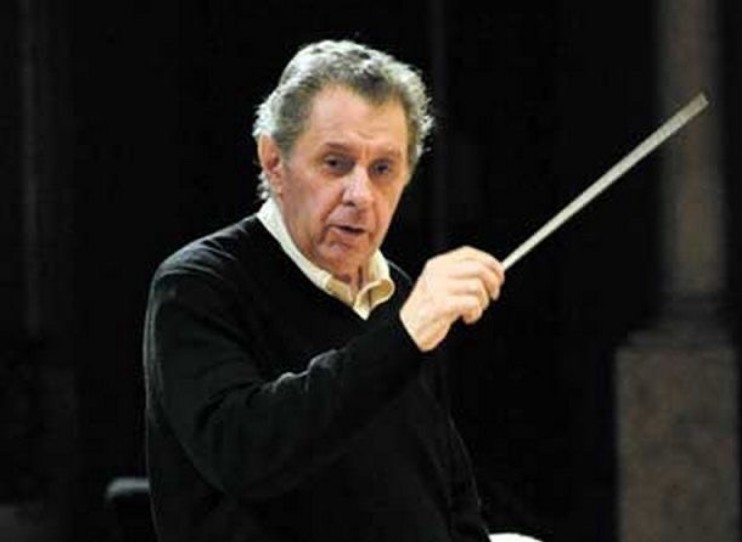
    Today is the 90th birthday of Mexican-born conductor Jorge Mester.

    Mester is perhaps best-known to collectors as music director of the Louisville Orchestra, where he served from 1967 to 1979 and oversaw first performances of dozens of works by composers from all over the world. These were released on the much sought-after Louisville First Editions label. Mester conducted 72 recordings of new or neglected music during his first stretch in Louisville. For all I know, some of these may now be available through digital streaming (a number of them have been posted to YouTube), but only a handful of them ever made it to compact disc – which means, for decades, the records have been Holy Grails for classical music lovers with adventurous taste.

    Of course, it’s also possible you may recognize Mester for having conducted some P.D.Q. Bach concerts. The man appears to have had his lighter side.

    27 years after his departure from Louisville, he returned for a second tenure, while the orchestra sought another music director, with Mester also serving on the search committee.

    His other posts have included directorships with the Aspen Symphony Orchestra, the Pasadena Symphony Orchestra, and the Naples Philharmonic in Naples, Florida.

    He made his conducting debut with the National Symphony Orchestra of Mexico in 1955. In 1998, he became music director of the Mexico City Philharmonic.

    He appears to still be active, as music director of the Orquesta Filarmónica de Boca del Río, Veracruz, an ensemble he has conducted since its founding in 2014.

    Mester studied with Jean Morel at the Juilliard School (he regards Morel as “the greatest conducting teacher of them all”), with Leonard Bernstein at the Berkshire Music Center, and with Albert Wolff. He himself joined Juilliard’s conducting faculty, and for a time was head of the department. He served at Juilliard for the better part of 30 years.

    Mester settled in the U.S. and became a naturalized American citizen in 1968.

    I very much enjoyed getting to know him through this interview with Bruce Duffie – conducted during a layover at O’Hare Airport. He comes across as much more congenial than his flawed colleague and compatriot Enrique Bátiz, who died on March 30.

    https://www.bruceduffie.com/mester.html

    By coincidence, he also refers to the conductor John Nelson, one of his students, who died on March 31.

    Happy birthday, Jorge Mester! Many happy returns.


    From vinyl: Carlos Chávez’s ballet “Horsepower” and Enrique Granados’ symphonic poem “Dante”

    Ernest Guiraud’s “The Fantastic Hunt”

    Peter Mennin’s Cello Concerto with Janos Starker

    An old favorite: Gian Carlo Menotti’s Piano Concerto with Earl Wild

    “An Hysteric Return: P.D.Q. Bach at Carnegie Hall”

    Mester speaks in 2020

  • Enrique Bátiz obituary: Latin American Music Icon

    Enrique Bátiz obituary: Latin American Music Icon

    Another figure from the glory days of classical radio has died. When the classical record scene was still strong and the major labels were in good hands, Enrique Bátiz was one of those conductors whose name and artistry were encountered quite frequently. He made many fine records for EMI and later ASV. In particular, I cherish his album of works by Joaquín Turina (including the “Danzas fantásticas” and “Sinfonia sevillana”), Falla’s “Nights in the Gardens of Spain” with pianist Aldo Ciccolini, a lovely Villa-Lobos program with Barbara Hendricks, the Manuel Ponce Violin Concerto with Henryk Szeryng (the work’s dedicatee), and the indispensable 4-disc “Rodrigo Edition,” released on EMI (a label whose catalogue has since been devoured by Warner).

    He continued to promote his country’s music with missionary zeal through ASV’s “Musica Mexicana” series. I also turn frequently to a fun album he made for Naxos, “Latin American Classics,” released in 1994. It’s a veritable banquet of brief, delectable tracks easily assimilated into my radio shows. Before the proliferation of high-quality independent labels, readier access to imports, and of course the internet, Bátiz’s records of Spanish and Latin American music were like El Dorado gold.

    In all, he made some 145 recordings. I confess with a degree of guilt that I am not really all that familiar with most of those that document repertoire outside Latin America and the Iberian Peninsula. He was justly celebrated as an ambassador for Latin music, but he also recorded his share of the standard repertoire, including a Beethoven cycle. I am unqualified to weigh in on most of it, though I do remember being surprised by the interpretative quality of his Rimsky-Korsakov. Mexico is an awfully long way from Russia (or so Leon Trotsky thought), but why not? Bátiz was every bit as capable as his U.S., British, and Continental brethren, who were less likely to be a pigeon-holed because of their nationalities.

    Bátiz died yesterday at the age of 82. Gracias, Maestro. Que descanse en paz.


    Turina, “Sinfonia sevillana”

    Rodrigo, “Concierto Serenata” for harp and orchestra

    Ponce, Violin Concerto

    Villa-Lobos

    Buxtehude (arranged by Carlos Chávez), Chaconne in E minor

  • Toscanini Legend Anti-Fascist Autocrat

    Toscanini Legend Anti-Fascist Autocrat

    There was a time when Arturo Toscanini was likely the most famous conductor in the United States. In fact, he was one of the most celebrated conductors of the 20th century. His intensity, perfectionism, and alleged fidelity to the score have been enshrined in legend. And when the legend becomes fact, I print the legend.

    Toscanini served as music director of La Scala, Milan, the Metropolitan Opera, the New York Philharmonic, and the NBC Symphony Orchestra. He conducted first performances of Puccini’s “La bohème,” Leoncavallo’s “Pagliacci,” Respighi’s “Feste Romane,” and Barber’s “Adagio for Strings.” As a cellist, he played in the world premiere of Verdi’s “Otello.”

    From 1937 to 1954, he reached millions of Americans via his weekly broadcast concerts on NBC radio. These originated at Rockefeller Center’s Studio 8-H, now the home of “Saturday Night Live.”

    Toscanini was vehemently anti-fascist. He despised Hitler, and vowed never to conduct in Germany as long as “the Führer” remained in power. In Italy, he was beaten up by brownshirts and had his passport confiscated for refusing to conduct “Giovinezza,” the fascist anthem. He also worked closely with violinist Bronislaw Huberman in support of the Palestine Orchestra, made up of Jewish exiles from fascist Europe. He once confided to a friend, “If I were capable of killing a man, I would kill Mussolini.”

    Il Duce really caught a break when Toscanini emigrated to America. It sounds to me as if the Maestro could have been borderline more than once. Ironically, for someone who hated dictators, he sure could dish out an autocratic tirade.

    Happy birthday, Arturo Toscanini.


    Conducting Verdi, “La Forza del Destino Overture” (on film, 1944)

    Beethoven, Symphony No. 3, “Eroica” (at Carnegie Hall, 1939)

    Respighi, “Feste Romane” (“Roman Festivals,” 1949)

    Toscanini snaps his baton and calls his double bassists “ball breakers”

  • Elgar Howarth Last Manchester Maverick Dies

    Elgar Howarth Last Manchester Maverick Dies

    When composer Alexander Goehr died last August, I erroneously reported – and then, when the error was pointed out to me, emended it – that the final representative of the so-called Manchester School had died at a venerable age. Now, truly, with the death of Elgar Howarth, the last of the Mancunian mavericks has left us. Howarth died yesterday at the age of 89.

    One of that squad of rebel angels that emerged from the Royal Manchester (now Northern) College of Music in the 1950s, Howarth joined fellow students and angry young men Harrison Birtwistle, Peter Maxwell Davies, Alexander Goehr, and John Ogdon in championing works that were hardly easy listening. To this end, they formed New Music Manchester. Collectively, they may have presented a tough face, but after-hours, they would geek out talking about things like medieval modes.

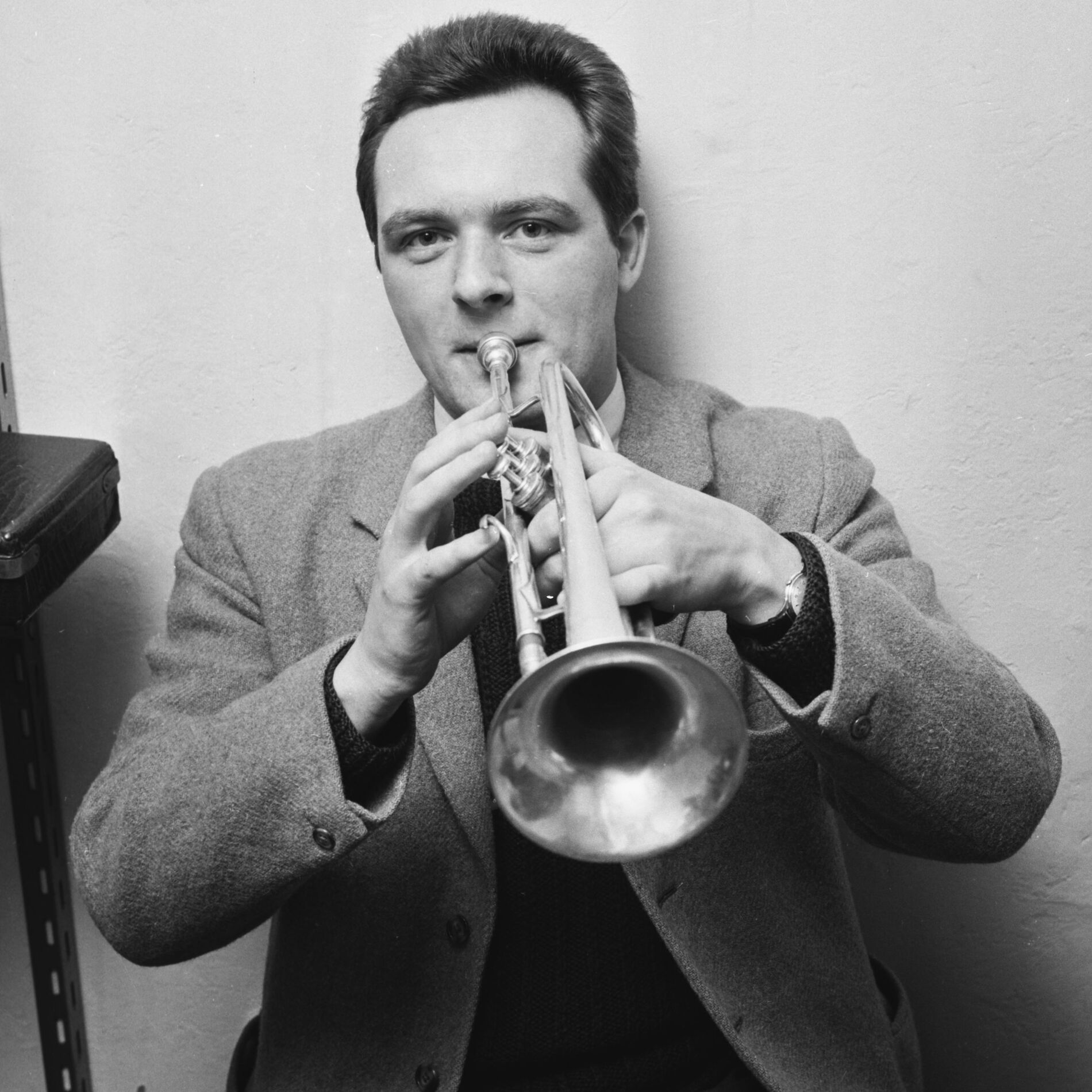
    Howarth was reared in a family of brass players. His father taught him cornet and trumpet. His brother was a trombonist. He received his formal education at Manchester University and RMCM.

    Of his college cohort, Ogdon gained fame as a pianist, Goehr evolved into a post-serialist avant-gardist steeped in Messiaen and world music, Maxwell Davies acquired a reputation as a symphonist (although he retained his impish glint), all the while cannily developing a sideline of light music classics, and was eventually appointed Master of the Queen’s Music, and Birtwistle, for all his notoriety, was regarded as one of the most important British composers of his generation.

    Howarth kept bread on the table as a trumpeter and conductor. He found employment in the Covent Opera Orchestra, before advancing to principal trumpet of the Royal Philharmonic Orchestra. He also appeared frequently with the London Sinfonietta, to which he would later return as a guest conductor.

    He cut his teeth on the podium as conductor of the Royal Philharmonic, in the early 1970s, for Frank Zappa’s film and album “200 Motels.” In 1967, he had arranged and performed, as one of four trumpeters, the fanfares for the Beatles’ “Magical Mystery Tour.”

    His impact on the brass band world was considerable. He took both the Grimethorpe Colliery Band and Black Dyke Mills Band to the BBC Proms. He was also closely associated with the Philip Jones Brass Ensemble. He commissioned and arranged works by William Walton, Harrison Birtwistle, Hans Werner Henze, Toru Takemitsu, and many others. His virtuosic arrangement of Mussorgsky’s “Pictures at an Exhibition” was widely praised.

    Howarth went on to lead all the major British orchestras, in both concert hall and recordings. He was especially associated with the works of Birtwistle and György Ligeti. (He gave first performances of four of Birtwistle’s operas as well as Ligeti’s “Le Grand Macabre.”) But his repertoire was broad, also encompassing works from the 18th and 19th centuries, and he appeared often with other well-known orchestras on mainland Europe. He was nearly as seasoned an opera conductor as he was a director of brass bands.

    In 2003, it was revealed that he had rejected the royal honor of a CBE. Howarth may have of necessity operated around the fringes of the establishment, but beneath that veneer of respectability still lurked a rebel angel.

    R.I.P.


    “Pictures at an Exhibition”

    Conducting Birtwistle

    Zappa

    Conversation with Elgar Howarth

    Howarth talks about his involvement with the Grimethorpe Colliery Band in 1972

Tag Cloud

Aaron Copland (92) Beethoven (94) Composer (114) Conductor (84) Film Music (106) Film Score (143) Film Scores (255) Halloween (94) John Williams (179) KWAX (227) Leonard Bernstein (98) Marlboro Music Festival (125) Movie Music (121) Mozart (84) Opera (194) Picture Perfect (174) Princeton Symphony Orchestra (102) Radio (86) Ross Amico (244) Roy's Tie-Dye Sci-Fi Corner (290) The Classical Network (101) The Lost Chord (268) Vaughan Williams (97) WPRB (396) WWFM (881)

DON’T MISS A BEAT

Receive a weekly digest every Sunday at noon by signing up here


RECENT POSTS