Tag: Constant Lambert

  • Ballets Russes’ Lost English Composers

    Ballets Russes’ Lost English Composers

    Serge Diaghilev, impresario of the Ballets Russes, commissioned some of the most enduring ballet scores of the 20th century, from such composers as Claude Debussy (“Jeux”), Maurice Ravel (“Daphnis and Chloe”), Manuel de Falla (“The Three-Cornered Hat”), and Igor Stravinsky (“The Firebird,” “Petrushka” and “The Rite of Spring”).

    Less well known is the fact that two Englishmen were also approached.

    This week on “The Lost Chord,” we’ll listen to works by Constant Lambert and Lord Berners – both men so diverse in their interests, and possessing such outsized personalities, it isn’t really possible to do justice to either in the time allotted.

    Lambert was a brilliant polymath. In addition to his considerable talents as a composer, he was a conductor, arranger, and writer, as well as the lover of Margot Fonteyn. Alas, alcoholism and workaholism conspired with undiagnosed diabetes to hasten his demise at the age of 45.

    His ballet, “Romeo and Juliet,” presented as a play-within-a-play, turns Shakespeare’s tragedy of star-crossed lovers on its head, with the leads falling hard in a backstage romance with happier results. Lambert would go on to greater things, but the ballet is undeniably an impressive piece of work for a 20 year-old.
    Similarly, Lord Berners’ interests lie all over the place, but his was a much more relaxed character. Unfailingly productive as a composer, a painter, and a writer, nonetheless he never lost sight of the fact that life would be his magnum opus. And Berners lived well.

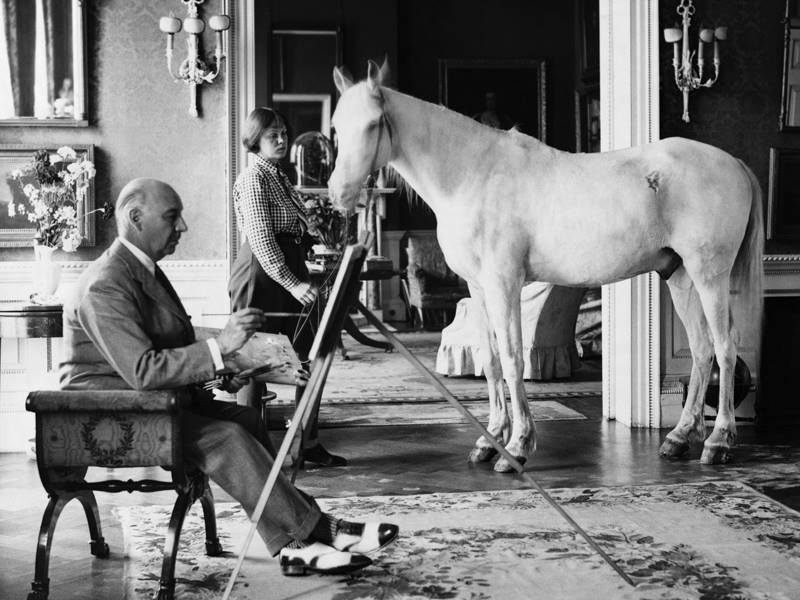
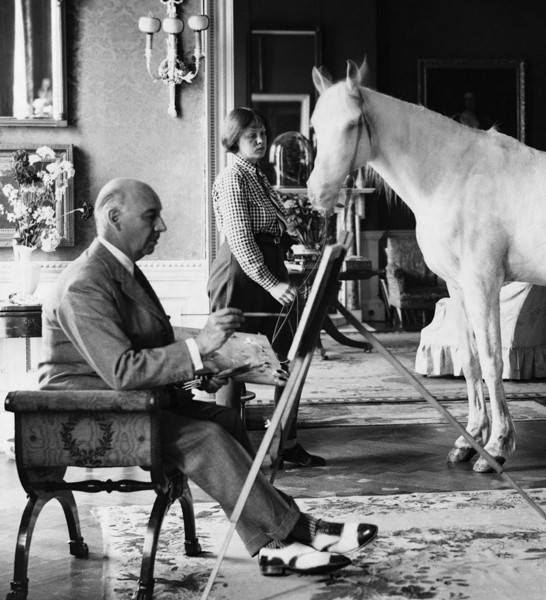
    Furthermore, his fortune ensured that he would never be taken to task for any of his whimsical behavior. This included having a 140-foot folly tower constructed on his estate (partly to annoy the neighbors) and keeping a horse and a giraffe to invite to his indoor and outdoor tea parties.

    Berners wrote novels, painted portraits (always sure to include a moustache, whether the sitter had one or not), and composed a respectable amount of music, especially for the ballet.

    For the Ballets Russes, he wrote “The Triumph of Neptune,” which became a great favorite of Sir Thomas Beecham. Sacheverell Sitwell provided the scenario, which concerns a sailor who is shipwrecked en route to Fairyland, and George Balanchine supplied the choreography.

    That’s a heady mix of hornpipes and pas de deux. I hope you’ll join me for “England à la Russe,” on “The Lost Chord,” now in syndication on KWAX, the radio station of the University of Oregon!


    Clip and save the start times for all three of my recorded shows:

    PICTURE PERFECT, the movie music show – Friday at 8:00 PM EDT/5:00 PM PDT

    SWEETNESS AND LIGHT, the light music program – ALL NEW! – Saturday at 11:00 AM EDT/8:00 AM PDT

    THE LOST CHORD, unusual and neglected rep – Saturday at 7:00 PM EDT/4:00 PM PDT

    Stream them, wherever you are, at the link!

    https://kwax.uoregon.edu/


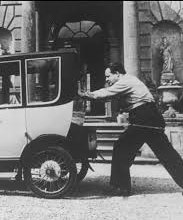
    PHOTOS: Berners, no doubt contemplating the placement of a moustache (right); and Lambert pushing Berners car
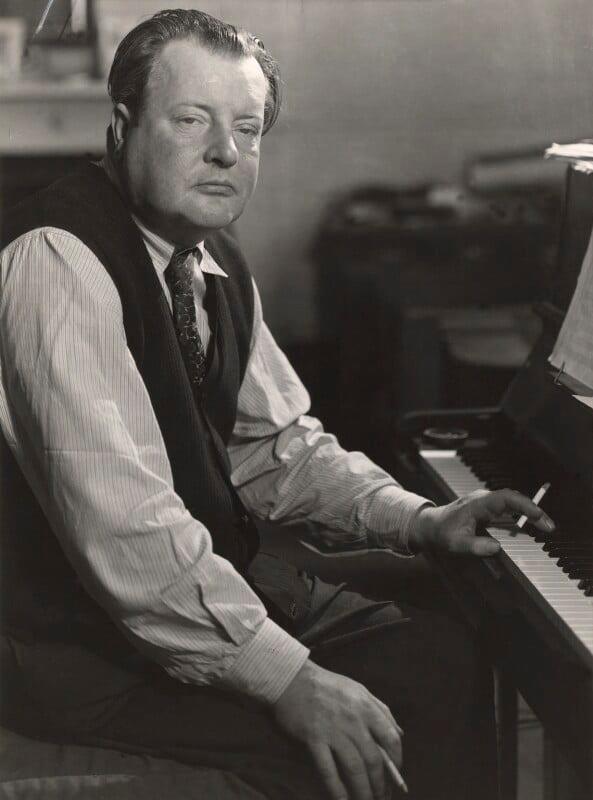
  • Constant Lambert: A Versatile English Composer

    Constant Lambert: A Versatile English Composer

    As composer, conductor, critic, scintillating conversationalist, and connoisseur of European culture, Constant Lambert proved himself to be one of the most versatile figures in English music.

    Born on this date in 1905, Lambert emerged from an introverted childhood, marred by illness, and blossomed into a preternaturally-gifted musician. At 13, he was writing orchestral works. At 20, he composed a ballet, “Romeo and Juliet,” for Serge Diaghilev and the Ballets Russes.

    He gained further notoriety as a reciter of Edith Sitwell’s patter verses for William Walton’s “Façade” (which was dedicated to him). His piano concerto with voice and orchestra, “The Rio Grande,” unashamedly incorporated jazz elements, at a time when such a thing could still provoke scandal. He also directed the first recording of Peter Warlock’s “The Curlew.”

    His book, “Music, Ho!,” written at the age of 28, offers incisive and witty commentary on the “decline” of modern music. In it, he favors jazz and popular idioms, praises the music Liszt and Sibelius, savages Stravinsky and Les Six, lauds the Marx Brothers, and pokes holes in what he perceives as an artificial “symphonic folk” tradition.

    In 1931, he was appointed music director of the Vic-Wells Ballet, soon to become the Sadler’s Wells. While he achieved great acclaim in this capacity, his responsibilities cut into his activities as a composer. Instead, he became largely occupied with the arranging of others’ music. An exception, his gloomy and sardonic choral work, “Summer’s Last Will and Testament,” was coolly received, following as it did so closely on the death of George V. Lambert took the failure to heart, and began to have serious doubts about his talent.

    Moreover, the outbreak of war, alcoholism, and undiagnosed diabetes all took their toll on his vitality and creativity. A long-held fear of doctors, stemming from his childhood experiences, only hastened his decline. Lambert died on August 21, 1951, two days shy of his 46th birthday.

    At Sadler’s Wells, he was integral to the planning of each new production, in many cases providing arrangements of lesser-known works by worthy composers. He also became something of an artistic mentor to dancers Margot Fonteyn and Robert Helpmann. In the case of Fonteyn, their relationship developed beyond teacher-pupil. In defiance of his personal demons and deteriorating health, Lambert’s conducting – like his celebrated conversation – remained buoyant and inspired.

    Happy birthday, Constant Lambert. You burned your candle, like your cigarettes, at both ends.


    Lambert and Edith Sitwell in the first recording of Walton’s “Façade” from 1929

    “The Rio Grande” (text by Sacheverell Sitwell)

    Conducting selections from his ballet “Horoscope”

    “Concerto for Piano and Nine Instruments”

    His arrangements of Meyerbeer into the ballet “Les Patineurs”

    https://www.youtube.com/watch?v=e15W-6FwEb4

    Footage of Lambert conducting Tchaikovsky’s “Romeo and Juliet Fantasy Overture”

    “Music Ho!,” thanks to Project Gutenberg

    https://gutenberg.ca/ebooks/lambert-music/lambert-music-00-h.html

  • Constant Lambert: English Music’s Versatile Genius

    Constant Lambert: English Music’s Versatile Genius

    As composer, conductor, critic, brilliant conversationalist, and connoisseur of European culture, Constant Lambert proved himself to be one of the most versatile figures in English music.

    This Sunday night on “The Lost Chord,” we’ll benefit from but one facet of this multitalented individual.

    Lambert, born in 1905, emerged from an introverted childhood, marred by illness, and blossomed into a preternaturally-gifted musician. At 13, he was writing orchestral works. At 20, he composed a ballet, “Romeo and Juliet,” for Serge Diaghilev and the Ballets Russes.

    He gained further notoriety as a reciter of Edith Sitwell’s patter verses for William Walton’s “Façade” (which was dedicated to him). His piano concerto with voice and orchestra, “The Rio Grande,” unashamedly incorporated jazz elements, at a time when it could still provoke scandal. He also directed the first recording of Peter Warlock’s “The Curlew.”

    His book, “Music, Ho!,” written at the age of 28, offers concise and witty commentary on the “decline” of modern music. In it, he favors jazz and popular idioms, praises the music Liszt and Sibelius, savages Stravinsky and Les Six, lauds the Marx Brothers, and pokes holes in what he perceives as an artificial “symphonic folk” tradition.

    In 1931, he was appointed music director of the Vic-Wells Ballet, soon to become the Sadler’s Wells. While he achieved great acclaim in this capacity, his responsibilities cut into his activities as a composer. Instead, he became largely occupied with the arranging of others’ music. An exception, his gloomy and sardonic choral work, “Summer’s Last Will and Testament,” was coolly received, following as it did so closely on the death of George V. Lambert took the failure to heart, and began to have serious doubts about his talent.

    Further, the outbreak of war, alcoholism, and undiagnosed diabetes all took their toll on his vitality and creativity. A long-held fear of doctors, stemming from his childhood experiences, only hastened his decline. Lambert died on August 21, 1951, two days shy of his 46th birthday.

    At Sadler’s Wells, he was integral to the planning of each new production, in many cases providing arrangements of lesser-known works by worthy composers. He also became something of an artistic mentor to dancers Margot Fonteyn and Robert Helpmann. In the case of Fonteyn, their relationship developed beyond teacher-pupil. In defiance of his personal demons and deteriorating health, Lambert’s conducting – like his celebrated conversation – remained buoyant and inspired.

    We’ll sample vintage recordings of ballet music after Tchaikovsky, Meyerbeer, Boyce, and Rossini. Lambert is the only constant, on “Lambent Lambert,” this Sunday night at 10:00 EST, on WWFM – The Classical Network and wwfm.org.


    “Music Ho!,” thanks to Project Gutenberg:

    https://gutenberg.ca/ebooks/lambert-music/lambert-music-00-h.html


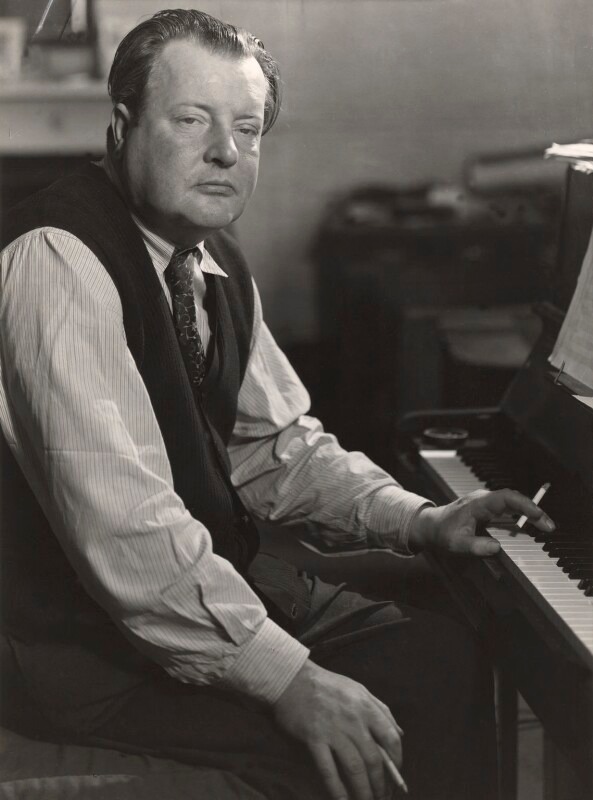
    PHOTO: I only just noticed that Lambert has two cigarettes going at the same time!

  • Ballets Russes’ Lost English Composers

    Ballets Russes’ Lost English Composers

    Serge Diaghilev, impresario of the Ballets Russes, commissioned some of the most enduring ballet scores of the 20th century, from such composers as Claude Debussy (“Jeux”), Maurice Ravel (“Daphnis and Chloe”), Manuel de Falla (“The Three-Cornered Hat”), and Igor Stravinsky (“The Firebird,” “Petrushka” and “The Rite of Spring”).

    Less well known is the fact that two Englishmen were also approached.

    This Sunday night on “The Lost Chord,” we’ll listen to works by Constant Lambert and Lord Berners – both men so diverse in their interests, and possessing such outsized personalities, it isn’t really possible to do justice to either in the time allotted.

    Lambert was a brilliant polymath. In addition to his considerable talents as a composer, he was a conductor, arranger, and writer, as well as the lover of Margot Fonteyn. Alas, alcoholism and workaholism conspired with undiagnosed diabetes to hasten his demise at the age of 45.

    His ballet, “Romeo and Juliet,” presented as a play-within-a-play, turns Shakespeare’s tragedy of star-crossed lovers on its head, with the leads falling hard in a backstage romance with happier results. Lambert would go on to greater things, but the ballet is undeniably an impressive piece of work for a 20 year-old.

    Similarly, Lord Berners’ interests lay all over the place, but his was a much more relaxed character. Unfailingly productive as a composer, a painter, and a writer, nonetheless he never lost sight of the fact that life would be his magnum opus. And Berners lived well.

    Furthermore, his fortune ensured that he would never be taken to task for any of his whimsical behavior. This included having a 140-foot folly tower constructed on his estate (partly to annoy the neighbors) and keeping a horse and a giraffe to invite to his indoor and outdoor tea parties.

    Berners wrote novels, painted portraits (always sure to include a moustache, whether the sitter had one or not), and composed a respectable amount of music, especially for the ballet.

    For the Ballets Russes, he wrote “The Triumph of Neptune,” which became a great favorite of Sir Thomas Beecham. Sacheverell Sitwell provided the scenario, which concerns a sailor who is shipwrecked en route to Fairyland, and George Balanchine supplied the choreography.

    That’s a heady mix of hornpipes and pas de deux. I hope you’ll join me for “England à la Russe,” this Sunday night at 10:00 EDT, on WWFM – The Classical Network and wwfm.org.


    PHOTO: Berners, no doubt contemplating the placement of a moustache

  • Ballets Russes: English Music for the Stage

    Ballets Russes: English Music for the Stage

    We don’t know for sure when he was born (he was baptized on April 26, 1564), but April 23 is the day the world has chosen to celebrate Shakespeare.

    Rather than pummel you with more music inspired by the Bard, I thought I would take a circuitous approach, this Sunday night on “The Lost Chord,” and present Constant Lambert’s 1924-25 ballet, “Romeo and Juliet.” Do not go into it expecting the star-cross’d lovers of Shakespeare’s immortal tragedy. Lambert’s version takes a look at a ballet company. In the process of preparing an adaptation of the play, the two leads fall in love. They flee a rehearsal, and are glimpsed eloping in an aeroplane!

    Lambert was only 20 years-old when he wrote the music, which is cheeky and burlesque, evocative of commedia dell’arte and perhaps influenced by contemporaneous displays of joie de vivre by composers of the Parisian collective, Les Six.

    “Romeo and Juliet” was one of only two ballets commissioned from English composers by Serge Diaghilev for his Ballets Russes. The other was “The Triumph of Neptune,” written in 1926 by Gerald Hugh Tirwhitt-Wilson, 14th Baron Berners.

    Berners was an exemplar of a certain tradition of English eccentricity, in which a lord might invite a giraffe to an outdoor tea party or a horse would be given license to roam the indoors to mingle with his guests. His garden was full of paper flowers, his dogs wore pearl necklaces, and he built a hundred foot folly tower, allegedly just to annoy the neighbors.

    Berners was gifted in so many areas – as a composer, of course, but also as a writer (his stories and autobiographical musings have been brought back into print) and a painter (he loved to include mustaches in his portraits, whether the sitter had one or not). He liked ballet best of all, since it allowed him to write the scenarios and design the backdrops, in addition to composing the music.

    “The Triumph of Neptune” is Berners’ best-known piece. In this instance, it was Sacheverell Sitwell who devised the scenario, which sprang from their mutual enchantment with 19th century theatrical prints. An English sailor is shipwrecked en route to Fairyland. He is saved by Britannia, who dances a hornpipe. He returns home in spirit form, to find his wife carrying on with a well-dressed villain. But all ends happily, as he is turned into a prince and marries Neptune’s daughter.

    The choreography was by George Balanchine, and the work became a great favorite of Sir Thomas Beecham.

    I hope you’ll join me for “England à la Russe” – music written by English composers for the Ballets Russes – this Sunday night at 10:00 EDT, on WWFM – The Classical Network and at wwfm.org.


    PHOTOS: Berners paints a horse; Lambert pushes a car

Tag Cloud

Aaron Copland (92) Beethoven (94) Composer (114) Film Music (117) Film Score (143) Film Scores (255) Halloween (94) John Williams (185) KWAX (228) Leonard Bernstein (99) Marlboro Music Festival (125) Movie Music (132) Opera (197) Philadelphia Orchestra (86) Picture Perfect (174) Princeton Symphony Orchestra (106) Radio (86) Ralph Vaughan Williams (85) Ross Amico (244) Roy's Tie-Dye Sci-Fi Corner (290) The Classical Network (101) The Lost Chord (268) Vaughan Williams (101) WPRB (396) WWFM (881)

DON’T MISS A BEAT

Receive a weekly digest every Sunday at noon by signing up here


RECENT POSTS