Tag: Cyril Scott

  • Herrmann’s English Obsession

    Herrmann’s English Obsession

    Before Bernard Herrmann emerged as a film composer of genius, he was music director at CBS Radio. There, he not only wrote incidental music for Orson Welles’ Mercury Theater (he would follow Welles to Hollywood in 1941 to write his first film score, for “Citizen Kane”), he also programmed and conducted broadcast concerts that were heavy on new, unusual, and neglected repertoire.

    Herrmann was a staunch Anglophile for his entire life. There’s no way he would have ignored the Vaughan Williams sesquicentenary. Shame on you, American orchestras! In the 1960s, when he was fired by Hitchcock from “Torn Curtain,” and he had had enough of Hollywood in general, he made London his permanent home. But already in the 1940s, he was guest conducting the Hallé Orchestra, at the invitation of Sir John Barbirolli. He also guest conducted the London Symphony Orchestra, and made a number of recordings with the London Philharmonic and National Philharmonic Orchestras, including some stunning albums of his film scores.

    English music featured regularly on Herrmann’s concerts. Here’s an attractive piece by Cyril Scott for the first full day of summer. You may recognize the English folk song on which it is based, “Early One Morning,” a cheerful enough melody somewhat at variance with its melancholy subject matter (a jilted lass lamenting the loss of her lover).

    Despite having left a sizeable output of orchestral, chamber, and instrumental works, Scott is largely remembered, if at all, for his piano miniature “Lotus Land.” Another good summer piece, come to think of it. In my library, I have a copy of Scott’s book, “Music: Its Secret Influence Throughout the Ages,” inscribed by the composer to Eugene Ormandy.

    Here, John Ogdon is the pianist, and Bernard Herrmann conducts the London Philharmonic Orchestra. Enjoy Cyril Scott’s “Early One Morning.” The big tune begins to coalesce around the four-minute mark.

    BONUS: Scott plays “Lotus Land”

    Bernard Herrmann on English music

    http://www.bernardherrmann.org/articles/archive-musicalengland/

    Herrmann the Anglophile

    http://www.musicweb-international.com/classrev/2003/oct03/herrmann_anglophile.htm


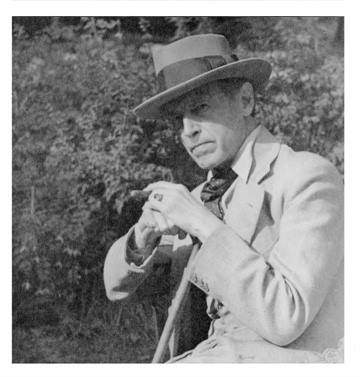
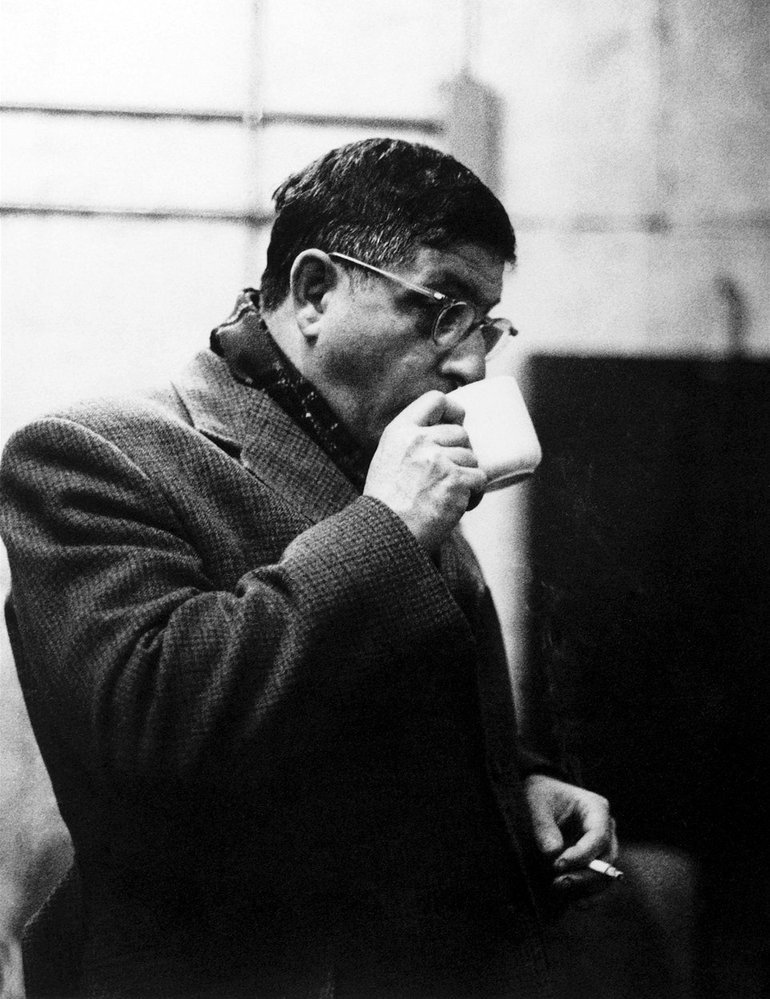
    PHOTO: Bernard Herrmann, early one morning
  • Titanic’s Echo: Music and Memory 1912 to Today

    Titanic’s Echo: Music and Memory 1912 to Today

    In yet another demonstration of history becoming shorter as I grow older, at 54 I look back to realize I was born only 54 years after the tragedy of the HMS Titanic.

    On this date in 1912, the Titanic sank off the coast of Newfoundland at 2:27 a.m. Over 1,500 souls were lost. But the band played on.

    A number of composers wrote music to commemorate the disaster. Cyril Scott, the prolific English composer – absurdly remembered, if at all, for a piano miniature, “Lotus Land” (1905) – wrote a piece called “Disaster at Sea” (1933), a work directly related to the Titanic sinking, which he revised as “Neptune” (1935). Its large orchestra includes a wind machine and an organ. Atmospheric sea music increases in menace, until the ship is consumed in a kind of arctic wasteland.

    Apparently, for Danish master Carl Nielsen, there was no such thing as “too soon.” The wreckage had scarcely settled on the ocean floor, when he embarked on a paraphrase for wind band on “Nearer, My God, to Thee” (1912). The well-known hymn is alleged to have been the last music played by the Titanic band. Essentially, Nielsen’s work turns out to be a three-minute tone poem. Stay sharp for the violent iceberg collision, or you might just spill your coffee.

    The musicians of the Titanic, of course, are legendary for having gone down with the ship, playing for as long as possible, in an attempt to keep calm among the passengers. The eight-member ensemble was led by Wallace Henry Hartley, who drew on selections from The White Star Line Songbook. The White Star Line repertoire included 341 items, including light overtures, intermezzi, waltzes, marches, arias, sacred music, and potpourris. Here’s a complete catalogue:

    https://www.encyclopedia-titanica.org/white-star-line-repertoire.html?fbclid=IwAR3i7AXjg7sInQDCuif70_Yzm6PnLXxqcYyS0-ikUVpo_4t3rOS4uSitu-8

    According to an eyewitness, “Many brave things were done that night, but none were more brave than those done by men playing minute after minute as the ship settled quietly lower and lower in the sea. The music they played served alike as their own immortal requiem and their right to be recalled on the scrolls of undying fame.“

    I Salonisti portrayed the ship’s band in the 1997 film “Titanic.”

    I am now as far away from my birth as my birth was from the Titanic. Talk about a sinking feeling! Gentlemen, it’s been a privilege playing with you…


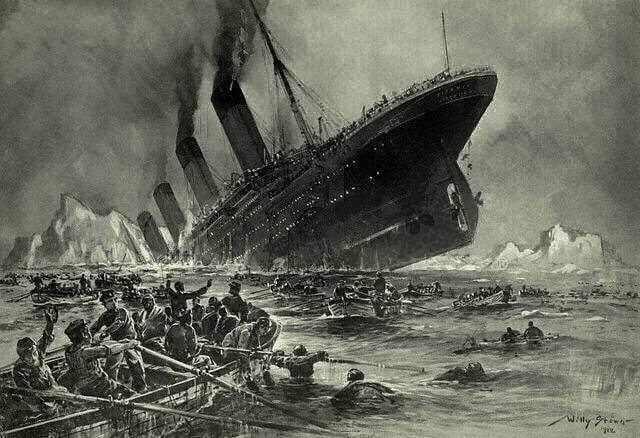
    “The Sinking of the Titanic,” iconic illustration for the newspaper “Die Gartenlaube,” by Willy Stöwer (1912)

  • English Music Marathon on WPRB Today

    English Music Marathon on WPRB Today

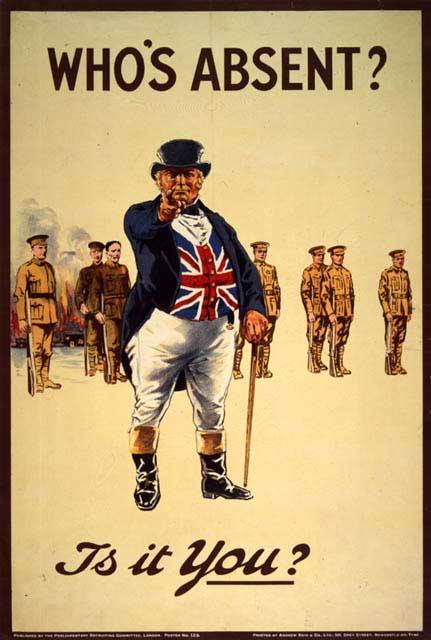
    I’d heed John Bull if I were you. Yet to come this morning: the Symphony No. 3 by Edmund Rubbra, the Violin Sonata No. 4 by Cyril Scott, the ballet “The Angels” by Richard Arnell, the Symphony No. 4 by William Alwyn, and more. It’s a full morning of English music until 11 ET on WPRB 103.3 FM and at wprb.com.

  • Clipper Erickson Rediscovering Lost Piano Gems

    Clipper Erickson Rediscovering Lost Piano Gems

    While the rest of the world is looking ahead to a new year, Clipper Erickson, piano is on the look-out for new repertoire.

    Erickson, who is on the faculty of Westminster Conservatory of Music, Rider University, in Princeton, and Boyer College of Music and Dance – Temple University, in Philadelphia, has two new releases of rediscovered works which have languished in obscurity for decades.

    These include world premiere recordings of pieces by R. Nathaniel Dett, the grandson of fugitive slaves who became an important figure in American music, and Cyril Scott, in his day a frontrunner of the English avant-garde, whose reputation faded over the decades until he was remembered, if at all, as the composer of one or two innocuous miniatures in Grandma’s piano bench.

    Interestingly, there was a creative exchange between the two by way of eccentric Australian pianist Percy Grainger, who championed works of both composers. You can read all about it in my article in today’s Trenton Times.

    http://www.nj.com/times-entertainment/index.ssf/2015/12/classical_music_local_pianist.html

  • Cyril Scott Forgotten Genius Rediscovered

    Cyril Scott Forgotten Genius Rediscovered

    A languid Saturday is a good day for Cyril Scott. Though I suppose under ideal circumstances it would be a rather balmy day full of cicadas and satyrs.

    Scott was one of the so-called Frankfurt Group, a collective of up-and-coming musicians who studied at the Hoch Conservatory in Frankfurt am Main, Germany, in the 1890s. The group included conductor and composer Balfour Gardiner (the great uncle of John Eliot Gardiner), songwriter Roger Quilter, and the nearly forgotten Norman O’Neill. The youngest of the bunch was a quirky, 13 year-old piano prodigy by the name of Percy Grainger.

    Scott’s fame, such that it is, rests primarily on a piano miniature called “Lotus Land,” which helped insulate the piano benches of musical grandmothers everywhere. But he also left behind a sizable body of dreamy, wayward orchestral works, including two symphonies, four operas, four oratorios, and concertos of all stripes, to say nothing of his chamber and instrumental music. Often referred to as “the English Debussy,” Scott could usually be counted on for a good wallow. Alban Berg described his music as mushy.

    His works, more or less neglected for decades, beyond some notable recordings of the piano concertos by John Ogdon, have received a lot of love in the recording studio over the past ten years.

    Scott was fascinated by the occult. His claim to have contacted Grainger’s mother from beyond the grave put an end to their friendship. He was also occupied with the subject of health foods. His writings on diet and alternative medicine prefigure a school of thought which has become practically mainstream in the present day.

    Someone must have sold off the library of Eugene Ormandy at some point since, somewhere in my own collection, I’ve got a book inscribed to Ormandy by Cyril Scott.

    Happy birthday, C.S. (1879-1970).

    Scott plays “Lotus Land”:

Tag Cloud

Aaron Copland (92) Beethoven (95) Composer (114) Film Music (119) Film Score (143) Film Scores (255) Halloween (94) John Williams (185) KWAX (229) Leonard Bernstein (99) Marlboro Music Festival (125) Movie Music (134) Opera (198) Philadelphia Orchestra (86) Picture Perfect (174) Princeton Symphony Orchestra (106) Radio (87) Ralph Vaughan Williams (85) Ross Amico (244) Roy's Tie-Dye Sci-Fi Corner (290) The Classical Network (101) The Lost Chord (268) Vaughan Williams (102) WPRB (396) WWFM (881)

DON’T MISS A BEAT

Receive a weekly digest every Sunday at noon by signing up here


RECENT POSTS