Tag: Czech Center New York

  • Czech Center NY Celebrates Martinů

    Czech Center NY Celebrates Martinů

    Among its multifarious attractions, Czech Center New York always seems to have something interesting musical going on.

    I remember traveling in to have a look at the original manuscript of Dvořák’s “New World” Symphony, brought back to the U.S. for the first time since the composer returned home with it to Bohemia in 1895. The Czech Center reception followed a performance of the piece by the Czech Philharmonic at Carnegie Hall, the venue at which the symphony received its world premiere, by the New York Philharmonic, in 1893. At the time, Dvořák was serving as director of the National Conservatory of Music of America, then located at 47-49 West 25th Street.

    It certainly was a memorable evening, as afterward I got to meet Jiri Bělohlávek, the orchestra’s chief conductor, and Véronique Firkušný, daughter of the late pianist Rudolf Firkušný. Furthermore, I actually shook hands with the composer’s grandson, who spoke no English but was his spitting image.

    This year, the Czech Center has shifted its focus to composer Bohuslav Martinů and the 80th anniversary of his arrival in New York. Martinů – still the sleeping giant of Czech music, when compared to Dvořák, Smetana, or even Janáček – arrived here from France, which he fled just ahead of the Nazi occupation. Rudolf Firkušný was one of the musicians who came to Martinů’s aid in the U.S. No doubt in gratitude, Martinů dedicated this Third and Fourth Piano Concertos to him.

    The commemoration is being marked by concerts, commentary, masterclasses, and online exhibitions. Here’s what’s been posted so far.

    The Year of Bohuslav Martinů in New York:

    https://new-york.czechcentres.cz/en/program/rok-bohuslava-martinu-v-new-yorku-opening

    Things to come:

    https://new-york.czechcentres.cz/en/blog/2021/02/80-let-od-cesty-martinu-z-evropy-do-ameriky

    Véronique Firkusny and conductor Jakub Hrůša:

    https://new-york.czechcentres.cz/en/program/bohuslav-martinu-v-new-yorku-80-vyroci-prijezdu?fbclid=IwAR0q5lRLbqyvG9zUn4wh28w4MqtyJ_AMCjPtwcon0PSisfA_V8m_YthAhas

    Works of Bohuslav Martinů / The Czech Way:

    https://new-york.czechcentres.cz/en/program/dila-bohuslava-martinu-v-podani-ceskych-interpretu

    Works of Bohuslav Martinů / The American Way:

    https://new-york.czechcentres.cz/en/program/dila-bohuslava-martinu-v-podani-americkych-interpretu

    I’ve been a Martinů nut since I first heard his “Rhapsody-Concerto” for Viola and Orchestra played by Joseph de Pasquale and the Philadelphia Orchestra back in the 1980s. It’s a puzzle to me why he is not more frequently performed here in the U.S. For anyone who loves Dvořák, there is much to enjoy in Martinů’s music. He’s Dvořák for a mechanized age. I think Dvořák himself, being so fond of trains, would have admired it.

    If nothing else, check out this stylish video – complete with double-breasted suits, booze, and cigarettes – an invigorating performance of Martinů’s “Bergerettes,” courtesy of Czech Center New York.

    FUN FACT: Martinů taught at Princeton University, commuting from New York, from 1948 to 1951.

    More about Czech Center New York here:

    https://new-york.czechcentres.cz/en/about-us

    Dvořák’s “New World” Symphony returns to New York:

    https://www.bohemianbenevolent.org/news/making-history-new-world-symphony-manuscript-in-bnh

    Martinů’s “Rhapsody-Concerto”

    And a work for theremin!

  • Dvořák’s “New World” Returns to NYC

    Dvořák’s “New World” Returns to NYC

    If, like me, you’re of the opinion that Dvořák never wrote a bad note, or you are a particular fan of the “New World” Symphony, you might be interested to know that the composer’s original manuscript will be returning to New York City for five days, beginning on Nov. 17. This will be the first time the manuscript for this seminal “American” work has been outside the Czech Republic since Dvořák left with it in 1895. The document will be on display at Bohemian National Hall at the Czech Center New York, 321 E. 73rd St.

    The exhibition will be prefaced on Sunday, Nov. 16, by a performance of the “New World” Symphony at Carnegie Hall, with the Czech Philharmonic Orchestra, conducted by Jiří Bělohlávek. For more information on these and related events, look online at http://www.czechcenter.com.

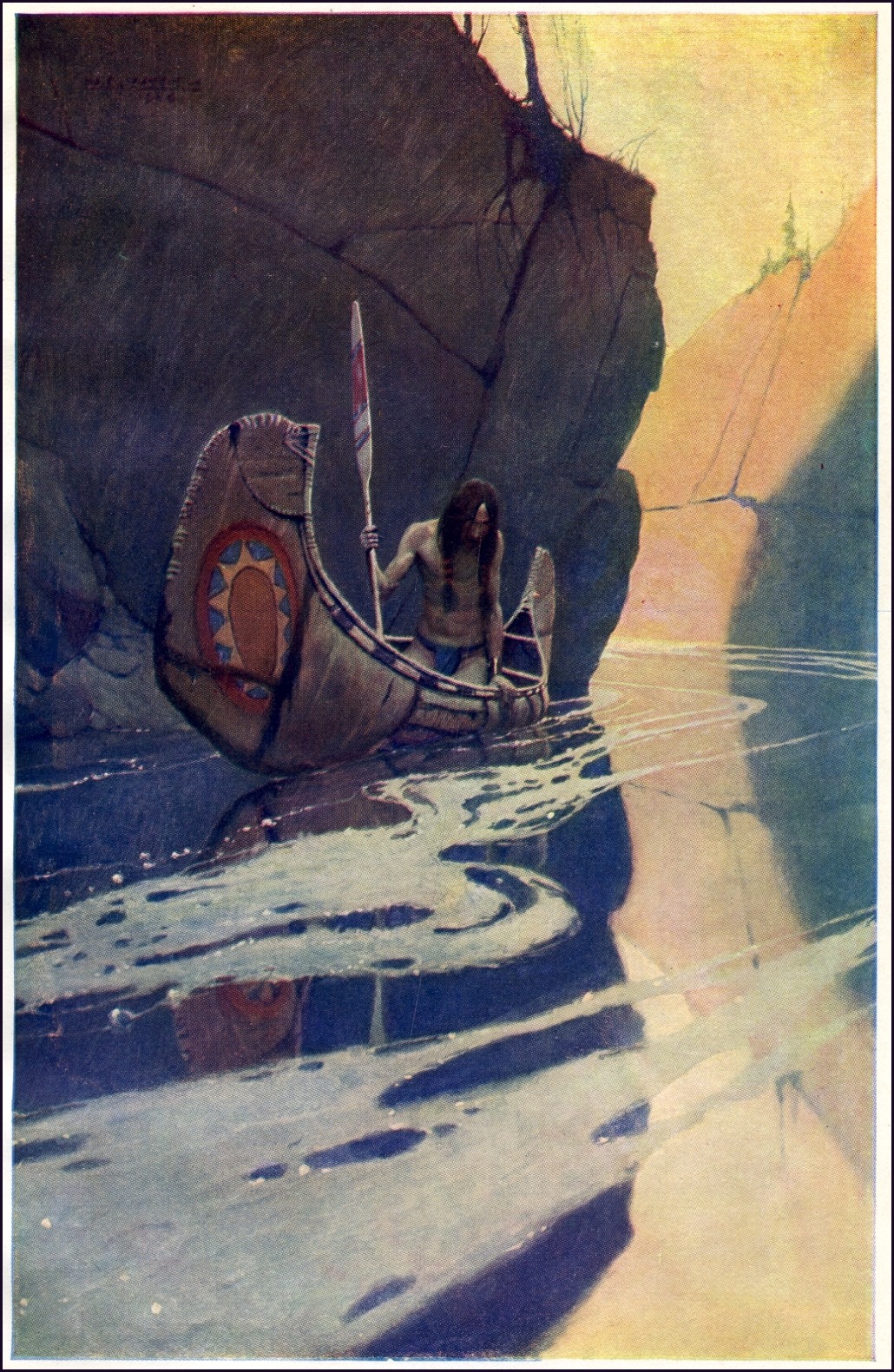
    To honor the occasion, tonight on “The Lost Chord” I thought we’d listen to a work from a fairly recent release on the Naxos label, a “Hiawatha Melodrama,” on themes of Dvořák, many of them taken from the “New World” Symphony.

    Dvořák composed what is now commonly termed his Symphony No. 9 (for decades it was recognized as his Symphony No. 5) in 1893, while he was director of the National Conservatory of Music in New York. The work was influenced by Native American music and African American spirituals. The composer intimated that certain sections were inspired by his reading of “The Song of Hiawatha.” In fact, he intended the famous Largo as a sketch for a later opera or cantata on the theme, and the third movement scherzo was suggested by a dance at Hiawatha’s wedding feast.

    Beginning in the early 1990s, cultural historian Joseph Horowitz and Dvořák scholar Michael Beckerman began experimenting with presentations incorporating portions of Longfellow’s text with music from Dvořák’s symphony. These developed into a 35-minute melodrama, which achieved its final form in 2013. (In musical terms, a melodrama is the marriage of music with spoken word.) The arrangers also lifted passages from Native American-influenced music from Dvořák’s Sonatina, Op. 100 (the composer sketched the theme for the Larghetto on his starched cuff during a visit to Minnehaha Falls in Minnesota), and his “American Suite.”

    The narrator is bass-baritone Kevin Deas. Deas regularly appears in Dvořák festivals curated by Horowitz, including a show devoted to Harry T. Burleigh, Dvořák’s African American assistant at the National Conservatory, who is said to have introduced Dvořák to the spiritual. They have toured the show to schools throughout the United States.

    The fascinating disc also contains the “American Suite” in its original piano version, as well as several of the “Humoresques,” the Larghetto from the “Sonatina,” an arrangement by Dvořák pupil William Arms Fisher of the symphony’s Largo as a spiritual, “Goin’ Home,” and three works by one of the first American composers to follow Dvořák’s example, Arthur Farwell.

    To round out the hour, I’ve also programmed selections from “Hiawatha’s Wedding Feast,” one of three cantatas which comprise “Scenes from the Song of Hiawatha,” by the English composer of African descent, Samuel Coleridge-Taylor. Coleridge-Taylor composed the work five years after Dvořák completed his “New World” Symphony.

    “Hiawatha’s Wedding Feast,” became a cultural phenomenon. By the time it was taken up by Sir Malcolm Sargent, it was given annually, from 1928 to 1939, in a costumed, semi-ballet version, featuring close to a thousand performers. Unfortunately, this was among the works the composer had sold outright, his heirs thereby missing out on the royalties. By the time of Sargent’s advocacy, the short-lived Coleridge-Taylor had already been dead for 16 years.

    The recording, released on the Argo label back in 1991, is one of the earliest of rising star Bryn Terfel.

    In the age of the computer, when first thoughts can be deleted without a trace, Dvořák’s manuscript provides an especially valuable glimpse into the artist’s creative process. WWFM’s Rachel Katz, on her show “A Tempo” this week, interviewed Czech Center director Barbara Karpetova, along with Beckerman, for their insights into the work and its cultural significance, with additional commentary by New York Philharmonic historian and archivist Barbara Haws.

    The New York Philharmonic, which owns the original orchestral parts of the “New World” Symphony and is lending them for this display, will be presenting its own Dvořák festival from Dec. 4 through Dec. 13, with Dvořák chamber works presented on their Saturday matinees throughout the season.

    If you missed “A Tempo,” the show will be posted this week as a webcast at the WWFM website, with all three conversations presented uncut. Listen in to learn about the evolution of the famous “New World” Largo and to hear a clip from a vintage performance by the New York Philharmonic, whose personnel still included performers who had played in the work’s premiere.

    In the meantime, I hope you’ll join me tonight for “Indian Summer” – works inspired by Longfellow’s “The Song of Hiawatha” – at 10 ET, with a repeat Wednesday evening at 6, or that you’ll listen to it later as a webcast at http://www.wwfm.org.

Tag Cloud

Aaron Copland (92) Beethoven (95) Composer (114) Film Music (119) Film Score (143) Film Scores (255) Halloween (94) John Williams (185) KWAX (229) Leonard Bernstein (99) Marlboro Music Festival (125) Movie Music (134) Opera (198) Philadelphia Orchestra (87) Picture Perfect (174) Princeton Symphony Orchestra (106) Radio (87) Ralph Vaughan Williams (85) Ross Amico (244) Roy's Tie-Dye Sci-Fi Corner (290) The Classical Network (101) The Lost Chord (268) Vaughan Williams (102) WPRB (396) WWFM (881)

DON’T MISS A BEAT

Receive a weekly digest every Sunday at noon by signing up here


RECENT POSTS