Naturally, I am always curious to see how classical music is treated in popular culture. Imagine my delight, then, to find a conductor central to the plot of “Firefall,” an episode of “Kolchak: The Night Stalker,” which originally aired back in 1974.
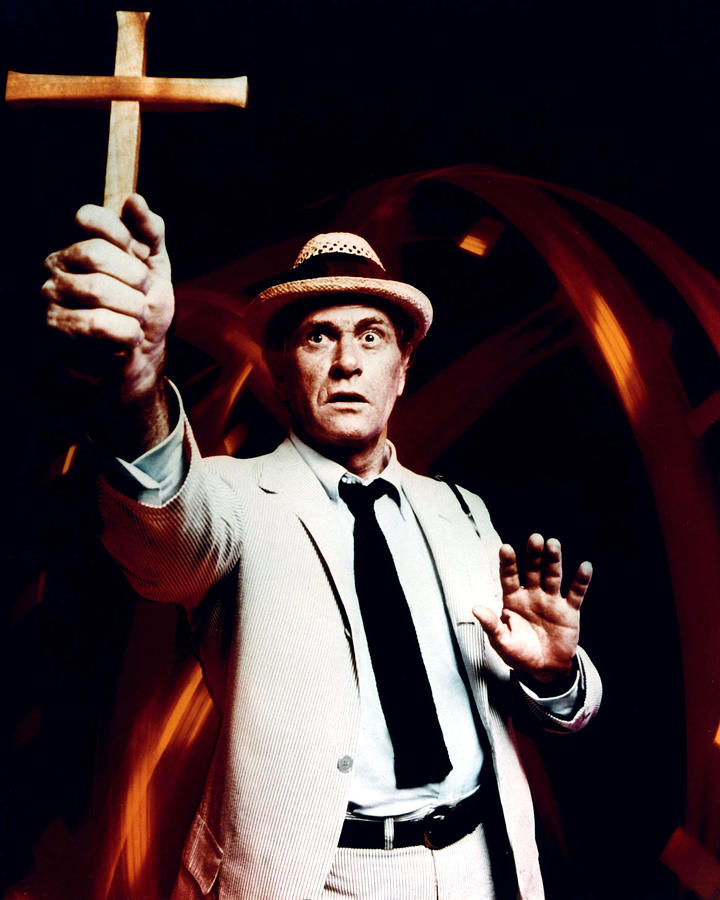
I’ve been working my way through the old “Kolchak” episodes, which feature Darren McGavin as a hardboiled reporter in rumpled seersucker, who has a nose for the mysterious and the supernatural in after-dark Chicago. McGavin is a hoot and unquestionably the main reason to watch the show, though Simon Oakland, as his editor, long-suffering Tony Vincenzo, plays exasperation well. The series ably walks the line between chills and camp. It is very 1970s – everyone looks horrible, the women are all stereotypes, and the monster make-up is cheesy to the extreme. Still, it has always appealed to the eight-year-old in me. And there’s something in it that still resonates in a world obsessed with conspiracies and cover-ups. Chris Carter claimed that “Kolchak” was a principal influence when he came to create “The X-Files.” He even attempted to resurrect the show itself, but it’s just not possible without an actor as quirky and knowing as McGavin, probably best recognized these days, thanks to annual TBS marathons, as Ralphie’s father in Jean Shepherd’s “A Christmas Story.”
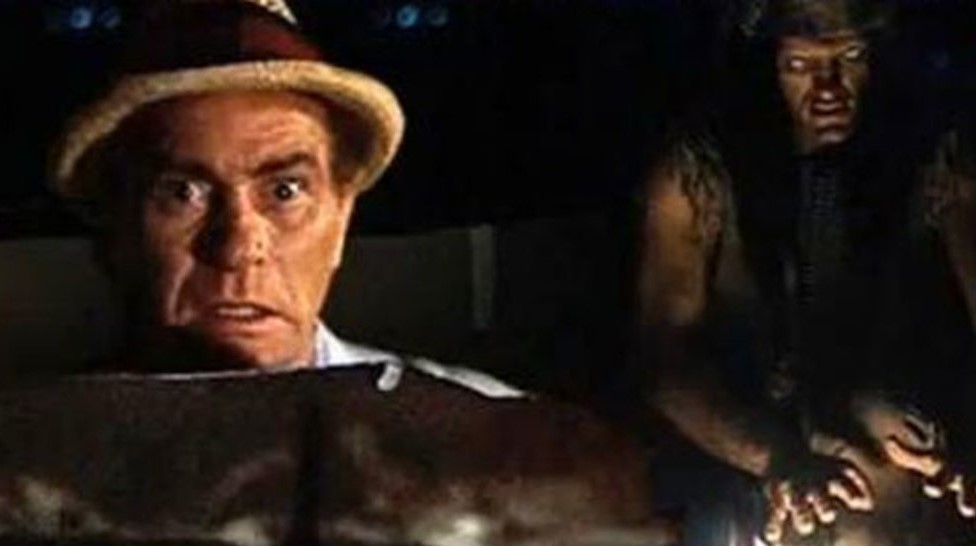
At any rate, this particular episode is about an orchestra conductor, Ryder Bond (played by Fred Beir), music director of the fictional Great Lakes Symphony – who, in his “nearly fatal devotion to punctuality,” cuts across a funeral line and riles the spirit of a murdered mobster, whose life’s passion happened to be classical music! This spirit manifests itself as Bond’s doppelganger, now determined to assume the conductor’s identity. Along the way, he immolates the orchestra’s concertmaster, for one, in an apparent “spontaneous combustion.” (“Now who will play the scherzo?” despairs Bond.) Kolchak, of course, is the only one who knows what’s going on. And he spends the episode, as he generally does, getting dressed down by his editor, roughed up by the police, and taken into custody for arson and in all likelihood bodysnatching. Does the story get written? Probably, eventually. The shows usually conclude with lonely shots of McGavin typing away in the deserted newspaper office, after hours. But will it go to press? Probably not. Not if Vincenzo has anything to do with it. But the truth is out there!
As far as classical music is concerned, we learn from a crime scene witness that the orchestra is scheduled to play Prokofiev. There is a scene of Bond rehearsing Tchaikovsky’s Fourth Symphony, and another of him sitting at a piano, playing through some Mozart and making a sardonic remark about Chopin. One of Kolchak’s colleagues reveals that he plays the French horn (“Why am I not surprised,” remarks Kolchak), before namedropping Bach, Beethoven and Bernstein – mispronouncing the latter as “Bern-STEEN.” But fans of the show, of course, are there for the monsters.
As an added bonus, every episode of “The Night Stalker” sports multiple guest stars, some veterans, some on their way up. So along the way to the final showdown with the vampire, werewolf, or extraterrestrial of the week, we encounter Dick Van Patten, Larry Storch, Scatman Crothers, Carolyn Jones, Mary Wickes, James Gregory, Jim Backus, Phil Silvers, Jackie Mason, Richard Kiel, and any number of others. In this instance, David Doyle, soon to be Bosley on “Charlie’s Angels,” turns up for a scene as an expert on flammables.
The series is also notable for breaking in Robert Zemeckis and Bob Gale, who put their own memorable spin on the Headless Horseman (making him a motorcyclist!). Zemeckis and Gale later hit it big with “Back to the Future.”
Zemeckis would win the Academy Award for Best Director in 1995 for “Forrest Gump.”
McGavin pours himself some day-old coffee in “Kolchak: The Night Stalker”: