Tag: David Bowie

  • George Crumb’s “Black Angels”: Halloween’s Dark Sound

    George Crumb’s “Black Angels”: Halloween’s Dark Sound

    In New York the other night at Old John’s Luncheonette, prior to catching a performance of Ralph Vaughan Williams’ Symphony No. 8 with the New Conductors Orchestra, I was asked by my companion for the evening, the filmmaker H. Paul Moon, off the top of my head, for the quintessential piece of Halloween music. With my back to the wall, I blurted out George Crumb’s “Black Angels.”

    This spinetingling piece, for electric string quartet, has lived in my head and fired my imagination for some 40 years. The first time I ever encountered it was on George Diehl’s “Music Through the Centuries,” on Philadelphia’s late, lamented classical music station, WFLN. Diehl, one time program director of the station, who also provided program notes for the Philadelphia Orchestra, engagingly introduced Crumb’s otherworldly, often hair-raising piece by placing it in context, deftly illuminating its structure, and supplementing it with recordings of other works referenced within. This was fascinating radio. I have no hesitation in crediting “Music Through the Centuries” as a principal influence on my own radio show, “The Lost Chord.” So, thank you, George Diehl, wherever you are!

    Sure, “Black Angels,” subtitled “Thirteen Images from the Dark Land,” was conceived as a reaction to the Vietnam War, but real-life horrors aside, this is one haunting, magical piece. It’s not for nothing that it was embraced by David Bowie, that it inspired David Harrington to form the Kronos Quartet (after he too encountered it on the radio), and that William Friedkin included a passage in “The Exorcist.”

    There are references to Schubert’s “Death and the Maiden,” Tartini’s “The Devil’s Trill,” and the medieval plainchant “Dies Irae” (“Day of Wrath”) – quoted in so many works by Berlioz, Liszt, Rachmaninoff, and others, as well as making an appearance under the opening credits of Stanley Kubrick’s “The Shining.”

    But it was not Crumb’s intention to evoke jeering demons, necessarily. The composer saw it as “a kind of parable on our troubled contemporary world. The numerous quasi-programmatic allusions in the work are therefore symbolic, although the essential polarity – God versus Devil – implied more than a purely metaphysical reality. The image of the ‘black angel’ was a conventional device used by early painters to symbolize the fallen angel.”

    Its thirteen movements are divided into three larger groups.

    I. Departure

    1. Threnody I: Night of the Electric Insects (tutti)
    2. Sounds of Bones and Flutes (trio)
    3. Lost Bells (duo)
    4. Devil-music (solo)
    5. Danse Macabre (duo)

    II. Absence

    1. Pavana Lachrymae (trio)
    2. Threnody II: Black Angels! (tutti)
    3. Sarabanda de la Muerte Oscura (trio)
    4. Lost Bells (Echo) (duo)

    III. Return

    1. God-music (solo)
    2. Ancient Voices (duo)
    3. Ancient Voices (Echo) (trio)
    4. Threnody III: Night of the Electric Insects (tutti)

    Each player is required to play a variety of instruments and to employ extended techniques.

    Violin 1

    • maraca
    • 7 crystal glasses
    • 6″ glass rod
    • 2 metal thimbles
    • metal pick (paper clip)

    Violin 2

    • 15″ suspended tam-tam and mallet
    • contrabass bow (for use on tam-tam)
    • 7 crystal glasses
    • 6″ glass rod
    • 2 metal thimbles
    • metal pick (paper clip)

    Viola

    • 6 crystal glasses
    • 6″ glass rod
    • 2 metal thimbles
    • metal pick

    Cello

    • maraca
    • 24″ suspended tam-tam, soft and hard mallets
    • contrabass bow

    Of course, Crumb was more than simply a “Halloween” composer, though his music can be creepy as hell. Many of his chamber works, especially those that employ percussion and voice, are models of economy and elegance. I always think of him as a kind of spiritual descendent of Charles Ives, in that many of the curious sonorities he explored, especially in the context of his song settings, seem to suggest truths beyond our workaday concerns.

    That said, here’s some sensational Crumb to play when you’re alone with the lights out.

    Crumb died last year at the age of 92. Remembering him, blackly, on his birthday.


    “Black Angels” in concert

    “Black Angels” with score

    “A Haunted Landscape”

    https://www.youtube.com/watch?v=XWa4eXg-Jdo

    “Star-Child” (Watch out for that “Musica Apocalyptica,” beginning at 11:47!)

    “Ancient Voices of Children” in concert (“Ghost Dance” at 17:55)

    George Crumb was the recipient of the Pulitzer Prize for Music in 1968, for “Echoes of Time and the River,” and a Grammy Award for Best Contemporary Composition in 2001, rather appropriately, for “Star-Child.” All or most of his music is available in the “Complete Crumb Edition,” an ongoing project on Bridge Records, Inc.
  • Unpacking The Man Who Fell to Earth

    Unpacking The Man Who Fell to Earth

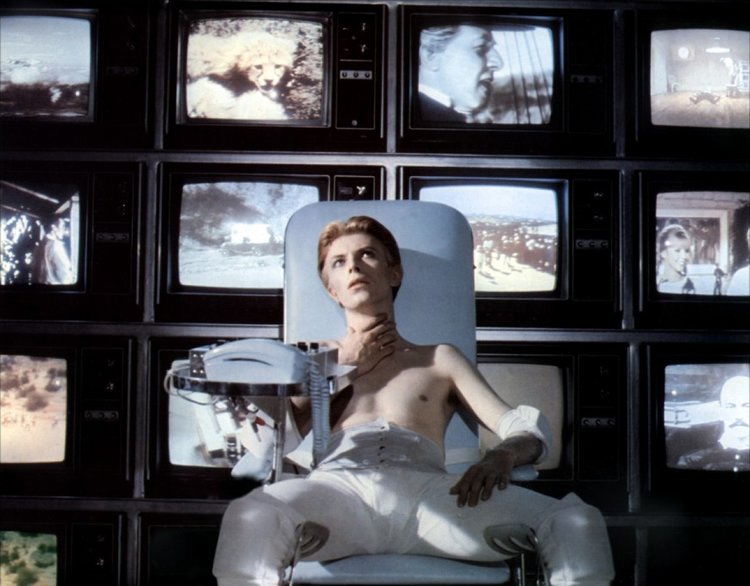
    “The Man Who Fell to Earth” (1976) may have traveled without luggage, but there certainly is a lot to unpack.

    Nicholas Roeg’s determinedly experimental adaptation of Walter Tevis’ novel (he also wrote the books that formed the bases for Paul Newman’s “The Hustler” and the recent Netflix sensation “The Queen’s Gambit”), “The Man Who Fell to Earth” is kind of like E.T.’s lost weekend.

    David Bowie, in his big screen debut, is the ethereal visitor from a dying planet who plans to return home with the necessary resources to save his people. However, he becomes increasingly mired in earthly distractions: media saturation, addiction (both chemical and interpersonal), human foibles, and institutional interference. Also, everyone he meets seems to spend so much of their time naked. And I’m talking really ‘70s naked.

    Disorienting at times to the point of semi-coherence, “The Man Who Fell to Earth” is the perfect metaphor for a Roy and Ross conversation. You’ll need something stronger than water when ranking your favorite Rip Torn nude scenes in the comments section, on the next Roy’s Tie-Dye Sci-Fi Corner. Interplanetary travel has seldom been so trippy as when we livestream on Facebook, this Friday evening at 7:30 EDT!

    https://www.facebook.com/roystiedyescificorner

  • Devo Bowie and a Monkee Remembered

    Devo Bowie and a Monkee Remembered

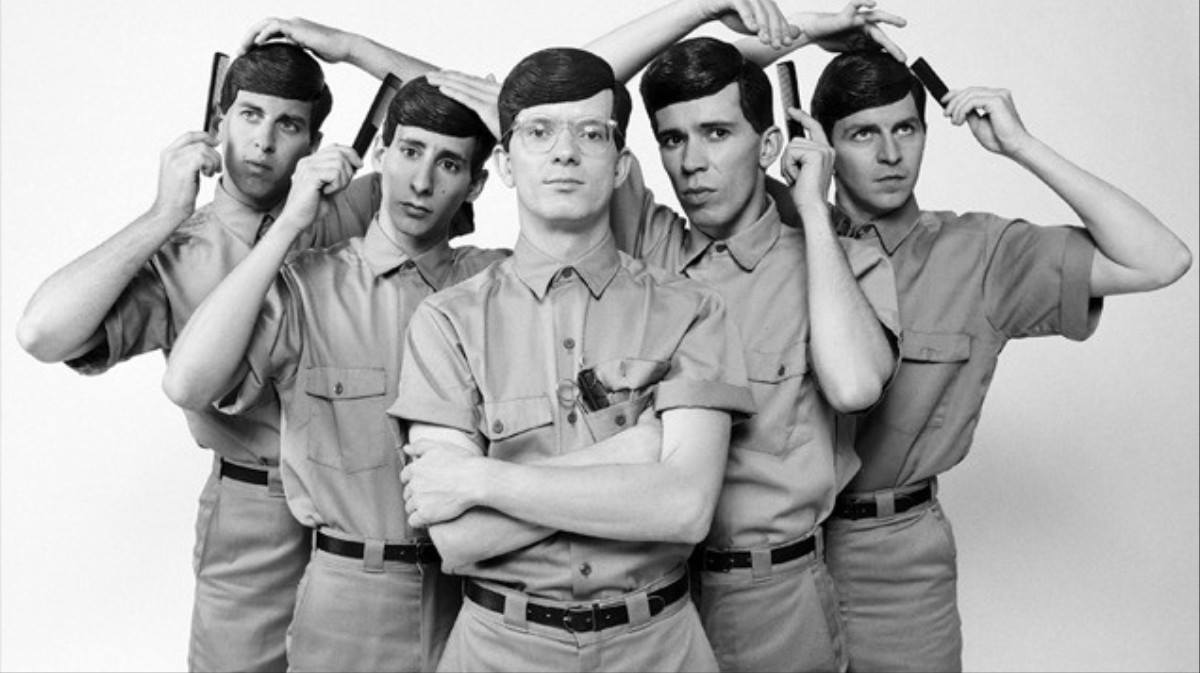
    I admit to being a closet Devo fan. When I was in high school, I listened to Devo as religiously as I did to Beethoven, John Williams, and Gilbert & Sullivan, and I can quote any lyric from their debut album (“Q: Are We Not Men? A: We Are Devo!”) up through “Shout” (when they lost it). This is likely due to my association with a band of skate punks, who were skate-punking well before skate-punking was cool. I never did seek out Devo’s come-back album, “Something for Everybody,” but most of the reviews I have read say it is a return to form.

    Devo co-founder and front man Mark Mothersbaugh mostly writes for the movies these days (“The Lego Movie,” “Thor: Ragnorak,” a lot of Wes Anderson films). But in his spare time, he happened to stumble across some session tapes he had done with Brian Eno and David Bowie 40 years ago.

    I love that some people just happen to have jam session tapes with David Bowie just lying around.

    Band members fighting with girlfriends on the telephone – it makes me so nostalgic:

    https://consequenceofsound.net/2017/12/recording-of-david-bowie-and-brian-enos-jam-session-with-devo-has-been-found-by-mark-mothersbaugh/?fbclid=IwAR3Z7saEc6GVplSgG1PQcKGgTm0GEjrLlk9gwrYR40KCAXxAH9NAvz8x_QQ

    While I’m being all pop-cultural: Peter Tork died this week?????????? Apparently Tork was classically trained. I always thought the Monkees were TV actors who had to hurry up and learn to play their instruments. In Tork’s case, not so. Not only did he play the guitar, he recorded the piano intro to “Daydream Believer,” played the harpsichord on “The Girl I Knew Somewhere,” and riffed on the banjo on “You Told Me.” He also played the French horn. Naturally, after the show was cancelled, he wound up teaching high school and waiting tables. Thank God for reunion tours.

    I used to enjoy the show’s zany humor as a kid. I predict another Saturday – or perhaps Pleasant Valley Sunday – misspent on YouTube.

  • Bowie’s Low Symphony a Philip Glass Tribute

    Bowie’s Low Symphony a Philip Glass Tribute

    David Bowie died yesterday at the age of 69. Here is Philip Glass’ Symphony No. 1, from 1992, known as the “Low” Symphony, inspired by the album “Low,” by Bowie and Brian Eno.

    I. Subterraneans:

    II. Some Are:

    III. Warszawa:

    Glass later wrote a “Heroes” Symphony (the Symphony No. 4), in 1996, also based on a Bowie album.

    https://www.youtube.com/watch?v=3TZsW99Vw_U&list=PLTUlTwlsdlFTGaOSuJfZGw82ySkas60me

    Bowie and Glass discuss “Low”:

    https://www.youtube.com/watch?v=p_SxYgtUVu4


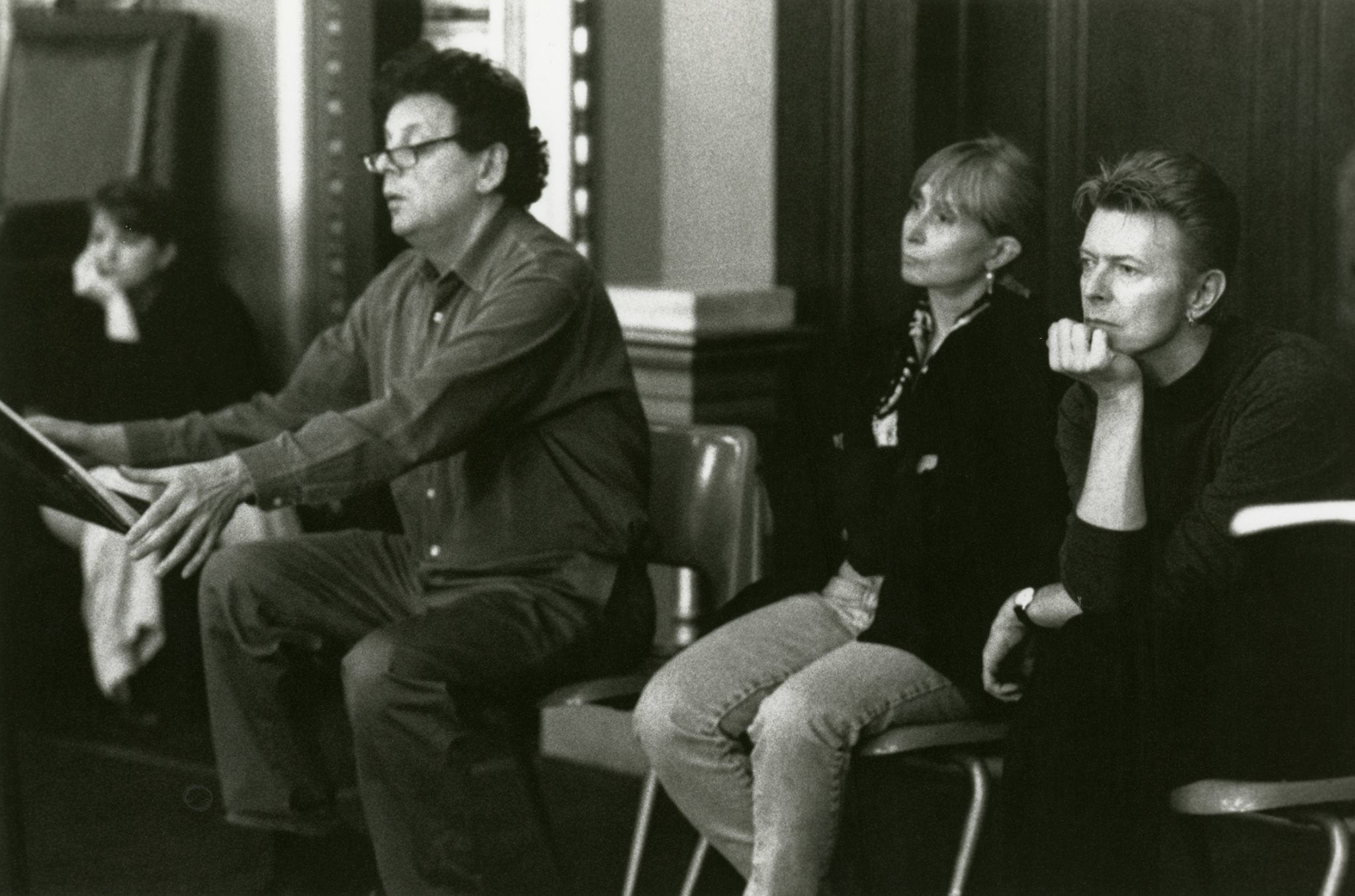
    PHOTO: With Twyla Tharp, rehearsing “Heroes”

Tag Cloud

Aaron Copland (92) Beethoven (94) Composer (114) Film Music (117) Film Score (143) Film Scores (255) Halloween (94) John Williams (185) KWAX (228) Leonard Bernstein (99) Marlboro Music Festival (125) Movie Music (132) Opera (197) Philadelphia Orchestra (86) Picture Perfect (174) Princeton Symphony Orchestra (106) Radio (86) Ralph Vaughan Williams (85) Ross Amico (244) Roy's Tie-Dye Sci-Fi Corner (290) The Classical Network (101) The Lost Chord (268) Vaughan Williams (101) WPRB (396) WWFM (881)

DON’T MISS A BEAT

Receive a weekly digest every Sunday at noon by signing up here


RECENT POSTS