Tag: Dittersdorf

  • Wassenaer vs Dittersdorf Birthday Name Game

    Wassenaer vs Dittersdorf Birthday Name Game

    Today’s Birthday Challenge:

    Whose name is more fun to say, Unico Wilhelm van Wassenaer or Carl Ditters von Dittersdorf?

    Wassenaer (1692-1766), the Dutch nobleman who composed his six “Concerti Armonici” on a whim, refused to have them published, until a couple of his friends twisted his arm. Wassenaer would condone it, barely, but only if his name was in no way connected with the material. Instead, the concertos would be attributed to violinist Carlo Ricciotti, who played in their first private performance, and dedicated to Wassenaer’s friend, Count Willem Bentick. A rumor circulate that the collection was actually the work of Giovanni Pergolesi, which is why, in 1920, a movement of the Concerto Armonico No. 2 wound up being used in Stravinsky’s ballet “Pulcinella” (allegedly on Pergolesi themes).

    Here’s how it sounds in the original:

    “…[T]hese concertos were published against my wishes,” Wassenaer wrote. “Some of them are tolerable, some middling, others wretched. Had they not been published, I would perhaps have corrected the mistakes in them, but other business has left me no leisure to amuse myself with them, and I would have caused their editor offence.”

    Dittersdorf (1739-1799) was one of the closest friends of Franz Joseph Haydn.

    He played first violin in a superstar string quartet that also included Haydn (second violin), Mozart (viola) and Dittersdorf pupil Jan Křtitel Vaňhal – a.k.a. Johann Baptist Wanhal (cello). Imagine being a fly on a wall at those performances, or even rehearsals! (Though wet blanket Michael Kelly, the Irish tenor who created Don Basilio and Don Curzio in Mozart’s “The Marriage of Figaro,” claimed the ensemble played well enough, but was nothing exceptional.)

    Among Dittersdorf’s enormous output, which includes some 120 numbered symphonies (it’s possible he may have composed 90 more), are twelve programmatic works inspired by Ovid’s “Metamorphoses.”

    Personally, I find more enjoyment in his chamber music. Here is his String Quartet No. 3 in G major.

    I’d never actually juxtaposed them before today, but of the two composers’ names, I’d have to say, it just tickles me to say “Carl Ditters von Dittersdorf.” How’s about you?

    Happy birthday, boys!


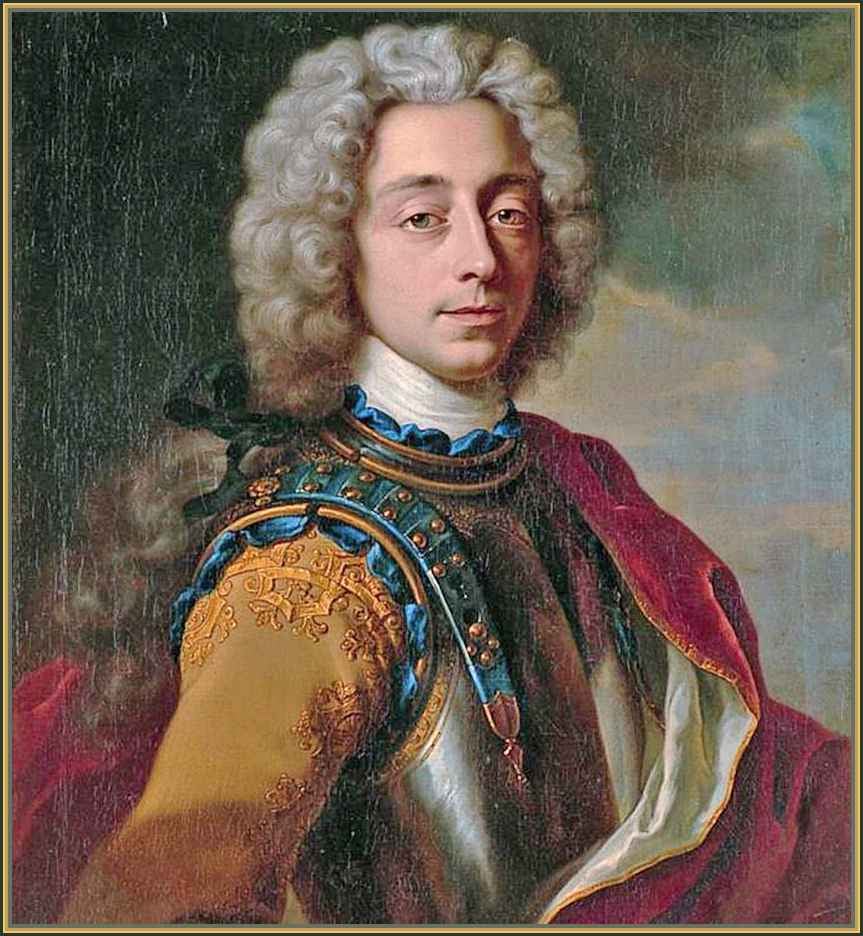
    PICTURED: Supercilious Wassenaer (left) and super-silly Dittersdorf
  • Wassenaer vs Dittersdorf Name Game

    Wassenaer vs Dittersdorf Name Game

    Today’s Birthday Challenge:

    Whose name is more fun to say, Unico Wilhelm van Wassenaer or Carl Ditters von Dittersdorf?

    Wassenaer (1692-1766), the Dutch nobleman who composed his six “Concerti Armonici” on a whim, refused to have them published, until a couple of his friends twisted his arm. Wassenaer would condone it, barely, but only if his name was in no way connected with the material. Instead, the concertos would be attributed to violinist Carlo Ricciotti, who played in their first private performance, and dedicated to Wassenaer’s friend, Count Willem Bentick. A rumor circulated that the collection was actually the work of Giovanni Pergolesi, which is why, in 1920, a movement of the Concerto Armonico No. 2 wound up being used in Stravinsky’s ballet “Pulcinella” (allegedly on Pergolesi themes).

    Here’s how it sounds in the original:

    “…[T]hese concertos were published against my wishes,” Wassenaer wrote. “Some of them are tolerable, some middling, others wretched. Had they not been published, I would perhaps have corrected the mistakes in them, but other business has left me no leisure to amuse myself with them, and I would have caused their editor offence.”

    Dittersdorf (1739-1799) was one of the closest friends of Franz Joseph Haydn.

    He played first violin in a superstar string quartet that also included Haydn (second violin), Mozart (viola) and Dittersdorf pupil Jan Křtitel Vaňhal – a.k.a. Johann Baptist Wanhal (cello). Imagine being a fly on a wall at those performances, or even rehearsals! (Though wet blanket Michael Kelly, the Irish tenor who created Don Basilio and Don Curzio in Mozart’s “The Marriage of Figaro,” claimed the ensemble played well enough, but was nothing exceptional.)

    Among Dittersdorf’s enormous output, which includes some 120 numbered symphonies (it’s possible he may have composed 90 more), are twelve programmatic works inspired by Ovid’s “Metamorphoses.”

    Personally, I find more enjoyment in his chamber music. Here is his String Quartet No. 3 in G major.

    I’d never actually juxtaposed them before today, but of the two composers’ names, I’d have to say, it just tickles me to say “Carl Ditters von Dittersdorf.” How’s about you?

    Happy birthday, boys!


    PICTURED: Supercilious Wassenaer (left) and super-silly Dittersdorf

Tag Cloud

Aaron Copland (92) Beethoven (94) Composer (114) Film Music (117) Film Score (143) Film Scores (255) Halloween (94) John Williams (185) KWAX (228) Leonard Bernstein (99) Marlboro Music Festival (125) Movie Music (132) Opera (197) Philadelphia Orchestra (86) Picture Perfect (174) Princeton Symphony Orchestra (106) Radio (86) Ralph Vaughan Williams (85) Ross Amico (244) Roy's Tie-Dye Sci-Fi Corner (290) The Classical Network (101) The Lost Chord (268) Vaughan Williams (99) WPRB (396) WWFM (881)

DON’T MISS A BEAT

Receive a weekly digest every Sunday at noon by signing up here


RECENT POSTS