Tag: Documentary

  • Perceptive, Gorgeous, and Deeply Moving, “Billy & Molly: An Otter Love Story”

    Perceptive, Gorgeous, and Deeply Moving, “Billy & Molly: An Otter Love Story”

    I confess, at first I was a little hesitant to watch the documentary “Billy & Molly: An Otter Love Story,” given its National Geographic TV premiere earlier this month (now with other streaming options). Anything to do with animals always gets me right in the heart. Even if there’s not death, there’s bound to be separation, and nothing has the potential to devastate me like separation from an adorable otter. I was taken to see “Ring of Bright Water” when I was a kid, and I think it must have traumatized me for life. If the film doesn’t end with an otter wearing a houndstooth vest having tea with a guy, chances are I probably won’t be able to handle it.

    I am proud of myself, then, that, the likelihood of sobbing be damned, I committed to viewing it. This artistically-framed, gorgeously-shot, deeply-moving film not only delivers on the promise of love, but is full of wonder and wit and, yes, depending on your level of sensitivity, pretty much guaranteed to have you furtively wiping away a few tears as it quietly restores your faith in humanity.

    A lost otter turns up on a man’s dock outside his home in the Shetland Islands (the northernmost region of the United Kingdom). It’s undernourished and unsteady and wrestling to get meat out of a crab. The man, Billy, quickly deduces this must be the pup of a mother otter he had seen dead at the side of the road. He has no idea what to do, but he decides to name the pup Molly, and his little, loving gestures deepen into a kind of paternal bond. They also have evident effect, as Molly begins to regain her health and, in her way, repay the investment. Soon Billy and the otter are inseparable.

    What follows is a parallel revivification of both their lives, and also a revitalization of the lives of Billy and his wife, Susan. The movie is as much about the human couple, who take turns narrating the film, as it is about the otter who changes them. Seesawing between patience and exasperation, Susan assists with the installation of a second freezer, as the first has been packed solid with haddock for Molly. At the same time, she shrewdly observes the transformative effect this unusual friendship is having on her husband. A later wrinkle, concerning the installation of WiFi, is hilarious.

    The film’s tone is simple, occasionally wry, and unsentimental, as stoic as Billy is, in fact, understanding that all the warmth and emotion is inherent in the story itself. At points, narrative is stripped away entirely, and we are left only with the beauty of loving interaction. Okay, there are one or two places where you may be overwhelmed by cuteness. I don’t want to ruin anything for you, but just imagine what kind of shelter Wes Anderson might create if he were to befriend a wild otter.

    There’s also an unflappable sheepdog named Jade, who just loves her ball so much, carrying, catching, and headbutting it everywhere (including in a highly-amusing, fabricated dream sequence).

    Director Charlie Hamilton-James finds beauty everywhere. What could be less prepossessing than the idea of winter in sub-arctic Shetland, you might think? But Hamilton-James discovers poetry in raging black seas and austere crags, and amusement and philosophical reflection in a local ceremony involving the ritualistic construction and destruction of a Viking longboat.

    It might be tempting to dismiss Billy’s job at a utility plant as soul-crushing. But again, Hamilton-James frames his visuals such as to imbue the hard hats, the file boxes, the blast furnaces, and the grapple claws with an appealing dignity. There’s organization and purpose to be found even in Billy’s tendency to fold his empty crisps bag into what any American school kid would recognize immediately as a triangular “football.”

    Billy and Susan text back and forth during the course of his workday, as he checks in on Molly. In the meantime, Susan puts together the puzzle pieces of the widening scope of the otter’s freewheeling adventures.

    The human race as a whole may be a lost cause, but every once in a while, one of us exhibits a little grace. That’s certainly the case here with Billy, and God bless him for it. I don’t care what this man’s politics are, how he worships, or what goes on in his bedroom. As Susan observes, “I would rather have a man who cares than one who doesn’t.” What’s important is that Billy cares about the right things.

    He’s so laconic, he would never say so, but his love for Molly is evident from the start. She awakens his paternal instincts, as he does the best he can in the roles of protector and teacher. Ultimately, however, the dynamic flips, and it is Molly who opens Billy’s eyes to the expansive beauty of the world around them – there’s a point where he recognizes a dead animal as another being, “just like us,” as opposed to simply gull food – and he learns the important lesson that the supposed barrier between man and nature is, in the end, a fiction.

    The film makes a powerful conservationist argument while at no point lecturing about conservation. What words are there to equal the persuasive impact of the sublime drone aerial footage and underwater photography? The images, the narrative, the moving simplicity of this love story between man and animal, all speak for themselves.

    “Billy & Molly: An Otter Love Story,” at 1 hour and 17 minutes, is a lesson in trust and the appreciation of simple things and how powerful and transformative they can be. Human and animal, we’re all in the same boat – in this case, quite literally! – and everything is so exquisitely beautiful and fragile.

    I can’t even make it through the trailer now without getting choked up. If you want to feel hopeful about people, our place in the world, and what it means to be alive, watch this movie.
  • Haimovitz Doc New York

    Haimovitz Doc New York

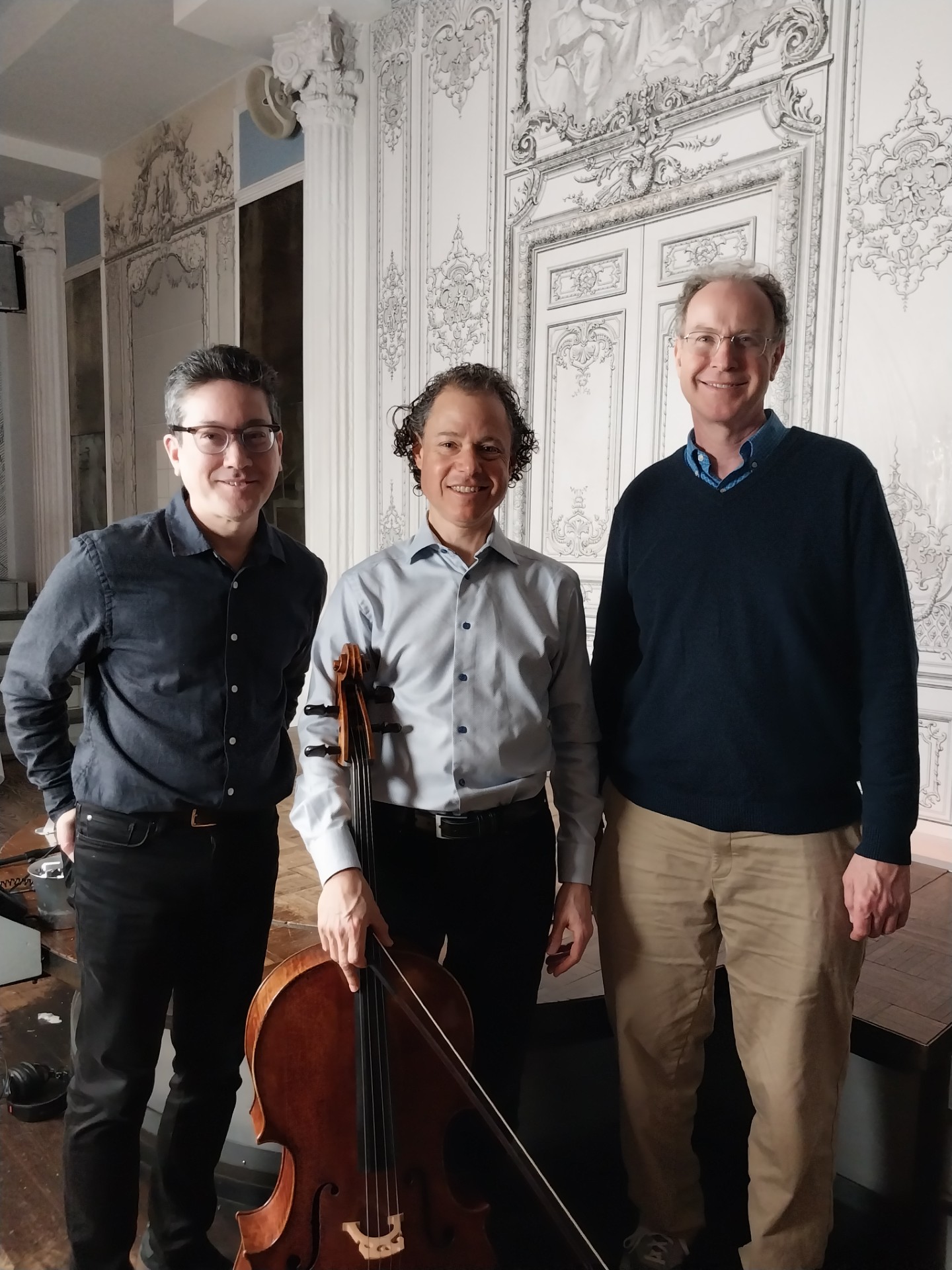
    It’s been a hell of a week for deadlines and social engagements. Now that the weekend’s just about over (and I’ve turned in my newspaper article), I can collapse. Here I am in New York yesterday with filmmaker Paul Moon (left) and cellist Matt Haimovitz, whom I interviewed (from my chair off-camera, thankfully) for a documentary about one of the great, comparatively unsung instrumentalists of the 20th century. Hint: It has something to do with one of Haimovitz’s teachers. A teaser from Day One. More as the project proceeds!

  • Bathtubs Over Broadway: Hidden Musical Gems

    Bathtubs Over Broadway: Hidden Musical Gems

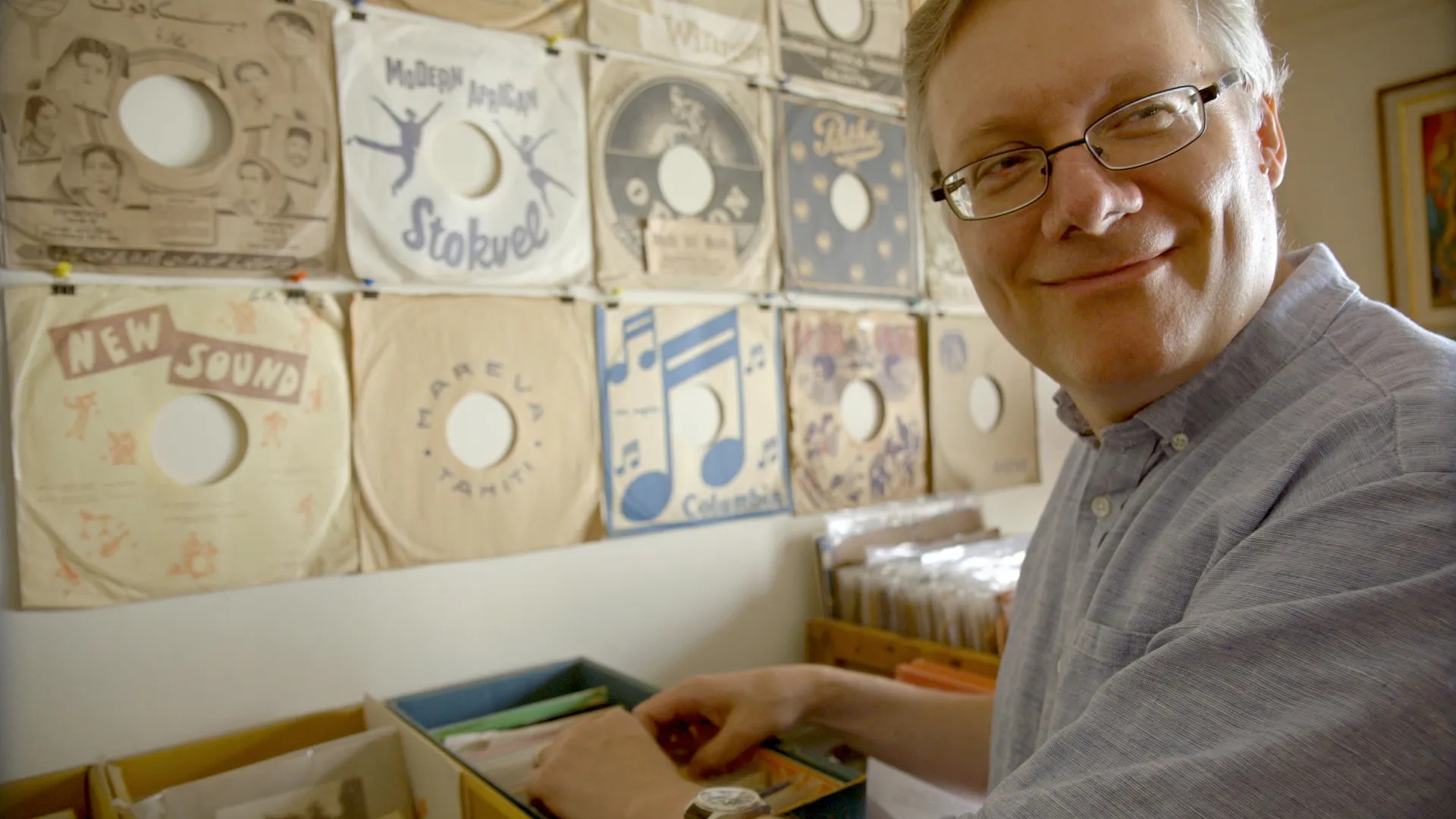
    A couple of weeks ago, one of my prolific music searches brought me to a strange corner of the internet that introduced me to film that was released in 2018 that somehow I had never heard of. Superficially, “Bathtubs Over Broadway” is a documentary about a comedy writer for “The Late Show with David Letterman” who, through his perpetual search for weird LPs to be used as gags on the show, unlocks a world previously unknown to him – that of the industrial musical.

    Industrial musicals were commissioned by America’s great corporations, extolling the magnificence of their products, whether they be tractors, dog food, or bathroom appliances, to be performed as one-offs at national or even regional sales conventions as morale boosters for its employees – mainly hardworking salesmen with unglamorous jobs that often kept them away from the suburban, nuclear family-occupied, pastel homes they were supporting.

    The money and talent lavished on these “shadow musicals” is staggering. The budgets eclipsed those of some of Broadway’s biggest hits. The actors and composers, a number of them future Tony winners, were all drawn from the same pool. Bob Fosse, Tommy Tune, Chita Rivera, Florence Henderson, Tony Randall, Bob Newhart, Hal Linden, Ed McMahon, Martin Short, and the creative forces behind “Fiddler on the Roof,” “Cabaret,” and “The Producers” all worked in industrial musicals. They were lavishly rewarded, I might add. And yet, very few people know of the existence of genre.

    Even if you think you don’t find the subject matter appealing, the film works on multiple levels. It goes without saying that it’s a must for musical theater enthusiasts. But hardcore collectors will totally get the mania of “the quest” and smile knowingly at Steve Young’s encounters with the few quirky people in the world who happen to share the focus of his own particular insanity.

    Furthermore, he makes it his mission to track down a number of the performers and creative artists who actually worked on these musicals. These encounters blossom into real-life friendships, lending the proceedings an unexpected warmth and even poignancy.

    It also makes for fascinating social history. Like any artistic or pop cultural development, the industrial musical holds a mirror to and reflects the realities of the time – in this case, a lost America of the 1950s and ‘60s.

    The entire film is an agreeable 90-minutes well-spent. And I must say, the out-of-left-field meta ending is absolutely perfect.

    I caught it on Netflix a couple of weeks ago. You can watch the trailer here:

    https://www.bathtubsoverbroadway.com/

    “Life can be so rich and wonderful when we step off the logical path and embark on eccentric adventures.” Ain’t that the truth.

  • Lalo Schifrin Awe Inspiring Film Music at 90

    Lalo Schifrin Awe Inspiring Film Music at 90

    Is he a classical composer who writes jazz, or a jazz musician who writes classical? He’s certainly one of the most distinctive composers of film and television music.

    On Lalo Schifrin’s 90th birthday, check out this documentary, which is full of rare footage, film clips, eyewitness accounts, and of course music.

    As I was watching I kept thinking the first few minutes alone should fill you with sufficient awe at Schifrin’s unique talent. But then the accomplishments just kept piling up!

    Thank you, Lalo Schifrin, and happy birthday!

  • Scriabin’s Mystical Vision: A Documentary

    Scriabin’s Mystical Vision: A Documentary

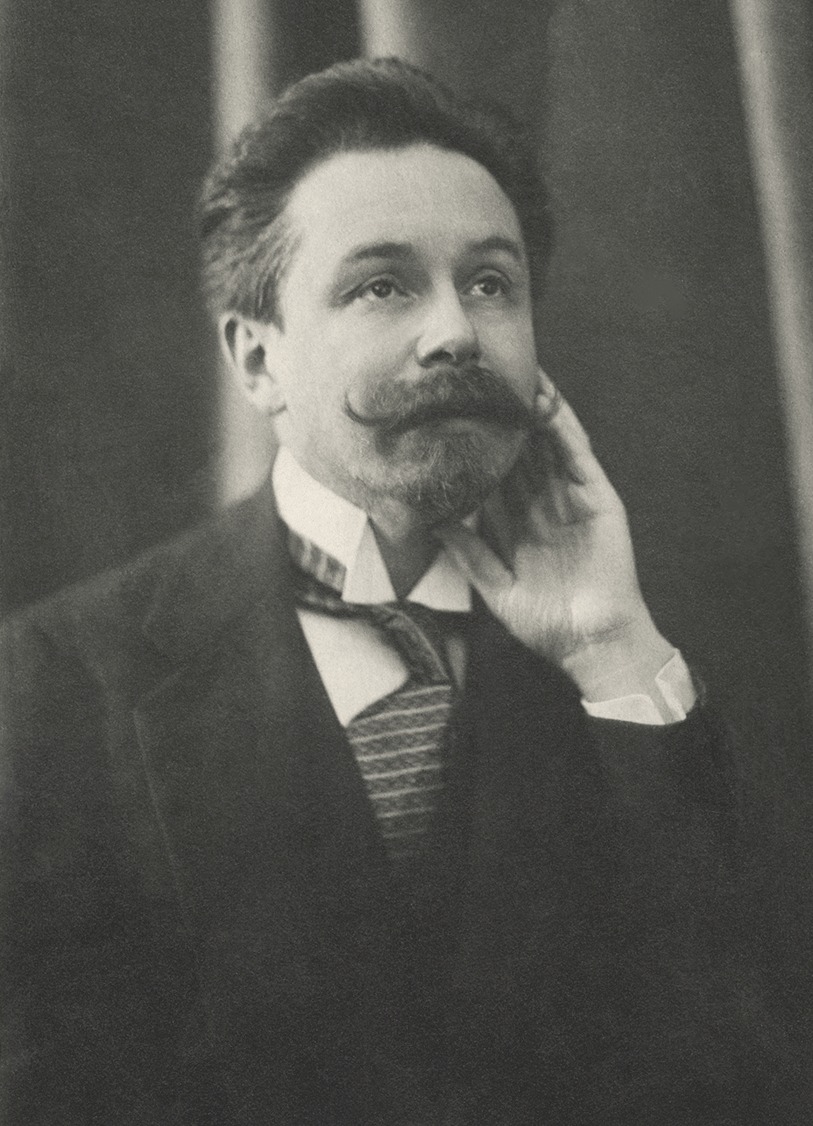
    How crazy was Alexander Scriabin? This documentary will give you a pretty good idea. Only, in providing a glimpse into what made him tick, paradoxically, it makes him seem almost sane.

    Overheated, roiling, euphoric – Scriabin’s music sprang from an impassioned, highly idiosyncratic logic. He began as an ardent admirer of Chopin and developed into a harmonically complex thinker, pushing into atonality and serial composition. He was also influenced by synesthesia, associating specific colors with various notes and keys.

    Pantheism, Nietzsche, and Madame Blavatsky all left their marks. Ultimately, he came to regard himself as a messiah, and he didn’t necessarily mean it metaphorically. He wrote music that he believed quite literally would usher in a new world– a “symphony of fragrances,” scored for, among other things, bells suspended by ribbons from clouds – the piece performed in the foothills of the Himalayas over a span of seven days and nights, at the end of which the human race as we know it would be replaced by nobler beings.

    Death. Love. Peace. It was all the same to Scriabin.

    The documentary includes commentary by Vladimir Horowitz, Vladimir Ashkenazy, Mikhail Pletnev, Håkon Austbø, and Alexander Zemetin, who, for over a quarter century, worked at a realization of Scriabin’s “Prefatory Action” (itself three hours in length) to the apocalyptic “Mysterium.”

    Don’t be confused by the “Old Style” grave marker. The Julian calendar fixes Scriabin’s birthday on December 25, 1871. With the adjustment to the Gregorian system, adopted by Russia in 1918, Scriabin was born on this date – January 6 – 150 years ago.

    In his comparatively brief life, Scriabin aimed very high indeed. As if in punishment for his hubris, his wings were melted by a carbuncle on his upper lip. He died of blood poisoning in April of 1915, at the age of 42.

    Brilliant. Highly-strung. Visionary. Ecstatic. Like the Titan of his orgiastic symphonic poem for piano, orchestra, and clavier à lumières, he was Promethean.

    Happy birthday, Alexander Scriabin.


    “Alexander Scriabin – Towards the Light/Calculation and Ecstasy” (1996)

    https://www.youtube.com/watch?v=E2VmLkzzBMM


    “The Poem of Ecstasy”

    “Prometheus: The Poem of Fire”

    Piano Sonata No. 9 “Black Mass”

    Prefatory Action to “Mysterium”

Tag Cloud

Aaron Copland (93) Beethoven (95) Composer (114) Film Music (136) Film Score (143) Film Scores (255) Halloween (94) John Williams (195) KWAX (229) Leonard Bernstein (103) Marlboro Music Festival (125) Movie Music (151) Mozart (88) Opera (207) Philadelphia Orchestra (89) Picture Perfect (174) Princeton Symphony Orchestra (108) Radio (88) Ross Amico (244) Roy's Tie-Dye Sci-Fi Corner (290) The Classical Network (101) The Lost Chord (268) Vaughan Williams (103) WPRB (396) WWFM (881)

DON’T MISS A BEAT

Receive a weekly digest every Sunday at noon by signing up here


RECENT POSTS