This week on “Sweetness and Light,” on the eve of International Women’s Day, we’ll have lighter works by six female composers: (pictured, clockwise from upper left) Peggy Stuart Coolidge, Elisabeth Lutyens, Teresa Carreño, Cécile Chaminade, Katherine Gladney Wells, and Doreen Carwithen – though not necessarily in that order. One was a crotchety avant-gardist who kept food on the table by writing music for sci-fi/horror films. One played for Abraham Lincoln at the White House. One was an heiress of the Seven-Up fortune.
I’ll fill you in, as concisely as possible, on “Sweetness and Light.” Cherchez les femmes, this Saturday morning at 11:00 EST/8:00 PST, exclusively on KWAX Classical Oregon!
Stream it, wherever you are, at the link:
https://kwax.uoregon.edu/
Tag: Doreen Carwithen
-

Cherchez les Femmes on “Sweetness and Light”
-
Doreen Carwithen Unsung Film Composer
This week on “Picture Perfect,” we’ll shine a light on the shamefully underutilized talent of Doreen Carwithen.
In 1941, Carwithen studied harmony and composition with William Alwyn at London’s Royal College of Music. For both, it was love at first sight. Their fateful pairing led to a decades-long romance that culminated in their marriage, finally, in 1975.
The reason for the delay was, unfortunately, at the time of their meeting, Alwyn happened already to be married. The double-life caused tremendous stress. Alwyn, in particular, descended into alcoholism and suffered a nervous breakdown. Finally, his doctor urged him that, if he was going to live at all, he should get on with it already and live honestly.
In the concert hall, Alwyn – a contemporary of William Walton and Michael Tippett – enjoyed comparative success as a symphonist. Carwithen, too, got off to a promising start. Her overture “ODTAA (One Damn Thing After Another)” was conducted by Adrian Boult at Covent Garden in 1947. She also wrote two award-winning string quartets. But the cinema promised more lucrative employment. Carwithen was the first selected by J. Arthur Rank to enter the college’s new film music program.
Combined, during their heyday, in the 1940s and ‘50s, Alwyn and Carwithen wrote the music for over 100 films. Alwyn, in particular, scored such high-profile projects as “The Crimson Pirate,” “A Night to Remember,” and “The Swiss Family Robinson.” Carwithen, although groomed for the very purpose, was not given the same opportunities. In all, she scored only six dramatic features. The rest were documentaries and shorts.
Neither were her concert works, though well-received, met with the same enthusiasm or eagerness by either programmers or publishers. In 1961, she became Alwyn’s secretary and amanuensis, and following his death in 1985, devoted herself to the preservation of his legacy.
Following her own death, in 2003, discovered among her papers were sketches for an unfinished string quartet (her third), a symphony, and a cello concerto. One can only imagine that, as an artist, her potential remained unfulfilled.
We’ll do our best to level the playing field for an hour, anyway, dividing the program between Alwyn and Carwithen, 50/50, this week, on “Picture Perfect,” music for the movies, now in syndication on KWAX, the radio station of the University of Oregon!
Clip and save the start times for all three of my recorded shows:
PICTURE PERFECT, the movie music show – Friday at 8:00 PM EST/5:00 PM PST
SWEETNESS AND LIGHT, the light music program – Saturday at 11:00 AM EST/8:00 AM PST
THE LOST CHORD, unusual and neglected rep – Saturday at 7:00 PM EST/4:00 PM PST
Stream them, wherever you are, at the link!
-
“Twelve Days of Christmas” Alternatives
My most despised Christmas carol? Why, “The Twelve Days of Christmas,” of course. Fun to sing, maybe, but maddening to listen to. Like “99 Bottles of Beer on the Wall,” with the beer replaced by wassail and eggnog.
But at least it serves to remind us that the Christmas season does not end on Christmas Day.
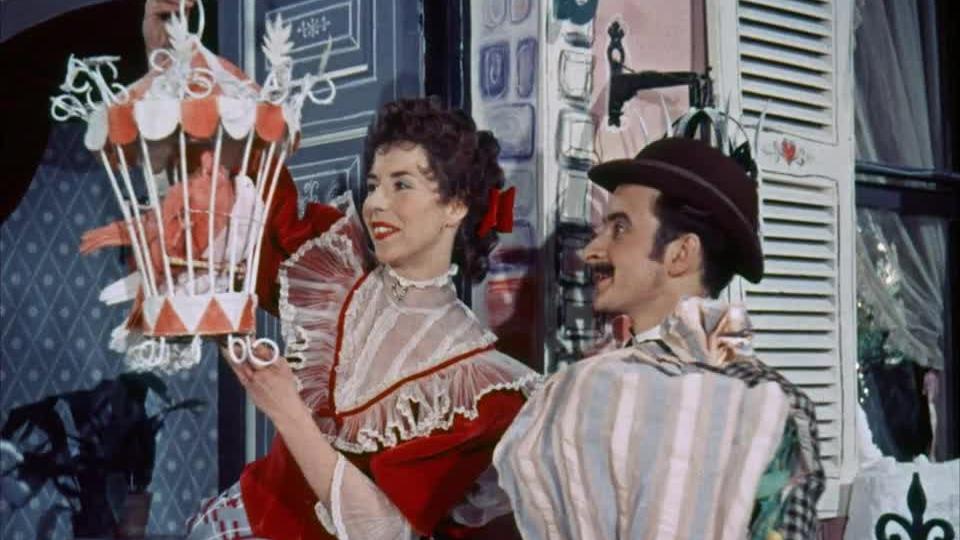
Here’s a real curio: a short film I discovered from the U.K. called “On the Twelfth Day” (1955). I came to it by way of the “back door,” as it were, since I’m familiar with the film’s score, by Doreen Carwithen. Some credit Carwithen with having been the first female full-time film composer. In 20 minutes, the short subject demonstrates what a living hell life would be if someone were actually to receive all those gifts. Even worse than having to listening to the actual carol!
Wendy Toye was the film’s director and devised its scenario. She’s also the unfortunate object of her truelove’s munificence.
Also perhaps of interest, the designs are by Ronald Searle. Searle was the creator of the St. Trinian’s School cartoons, which became the basis for the popular film series. With Albert Finney’s “Scrooge” still fresh in everyone’s minds, Searle also designed and did the paintings for that film’s opening credits.
Previously, Toye and Searle collaborated on the stage play “Wild Thyme” (1955) and subsequently a film, “The King’s Breakfast” (1963). For these projects, Searle designed the décor and costumes and painted the sets. For the films, obviously, he also did the credits. Toye, who was also a dancer and choreographer, included in her projects elements of slapstick, dance, and mime.
Watch “On the Twelfth Day” here:
The carol itself is traditional, its origins reaching way back, but it was English composer Frederic Austin who gave us its modern form in 1909. He codified the melody and lyrics, replacing “colly birds” with “calling birds,” and – the masterstroke – extending the cadence of “five go-old rinnnnnnnnngs.” That’s the part everyone really likes to sing, isn’t it?
Now, Austin is not the best-known of English composers (nor is Carwithen, for that matter), but I’ve always been a bit of a musical Anglophile, so I do have some of his concert works in my collection.
Here’s Austin’s “The Sea Venturers,” from 1935:
And Carwithen’s film score:
I know of two other treatments of this insufferable carol that manage to make it somewhat interesting, and I try to play them every year. The first is “Partridge Pie,” by English composer Richard Rodney Bennett. It’s a piano suite, consisting of wholly original music for each of the twelve days. Thankfully, unlike in the carol as it is sung, the material is not repeated from verse to verse.
Book I
Book II
The other is “A Musicological Journey Through ‘The Twelve Days of Christmas,’” by American composer Craig Courtney. Courtney arranges each of the verses in the style of a different composer or historical era, reaching back to Gregorian chant and culminating in a pseudo-Sousa march. It tickles the ear as no recording of the traditional “Twelve Days” ever does. Here’s my preferred recording, with the Bach Choir of Pittsburgh and the Pittsburgh Brass. Each of the movements is posted separately, so you have to let the playlist run through to enjoy each of the twelve days.
Let the gratuitous gift-giving continue!
-
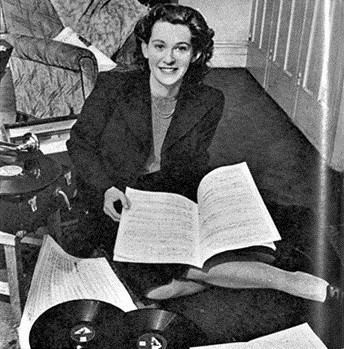
Doreen Carwithen Rediscovered?
On the centenary of her birth, is Doreen Carwithen finally ready for her close-up?
Carwithen has been lauded as the first female film composer. She was certainly the first to study in the Royal Academy of Music’s film program, instituted by J. Arthur Rank in 1946. Could she have been the first woman in the world to have made film music a career? In all, she composed scores for some 30 films, many of them shorts and documentaries, but six of them were features.
Alas, her concert works, while well-received, were not embraced with particular enthusiasm by either programmers or publishers.
Carwithen entered the Royal Academy as a cellist, who could also play violin and piano, in 1941. There, she enrolled in William Alwyn’s harmony class. Before long, he was also teaching her composition. Their mutual attraction was instantaneous, sparking a 30-year romance that culminated in their marriage in 1975.
Unfortunately, at the time of their meeting, Alwyn happened already to be married. The affair proved deleterious to everyone – Carwithen, Alwyn, and Alwyn’s wife – with stress, depression, and physical health issues all around.
When they finally did marry (after Alwyn’s doctor gave him a talking to, pointing out that he was killing everyone by not living honestly), Carwithen preferred to be recognized by her middle name. She had always disliked Doreen. Thereafter, she went by Mary.
In 1961, as her career never really seemed to get off the ground, Carwithen began acting as Alwyn’s secretary and amanuensis. Increasingly, she shifted her focus to supporting and promoting his music at the expense of her own. After all, he was by that time a symphonist of stature, while she wasn’t gaining any traction.
Following Alwyn’s death in 1985, she devoted herself purely to the preservation of his legacy. When she herself died in 2003, she left sketches for a string quartet (which would have been her third), a symphony, and a cello concerto. One can only imagine that, as a creative artist, Carwithen withered on the vine.
Now it seems her time has come. Her overture, “Bishop Rock,” was performed at this year’s BBC Proms (alongside Grace Williams’ “Sea Sketches” and Ralph Vaughan Williams’ “A Sea Symphony”). On a separate concert, her Second String Quartet was also played. Another scheduled overture, “ODTAA (One Damn Thing After Another)” was not heard, as the Last Night of the Proms was cancelled because of the Queen’s death.
I expect, with the increased interest in music by composers marginalized because of race or gender, that we’ll be seeing more recordings and concerts featuring Carwithen’s works.
Here’s an interesting write-up that contains a lot of information about the composer, beyond that usually drawn from her Wikipedia page:
I’ve also been looking for an excuse to post this video of her Piano Sonatina for the last few weeks.
“ODTAA (One Damn Thing After Another),” introduced by Sir Adrian Boult and the London Philharmonic in 1947
Concerto for Piano and Strings, first performed at the Proms in 1952
“Bishop Rock”
String Quartet No. 1
“Suffolk Suite” (1964)
Carwithen wrote the score for the documentary “Elizabeth is Queen” (1953) at white heat. The film was released in theaters three days after Elizabeth’s coronation. The music under the opening credits is arranged from Walton’s “Crown Imperial.” Keep in mind, this is only reel one!
https://www.britishpathe.com/video/elizabeth-is-queen-reel-1-1
Carwithen and Alwyn were the focus of my film music show, “Picture Perfect,” this past Saturday on WWFM – The Classical Network. You can listen to the webcast by following the link below.
Happy birthday, Doreen Carwithen.
-

Doreen Carwithen Unsung Film Composer
This week on “Picture Perfect,” we’ll shine a light on the shamefully underutilized talent of Doreen Carwithen.
In 1941, Carwithen studied harmony and composition with William Alwyn at London’s Royal College of Music. For both, it was love at first sight. Their fateful pairing led to a decades-long romance that culminated in their marriage, finally, in 1975.
The reason for the delay was, unfortunately, at the time of their meeting, Alwyn happened already to be married. The double-life caused tremendous stress. Alwyn, in particular, descended into alcoholism and suffered a nervous breakdown. Finally, his doctor urged him that, if he was going to live at all, he should get on with it already and live honestly.
In the concert hall, Alwyn – a contemporary of William Walton and Michael Tippett – enjoyed comparative success as a symphonist. Carwithen, too, got off to a promising start. Her overture “ODTAA (One Damn Thing After Another)” was conducted by Adrian Boult at Covent Garden in 1947. She also wrote two award-winning string quartets. But the cinema promised more lucrative employment. Carwithen was the first selected by J. Arthur Rank to enter the college’s new film music program.
Combined, during their heyday, in the 1940s and ‘50s, Alwyn and Carwithen wrote the music for over 100 films. Alwyn, in particular, scored such high-profile projects as “The Crimson Pirate,” “A Night to Remember,” and “The Swiss Family Robinson.” Carwithen, although groomed for the very purpose, was not given the same opportunities. In all, she scored only six dramatic features. The rest were documentaries and shorts.
Neither were her concert works, though well-received, met with the same enthusiasm or eagerness by either programmers or publishers. In 1961, she became Alwyn’s secretary and amanuensis, and following his death in 1985, devoted herself to the preservation of his legacy.
After her own death, in 2003, discovered among her papers were sketches for an unfinished string quartet (her third), a symphony, and a cello concerto. One can only imagine that, as an artist, her potential remained unfulfilled.
In anticipation of the centenary of Carwithen’s birth (on November 15, 1921), we’ll do our best to level the playing field, dividing the hour between Alwyn and Carwithen, 50/50, this week, on “Picture Perfect,” music for the movies, this Saturday evening at 6:00 EST, on WWFM – The Classical Network and wwfm.org.
Watch this space: I’ll be writing more about Carwithen and her efforts for the concert hall this Tuesday!
If you enjoy either of my weekly shows (or both!), or any of the other music you hear on The Classical Network, please consider making a contribution today. We’re celebrating our 40th anniversary on the air and online. If you’re in a position to do so, why not make a donation right now at wwfm.org. Thank you in advance for your generosity and for your continued support of WWFM The Classical Network!
Tag Cloud
Aaron Copland (93) Beethoven (95) Composer (114) Film Music (144) Film Score (143) Film Scores (255) Halloween (94) John Williams (195) KWAX (229) Leonard Bernstein (104) Marlboro Music Festival (125) Movie Music (159) Mozart (90) Opera (212) Philadelphia Orchestra (89) Picture Perfect (174) Princeton Symphony Orchestra (109) Radio (88) Ross Amico (244) Roy's Tie-Dye Sci-Fi Corner (290) The Classical Network (101) The Lost Chord (269) Vaughan Williams (105) WPRB (397) WWFM (881)