Tag: Doreen Carwithen

  • Michelle Kwan’s Secret Weapon William Alwyn

    Michelle Kwan’s Secret Weapon William Alwyn

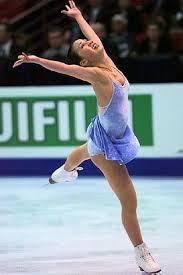
    What composer helped spur Michelle Kwan to Olympic excellence? Kwan skated to William Alwyn’s harp concerto, “Lyra Angelica,” during her legendary free skate at the 1998 Winter Olympics.*

    Polyglot, poet, artist and especially musician, Alwyn played flute for a time with the London Symphony Orchestra. He taught composition at the Royal Academy of Music from 1926 to 1955. He was a composer of symphonies, operas, concertos, string quartets and film scores.

    My personal favorite of the symphonies is No. 4. Dig that cascading scherzo of a second movement! Then feel your heart tug at the third.

    His Symphony No. 3 may be the most structurally amazing, with the first movement generated from an 8-note theme, the second from a 4-note fragment, and the last a combination of the two. By golly, that’s all twelve notes of the chromatic scale – twelve-tone music! Then why is it so damned beautiful?

    Of course, there is much to be said for the simple pleasures of his music for “The Crimson Pirate.”

    In all, Alwyn wrote music for dozens of films, including “Odd Man Out,” “The Fallen Idol,” “A Night to Remember,” and “Swiss Family Robinson.” Fun fact: He was also a cousin of Gary Cooper!

    Stay tuned, next Tuesday I’ll be posting about the love of Alwyn’s life, composer Doreen Carwithen, on the centenary of her birth.

    For the present, happy birthday, William Alwyn (1905-1985)!


    *Attentive listeners will note the interpolation of Satie’s “Gymnopédie No. 1” (in Debussy’s orchestration) in the middle of Kwan’s routine.

    But the inspiring music for harp and strings is all Alwyn. You can hear the complete piece at the link below. Inspired by the metaphysical poetry of Giles Fletcher, it was always a highlight of my radio playlist on an Easter morning.
  • Doreen Carwithen Unsung Film Composer

    Doreen Carwithen Unsung Film Composer

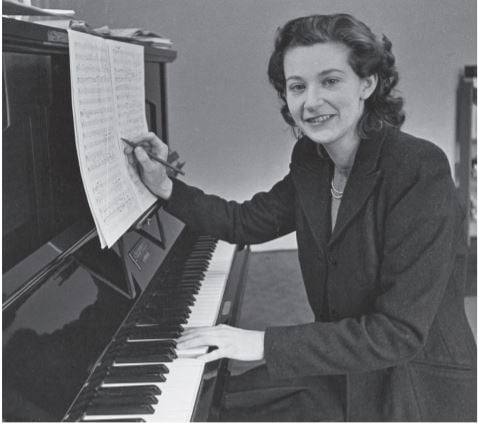
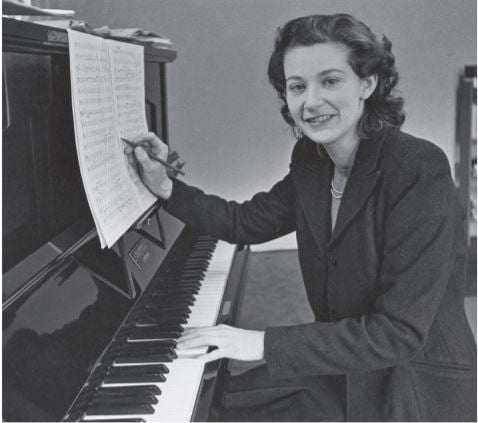
    This week on “Picture Perfect,” we’ll shine a light on the shamefully underutilized talent of Doreen Carwithen.

    In 1941, Carwithen studied harmony and composition with William Alwyn at London’s Royal College of Music. For both, it was love at first sight. Their fateful pairing led to a decades-long romance that culminated in their marriage, finally, in 1975.

    The reason for the delay was, unfortunately, at the time of their meeting, Alwyn happened already to be married. The double-life caused tremendous stress. Alwyn, in particular, descended into alcoholism and suffered a nervous breakdown. Finally, his doctor urged him that, if he was going to live at all, he should get on with it already and live honestly.

    In the concert hall, Alwyn – a contemporary of William Walton and Michael Tippett – enjoyed comparative success as a symphonist. Carwithen, too, got off to a promising start. Her overture “ODTAA (One Damn Thing After Another)” was conducted by Adrian Boult at Covent Garden in 1947. She also wrote two award-winning string quartets. But the cinema promised more lucrative employment. Carwithen was the first selected by J. Arthur Rank to enter the college’s new film music program.

    Combined, during their heyday, in the 1940s and ‘50s, Alwyn and Carwithen wrote the music for over 100 films. Alwyn, in particular, scored such high-profile projects as “The Crimson Pirate,” “A Night to Remember,” and “The Swiss Family Robinson.” Carwithen, although groomed for the very purpose, was not given the same opportunities. In all, she scored only six dramatic features. The rest were documentaries and shorts.

    Neither were her concert works, though well-received, met with the same enthusiasm or eagerness by either programmers or publishers. In 1961, she became Alwyn’s secretary and amanuensis, and following his death in 1985, devoted herself to the preservation of his legacy.

    After her own death, in 2003, discovered among her papers were sketches for an unfinished string quartet (her third), a symphony, and a cello concerto. One can only imagine that, as an artist, her potential remained unfulfilled.

    We’ll do our best to level the playing field this week, dividing the hour between Alwyn and Carwithen, 50/50, on “Picture Perfect,” music for the movies, this Saturday evening at 6:00 EDT, on WWFM – The Classical Network and wwfm.org.


    Remember, you can help support “Picture Perfect” by making a donation at wwfm.org. Enjoy a sense of satisfaction as you cause the mercury to rise in the thermometer on the station’s homepage. Less than 100 contributions in any amount will bring this year’s Bach 500 to a close. Tomorrow is Bach’s birthday, the end of the campaign, so why not do it now? Thank you for your support of The Classical Network!

    https://wwwfm.secureallegiance.com/wwfm/WebModule/Donate.aspx?P=DEFAULT&PAGETYPE=PLG&CHECK=vOU2bz5JCWmgCDbf53nm9ezWDeZ%2beA1M

  • Doreen Carwithen Rediscovered Composer

    Doreen Carwithen Rediscovered Composer

    In honor of the Clara Schumann bicentennial (she was born 200 years ago today), I am doing my best to honor the contributions of women composers all month long by finding ways to incorporate their music into my regular broadcasts. This week on “Picture Perfect,” I’ll shine a light on Doreen Carwithen.

    Carwithen was a pupil of William Alwyn, with whom she studied harmony and composition at the Royal College of Music in London. Alwyn, a contemporary of William Walton, enjoyed comparative success in the concert hall. Carwithen was the first to be selected by J. Arthur Rank to enter the college’s new film music program. For Carwithen and Alwyn, it was love at first sight. Their 30-year romance culminated in the couple’s marriage in 1975.

    The reason for the delay, unfortunately, was that Alwyn happened already to be married. This double life caused tremendous stress, taking a toll on both of their health and driving Alwyn, in particular, to alcoholism and ultimately a nervous breakdown. Finally, his doctor recommended that he get on with it already and live honestly.

    Combined, during their heyday in the 1940s and ‘50s, Alwyn and Carwithen wrote the music for over 100 films. Alwyn, in particular, scored such high-profile projects as “The Crimson Pirate,” “A Night to Remember,” and “The Swiss Family Robinson.” Although groomed for a career in film, Carwithen was not given the same opportunities. She scored only six dramatic features. The rest were documentaries and shorts.

    Her concert works, while well-received, were not met with enthusiasm or eagerness by either programmers or publishers. In 1961, she became Alwyn’s secretary and amanuensis, and following his death in 1985, devoted herself to the preservation of his legacy.

    At the time of her own death, in 2003, discovered among her papers were sketches for an unfinished string quartet (her third), a symphony, and a cello concerto. One can only imagine that, as an artist, her potential remained unfulfilled.

    I’ll do my best to level the playing field by dividing the hour between Alwyn and Carwithen, 50/50, on “Picture Perfect” – music for the movies – this Friday evening at 6:00 EDT, on WWFM – The Classical Network and wwfm.org.

Tag Cloud

Aaron Copland (92) Beethoven (95) Composer (114) Film Music (120) Film Score (143) Film Scores (255) Halloween (94) John Williams (185) KWAX (229) Leonard Bernstein (100) Marlboro Music Festival (125) Movie Music (135) Opera (198) Philadelphia Orchestra (88) Picture Perfect (174) Princeton Symphony Orchestra (106) Radio (87) Ralph Vaughan Williams (85) Ross Amico (244) Roy's Tie-Dye Sci-Fi Corner (290) The Classical Network (101) The Lost Chord (268) Vaughan Williams (103) WPRB (396) WWFM (881)

DON’T MISS A BEAT

Receive a weekly digest every Sunday at noon by signing up here


RECENT POSTS