Tag: Dutilleux

  • Halloween Music Beethoven’s Ghost Trio & Dutilleux

    Halloween Music Beethoven’s Ghost Trio & Dutilleux

    Halloween is only eight days away. On this week’s “Music from Marlboro” we’ll get into the spirit with some ghostly utterances by Beethoven and Henri Dutilleux.

    Beethoven had already been dead for fifteen years at the time his star pupil, Carl Czerny, remarked that the slow movement of one of the piano trios reminded him of Banquo’s ghost. It turns out, Czerny may not have been all that far off the mark.

    In 1808, while Beethoven was at work on his Piano Trio in D major, Op. 70, No.1, he was actually contemplating writing an opera on the subject of Macbeth. The words “Macbett” and “Ende” were scrawled near sketches for the Largo in one of his notebooks. Some scholars speculate that the composer may have been working out ideas for a projected scene with the three witches.

    The mood is certainly ominous, heightened by eerie and mournful passages, sudden pauses and outbursts, and a kind of ghostly tremolo. Beethoven would abandon the opera, when his librettist, Heinrich Joseph von Collin (to whom he had dedicated the “Coriolan Overture”), begged off the project, thinking it too dark.

    Allegedly, the “Ghost Trio” contains the slowest of all slow movements in Beethoven’s output. By some standards, it might also be said to be the most impressionistic. All the more appropriate, then, that we hear it coupled with Dutilleux’s “Ainsi la nuit” (“Thus the Night”).

    Dutilleux’s seven-movement string quartet, meticulously crafted between 1973 and 1976, has often been described as Impressionist. However, subjectively speaking, it must be Impressionism by way of Guillermo del Toro. Let’s face it, folks, masterpiece or no, this “Night” can be a little creepy.

    Dutilleux claimed he wrote the work after coming off intensive studies of the scores of Bartók, Webern, and yes, Beethoven. I think he may have been hitting the cheese plate a little too close to bed time.

    We’ll hear a performance from the 2001 Marlboro Music Festival, with violinists Joseph Lin and Harumi Rhodes, violist Richard O’Neill, and cellist Marcy Rosen.

    Beethoven’s “Ghost Trio” was performed in 2015, by pianist Dénes Várjon, violinist Michelle Ross, and cellist Brook Speltz, on tour in Washington, DC.

    The first of this season’s Marlboro tours is already underway. Remaining performances will take place tonight, at the Perleman Theater in the Kimmel Center for the Performing Arts in Philadelphia; tomorrow, at the Freer Gallery’s Meyer Auditorium in D.C.; and Sunday, at Longy School of Music in Boston. On the program are works by Mozart, Beethoven and Brett Dean. For more information, visit marlboromusic.org.

    Then join me for an hour of weird music and uncanny performances on the next “Music from Marlboro,” this Wednesday evening at 6:00 EDT, on WWFM – The Classical Network and wwfm.org.

    Marlboro School of Music and Festival: Official Page
  • Licorice Sticks Beethoven Dutilleux at Marlboro

    Licorice Sticks Beethoven Dutilleux at Marlboro

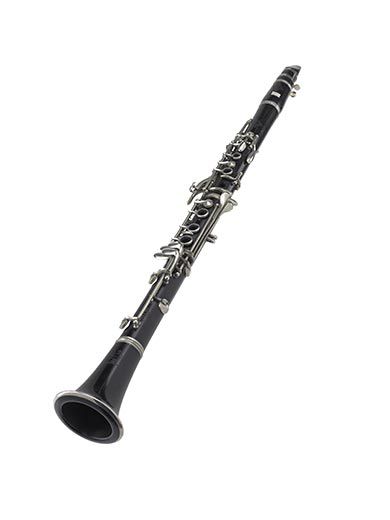
    I hope you’re in the mood for some licorice stick. On this week’s “Music from Marlboro,” our program will be bookended by two works for clarinet trio.

    For Darius Milhaud, as a member of that loose collective known as “Les six,” tomfoolery and high-spirits were a matter of course. Milhaud’s Suite for Violin, Clarinet and Piano, composed in 1936, revisits material from incidental music written for Jean Anouilh’s play “Le Voyageur sans bagages” (“The Traveler without Luggage”). The play deals with an amnesiac World War I soldier attempting to reestablish his identity. Milhaud might seem like an unlikely source for such a serious subject – but then the drama turns out to be a comedy!

    The piece falls into four movements: “Ouverture;” “Divertissement;” “Jeu” (literally “Game”); and “Introduction et Final.” We’ll hear it performed at the 1971 Marlboro Music Festival by violinist Marilyn Dubow, clarinetist Richard Stoltzman, and pianist David Effron.

    All things considered, Beethoven tended to be a little more severe than Milhaud. If there is play in his music, it is the play of a cat, pursuing a musical idea relentlessly, batting it around, adopting an air of calm, and then tearing off its appendages and hammering it through the floorboards.

    Even if that is not your idea of a good time, there is plenty to smile about in his Trio in B-flat, Op. 11. Sometimes identified by the nickname “Gassenhauer,” the work borrows a theme for its third movement set of variations from the drama giocoso (literally, drama with jokes) “L’amor marinaro ossia il corsaro” by Joseph Weigl. Weigl, by the way, was Haydn’s godson.

    “Gassenhauser” denotes a certain kind of popular music, a tune picked up by your average man in the street, and sung or whistled oblivious to its origins. The melody was so well-known, in fact, that it was also treated by Johann Nepomuk Hummel and Niccolo Paganini, among others.

    You’ll sometimes hear the trio performed with a violin in place of the clarinet – the cello is also sometimes swapped out for a bassoon – but for our purposes this evening we’ll go with the distinctive timbres of the sanctioned version for clarinet trio. Again, Richard Stoltzman will be the clarinetist, alongside cellist Alain Meunier, and pianist (and Marlboro co-founder) Rudolf Serkin.

    In between, we’ll experience something completely different. Henri Dutilleux meticulously crafted his seven-movement string quartet, “Ainsi la nuit” (Thus the Night), between 1973 and 1976, after intensive studies of the works of Beethoven, Bartok, and Webern, and a series of preliminary sketches he called “Nights.” All the hard work certainly paid off – the quartet was embraced as a modern masterpiece – though, to my ears, I’ve yet to find any humor in it.

    We’ll hear a performance from Marlboro in 2001. Joseph Lin and Harumi Rhodes will be the violinists, Richard O’Neill the violist, and Marcy Rosen the cellist.

    It’s said that licorice is very good for the digestion. You’ll find plenty to chew on, on this week’s “Music from Marlboro. Join me this Wednesday evening at 6:00 EDT, on WWFM – The Classical Network and wwfm.org.

    Marlboro School of Music and Festival: Official Page

  • Saint-Saëns Mozart & Marlboro

    Saint-Saëns Mozart & Marlboro

    On this All Saints’ Day, we’ll have music by Saint-Saëns, to open this week’s “Music from Marlboro.” In fact, works by two former prodigies will frame tonight’s program.

    Saint-Saëns demonstrated perfect pitch at the age of two and gave his first public concert at the age of five. He was 72, at the other end of a very long career, when he composed his Fantaisie, Op. 124. We’ll hear it performed by violinist Thomas Zehetmair and harpist Alice Giles, from the 1982 Marlboro Music Festival.

    Mozart, of course, was composing from the age of five; he wrote his first symphony at the age of eight. He lived less than half as long at Saint-Saëns (who died at 86), but in his comparatively brief span managed to hit greater heights. We’ll conclude with Mozart’s Piano Trio in B-flat major, K. 502, written in 1786, when he was about 30 years-old and at the peak of his powers. We’ll hear a recording made at Marlboro in 1968, with pianist (and Marlboro co-founder) Rudolf Serkin, violinist Jaime Laredo, and cellist Madeline Foley.

    In between, we’ll have “Ainsi la nuit” (Thus the Night) by Henri Dutilleux. The seven-movement string quartet was meticulously crafted by the composer between 1973 and 1976, after intensive study of the works of Beethoven, Bartok, and Webern, and a series of preliminary sketches he called “Nights.” Nevermind the prodigy status; Dutilleux was about 60 at the time he completed the piece. All the hard work certainly paid off – the quartet was embraced as a modern masterpiece. We’ll hear it performed at Marlboro in 2001 by violinists Joseph Lin and Harumi Rhodes, violist Richard O’Neill, and cellist Marcy Rosen.

    I hope you’ll join me for music by Saint-Saëns, Dutilleux, and Mozart, on the next “Music from Marlboro,” this Wednesday evening at 6 EDT, on WWFM – The Classical Network and wwfm.org.

    Marlboro School of Music and Festival: Official Page


    Caricature of Saint-Saëns playing the harp, by his pupil, Gabriel Fauré

Tag Cloud

Aaron Copland (92) Beethoven (94) Composer (114) Film Music (117) Film Score (143) Film Scores (255) Halloween (94) John Williams (185) KWAX (228) Leonard Bernstein (99) Marlboro Music Festival (125) Movie Music (132) Opera (197) Philadelphia Orchestra (86) Picture Perfect (174) Princeton Symphony Orchestra (106) Radio (86) Ralph Vaughan Williams (85) Ross Amico (244) Roy's Tie-Dye Sci-Fi Corner (290) The Classical Network (101) The Lost Chord (268) Vaughan Williams (101) WPRB (396) WWFM (881)

DON’T MISS A BEAT

Receive a weekly digest every Sunday at noon by signing up here


RECENT POSTS