Tag: Easter

  • Epic Biblical Film Scores for Passover & Easter

    Epic Biblical Film Scores for Passover & Easter

    Passover begins tonight, and Sunday is Easter. Time to Bible-up!

    This week on “Picture Perfect,” religion takes a back seat to spectacle, with an hour of music from mid-century Hollywood epics, including “Samson and Delilah” (Victor Young), “Solomon and Sheba” (Mario Nascimbene), “Sodom and Gomorrah” (Miklós Rózsa) and “The Ten Commandments” (Elmer Bernstein).

    We begin and end with two Cecil B. DeMille productions. DeMille could always be counted on to give his audience a good show. Both “Samson” and “The Ten Commandments” feature sultry temptresses, violent, bare-chested men, and plenty of austere moralizing. The climactic special effects in both films are still sublime.

    Tyrone Power was originally cast as Solomon in King Vidor’s “Solomon and Sheba.” However, he died of a massive heart attack during shooting (at the age of 44), paving the way for Yul Brynner to assume the role of the wise king. Brynner, of course, would later become DeMille’s pharaoh Rameses. With Gina Lollobrigida as the Queen of Sheba, you know there has to be an orgiastic dance.

    Miklós Rózsa characterized “Sodom and Gomorrah” as “an intriguing subject which developed into a bad picture,” and most critics agreed. Any film that casts Stewart Granger as Lot should be taken with a pillar of salt. Rózsa determined not to score any more Biblical epics after “Sodom,” though his music is nothing to be ashamed of. It possesses that classic Rózsa epic sound, much beloved thanks to his work on “Quo Vadis,” “Ben-Hur” and “King of Kings.”

    Chariots! Tunics! Histrionic acting! The music will be epic, this Friday evening at 6:00 EDT, on WWFM – The Classical Network. (Please note: if the time happens to conflict with your Seder, the show will be posted next week as a webcast, at wwfm.org.)


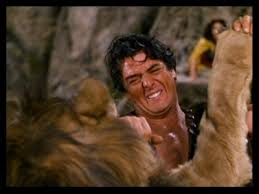
    PHOTOS: Victor Mature’s stuffed lion vs. Charlton Heston’s cotton candy beard

  • Easter Joy Vaughan Williams & Metaphysical Poets

    Easter Joy Vaughan Williams & Metaphysical Poets

    For me, it just isn’t Easter until I’ve heard Ralph Vaughan Williams’ “Five Mystical Songs.” I defy anyone not to be uplifted by the opening song of the cycle, titled, appropriately enough, “Easter.” The songs are settings of poems by George Herbert (1593-1633). This Sunday night on “The Lost Chord,” we’ll hear a classic recording, with bass-baritone John Shirley-Quirk, as part of a program devoted to the 17th century metaphysical poets.

    We’ll also hear William Alwyn’s “Lyra Angelica” of 1954, a harp concerto inspired by Giles Fletcher’s epic poem of 1610, “Christ’s Victorie and Triumph.” The composer regarded it as his most beautiful piece, and I am inclined to agree. The work likely received its widest exposure when Michelle Kwan elected to skate to it during the 1988 Olympics.

    Finally, we’ll have a lute song setting by John Hilton of a poem by John Donne, “Wilt thou forgive that sinne,” from an album on the Harmonia Mundi label, titled “The Rags of Time.”

    I hope you’ll join me for “Donne Deal” – an hour of metaphysical therapy – this Easter Sunday at 10 p.m. EDT, on WWFM – The Classical Network and wwfm.org.

  • Holy Week Music on WPRB

    Holy Week Music on WPRB

    Have you got a passion for Passions? Do you think Stabat Maters matter? Tune in to WPRB this Thursday morning for music for Holy Week. That’s right, it’s wholly music for Passiontide.

    Well, not wholly. We’ll have some selections of a broadly mystical nature (William Alwyn’s harp concerto, “Lyra Angelica,” for instance), works of a meditative bent (for example, John Tavener’s “Song of the Angel”), and perhaps a couple of pieces concerning hope and renewal (such as Edmund Rubbra’s “Resurgam Overture”).

    Otherwise, it will be music inspired by the Passion story, ranging roughly from Palm Sunday through, possibly, the observance of Russian Easter. Some of it will be purely orchestral (Victor de Sabata’s “Gethsemani”) and some will include vocal soloists and chorus (Osvaldo Golijov’s Latin-inflected “La Pasión según San Marcos”).

    In addition, a certain listener has been requesting Eugene Ormandy’s recording of Respighi’s “Church Windows” since June, probably. Now seems as good a time as any to blast that out. For my own edification, I have to play Vaughan Williams’ “Five Mystical Songs,” with the great John Shirley-Quirk. It just isn’t Easter for me without the “Five Mystical Songs.”

    At 9:00, we’ll take a break from Holy Week for a special visit from Douglas Martin, artistic director of American Repertory Ballet, and Marc Uys, executive director of the Princeton Symphony Orchestra. They’ll drop by to talk about Martin’s new ballet, “Pride and Prejudice,” which sets the classic novel by Jane Austen to music by Ignaz Pleyel. The PSO will provide live musical accompaniment for the dancers, at McCarter Theatre Center on April 21 & 22.

    This is a radio show, not a church service, so nobody freak out if an “Alleluia” or a “Gloria” slip into the mix, okay? We’re here to celebrate the music, not to scrupulously observe the minutiae of tradition. I’ll be lining the CD cases with Easter grass, tomorrow morning from 6 to 11 EDT, on WPRB 103.3 FM and at wprb.com, and wishing you peace, hope, and happiness, on Classic Ross Amico.

  • Easter Vivaldi and Mom’s Love of Music

    Easter Vivaldi and Mom’s Love of Music

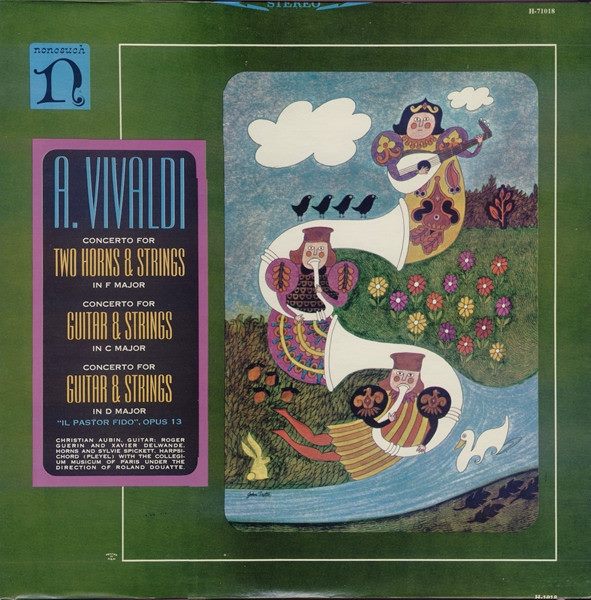
    One of my favorite Easter memories is of when I came downstairs and found a couple of Vivaldi LPs next to my basket. Now, Vivaldi isn’t even remotely my favorite composer, but I thought that was just the greatest thing ever. I listened to those records with every bit as much pleasure as I experienced when I devoured my chocolate rabbit (and of course they’ve lasted a great deal longer).

    That’s the kind of thoughtful gesture my mom would make. She always started with something nice and then took it to the next level. Mom was fond of Vivaldi’s Guitar Concerto in D. We weren’t a “classical music” family – I was the first to fall under the spell – but Mom caught on fast. She liked Vivaldi and Bach and jogged to Sousa marches.

    That’s not to say she didn’t always have an appreciation for it. She took me to plenty of piano and chamber recitals after she realized I had been bitten by the bug, and we attended every Gilbert & Sullivan production in the area. She encouraged me in my record collecting. I wonder if she ever thought, “My god, what have I done?”

    In her last few years, Mom became interested in learning more about opera, after I had gotten her a nice compilation of arias for a gift. I could see she was a little puzzled by it at first, though Mom being Mom, she never would have expressed anything other than gratitude. But she actually grew to really enjoy it.

    A number of years earlier, she had attended part of a dress rehearsal for “The Marriage of Figaro” I had assistant stage managed with what was then the Opera Company of Philadelphia. It made her proud to see me in the wings with my headset, doing something I enjoyed (which was mostly cueing singers when it was time for them to go on and signaling stage hands when to smash flower pots). There was a lot of funny business on stage, though no supertitles until the actual performances. But it was pure farce, with powdered wigs flying around and people diving under furniture. I think she probably was already interested in seeing a complete opera then. I don’t know why my parents couldn’t make that one – they lived only about an hour and a half away – since that would have been pretty much ideal.

    Instead, I wound up taking her to a threadbare production of Boito’s “Mefistofele” at the New York City Opera. It was essentially the same production Norman Treigle had triumphed in, in the early 1970s, but 20 years later it was looking kind of shabby – which surprised me, since everything I had seen at City Opera up until that point (Korngold’s “Die tote Stadt,” Busoni’s “Doktor Faust,” Hindemith’s “Mathis der Maler,” Tippett’s “The Midsummer Marriage”) had been so good. I should have just taken her across the plaza to the Met for a buffo romp. It’s one of my regrets that I did not. Hopefully they’ve got “Figaro” in heaven.

    Our last concert together featured the Chamber Orchestra of Philadelphia in Mozart’s final three symphonies.

    Happy birthday, Mom. Thanks for everything.

  • Easter Music: Cathedrals in Sound

    Easter Music: Cathedrals in Sound

    Happy Easter, everyone! I’ve been all tied up with Easter activities for most of the day, so I’m only just getting around to extending the invitation for you to cap off your Sunday by joining me on “The Lost Chord” for an hour of pieces inspired or influenced by cathedrals.

    We’ll hear Jennifer Higdon’s “blue cathedral” (all lower-case), from 1999, commissioned by the Curtis Institute of Music in honor of its 75th anniversary. The work is dedicated to the memory of Higdon’s younger brother, Andrew Blue. In the writing of the piece, she imagined a journey through a glass cathedral in the sky, with transparent walls and crystal pillars, through which clouds and endless expanses of blue would be visible.

    Guitarist-composer Agustin Barrios wrote “La Catedral” (“The Cathedral”) in 1921, after having heard music of Johann Sebastian Bach performed on the organ of the cathedral of San Juan Bautista de las Misiones in his native Paraguay.

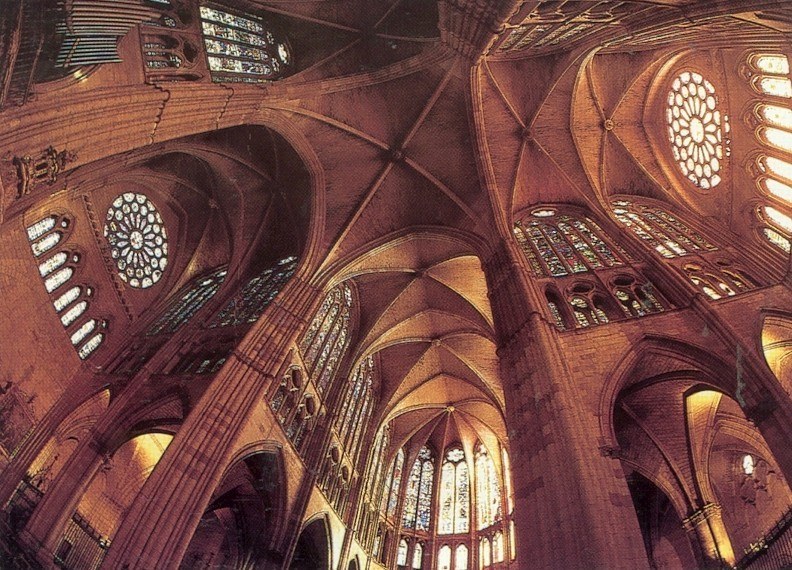
    Englishman Joby Talbot composed “Path of Miracles” in 2005. The work – dedicated to the memory of his father, Vincent – was written on a commission from the vocal chamber group Tenebrae. Its four movements reflect stops along the medieval pilgrimage route to Santiago. The third of these, an evocation of León Cathedral, is imagined as a kind of “Lux Aeterna,” the interior of the space bathed in light.

    Finally, American composer Adolphus Hailstork recollected his experiences as a child chorister at the Cathedral of All Saints in Albany, New York, when he came to write his “Sonata da Chiesa” (“Church Sonata”) in 1992. Hailstork, composer-in-residence at Old Dominion University in Norfolk, Virginia, conceived the work’s seven vibrant sections – “Exaltation,” “O Great Mystery,” “Adoration,” “Jubilation,” “O Lamb of God,” “Grant Us Thy Peace,” and “Exaltation” – for string orchestra, providing a joyous conclusion to the hour.

    I hope you’ll join me for “Master Builders: Architects of Cathedrals in Sound,” tonight at 10 EDT, with a repeat Wednesday evening at 6; or that you’ll listen to it later as a webcast at wwfm.org.


    PHOTO: The vaulted ceiling of León Cathedral

Tag Cloud

Aaron Copland (92) Beethoven (95) Composer (114) Film Music (120) Film Score (143) Film Scores (255) Halloween (94) John Williams (185) KWAX (229) Leonard Bernstein (100) Marlboro Music Festival (125) Movie Music (135) Opera (198) Philadelphia Orchestra (88) Picture Perfect (174) Princeton Symphony Orchestra (106) Radio (87) Ralph Vaughan Williams (85) Ross Amico (244) Roy's Tie-Dye Sci-Fi Corner (290) The Classical Network (101) The Lost Chord (268) Vaughan Williams (103) WPRB (396) WWFM (881)

DON’T MISS A BEAT

Receive a weekly digest every Sunday at noon by signing up here


RECENT POSTS