Tag: Eastman School of Music

  • Howard Hanson Romantic Symphony & Film

    Howard Hanson Romantic Symphony & Film

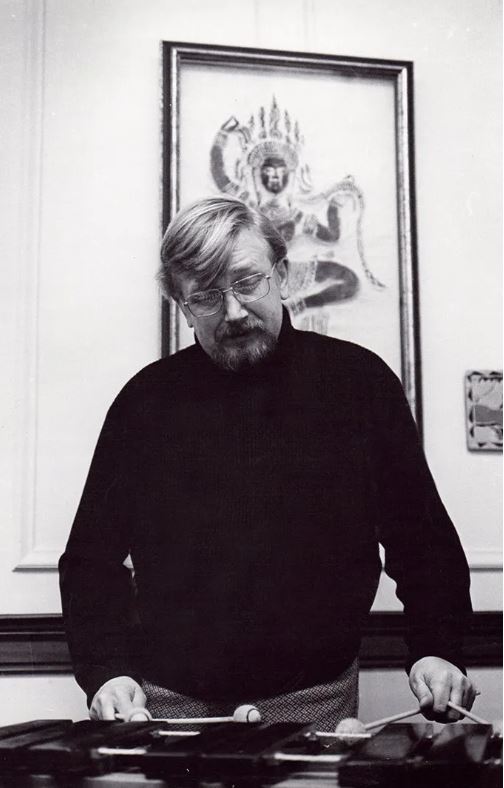
    I don’t know if I ever shared this before – from the Classic Ross Amico Cabinet of Curiosities, an inscribed photo of Howard Hanson.

    For 40 years, Hanson was director of the Eastman School of Music, in which capacity he nurtured and championed innumerable American composers, giving literally thousands of premieres at the helm of the Eastman-Rochester Orchestra (an ensemble he founded). The lucky ones found their way onto records, issued on the Mercury label.

    Hanson, of course, was himself a composer. He was awarded the Pulitzer Prize for Music in 1944, for his Symphony No. 4 “Requiem,” written in memory of his father. But his best-known music, unquestionably, is his Symphony No. 2 “Romantic,” composed in 1930.

    A cassette tape of the piece must have been circulating in Hollywood, beginning in the late 1970s. It started turning up in the movies, either directly, as in the end credits to “Alien” (1979), or as thinly-veiled homage, as in the bicycle chase and finale of “E.T. The Extra-Terrestrial” (1982). More recently, Hans Zimmer cribbed it for “The Boss Baby” (2017).

    I can understand the allure. The quintessential “Hanson sound” is one of heart-on-the-sleeve romanticism, characterized by glowingly nostalgic melodies. But the composer also had his severe side. As the offspring of Swedish immigrants in Wahoo, Nebraska, he was also inclined to a certain Nordic austerity, especially in his later works.

    I never met Dr. Hanson myself, but he has all my respect and gratitude. Happy birthday, Howard Hanson!


    Romantic Hanson, incongruously, in “Alien”

    Hans Zimmer cribs for “The Boss Baby”

    John Williams’ most glorious music, for the last 15 minutes of “E.T.,” would not have been the same without his influence

    As it’s heard in the original

    Romantic Symphony (complete)

    Piano Concerto

    “Elegy in Memory of Serge Koussevitzky”

    Koussevitzky conducts Hanson’s Symphony No. 3 (in commemoration of the 300th anniversary of the first Swedish settlement in Delaware)

    “Pastorale” for Oboe, Harp and Strings

  • Howard Hanson’s Bold Island Inspiration

    Howard Hanson’s Bold Island Inspiration

    For many, the prospect of having to work through vacation can be a real drag; but for the creative artist, getting away can be a welcome opportunity to really get things done.

    This week on “The Lost Chord,” we’ll hear three pieces associated with Bold Island, Maine, the summer home of Howard Hanson.

    For 40 years, Hanson was director of the Eastman School of Music. In that capacity he nurtured and championed innumerable American composers, giving literally thousands of premieres at the helm of the Eastman-Rochester Orchestra, an ensemble he founded. The lucky ones made it onto Hanson’s records on the Mercury label.

    Hanson, of course, was himself a composer. He was awarded the Pulitzer Prize for Music in 1944, for his Symphony No. 4 “Requiem,” written in memory of his father. But his best-known music, undoubtedly, is his Symphony No. 2 “Romantic,” composed in 1930.

    The famous “Hanson sound” is one of heart-on-the-sleeve romanticism, characterized by glowingly nostalgic melodies, though he also had his severe side. After all, he was born in Wahoo, Nebraska, to Swedish parents, and a certain Nordic austerity can be detected, especially in his later works.

    His Symphony No. 6, of 1967, is more tightly argued than his earlier, more famous symphonies. Its six brief movements are built on a recurring motif. At times, it can sound a bit like Sibelius, though Hanson very much remains his own man. Hanson being Hanson, he doesn’t really skimp on the lyricism, but he doesn’t exactly indulge it to the same extent he does in the earlier works. Still, predictably, the symphony was derided as old-fashioned by the genuinely austere musical establishment of the day.

    The Bold Island connection is through Hanson’s “Summer Seascape No. 2,” written a few years earlier, and clearly the blueprint for the symphony. In fact, the opening of the symphony is identical.

    Hanson’s first “Summer Seascape” forms the centerpiece of his “Bold Island Suite,” a separate work composed in 1961. The suite also contains movements with the descriptive titles “Birds of the Sea” and “God in Nature.”

    The North Atlantic inspires some august music, on “August Hanson,” on “The Lost Chord,” now in syndication on KWAX, the radio station of the University of Oregon!


    Clip and save the start times for all three of my recorded shows:

    PICTURE PERFECT, the movie music show – Friday at 8:00 PM EDT/5:00 PM PDT

    SWEETNESS AND LIGHT, the light music program – Saturday at 11:00 AM EDT/8:00 AM PDT

    THE LOST CHORD, unusual and neglected rep – Saturday at 7:00 PM EDT/4:00 PM PDT

    Stream them, wherever you are, at the link!

    https://kwax.uoregon.edu/


    PHOTO: Not-very-austere Puffins off the coast of Maine

  • Warren Benson A Centennial Celebration

    Warren Benson A Centennial Celebration

    Bang the drum for Warren Benson. Benson was born in Detroit 100 years ago today.

    At 14, he was playing timpani in the Detroit Symphony Orchestra, working with conductors such as Eugene Ormandy, Fritz Reiner, Eugene Goossens, and Leonard Bernstein while an undergraduate at the University of Michigan.

    He taught in Greece for two years, establishing a bi-lingual music curriculum and organizing the Anatolia College Chorale, the first scholastic co-educational choir in the country. For 14 years, he taught at Ithaca College, organizing the first touring percussion ensemble in the eastern United States. From there, he joined the faculty at the Eastman School of Music in Rochester, NY.

    Benson composed over 100 works. He was especially well-regarded for his song cycles and music for percussion and winds. His most celebrated piece has been “The Leaves Are Falling,” written in the aftermath of the assassination of John F. Kennedy. The piece was inspired by the poem “Herbst” (“Autumn”) by Rainer Maria Rilke.

    Benson died in 2005. Donald Hunsberger, an associate at Eastman, included “The Leaves Are Falling” on a list of essential works for wind ensemble.


    “The Leaves Are Falling”

    Benson discusses it:

    https://irp-cdn.multiscreensite.com/2302eea8/files/uploaded/discussion_w_benson.pdf

    “HERBST” (“AUTUMN”) BY RAINER MARIA RILKE

    Die Blätter fallen, fallen wie von weit,
    als welkten in den Himmeln ferne Gärten;
    sie fallen mit verneinender Gebärde.

    Und in den Nächten fällt die schwere Erde
    aus allen Sternen in die Einsamkeit.

    Wir alle fallen. Diese Hand da fällt.
    Und sieh dir andre an: es ist in allen.

    Und doch ist Einer, welcher dieses Fallen
    unendlich sanft in seinen Händen hält.

    ENGLISH TRANSLATION BY DONALD MACE WILLIAMS:

    Leaves fall, they fall as from a distant place,
    as if far gardens withered in the skies;
    they fall with a denying attitude.

    And in the nighttimes falls the heavy world
    out of all stars into the solitude.

    We all are falling. Falling, here, this hand.
    And look at others: it is in them all.

    Yet there exists One who all of this falling
    forever softly holds within his hands.

  • Howard Hanson’s Bold Island Inspiration

    Howard Hanson’s Bold Island Inspiration

    For many, the prospect of having to work through vacation can be a real drag; but for the creative artist, getting away can be a welcome opportunity to really get things done.

    This week on “The Lost Chord,” we’ll hear three pieces associated with Bold Island, Maine, the summer home of Howard Hanson.

    For 40 years, Hanson was director of the Eastman School of Music. In that capacity he nurtured and championed innumerable American composers, giving literally thousands of premieres at the helm of the Eastman-Rochester Orchestra, an ensemble he founded. The lucky ones made it onto Hanson’s records on the Mercury label.

    Hanson, of course, was himself a composer. He was awarded the Pulitzer Prize for Music in 1944, for his Symphony No. 4 “Requiem,” written in memory of his father. But his best-known music, undoubtedly, is his Symphony No. 2 “Romantic,” composed in 1930.

    The famous “Hanson sound” is one of heart-on-the-sleeve romanticism, characterized by glowingly nostalgic melodies, though he also had his severe side. After all, he was born in Wahoo, Nebraska, to Swedish parents, and a certain Nordic austerity can be detected, especially in his later works.

    His Symphony No. 6, of 1967, is more tightly argued than his earlier, more famous symphonies. Its six brief movements are built on a recurring motif. At times, it can sound a bit like Sibelius, though Hanson very much remains his own man. Hanson being Hanson, he doesn’t really skimp on the lyricism, but he doesn’t exactly indulge it to the same extent he does in the earlier works. Still, predictably, the symphony was derided as old-fashioned by the genuinely austere musical establishment of the day.

    The Bold Island connection is through Hanson’s “Summer Seascape No. 2,” written a few years earlier, and clearly the blueprint for the symphony. In fact, the opening of the symphony is identical.

    Hanson’s first “Summer Seascape” forms the centerpiece of his “Bold Island Suite,” a separate work composed in 1961. The suite also contains movements with the descriptive titles “Birds of the Sea” and “God in Nature.”

    The North Atlantic inspires some august music, on “August Hanson,” on “The Lost Chord,” now in syndication on KWAX, the radio station of the University of Oregon!


    Keep in mind, KWAX is on the West Coast, so there’s a three-hour difference for the Trenton-Princeton area. Here are the respective air-times of my recorded shows (with East Coast conversions in parentheses):

    PICTURE PERFECT, the movie music show – Friday on KWAX at 5:00 PACIFIC TIME (8:00 PM EDT)

    THE LOST CHORD, unusual and neglected rep – Saturday on KWAX at 4:00 PACIFIC TIME (7:00 PM EDT)

    Stream them here!

    https://kwax.uoregon.edu/


    PHOTO: Not-very-austere Puffins off the coast of Maine

  • David Fetler Orchestra Leader Dies at 96

    David Fetler Orchestra Leader Dies at 96

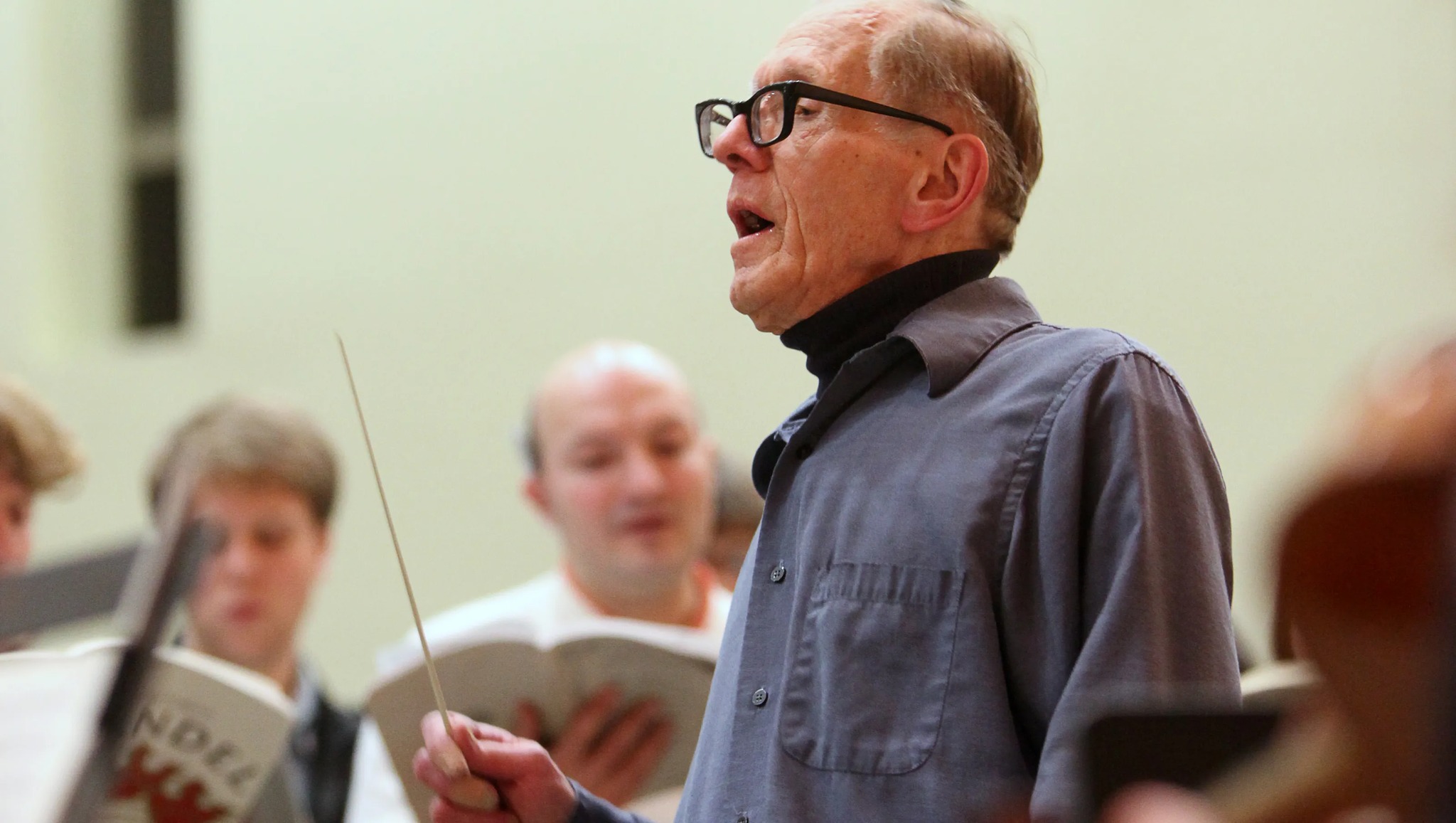
    David Fetler, alleged to be America’s longest-serving music director of an orchestra, has died. Fetler directed the Rochester Chamber Orchestra for over 50 years, surpassing Arthur Fiedler’s record of 49 with the Boston Pops. (On the world stage, there have been longer.)

    Fetler was born in Riga, Latvia, the tenth of a family of thirteen children. He came to the United States at the age of 12. He studied at Juilliard, Westminster Choir College in Princeton, and the Eastman School of Music in Rochester, NY, as well as with conductors Pierre Monteux and Leopold Stokowski.

    His available recordings are few, but I recognized his named immediately from a lovely album of Howard Hanson’s music. Fetler conducted the premiere of Hanson’s ballet “Nymphs and Satyr” (1979). I’ve always been especially fond of the infectious scherzo, based on a melody the composer whistled to his Irish terrier, Molly, while feeding her biscuits. Hanson, best known for his Symphony No. 2, the “Romantic,” served as the Eastman School’s director for 40 years, beginning in 1924.

    From the same album, here’s Fetler’s recording of Hanson’s Concerto for Organ, Harp and Strings (1926):

    It was Hanson who invited Fetler to join the conducting faculty in Rochester. In that capacity, Fetler presented a wide variety of instrumental and choral music with the Eastman Collegium Chamber Orchestra and Singers. Fetler’s programs frequently juxtaposed composers from different eras and included plenty of new music.

    He founded the Rochester Chamber Orchestra with musicians from the Rochester Philharmonic. Also written for the group was David Diamond’s “Lilac Festival Overture.”

    He also founded and conducted Rochester’s Greece Symphony Orchestra. For many years, he was choral director at St. Paul’s Episcopal Church.

    Fetler died on Sunday. He was 96 years-old.

Tag Cloud

Aaron Copland (92) Beethoven (95) Composer (114) Film Music (119) Film Score (143) Film Scores (255) Halloween (94) John Williams (185) KWAX (229) Leonard Bernstein (99) Marlboro Music Festival (125) Movie Music (134) Opera (198) Philadelphia Orchestra (86) Picture Perfect (174) Princeton Symphony Orchestra (106) Radio (87) Ralph Vaughan Williams (85) Ross Amico (244) Roy's Tie-Dye Sci-Fi Corner (290) The Classical Network (101) The Lost Chord (268) Vaughan Williams (102) WPRB (396) WWFM (881)

DON’T MISS A BEAT

Receive a weekly digest every Sunday at noon by signing up here


RECENT POSTS