Tag: Eccentric Composers

  • Antheil & Grainger Wacky Music Geniuses

    Antheil & Grainger Wacky Music Geniuses

    When they were handing out the looney, they must have found themselves with an overabundance when it came to July 8.

    Today marks the birthday anniversaries of two of music’s wackiest pianist-composers.

    George Antheil, self-proclaimed “Bad Boy of Music,” was born in Trenton, NJ on this date in 1900. His “Ballet Mécanique,” scored for synchronized player pianos, airplane propellers, siren and electric bells, inspired one of the great classical music riots at its Paris premiere in 1926.

    Antheil would practice the piano with such ferocity that he would have to pause, periodically, to thrust his hands into two fish bowls filled with ice water. Before the start of a recital, he would remove a pistol from a silk holster sewn into his jacket and place it atop the piano, to telegraph the message that he would brook no nonsense.

    Later, he became a Hollywood film composer, a war correspondent, the author of a column of advice to the lovelorn, an expert in endocrinology, and co-inventor, with actress Hedy Lamarr, of a frequency-hopping system for the guidance of Allied torpedoes that would become the basis for modern spread-spectrum communications technology. Neither Antheil nor Lamarr would ever see a dime for their invention.

    In 1944, he scored a notable success with his Symphony No. 4, after it was taken up by Leopold Stokowski and later Sir Eugene Goossens, who recorded it. Antheil was also the author of a bestselling autobiography, “Bad Boy of Music.” He died of a heart attack at the age of 59. A third recorded cycle of his symphonies is currently underway, on the Chandos label. Not bad for a boy from Trenton.

    Wouldn’t you know, Percy Aldridge Grainger was also born on this date, outside Melbourne, Australia, in 1882. Another one of classical music’s great eccentrics, Grainger was obsessed with physical fitness. Rather than drive or take the train between towns and recitals, it was his preference to jog. He was also known to throw a ball over one side of a house, and then race around to the other side to catch it.

    Enamored with Nordic culture, he went out of his way to use only Anglo-Saxon words, avoiding in his letters anything of Norman or Latin origin. This extended to his scores, in which he eschewed Italian musical terms in favor of their English equivalents. In 1928, he married Ella Ström, from Sweden, during a concert at the Hollywood Bowl. On the program was his new work, “To a Nordic Princess.”

    Lest his cultural quirks be misconstrued in an increasingly black-and-white world, Grainger’s embrace of “blue-eyed English” was as idiosyncratic as everything else in his character. He bristled against the dominance of German music, he served in the U.S. Army against Germany in WWI, he embraced music from a wide diversity of cultures, all the way to Bali, he championed works by African-Canadian-American composer R. Nathaniel Dett, and he adored Duke Ellington and George Gershwin.

    Grainger was unusually close to his mother and exhibited sadomasochistic tendencies. He donated whips and blood-stained clothes to the Grainger Museum, which he founded in 1932. His request to have his skeleton displayed – posthumously, of course – was denied.

    Later, while living in White Plains, NY, he experimented with electronics and “machine music,” in a sense paralleling an obsession of Antheil, who besides “Ballet Mécanique,” wrote such works as “Airplane Sonata” and “Death of Machines.”

    Sadly, only the tiniest portion of Grainger’s output is known by the general public, and he is celebrated as the composer of such folksy trifles as “Country Gardens,” “Molly on the Shore,” and “Shepherd’s Hey.” But Grainger’s treatment of harmony and rhythm could be highly original. He was a brilliant musician, and wholly unconventional in more ways than one.

    Grainger died in White Plains in 1961 at the age of 78. His remains, including his skeleton, rest in Adelaide.

    Happy birthday, you wacky, wacky boys.


    Grainger, “Scotch Strathspey and Reel”

    Grainger orchestration of Debussy’s “Pagodes”

    His imaginary ballet, “The Warriors”

    Grainger plays “Molly on the Shore”

    R. Nathaniel Dett’s “Juba”

    Antheil, “Ballet Mécanique” – presumably in its revision, because of the use of live pianists – with the annoying Fernand Léger film

    Antheil, “Jazz Symphony”

    Antheil, Symphony No. 4 “1942”

    Antheil, “Specter of the Rose” (from the film score, 1946)

    Antheil speaks!


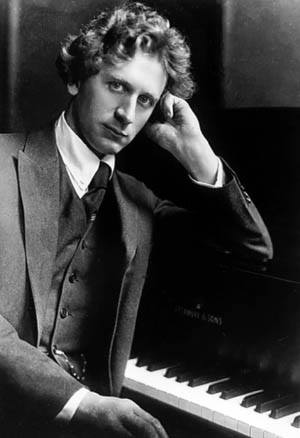
    PHOTOS: Antheil packing heat (top), and the multifaceted Grainger
  • Wacky Classical Music Geniuses Celebrate Birthdays

    Wacky Classical Music Geniuses Celebrate Birthdays

    When they were handing out looney, they must have found themselves with an overabundance when it came to July 8.

    Today marks the birthday anniversaries of two of music’s wackiest pianist-composers.

    George Antheil, self-proclaimed “Bad Boy of Music,” was born in Trenton, NJ, on this date in 1900. His “Ballet Mécanique,” scored for synchronized player pianos, airplane propellers, siren and electric bells, inspired one of the great classical music riots at its Paris premiere in 1926.

    Antheil would practice the piano with such ferocity that he would have to pause, periodically, to thrust his hands into two fish bowls filled with ice water. Before the start of a recital, he would remove a pistol from a silk holster sewn into his jacket and place it atop the piano, to telegraph the message that he would brook no nonsense.

    Later, he became a Hollywood film composer, a war correspondent, the author of a column of advice to the lovelorn, an expert in endocrinology, and co-inventor, with actress Hedy Lamarr, of a frequency-hopping system for the guidance of Allied torpedoes that would become the basis for modern spread-spectrum communications technology. Neither Antheil nor Lamarr would ever see a dime for their invention.

    In 1944, he scored a notable success with his Symphony No. 4, after it was taken up by Leopold Stokowski and later Sir Eugene Goossens, who recorded it. Antheil was also the author of a bestselling autobiography, “Bad Boy of Music.” He died of a heart attack at the age of 59. A third recorded cycle of his symphonies is currently underway, on the Chandos label. Not bad for a boy from Trenton.

    Wouldn’t you know, Percy Aldridge Grainger was also born on this date, outside Melbourne, Australia, in 1882. Another one of classical music’s great eccentrics, Grainger was obsessed with physical fitness. Rather than drive or take the train between towns and recitals, it was his preference to jog. He was also known to throw a ball over one side of a house, and then race around to the other side to catch it.

    Enamored with Nordic culture, he went out of his way to use only Anglo-Saxon words, avoiding in his letters anything of Norman or Latin origin. This extended to his scores, in which he eschewed Italian musical terms in favor of their English equivalents. In 1928, he married Ella Ström, from Sweden, during a concert at the Hollywood Bowl. On the program was his new work, “To a Nordic Princess.”

    Lest his cultural quirks be misconstrued in an increasingly black-and-white world, Grainger’s embrace of “blue-eyed English” was as idiosyncratic as everything else in his character. He bristled against the dominance of German music, he served in the U.S. Army against Germany in WWI, he embraced music from a wide diversity of cultures, all the way to Bali, he championed works by African-Canadian-American composer R. Nathaniel Dett, and he adored Duke Ellington and George Gershwin.

    Grainger was unusually close to his mother and exhibited sadomasochistic tendencies. He donated whips and blood-stained clothes to the Grainger Museum, which he founded in 1932. His request to have his skeleton displayed – posthumously, of course – was denied.

    Later, while living in White Plains, NY, he experimented with electronics and “machine music,” in a sense paralleling an obsession of Antheil, who besides “Ballet Mécanique,” wrote such works as “Airplane Sonata” and “Death of Machines.”

    Sadly, only the tiniest portion of Grainger’s output is known by the general public, and he is celebrated as the composer of such folksy trifles as “Country Gardens,” “Molly on the Shore,” and “Shepherd’s Hey.” But Grainger’s treatment of harmony and rhythm could be highly original. He was a brilliant musician, and wholly unconventional in more ways than one.

    Grainger died in White Plains in 1961 at the age of 78. His remains, including his skeleton, rest in Adelaide.

    Happy birthday, you wacky, wacky boys.


    Grainger, “Scotch Strathspey and Reel”

    Grainger orchestration of Debussy’s “Pagodes”

    His imaginary ballet, “The Warriors”

    Grainger plays “Molly on the Shore”

    Antheil, “Ballet Mécanique” – presumably in its revision, because of the use of live pianists – with the annoying Fernand Léger film

    Antheil, “Jazz Symphony”

    Antheil, Symphony No. 4 “1942”

    Antheil, “Specter of the Rose” (from the film score, 1946)


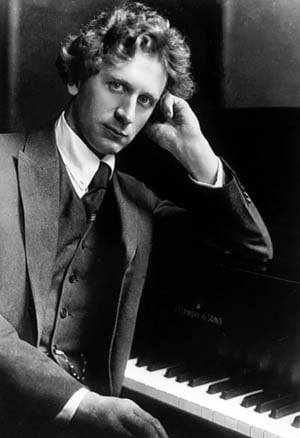
    PHOTOS: Bad boys, whatcha gonna do? Percy Grainger (left) and Trenton’s own George Antheil.

  • Alkan Eccentric Genius Rediscovered

    Alkan Eccentric Genius Rediscovered

    Charles-Valentin Alkan was a pianist of transcendent technique, a forward-looking composer, and the most eccentric recluse in Paris.

    Acclaimed in all circles as one of the finest keyboard artists of his day, he secluded himself in his home for years at a time. He shared the apartment with his illegitimate son, two apes and 100 cockatoos.

    He was also known to exhibit obsessive tendencies. His “12 Etudes in All the Minor Keys” contains among its movements a full concerto and a symphony for solo piano. He translated the entire Bible (with Apocrypha) from its original languages, and he talked of setting the entire thing to music.

    At the time of his death, his library contained 75 volumes in Hebrew or related to Judaism. He’s said to have been killed by a fallen bookcase after reaching for a volume of the Talmud, which was situated on a high shelf.

    Alkan himself was top-shelf material. Admired by Chopin and Liszt, his refusal to travel, or even to leave his home, contributed to his general obscurity, though he continued to issue new, exciting scores to great acclaim. He was studied by Debussy, Ravel, Busoni and Rachmaninoff, but really it fell to pianists of our own time to rediscover Alkan’s genius.

    Alkan (1813-1888) will be among our featured subjects this afternoon, as we celebrate his birthday anniversary. We’ll also hear from Swedish composer Ture Rangström (1884-1947); lied master Carl Loewe (1796-1869); lifelong friend of Richard Strauss, Ludwig Thuille (1861-1907); and late disciple of Mily Balakirev, Sergei Lyapunov (1859-1924). Finally, Romanian pianist Radu Lupu (b. 1945), another recluse, will perform music by Franz Schubert.

    I myself will emerge from seclusion, from 4 to 7 p.m. EST, on WWFM – The Classical Network and at wwfm.org.


    IMAGES: Alkan (left), in one of only two photos of him known to exist, and friend

  • Wacky Composers: Grainger & Antheil’s Eccentric Genius

    Wacky Composers: Grainger & Antheil’s Eccentric Genius

    July 8 is classical music’s birth date of wacky. Were there two more eccentric characters than Percy Grainger and George Antheil? Undoubtedly, there were some who would give them a run for the money, but few could win the race.

    Antheil, the self-proclaimed “Bad Boy of Music,” was born in Trenton, NJ, in 1900. His “Ballet Mécanique,” for synchronized player pianos, siren, electronic bells, xylophones and airplane propellers, caused a riot at its Paris premiere in 1926.

    At the time, he and his wife lived in a one-bedroom apartment above Sylvia Beach’s Shakespeare & Company bookshop, a favorite haunt of Ezra Pound, Ernest Hemingway and James Joyce. Relishing his notoriety, Antheil carried a pistol in a silk holster sewn into his jacket, which he ostentatiously would place on the piano prior to commencing a recital.

    Later, he was co-holder of a patent with actress Hedy Lamarr for a communications system based on frequency-hopping, as applied to radio-controlled torpedoes. Though the idea of spread spectrum became the basis for modern cell phone technology, neither Antheil nor Lamarr ever saw a dime for their invention.

    In his spare time, Antheil wrote a column of advice to the lovelorn for Esquire magazine, a couple of murder mysteries and a book on criminal endocrinology.

    Grainger, born in Australia in 1882, was an outstanding pianist and an innovative composer. He was also obsessed with physical fitness and the idea of racial superiority. Rather than drive or take the train, he preferred to jog across country from engagement to engagement. He would throw a ball over one side of a house, and then race around the other side to catch it.

    Enamored of Nordic culture, he went out of his way to use only Anglo-Saxon words, avoiding in his letters anything of Norman or Latin origin. However, the dominance of German music rankled him.

    He was unusually close to his mother and developed sadomasochistic tendencies. He donated whips and blood-stained clothes to the Grainger Museum, which he founded in 1932. (His request to have his skeleton displayed – posthumously, of course – was denied.)

    Late in life, he experimented with electronics and “machine music,” in a sense paralleling an obsession of Antheil, who besides the “Ballet Mécanique,” wrote works like the “Airplane Sonata” and “Death of Machines.”

    Sadly, only the smallest portion of Grainger’s output (“Country Gardens,” “Molly on the Shore,” “Shepherd’s Hey”) is known by the general public, and generally celebrated for the wrong reasons. Grainger’s treatment of harmony and rhythm could be highly original. He was a brilliant musician, and wholly unconventional in more ways than one.

    Happy birthday, you wacky, wacky boys.

    Here’s Antheil’s “Ballet Mécanique” – presumably in its revision, because of the use of live pianists – with the annoying Fernand Léger film: https://www.youtube.com/watch?v=kX9SZ21OmYU

    And Grainger’s setting of a text from the Faroe Islands, “Father and Daughter”: https://www.youtube.com/watch?v=iPAVUlmL0sk

    PHOTOS: Grainger (left) and Antheil, both very bad

Tag Cloud

Aaron Copland (93) Beethoven (95) Composer (114) Film Music (126) Film Score (143) Film Scores (255) Halloween (94) John Williams (189) KWAX (229) Leonard Bernstein (101) Marlboro Music Festival (125) Movie Music (141) Mozart (87) Opera (203) Philadelphia Orchestra (89) Picture Perfect (174) Princeton Symphony Orchestra (107) Radio (87) Ross Amico (244) Roy's Tie-Dye Sci-Fi Corner (290) The Classical Network (101) The Lost Chord (268) Vaughan Williams (103) WPRB (396) WWFM (881)

DON’T MISS A BEAT

Receive a weekly digest every Sunday at noon by signing up here


RECENT POSTS