Tag: Edward Elgar

  • Fauré & Elgar Friendship

    Fauré & Elgar Friendship

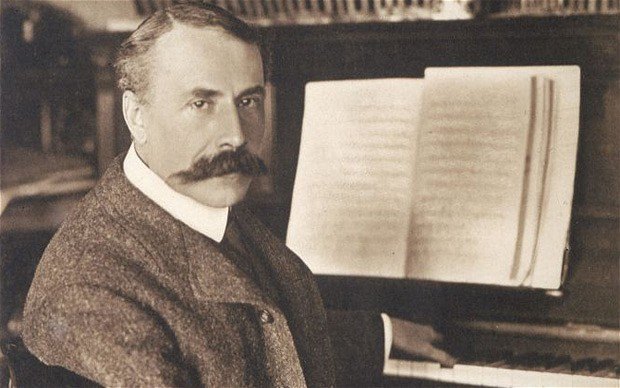
    On Gabriel Fauré’s birthday, I am fascinated to learn that the composer was not only hugely popular in England, having visited there many times, he was also greatly admired by Sir Edward Elgar.

    Fauré was staying the month with Elgar’s friend, Frank Schuster, prior to the London premiere of Elgar’s Symphony No. 1, in 1908. Following a rehearsal, the two attended a dinner party held by Schuster in their honor.

    What did the two of them talk about? Their moustaches, I hope.

  • British Composers Abroad on The Lost Chord

    British Composers Abroad on The Lost Chord

    This Sunday night on “The Lost Chord,” the only thing missing will be a dour Dame Maggie Smith, as we holiday on the Continent with the British. It’s an hour of music by English composers inspired by their travels abroad.

    Elisabeth Lutyens must have been a rather prickly personality herself. She wrote principally in a modified twelve tone idiom. While she despised the modal melodies of the English pastoralists (in reference to whose works, she coined the term “cow-pat music”), she was equally dismissive of strict serialism.

    It’s interesting that someone who made so many enemies could turn around and write a piece like “En Voyage,” a delightful suite of British Light Music. But I suppose it served to keep Lutyens in cucumber sandwiches.

    Lennox Berkeley met Benjamin Britten at a contemporary music festival in Barcelona in 1936. While there, the pair witnessed some Catalan folk dancing in a park. Britten jotted down some of the melodies onto an envelope, and the two composers worked closely to create an orchestral suite called “Mont Juic.”

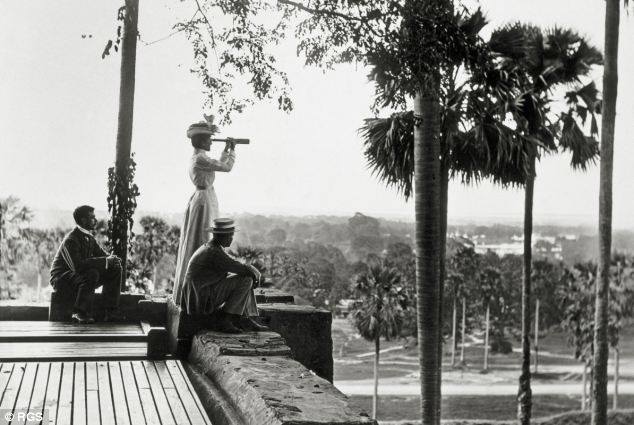
    Finally, it was the remembrance of a trip to Upper Bavaria that inspired the Elgars to collaborate on a set of part-songs, which would be called “Scenes from the Bavarian Highlands.” Edward Elgar (not yet knighted), set texts of his wife, C. Alice Elgar. Three of the movements would later be published separately, in a purely orchestral version, much better known, as “Three Bavarian Dances.”

    Send word for the valet to pack up your steamer trunk. We’ll be “Channel Hopping,” with the English abroad, this Sunday night at 10:00 EDT, on WWFM – The Classical Network and wwfm.org.
  • Irish Music & Elgar with Ross Amico on WPRB

    Irish Music & Elgar with Ross Amico on WPRB

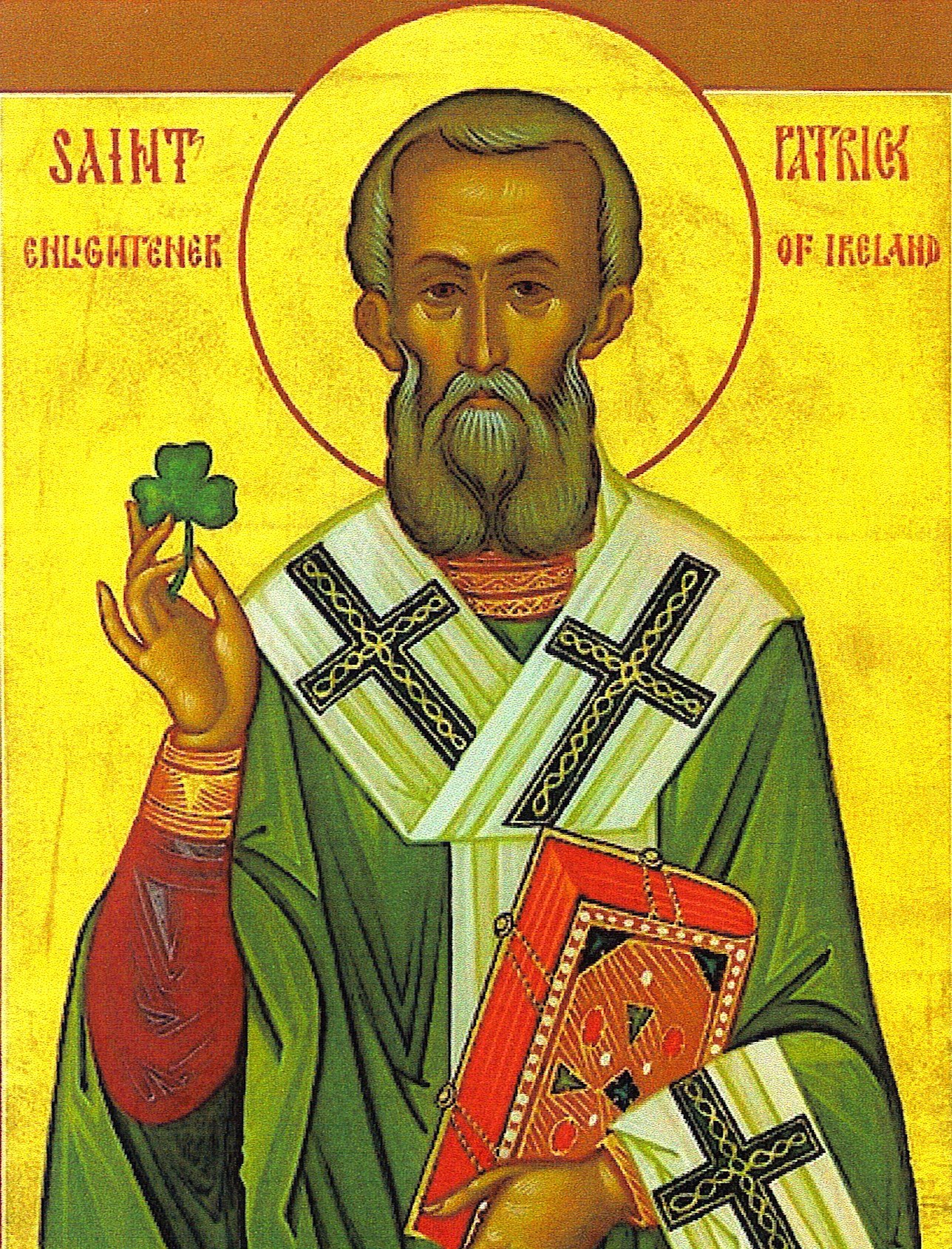
    Music on Irish themes will be as numerous as the shamrocks of the field, with nary a snake to be found, thanks be to St. Patrick. This morning on WPRB, we’ll have works by Irish composers, composers of Irish descent, and plenty of Irish-for-a-day. I hope you’ll join me for an abundance of reels, whimsy, and sentiment for the Emerald Isle.

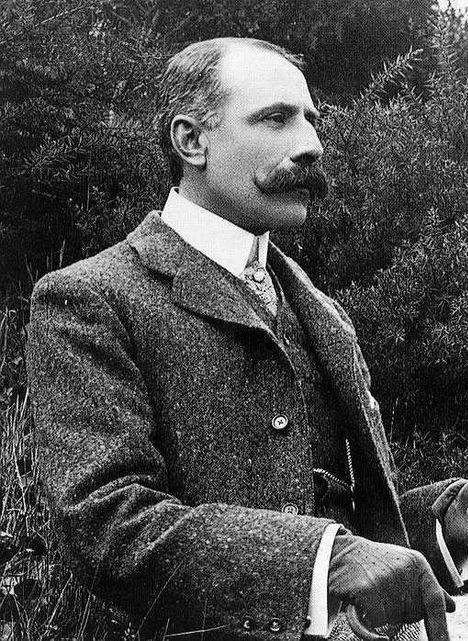
    At 10:00, I’ll be joined by Christopher Lyndon-Gee. Lyndon-Gee will guest conduct the Princeton Symphony Orchestra at Richardson Auditorium this Sunday at 4 p.m., in a program featuring music by Sir Edward Elgar and Carl Nielsen. Lyndon-Gee, a prolific recording artist who has garnered five Grammy nominations, will share a few insights into this weekend’s program, and then surprise us with a selection of his recorded performances. Refreshingly, his musical interests lay well off the beaten path.

    Don’t let the Italian surname fool you. My mother’s people came from Ireland. That said, I’ll be needin’ to kiss the blarney stone to get through five hours of music and conversation, from 6 to 11 EDT, on WPRB 103.3 FM and at wprb.com. I’ve got dark circles around my half-Irish eyes, on Classic Ross Amico.

  • Elgar’s Symphony No 3 Celebrated Today

    Elgar’s Symphony No 3 Celebrated Today

    No Payne, no gain!

    I hope you’ll join me this afternoon, as we celebrate the 80th birthday of composer and musicologist Anthony Payne. Payne did an uncanny job channeling the spirit of one of England’s most celebrated composers in bringing about the completion of sketches for Sir Edward Elgar’s Symphony No. 3. The resultant work, judiciously titled “Edward Elgar: Sketches for the Symphony No. 3 elaborated by Anthony Payne,” will be heard in the 1:00 hour.

    We’ll also honor a former Master of the Queen’s Music, Sir Arthur Bliss, on his birthday, and I wouldn’t be the least bit surprised if music by Karl Amadeus Hartmann will turn up at some point, as well.

    Hartmann was an anti-fascist German composer who played the dangerous game of remaining in Nazi Germany during World War II. He withdrew completely from musical life there and refused to allow his works to be performed. However, his symphonies continued to be championed abroad. Though still very much underrated, Hartmann was one of the great composers of the 20th century. We’ll be listening to his Symphony No. 6.

    Experience these and more today, when you tune in from noon to 4 p.m. EDT, on WWFM – The Classical Network and at wwfm.org.


    PHOTOS: Elgar (top) and Payne

  • British Composers Abroad on The Lost Chord

    British Composers Abroad on The Lost Chord

    This Sunday night on “The Lost Chord,” we holiday on the Continent with the British. We’ll have works by English composers inspired by their travels abroad.

    Elisabeth Lutyens must have been a prickly personality. She wrote principally in a modified twelve tone idiom. While she despised the modal melodies of the English pastoralists (in reference to whose works, she coined the term “cow-pat music”), she was equally dismissive of strict serialism.

    It’s interesting that someone who made so many enemies could turn around and write a piece like “En Voyage,” a delightful suite of British light music. But I suppose it served to keep Lutyens in cucumber sandwiches.

    Lennox Berkeley met Benjamin Britten at a contemporary music festival in Barcelona in 1936. While there, they witnessed some Catalan folk dancing in a park. Britten jotted down some of the melodies onto an envelope, and the two composers worked closely to create an orchestral suite called “Mont Juic.”

    Finally, it was the remembrance of a trip to Upper Bavaria that inspired the Elgars to collaborate on a set of part-songs, which would be called “Scenes from the Bavarian Highlands.” Edward Elgar (not yet knighted), set texts of his wife, C. Alice Elgar. Three of the movements would later be published separately, in a purely orchestral version, much better known, as “Three Bavarian Dances.”

    I hope you’ll join me for “Channel Hopping” – the English abroad – this Sunday night at 10 ET, with a repeat Wednesday evening at 6; or that you’ll listen to it later as a webcast at wwfm.org.

Tag Cloud

Aaron Copland (92) Beethoven (95) Composer (114) Film Music (120) Film Score (143) Film Scores (255) Halloween (94) John Williams (185) KWAX (229) Leonard Bernstein (100) Marlboro Music Festival (125) Movie Music (135) Opera (198) Philadelphia Orchestra (88) Picture Perfect (174) Princeton Symphony Orchestra (106) Radio (87) Ralph Vaughan Williams (85) Ross Amico (244) Roy's Tie-Dye Sci-Fi Corner (290) The Classical Network (101) The Lost Chord (268) Vaughan Williams (103) WPRB (396) WWFM (881)

DON’T MISS A BEAT

Receive a weekly digest every Sunday at noon by signing up here


RECENT POSTS