I’ve been in radio for so long, when I began, recorded shows were being broadcast from reel-to-reel tape (edited by hand using a razor blade). Later, they were played from DAT tape (that is to say, Digital Audio Tape), and now from automation from a computer network.
So I really dug deep into the archive for this week’s broadcast of “The Lost Chord” – 21 years deep, as a matter of fact – extracting from a vein of probably about 100 shows that I found here on CD-R, which I likely transferred from DAT, before the station ditched the machines. According to the label on the jewel case, this particular episode aired in 2003 and 2007.
For all that, the technology is not quite as ancient as that employed for the actual recordings I selected for a nostalgic glimpse back at Christmases of yore. A few of of them date to the 1910s and 1920s. Among the featured artists are Enrico Caruso, Fritz Kreisler, John McCormack, Paul Robeson, Raymond Scott, and Fats Waller.
I hope you’ll join me, when I wipe away the cobwebs for “Ghosts of Christmases Past,” a special holiday edition of “The Lost Chord,” now in syndication on KWAX, the radio station of the University of Oregon!
Clip and save the start times for all three of my recorded shows:
PICTURE PERFECT, the movie music show – Friday at 8:00 PM EST/5:00 PM PST
SWEETNESS AND LIGHT, the light music program – ALL NEW! – Saturday at 11:00 AM EST/8:00 AM PST
THE LOST CHORD, unusual and neglected rep – Saturday at 7:00 PM EST/4:00 PM PST
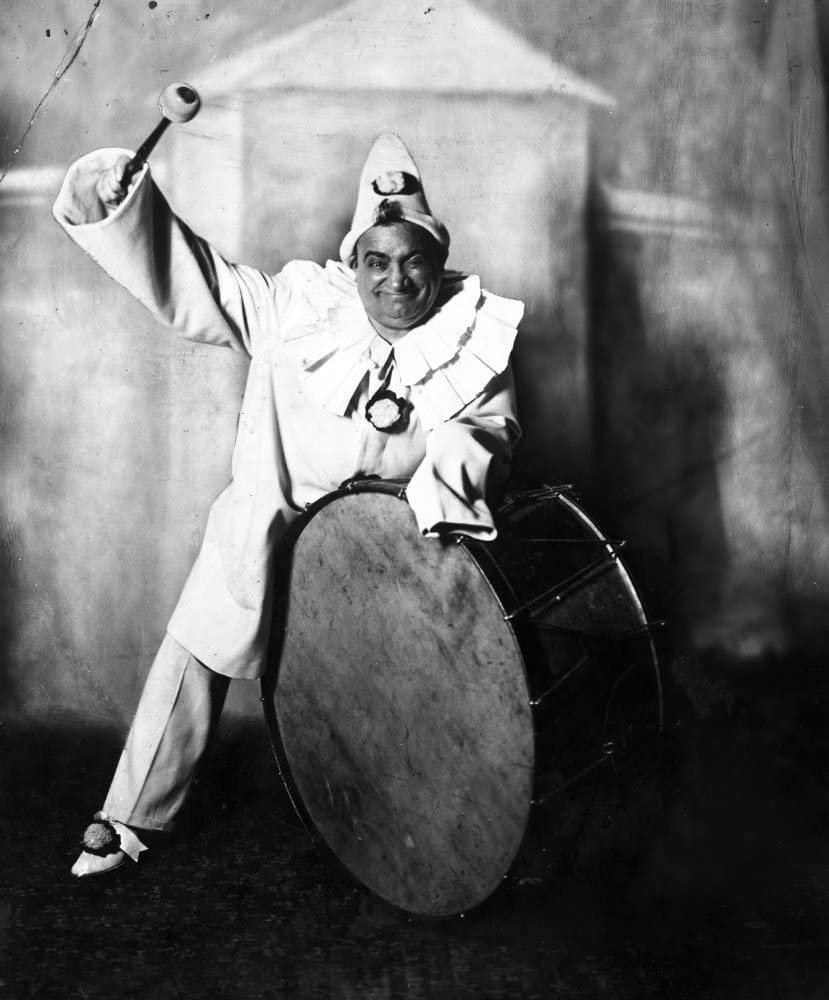
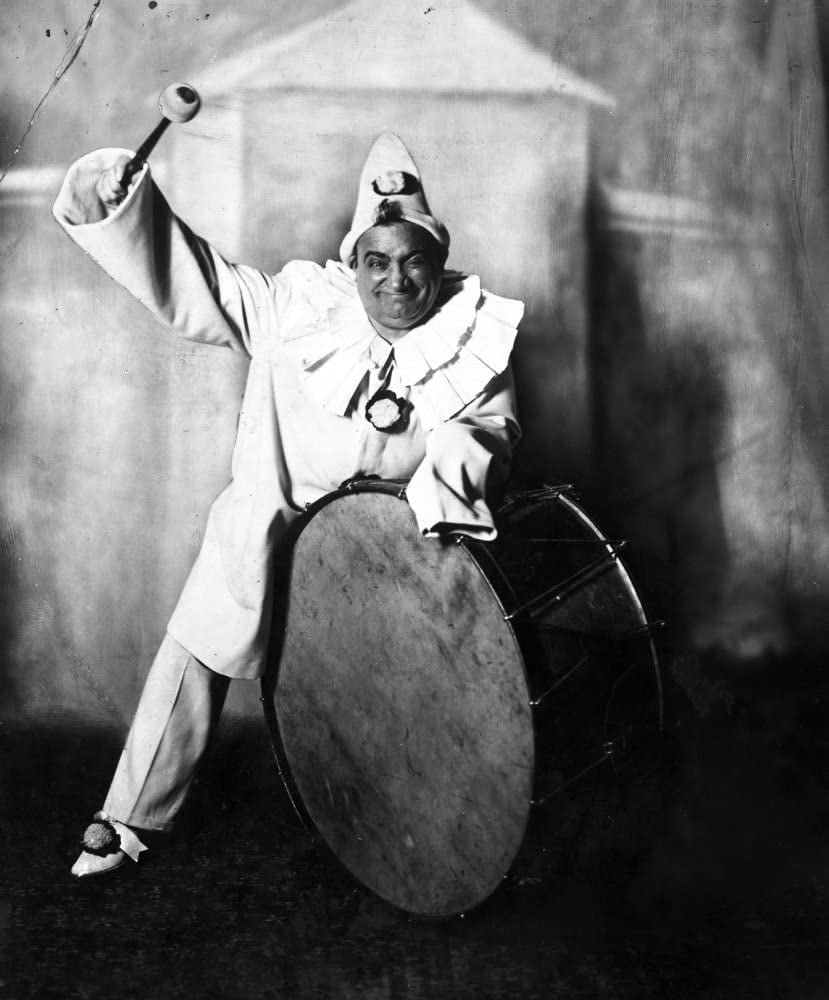
It’s a cruel irony that the first superstar of the gramophone would have appeared in a silent movie. Here’s Enrico Caruso in a dual role, in the 1918 film “My Cousin.”
Caruso’s “Vesti la giubba,” from Leoncavallo’s “Pagliacci,” was the first million-selling recording. He performs it in the movie – without sound!
However, he did record it three times, in 1902, 1904, and 1907. Here are all three versions, the first two with piano, and the last with orchestra. It’s one of those arias you know, even if you think you don’t.
Caruso was paid $100,000 to appear in “My Cousin.” Unfortunately, the film bombed at the box office. I guess no one thought about Caruso’s celebrity being tied up with, you know, HIS EXTRAORDINARY VOICE (though Caruso was hardly the only opera singer to appear in the silents). In the meantime, a second Caruso vehicle, “The Splendid Romance” – for which he was also paid $100,000 – was shot, but apparently never released.
The Great Caruso was born 150 years ago today. It’s believed that an on-stage injury precipitated his untimely demise in 1921 at the age of 48. But the overeating, sedentary lifestyle, and strong Egyptian cigarettes couldn’t have helped. His final months were a phantasmagoria of ailments and surgeries.
Thousands turned out for his funeral in Naples. For the better part of a decade, his remains were kept on display in a glass sarcophagus, until his wife had him sealed up in an ornate tomb.
Thanks in part to his 247 records, which wound up earning millions of dollars in royalties, Caruso became one of the first global celebrities. In all, he appeared at the Old Met 863 times. He toured extensively throughout Europe, and North and South America, singing in all the major opera houses. A single appearance in Cuba earned him $10,000. That he was able to achieve the level of superstardom he did, before radio, television, or even transatlantic telephone service, is astonishing.
Before Columbus Circle, Columbus OH, and the Knights of Columbus came… He Who Must Not Be Named.
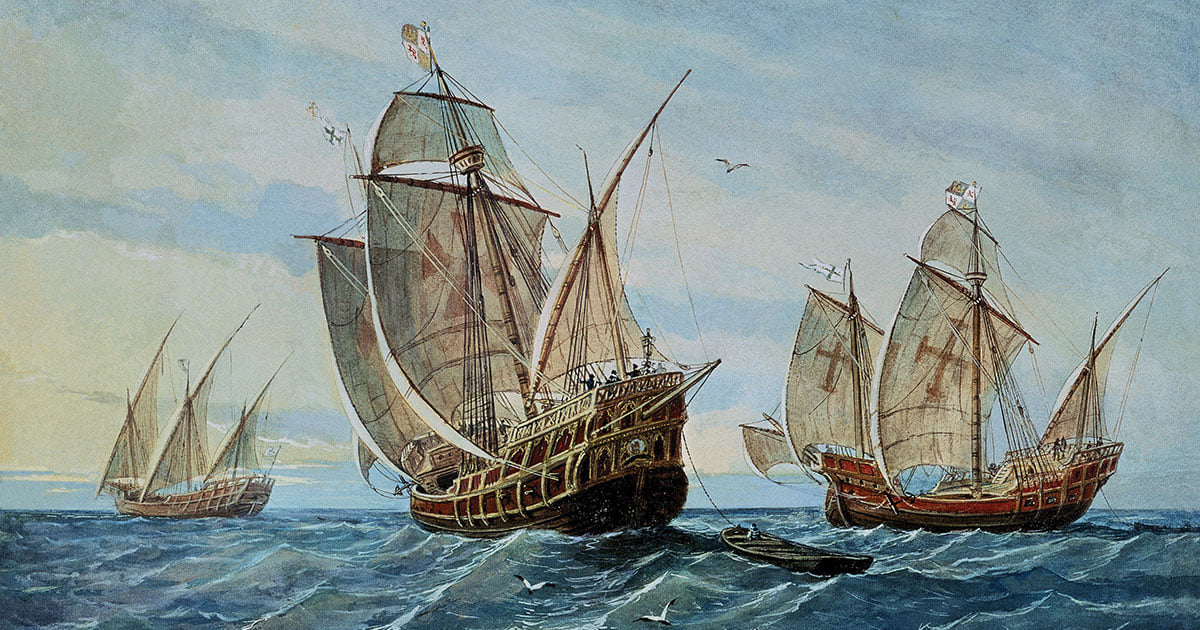
He may be a controversial figure today, but Christopher Columbus sure did inspire a lot of music. I’ve had this recording (bottom right) on the shelf for a few years now. I think today is probably as good a time as any to take it down and see what it’s all about.
“Cristoforo Colombo” was composed in 1892 to mark the 400th anniversary of Columbus’ first voyage to the New World. It is said to be Alberto Franchetti’s magnum opus. Franchetti (1860-1942) was a nobleman of independent means, who studied with Josef Rheinberger and Felix Draeseke.
Dubbed “the Meyerbeer of modern Italy,” his style synthesizes Wagner, Meyerbeer, and the contemporary school of Italian verismo. His most popular success was the opera “Germania,” which was held in high regard by both Toscanini and Caruso. In fact, in his day, Franchetti’s reputation was right up there with those of Mascagni and Cilea, second tier composers, perhaps, but on a good day they could still rise to an occasion. Unfortunately, “Germania” drifted out of circulation following the First World War.
Later, in accordance with Fascist racial laws, Franchetti’s works were banned from public performance. Franchetti was not only out of fashion; he was Jewish. Mascagni, composer of “Cavalleria Rusticana,” went out on a limb to plead his case before Mussolini.
Interestingly, it was Franchetti who had first been offered the libretto of “Tosca,” which of course eventually wound up in the hands of Giacomo Puccini. “Tosca” remains one of the most frequently performed operas in the world.
“Cristoforo Colombo” was given its debut in Genoa – Columbus’ birthplace – on October 6, 1892. The same year, it was performed at La Scala, Milan. Its North American premiere took place in Philadelphia, presented by the Philadelphia-Chicago Grand Opera Company at the Metropolitan Opera House on North Broad Street, on November 20, 1913. Tito Ruffo sang the title role.
The opera is nothing if not ambitious. It encompasses intrigues at the Spanish court, the encouragement of Queen Isabella, the voyage of discovery, an attempted mutiny, adventures in the New World, a love affair between one of Columbus’ associates and a native princess, and Columbus’ disgrace, disillusionment, and death.
Fascinatingly, for an opera necessarily tied to the conquest of the Americas, the Church comes in for some particularly harsh treatment. Already, in 1892, the clerics are critically portrayed in their violent attempts to evangelize the indigenous peoples.
Despite its early success, “Cristoforo Colombo” was deemed to be too long, and a lot of cuts were made, especially to the segments set in the New World. The final version excises Columbus’ adventures in the Americas altogether! It looks as if this recording, set down 30 years ago for the Koch Schwann label, restores the American material.
This is not a political statement, but rather a musical one. Hey, for three bucks from Princeton Record Exchange, I think it’s worth exploring.
Enrico Caruso’s first published recording, captured in a Milanese hotel room on April 10, 1902, was an aria from Franchetti’s “Germania,” which he had introduced at the opera’s world premiere only a month before:
The Columbus expedition sights land:
Not your cup of espresso? Here’s a Franchetti symphony:
IMAGES (top): “La Pinta, La Niña and La Santa Maria” by Rafael Monleón y Torres; (bottom, left to right) Alberto Franchetti; Franchetti, Mascagni and Puccini; Koch recording of “Cristoforo Colombo”
It’s a cruel irony that the first superstar of the gramophone would have appeared in a silent movie. Here’s Enrico Caruso in a dual role, in the 1918 film “My Cousin.”
Caruso’s “Vesti la giubba,” from Leoncavallo’s “Pagliacci,” was the first million-selling recording. He performs it in the movie – without sound!
However, he did record it three times, in 1902, 1904, and 1907. Here are all three versions, the first two with piano, and the last with orchestra. It’s one of those arias you know, even if you think you don’t.
Caruso was paid $100,000 to appear in “My Cousin.” Unfortunately, the film bombed at the box office. I guess no one thought about Caruso’s celebrity being tied up with, you know, HIS EXTRAORDINARY VOICE (though Caruso was hardly the only opera singer to appear in the silents). In the meantime, a second Caruso vehicle, “The Splendid Romance” – for which he was also paid $100,000 – was shot, but apparently never released.
The Great Caruso died 100 years ago today. It’s believed that an on-stage injury precipitated his untimely demise at the age of 48. But the overeating, sedentary lifestyle, and strong Egyptian cigarettes couldn’t have helped. His final months were a phantasmagoria of ailments and surgeries.
Thousands turned out for his funeral in Naples. For the better part of a decade, his remains were kept on display in a glass sarcophagus, until his wife had him sealed up in an ornate tomb.
Thanks in part to his 247 records, which wound up earning millions of dollars in royalties, Caruso became one of the first global celebrities. In all, he appeared at the Old Met 863 times. He toured extensively throughout Europe, and North and South America, singing in all the major opera houses. A single appearance in Cuba earned him $10,000. That he was able to achieve the level of superstardom he did, before radio, television, or even transatlantic telephone service, is astonishing.
Before Michael Jackson, before The Beatles, before Elvis, there was the first global superstar of the gramophone – Enrico Caruso. The first million-selling recording was Caruso’s “Vesti la giubba,” from Leoncavallo’s “Pagliacci.” You know it, even if you think you don’t.
Caruso recorded it three times, in 1902, 1904, and 1907. Here are all three versions, the first two with piano, and the last with orchestra.
Leoncavallo, as can be imagined, was over the moon. In 1904, he dedicated his “Mattinata” to Caruso. It was the first song ever written expressly for the Gramophone Company (now EMI). It’s been popular with tenors ever since.
Here’s Caruso’s recording, with the composer at the keyboard.
Caruso may have had the sales, but Leoncavallo definitely had the mustache.
This year is significant in that it also marks the centenary of the tenor’s death, on August 2, 1921. It’s believed that an injury suffered on stage precipitated his untimely demise at the age of 48.
Let’s face it, Caruso was never a model of health. His appetite was prodigious. He liked his food, he liked his cigarettes, and he liked his work. In all, he appeared at the Old Met 863 times, and he toured extensively. He also left 247 records.
When he died, thousands turned out for his funeral in Naples. For the better part of a decade, his remains were displayed in a glass sarcophagus, until his wife had him sealed up in an ornate tomb.
More about the King of Tenors in August. For now, happy birthday to the Great Caruso.