Tag: Enrique Granados

  • Cosmic Classics NASA Inspired Music This Sunday

    Cosmic Classics NASA Inspired Music This Sunday

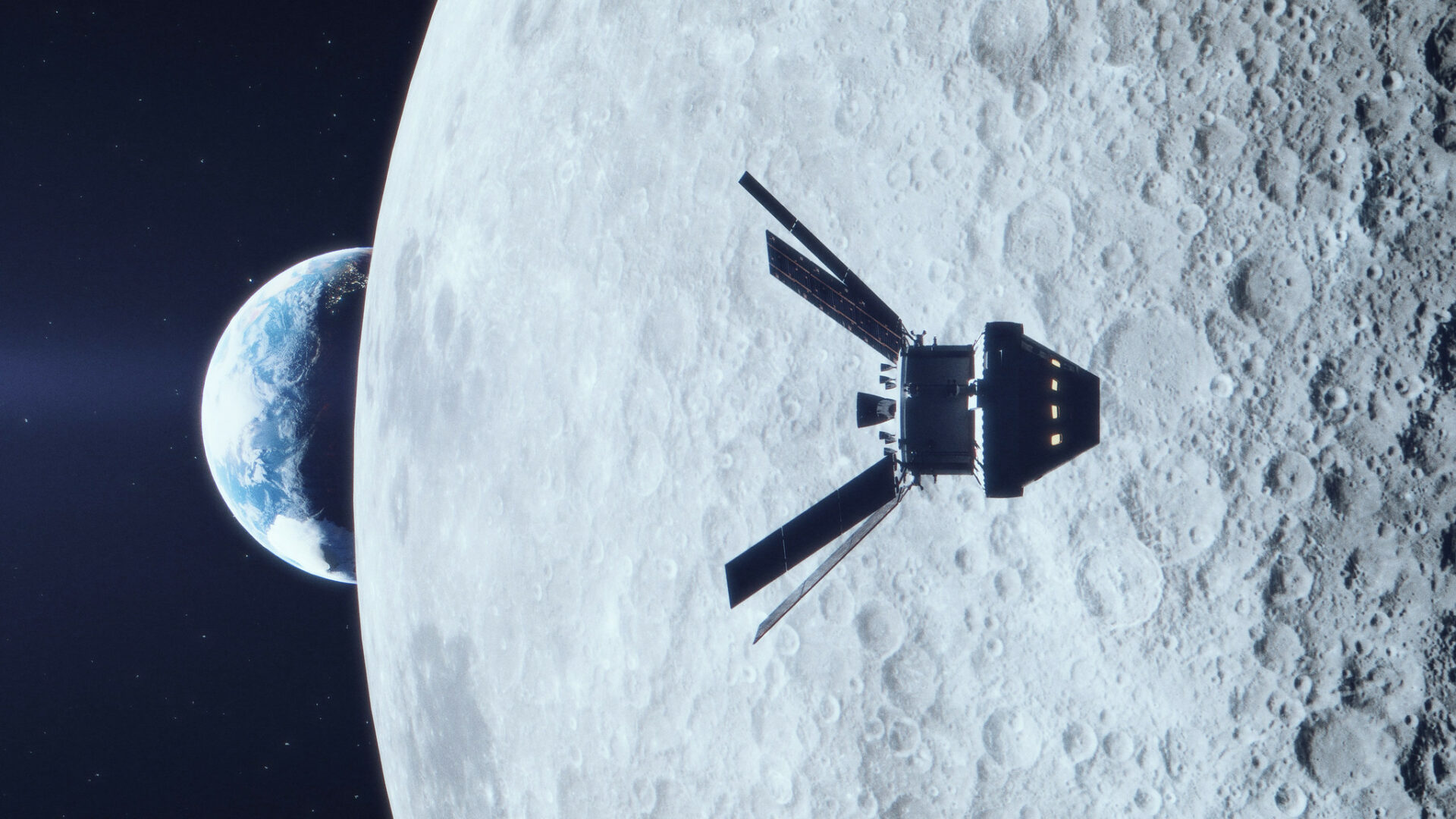
    This Sunday night on “The Lost Chord,” with the Artemis I Orion spacecraft and the James Webb Space Telescope keeping NASA very much in the news these days, we look to the heavens, with an hour of music inspired by the cosmos.

    When Spanish master Joaquin Rodrigo was in the United States in 1970 to attend the world premiere of his “Concierto Madrigal” at the Hollywood Bowl, he decided to make a side-trip to Houston, where he visited what is now the Johnson Space Center. There, NASA saw to it that the composer, blind since the age of three, was introduced to astronauts and permitted to handle moon rocks.

    The experience left him with a powerful impression, so that when he was commissioned by the Houston Symphony Orchestra several years later to write a piece of music to celebrate the American Bicentennial, his thoughts returned to his friends at NASA and the idea of space exploration. The result was something worlds away – if you’ll excuse the expression – from his popular works for guitar: the symphonic poem “A la busca del más allá” (“In search of the beyond”).

    Another Spaniard inspired by extraterrestrial concerns was Enrique Granados, very well-known for his music for the keyboard. Perhaps Granados’ most unusual work is a concerto of sorts for piano, with choruses and organ, “Cant de les estrilles” (“Song of the Stars”). This music was composed as a vehicle for Granados himself and dedicated to the long-lived pianist, Mieczyslaw Horszowski, who died as recently as 1993 – one month shy of his 101st birthday.

    “Song of the Stars” was given its first performance in 1911, on the same program as the premiere of Granados’ enduring piano suite “Goyescas.” However, the manuscript would remain unpublished. Granados died in 1916, only a few years later, on a return trip from the United States, when his ship was torpedoed by a German submarine while crossing the English Channel.

    The manuscript found its way to New York in the 1930s, brought there by the composer’s son, who was lured by businessman and conductor Nathaniel Shilkret with the promise of publication. Legal entanglements ensued, involving other members of the Granados family. A fire in the 1960s was feared to have destroyed the work, and efforts by the family to recover the piece with the assistance of José Iturbi and Alicia de Larrocha came to naught.

    In 1982, Granados’ daughter enlisted the American pianist Douglas Riva to act as the family representative. Finally, an agreement was negotiated with Shilkret’s grandson, and the work was performed again for the first time in nearly 100 years. The unattributed Catalan text is said to be a response to the poetry of Heinrich Heine, about love and the stars, from the perspective of the stars themselves.

    Finally, we’ll round out the hour with music by contemporary Finnish composer Kaija Saariaho. Saariaho evokes both the mythological and astrological in her work for orchestra, “Orion,” from 2002. The piece falls into three movements: “Memento mori,” “Winter Sky,” and “Hunter.” With spacecraft Orion just wrapping up its lunar mission, how appropriate is that?

    Pour yourself some cosmos; then look to the skies in wonder! I hope you’ll join me for “Creating Space,” this Sunday night at 10:00 EST, on WWFM – The Classical Network and wwfm.org.
  • Enrique Granados: A Spanish Musical Master

    Enrique Granados: A Spanish Musical Master

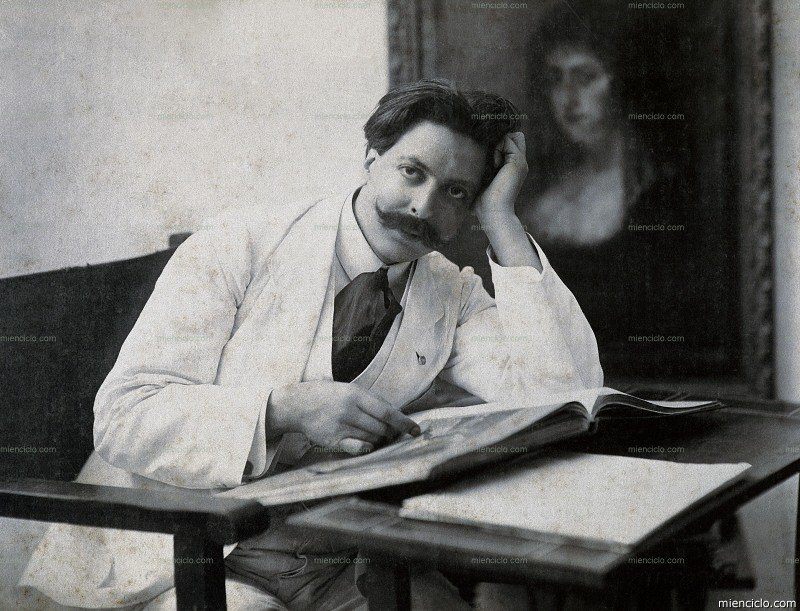
    Yesterday, I wrote about the untimely death of Enrique Granados in connection with his delayed return from the U.S., after being invited to the White House by Woodrow Wilson following the sensational debut of his opera “Goyescas” at the Metropolitan Opera. Granados’ ship was torpedoed in the English Channel by a German U-boat, and the composer drowned when attempting to save his wife.

    Granados was born on this date in 1867. He is best-remembered, of course, for his delectable piano miniatures, which contain music of great beauty and sensitivity. He’s sometimes described as “the Spanish Chopin.” I prefer to think of him as “the Spanish Grieg.” And that is not in any way to damn him with faint praise. He may be my favorite Spanish composer.

    Here’s a pleasing recital by Pablo Matías Becerra (including “Valses poéticos,” Spanish Dance No. 2 “Oriental,” “El pelele,” Spanish Dance No. 7 “Arabesca,” “Allegro de concierto,” and “Escenas románticas”)

    Anyone looking to gain a more comprehensive overview of the scope of Granados’ compositional output could do worse than to seek out three volumes of his orchestral works recorded by Pablo González and the Barcelona Symphony Orchestra and National Orchestra of Catalonia, on the Naxos label.

    Also, a piece for piano, organ, and three choruses, called “Song of the Stars,” lost for nearly a century.

    None of the orchestral pieces rise to the level of the piano music, in my opinion, but they all contain some very charming, wholly neglected music. One of the volumes includes a half-hour symphonic poem, “Dante” (little charm here, perhaps, but plenty of drama), which will surely modify your view of the composer.

    Just before Granados’ fateful homeward journey from New York, he made some live-recorded player piano rolls for the Aeolian Company’s “Duo-Art” system. Here are two of them.

    Granados playing “The Maiden and the Nightingale” from “Goyescas”

    And the Spanish Dance No. 5 “Andaluza”

    In 1909, he began a piano concerto. This was interrupted by “Song of the Stars” and the operatic version of “Goyescas.” The concerto would be left unfinished at the time of Granados’ death.

    In 2011, the sketches were rediscovered and a realization undertaken. Keep in mind, the completed work is purely conjectural, the first movement built on two surviving fragments. The other movements were adapted from existing Granados works: the Spanish Dance No. 2 “Oriental” and “Capricho español” (for Movement II) and “Allegro de concierto” (for Movement III). Here’s a performance in concert.

    An ironic footnote: one of the Granados’ sons, also named Enrique, became a champion swimmer, who competed in the 1952 Summer Olympics.

    Happy birthday, Enrique Granados. And gracias.


    Alicia de Larrocha plays “Goyescas,” in its original guise

    The operatic version

  • Ernest Schelling: Jersey Boy and Granados’ Fate

    Ernest Schelling: Jersey Boy and Granados’ Fate

    You might say that Ernest Schelling was a Jersey boy who made good. He also happened to be responsible, in part, for the death of Enrique Granados.

    Schelling, a celebrated pianist who for a period of three years became the exclusive pupil of Ignacy Paderewski, was born in Belvidere, NJ on this date in 1876.

    A child prodigy, he made his debut at Philadelphia’s Academy of Music at the age of 4. At 7, he was admitted to the Paris Conservatory. Among the other notable musicians he worked with were Hans Huber, Moritz Moszkowski, and Theodor Leschetizky. Leschetizky was the pupil of Carl Czerny, who of course studied with Beethoven.

    As a conductor, Schelling became music director of the Baltimore Symphony Orchestra, which he led from 1935 to 1937. Well before Bernstein, he conducted the New York Philharmonic Young People’s Concerts, beginning in 1924. They were such a success, he took them on tour, with stops in Philadelphia, Los Angeles, London, and Rotterdam.

    Schelling gave the U.S. premiere of Granados’ piano cycle “Goyescas.” In fact it was he who encouraged the composer to craft the music into an opera. Granados liked the idea, and “Goyescas” was given its first performance at the Metropolitan Opera in 1916.

    It created such a sensation that Woodrow Wilson – former president of Princeton University and former governor of New Jersey – invited the composer to the White House, an offer Granados could hardly refuse. Granados postponed his homeward journey. A few weeks later, he was drowned in the English Channel, after his ship, the S.S. Sussex, was torpedoed by a German submarine.

    Thanks a lot, Ernest Schelling – and by the way, happy birthday.


    Schelling plays Liszt’s Sonata in B minor:

    Willem Mengelberg conducts Schelling’s “A Victory Ball:”

    A selection from Schelling’s “Suite Fantastique:”


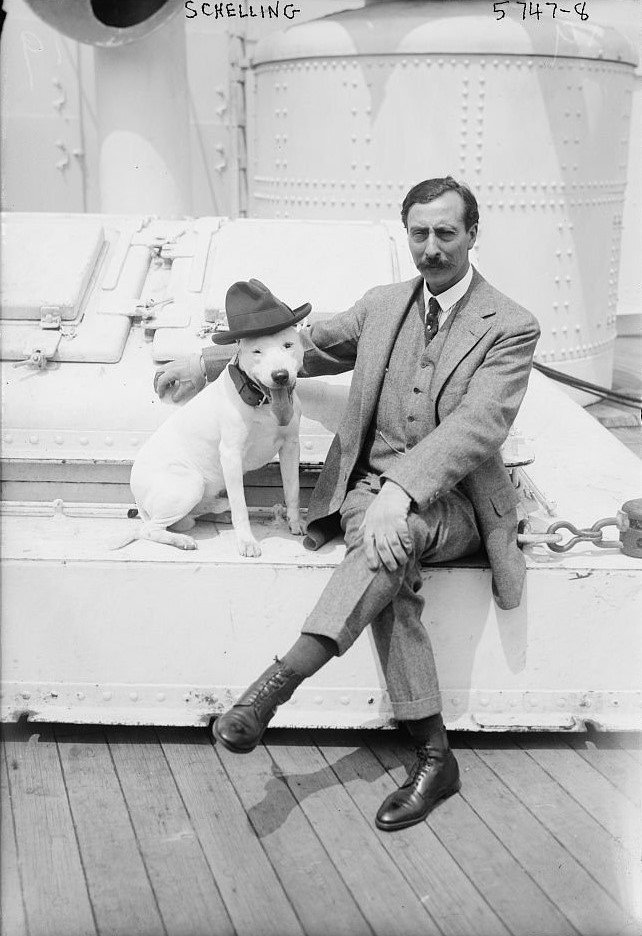
    PHOTO: Shipboard with Ernest Schelling and friend

  • Granados and Freddie Mercury Barcelona Connection

    Granados and Freddie Mercury Barcelona Connection

    What do Enrique Granados and Freddie Mercury have in common?

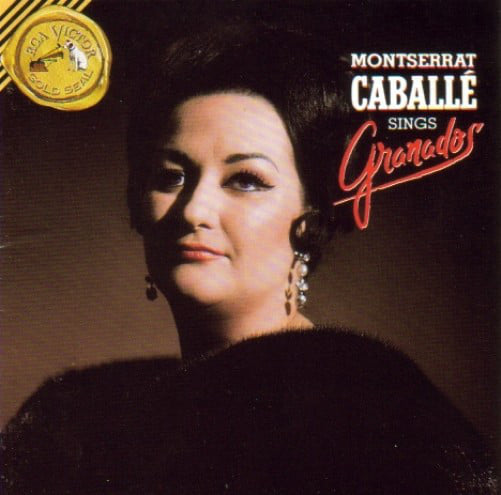
    Granados undertook piano studies in Barcelona and, following an interlude at the Paris Conservatory, returned to achieve his first successes there in the 1890s. A century later, Mercury sang his smash hit “Barcelona” in the city, in duet with soprano – and Barcelona native – Montserrat Caballé.

    Caballé, a champion of Granados’ songs, was approached to come up with something celebratory, after Barcelona was selected as the home of the 1992 Summer Olympics. She enlisted Mercury, an enthusiastic operaphile and a Caballé fan. Furthermore, she suggested that “Barcelona” should be more than just a single, and that their teaming should encompass an entire album. Mercury was delighted. They began recording together in 1987.

    Sady, both Granados and Mercury wound up dying before their time. Granados drowned while attempting to save his wife after their ship was torpedoed by a German submarine in 1916; Mercury succumbed to AIDS-related illness in 1991.

    Following Mercury’s death, “Barcelona” was embraced as the official anthem of the 1992 Summer Games. During the opening ceremony, Caballé sang her part live, opposite Mercury on a video screen. Fueled by Olympic fever, the song became one of the biggest “solo” hits of Mercury’s career.

    Finally, Granados and Mercury both wore signature mustaches. Mercury had already shaved his prior to this live performance:

    Caballé sings Granados’ “The Maiden and the Nightingale”:

    Caballé remembers Freddie Mercury in her final interview. (The subtitles are a little choppy, but someone provides a more fluent translation in the comments section beneath the video.)

    This post is what happens when the birthday of Enrique Granados coincides with the Summer Olympics!

  • Cosmic Classics Moonwalk Anniversary

    Cosmic Classics Moonwalk Anniversary

    This Sunday night on “The Lost Chord,” for the 50th anniversary of the first moonwalk, cap your weekend of lunar celebrations with an hour of music inspired by the cosmos.

    When Spanish master Joaquin Rodrigo was in the United States in 1970 to attend the world premiere of his “Concierto Madrigal” at the Hollywood Bowl, he decided to make a side-trip to Houston, where he visited what is now the Johnson Space Center. There, NASA saw to it that the composer, blind since the age of three, was introduced to astronauts and permitted to handle moon rocks.

    The experience left him with a powerful impression, so that when he was commissioned by the Houston Symphony Orchestra several years later to write a piece of music to celebrate the American Bicentennial, his thoughts returned to his friends at NASA and the idea of space exploration. The result was something worlds away – if you’ll pardon the expression – from his popular works for guitar: the symphonic poem “A la busca del más allá” (“In search of the beyond”).

    Another Spaniard inspired by extraterrestrial concerns was Enrique Granados, very well-known for his music for the keyboard. Perhaps Granados’ most unusual work is a concerto-of-sorts for piano, with choruses and organ, “Cant de les estrilles” (“Song of the Stars”). This music was composed as a vehicle for Granados himself and dedicated to the long-lived pianist, Mieczyslaw Horszowski, who died as recently as 1993 – one month shy of his 101st birthday.

    “Song of the Stars” was given its first performance in 1911, on the same program as the premiere of Granados’ enduring piano suite “Goyescas.” However, the manuscript would remain unpublished. Granados died in 1916, only a few years later, on a return trip from the United States, when his ship was torpedoed by a German submarine while crossing the English Channel.

    The manuscript found its way to New York in the 1930s, brought there by the composer’s son, who was lured by businessman and conductor Nathaniel Shilkret with the promise of publication. Legal entanglements ensued, involving other members of the Granados family. A fire in the 1960s was feared to have destroyed the work, and efforts by the family to recover the piece with the assistance of José Iturbi and Alicia de Larrocha came to naught.

    In 1982, Granados’ daughter enlisted the American pianist Douglas Riva to act as the family representative. Finally, an agreement was negotiated with Shilkret’s grandson, and the work was performed again for the first time in nearly 100 years. The unattributed Catalan text is said to be a response to the poetry of Heinrich Heine, about love and the stars, from the perspective of the stars themselves.

    Finally, we’ll round out the hour with music by contemporary Finnish composer Kaija Saariaho. Saariaho evokes both the mythological and astrological in her work for orchestra, “Orion,” from 2002. The piece falls into three movements: “Memento mori,” “Winter Sky,” and “Hunter.”

    Pour yourself some cosmos. Then look to the skies in wonder! Join me for “Creating Space,” this Sunday night at 10:00 EDT, on WWFM – The Classical Network and wwfm.org.
Tag Cloud

Aaron Copland (92) Beethoven (94) Composer (114) Film Music (117) Film Score (143) Film Scores (255) Halloween (94) John Williams (185) KWAX (228) Leonard Bernstein (99) Marlboro Music Festival (125) Movie Music (132) Opera (197) Philadelphia Orchestra (86) Picture Perfect (174) Princeton Symphony Orchestra (106) Radio (86) Ralph Vaughan Williams (85) Ross Amico (244) Roy's Tie-Dye Sci-Fi Corner (290) The Classical Network (101) The Lost Chord (268) Vaughan Williams (99) WPRB (396) WWFM (881)

DON’T MISS A BEAT

Receive a weekly digest every Sunday at noon by signing up here


RECENT POSTS