Hot on the heels of Rusalka Week – a time when Slavic naiads roam free, luring unsuspecting men to a watery grave – we cast a wary eye upon Karl Jaromir Erben.
Erben (1811-1870) served as a kind of Brothers Grimm to the Czech people, synthesizing works based on folkloric themes into gruesome ballads full of witches, goblins, and ghosts. Most of these were collected into a lurid, if poetic, little volume titled “Kytice,” or “Bouquet.” The tales, recited by generations of schoolchildren, were embraced as a kind of celebration of Czech national identity.
Antonín Dvořák was most susceptible. Bohemia’s greatest composer wrote a surprising number of pieces inspired by Erben’s grisly tales, including the symphonic poems “The Water Goblin,” “The Noon Witch,” and “The Wood Dove.” Erben’s influence also looms over Dvořák’s most famous opera, “Rusalka.”
This Sunday night on “The Lost Chord,” we’ll salute Erben with two selections by Dvořák: the symphonic poem “The Golden Spinning Wheel” and the spine-tingling graveyard scene from the dramatic cantata “The Spectre’s Bride.”
“The Golden Spinning Wheel” is a Cinderella story gone very, very wrong, as a wicked stepmother and stepsister not only murder, but dismember an unfortunate maiden favored by the king. Naturally – or perhaps supernaturally – they overplay their hand, and the titular appliance proves their undoing.
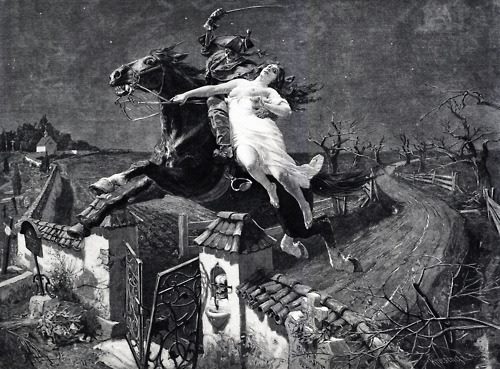
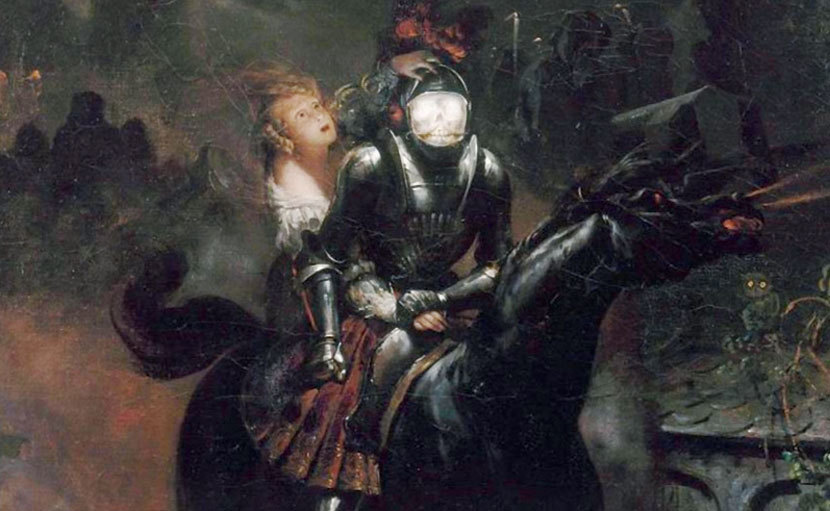
“The Spectre’s Bride” is another of the seemingly infinite variations on the tale of a young woman borne away by the ghost of her lover. The climax of Dvořák’s cantata deposits the heroine in a cottage besieged by howling spirits, as a corpse on the table, prepared for burial, stirs to do their bidding.
It’s a long, long way from Dvořák’s “Slavonic Dances.” Join me for “Erben Legends” – a celebration of Karel Jaromir Erben – this Sunday night at 10:00 EDT, on WWFM – The Classical Network and wwfm.org.