Tag: Erich Wolfgang Korngold

  • Double Your Pleasure on “Picture Perfect”

    Double Your Pleasure on “Picture Perfect”

    This week on “Picture Perfect,” we’re seeing double.

    James Stewart plays Scottie Ferguson, a traumatized police detective who becomes obsessed with the woman he loves – and loses – in Alfred Hitchcock’s “Vertigo” (1958). Kim Novak portrays both the enigmatic beauty and her spitting image, who Ferguson, rather creepily, attempts to mold. Bernard Herrmann wrote the hypnotic score.

    Krzysztof Kieślowski’s “La double vie de Véronique”/“The Double Life of Véronique” (1991) depicts parallel characters living in Poland and France who are mysteriously linked, both of them played by Irène Jacob. The performance(s) earned Jacob an award for Best Actress at the Cannes Film Festival. The music, which plays a significant role in the actual plot, is by Zbigniew Preisner.

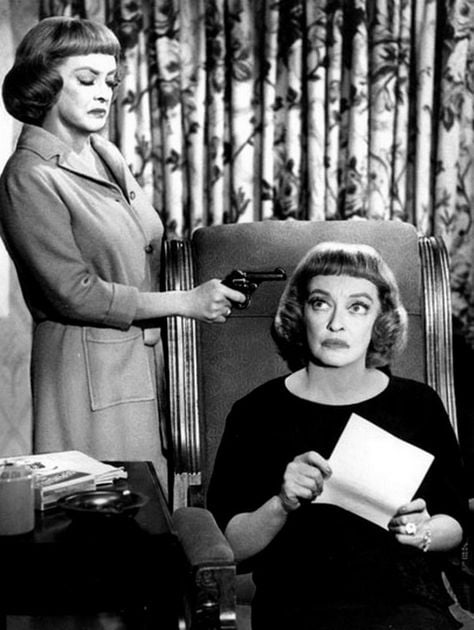
    For the second time in her career, Bette Davis gets a chance to play an evil twin in “Dead Ringer” (1964). The first was in the 1946 good twin-bad twin melodrama, “A Stolen Life.” When asked what the difference was between the two performances, Davis quipped, “About 20 years.” “Dead Ringer” was directed by her longtime friend and “Now, Voyager” co-star Paul Henreid. The music is by André Previn, whose score employs a stock-in-trade sinister harpsichord, yet when he comes to write the love theme, he manages to whip up one hell of a tribute to Erich Wolfgang Korngold.

    Korngold scored a number of Davis’ films in the 1940s, though he is principally remembered for his work on the swashbucklers of Errol Flynn. To capitalize on Flynn’s star-making performance in “Captain Blood,” Warner Brothers produced a big screen adaptation of Mark Twain’s Tudor switcheroo, “The Prince and the Pauper” (1937). Flynn steals the show as Miles Hendon, the devil-may-care guardian of Prince Edward and Tom Canty, Edward’s mirror image, played by real-life twins Bobby and Billy Mauch. If you’re a Korngold fan, or an enthusiast of violin concertos, you may recognize some of the music. Korngold recycled the theme for use in the last movement of his Violin Concerto, championed by Heifetz and others.

    Double your pleasure with an hour of doppelgangers, twins, and dual identities, on “Picture Perfect,” music for the movies, now in syndication on KWAX Classical Oregon!

    ——–

    Clip and save the start times for all three of my recorded shows:

    PICTURE PERFECT, the movie music show – Friday at 8:00 PM EST/5:00 PM PST

    SWEETNESS AND LIGHT, the light music program – Saturday at 11:00 AM EST/8:00 AM PST

    THE LOST CHORD, unusual and neglected rep – Saturday at 7:00 PM EST/4:00 PM PST

    Stream them, wherever you are, at the link!

    https://kwax.uoregon.edu
  • Korngold is King in “Kings Row”

    Korngold is King in “Kings Row”

    Anyone familiar with the main title music from “Star Wars” – and who isn’t? – will recognize a spiritual kinship with “Kings Row” (1942). This week on “Picture Perfect, we’ll hear an extensive suite from one of Erich Wolfgang Korngold’s most magnificent scores, one of John Williams’ acknowledged influences.

    The settings of the two films couldn’t be more different – “Kings Row’s” struggle of decency against sinister impulses takes place in a small Midwestern town – but Korngold’s opulently orchestrated music brims with romance and heroism. Check out that opening fanfare!

    Although he was one of the great musical prodigies – celebrated in Vienna in his teens and 20s, especially for his operas – Korngold’s name was kept alive for decades after his death largely because of his work on a number of classic Warner Bros. films of the 1930s and ’40s. His music for the Errol Flynn swashbucklers has been particularly well-loved.

    He had already written music for “Captain Blood,” “The Prince and the Pauper,” “The Adventures of Robin Hood,” “The Private Lives of Elizabeth and Essex,” and “The Sea Hawk” by the time he was offered work on “Kings Row.” Without knowing anything more about the project than the title, he commenced writing the main theme, on the assumption that the film would be yet another historical adventure. In reality, it was a turn-of-the-century soap opera based in America’s heartland.

    Korngold’s approach couldn’t have been more fortuitous, since it led him to compose one of his grandest motifs. It punctuates the action of the film as if it were a cinematic “Ein Heldenleben” – which should come as little surprise, since Korngold actually knew Richard Strauss.

    “Kings Row” was based on the bestselling novel by Henry Bellamann. The book reveals a kind of dark underbelly to the civility of small-town American life. The subject matter was ahead of its time, laying the groundwork for the novel “Peyton Place,” the film “Blue Velvet,” and television series such as “Twin Peaks” and “Desperate Housewives.” Yet at its core is the fundamental decency of its protagonist, Parris Mitchell, and his circle of friends. It is Mitchell’s ambition to become a doctor, and he heads to Vienna to study a new branch of science known as psychology.

    Mitchell was played in the film by Robert Cummings, his best friend Drake by Ronald Reagan, and Randy, a former tomboy from a family of railroad workers, by Ann Sheridan, who received top billing. The studio filled out the cast with a superb ensemble, including Claude Rains, Judith Anderson, Charles Coburn, Harry Davenport, and even Maria Ouspenskaya, best known as Maleva the gypsy woman from “The Wolf Man.”

    It’s a grand piece of entertainment, if you can get into the spirit of it, depending on your tolerance for incest, sadism, involuntary amputation, wrongful commitment to an insane asylum and suicide. This is the film in which Reagan exclaims the immortal line, “Where’s the rest of me?”

    Thanks to the Hays Code, the screen adaptation was considerably toned down from – and more upbeat than – the novel. The emphasis is on Mitchell’s idealism in the face of a cruel, and at times horrifying, world. Along the way, there are several amusing (from our perspective) explanations of that mysterious new discipline, the study of the mind.

    I hope you’ll join me for an hour of music from “Kings Row,” by the King of Film Composers, Erich Wolfgang Korngold, on “Picture Perfect,” music from the movies, now in syndication on KWAX, the radio station of the University of Oregon!

    ——–

    Clip and save the start times for all three of my recorded shows:

    PICTURE PERFECT, the movie music show – Friday at 8:00 PM EST/5:00 PM PST

    SWEETNESS AND LIGHT, the light music program – Saturday at 11:00 AM EST/8:00 AM PST

    THE LOST CHORD, unusual and neglected rep – Saturday at 7:00 PM EST/4:00 PM PST

    Stream them, wherever you are, at the link!

    https://kwax.uoregon.edu/
  • Pirate Movie Music Swashbuckling Soundtracks

    Pirate Movie Music Swashbuckling Soundtracks

    “Seas ablaze… with black villainy, with fiery romance, with breathless deeds of daring… in the roaring era of love, gold and adventure!”

    That tagline for “The Black Swan” (1942) just about sums it up. The allure of the pirate genre.

    September 19th is Talk Like a Pirate Day. This week on “Picture Perfect,” we hoist the Jolly Roger for an hour of music for movies about buccaneers, sea rovers, and freebooters.

    Of course, these men, and sometimes women, are seldom REALLY pirates – violent, ruthless criminals – but rather pirates by circumstance. Kindly rogues pushed into lawlessness by tyrannical powers greater than themselves (at least for the time being), fighting back, through subversive means, sometimes out of revenge, perhaps, but it is a revenge driven by motives of duty, conscience and/or patriotism, certainly tempered with moral righteousness.

    In “Anne of the Indies” (1951), Jean Peters plays Captain Anne Providence, a protégée of Blackbeard the Pirate. The story is based on the real-life exploits of Anne Bonny, though obviously given the Hollywood treatment, so that the final product bears little resemblance to the historical figure that inspired it. Franz Waxman wrote the stirring music.

    “The Buccaneer” (1958) stars Yul Brynner as Jean Lafitte and Charlton Heston as Andrew Jackson (!). The film, again based upon a true episode, is heavily fictionalized, though the pirate Lafitte did assist the United States against the British at the Battle of New Orleans.

    This was the second telling of the tale by Cecile B. De Mille, who directed an earlier version, with Frederic March, in 1938. The remake came very late in DeMille’s career, and in fact his health was such that he was unable to oversee the film’s actual direction, assigning the duty instead to his son-in-law, Anthony Quinn. It would be the only film Quinn ever directed.

    The music is by Elmer Bernstein, who had previously written the score for DeMille’s perennial favorite “The Ten Commandments.” Twenty years later, Bernstein would go on to score a series of comedies for Ivan Reitman and John Landis, beginning with “Animal House,” in 1978. There is a scene toward the end of “Animal House,” in which John Belushi appears in the guise of a pirate, scales a building, and then swings down a banner. His antics are underscored with a near quotation from “The Buccaneer.”

    In “The Crimson Pirate” (1951), Burt Lancaster is joined by his lifelong friend, Nick Cravat, born Nicholas Cuccia. He and Lancaster had partnered in a trapeze act before breaking into the movies. They costarred in nine films all together, with Cravat, as often as not, playing a mute, on account of his thick Brooklyn accent. The music for “The Crimson Pirate” is by William Alwyn, also a respected concert composer.

    For “The Black Swan,” the cast includes Tyrone Power, Maureen O’Hara, and Laird Cregar as Henry Morgan. Also, if you ever wanted to see George Sanders in a red beard, then this is the movie for you! The score is by Alfred Newman, 20th Century Fox music director, who provided the music for all of Power’s historical adventures. We’ll hear the composer conduct, from the film’s original elements.

    Finally, Errol Flynn attained superstardom in the 1935 pirate opus “Captain Blood.” Within five years, he had become cinema’s quintessential swashbuckler. “The Sea Hawk” (1940), with Flynn playing a privateer in the service of England and Elizabeth, sports arguably the greatest pirate score ever written, by Erich Wolfgang Korngold. We’ll hear a couple of suites, played back-to-back, from two albums in the celebrated Classic Film Scores series, originally issued back in the 1970s on the RCA label. Charles Gerhardt conducts National Philharmonic Orchestra and Ambrosian Singers.

    As with the western, the epic, and the space opera, the pirate genre tends to draw forth some very colorful contributions. Lock up your daughters and join me for “Swords at Sea,” on “Picture Perfect,” music for the movies, now in syndication on KWAX the radio station of the University of Oregon!

    ARRRRRRRRRRRRRRRRRR!!!!


    Clip and save the start times for all three of my recorded shows:

    PICTURE PERFECT, the movie music show – Friday at 8:00 PM EDT/5:00 PM PDT

    SWEETNESS AND LIGHT, the light music program – Saturday at 11:00 AM EDT/8:00 AM PDT

    THE LOST CHORD, unusual and neglected rep – Saturday at 7:00 PM EDT/4:00 PM PDT

    Stream them, wherever you are, at the link!

    https://kwax.uoregon.edu/

  • Sabatini’s Swashbucklers on Picture Perfect

    Sabatini’s Swashbucklers on Picture Perfect

    This year marks the 150th anniversary of the birth of Rafael Sabatini (on April 29, 1875) and the 75th anniversary of his death (on February 13, 1950).

    Though Sabatini’s popularity may have faded somewhat over the decades, in his day the Italian-English writer might have been regarded as the heir apparent to Alexandre Dumas. His bestselling novels are full of romance and derring-do. However, unlike Dumas, I’m not sure if any of his books have really endured in the consciousness of the wider public.

    His memory is kept alive principally through film adaptations of his works. And why not? His incident-filled pages seem tailor-made for the silver screen. Film adaptations of “Scaramouche,” “The Sea Hawk” and “Captain Blood” were all made during the silent era. As recently as 2006, a long-lost John Gilbert classic, adapted from Sabatini’s “Bardelys the Magnificent,” was rediscovered in France. Several of these, of course, were remade, more or less, to even greater success during the era of talking pictures.

    This week on “Picture Perfect,” we’ll hear Erich Wolfgang Korngold’s music for the Errol Flynn classics “Captain Blood” (1935) and “The Sea Hawk” (1940). The former provided Flynn with his breakout role; the latter actually has nothing at all to do with Sabatini’s original plot, despite the writer’s prominent onscreen credit.

    We’ll also enjoy Alfred Newman’s rollicking main title music for the pirate opus “The Black Swan” (1942), which starred Tyrone Power, and one of Victor Young’s most rousing and melodically inventive scores, for “Scaramouche” (1952), which featured Stewart Granger in probably the best swashbuckler of the 1950s.

    Polish up those seven-league boots and don your gaudiest plumage. We’ll set sail with scores from movies inspired by the novels of Rafael Sabatini on “Picture Perfect,” now in syndication on KWAX, the radio station of the University of Oregon!


    Clip and save the start times for all three of my recorded shows:

    PICTURE PERFECT, the movie music show – Friday at 8:00 PM EDT/5:00 PM PDT

    SWEETNESS AND LIGHT, the light music program – Saturday at 11:00 AM EDT/8:00 AM PDT

    THE LOST CHORD, unusual and neglected rep – Saturday at 7:00 PM EDT/4:00 PM PDT

    Stream them, wherever you are, at the link!

    https://kwax.uoregon.edu/

  • Korngold Birthday Rediscovering a Master

    Korngold Birthday Rediscovering a Master

    Today is the birthday of one of my favorite composers, Erich Wolfgang Korngold (1897-1957), in my heart since childhood, thanks to viewings of “The Adventures of Robin Hood. But guess what? I love his concert music and his operas too! Here’s a joyous discovery for a spring afternoon: Korngold at the piano, playing his own themes from opera and the movies, at the home of Ray Heindorf, who worked very closely with the composer as an orchestrator on a number of his classic film scores. By 1951, Korngold had already left Warner Brothers. He would work on only one more film, the Richard Wagner biopic “Magic Fire,” released by Republic Pictures in 1955. Hear Korngold sing (if you can distinguish him from Heindorf) and actually speak, especially during the final minutes, accompanied by some fascinating home movies.

Tag Cloud

Aaron Copland (92) Beethoven (94) Composer (114) Conductor (84) Film Music (106) Film Score (143) Film Scores (255) Halloween (94) John Williams (179) KWAX (227) Leonard Bernstein (98) Marlboro Music Festival (125) Movie Music (121) Mozart (84) Opera (194) Picture Perfect (174) Princeton Symphony Orchestra (102) Radio (86) Ross Amico (244) Roy's Tie-Dye Sci-Fi Corner (290) The Classical Network (101) The Lost Chord (268) Vaughan Williams (97) WPRB (396) WWFM (881)

DON’T MISS A BEAT

Receive a weekly digest every Sunday at noon by signing up here


RECENT POSTS