Tag: Ernest Gold

  • Ernest Gold: Exodus Oscar Winner

    Ernest Gold: Exodus Oscar Winner

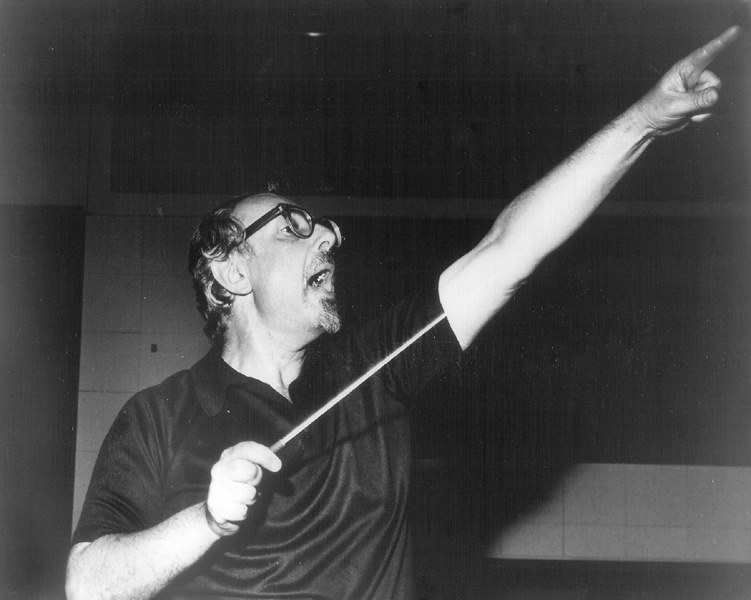
    While Ernest Gold embarked on his career as a composer of symphonies, his heart was always in the world of Max Steiner. Gold was born Ernst Sigmund Goldner, in Vienna, 100 years ago today.

    If you missed my tribute to Gold Sunday night on “The Lost Chord,” on WWFM – The Classical Network, the show is now posted as a webcast. On the program is his String Quartet No. 1, his song cycle “Songs of Love and Parting,” and two of his most famous film themes – those for “Exodus” and “It’s a Mad, Mad, Mad, Mad World.” The songs are performed by Gold’s wife of 19 years, Marni Nixon, the soprano who “ghost voiced” for a number of the musicals’ leading ladies, in films like “The King and I,” “My Fair Lady,” and “West Side Story.”

    https://www.wwfm.org/post/lost-chord-july-11-unalloyed-gold

    As an addendum, it’s only within the last year or so that I discovered Gold’s Piano Concerto, written when he was 17 years-old. The recording appeared on a CD with George Antheil’s music for the film “Dementia.” Gold worked as an orchestrator on a number of Antheil’s films. When Antheil fell ill and was unable to follow through on a commitment to score “On the Beach,” Gold stepped up. The music earned Gold an Academy Award nomination and a Golden Globe.

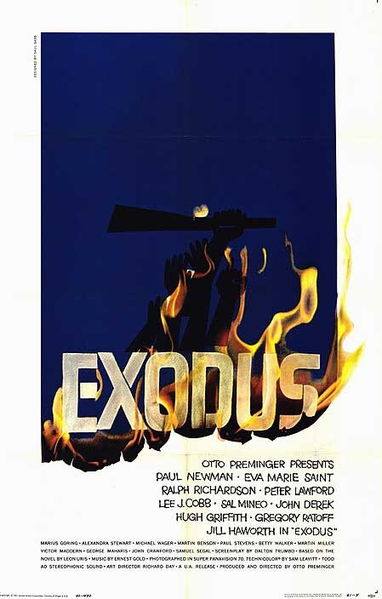
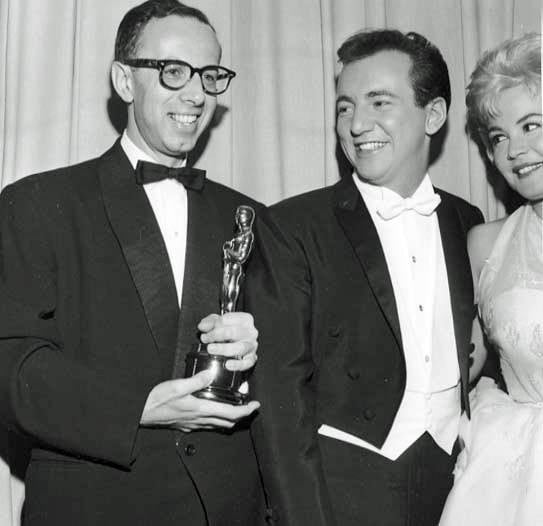
    In all, Gold would be nominated by the Academy four times. He was recognized with an Oscar for his powerful contribution to “Exodus” in 1960. Here’s another nice Gold tribute:

    Eddie Harris riffs on “Exodus”:

    Not really my cup of tea, but “Fight for Survival” from “Exodus” was sampled (a string passage, reversed) by Moby, great-great-great nephew of Herman Melville (!), for his song “Porcelain.”

    All that glitters is Gold. Happy birthday, Ernest Gold!


    PHOTO: With Bobby Darin, Sandra Dee, and his “Exodus” Oscar
  • Ernest Gold Hollywood’s Viennese Master

    Ernest Gold Hollywood’s Viennese Master

    This Sunday night on “The Lost Chord,” we’re on the quest for Gold – Ernest Gold, that is.

    July 13 marks the composer’s centenary. Gold, who won an Academy Award for his work on “Exodus” in 1960, wrote nearly 100 film scores, including those for “The Defiant Ones,” “Inherit the Wind,” and “It’s a Mad, Mad, Mad, Mad World.” He was perhaps Hollywood’s last major musical link with Old Vienna.

    Though from the start his ambition was to write for film like his hero, Max Steiner, for a time he eked out a livelihood in New York, where he had settled following the Anschluss in 1938. There, he found work as a piano accompanist and a writer of popular songs. He used the income to formally study harmony and orchestration. He wrote a symphony in 1941. It was never performed in his lifetime, though his Piano Concerto made it to Carnegie Hall. It was damned by the critics for sounding like movie music, but Gold embraced the endorsement, packed his bags, and struck out for the West Coast. Eventually he would secure a foothold at Columbia Studios, where he worked with directors like Stanley Kramer and Otto Preminger.

    Despite his love of film, he never lost his enthusiasm for composing absolute music. The result was a piano sonata, a Symphony for Five Instruments, and one of the works I’ll be featuring this evening, his String Quartet No. 1 from 1948. It had been Gold’s intention that it would be a very serious piece, of an uncompromising, modernist bent. But he soon struck up against a mental block and realized that the only way to go was to write from the heart.

    For 19 years, Gold was married to Marni Nixon, the second of his three wives. If you’re a fan of screen musicals of the 1950s and ‘60s, you probably know that Nixon dubbed the singing voices of lead actresses in films like “The King and I,” “West Side Story,” and “My Fair Lady.”

    Gold wrote his “Songs of Love and Parting” expressly for Nixon in 1963. The texts were drawn from a variety of sources, the better to convey the universality of love and the heartache of separation, including poetry by James Thomson, William Shakespeare, Robert Burns, Emily Dickinson, Edna St. Vincent Millay, and Percy Bysshe Shelley.

    In the few minutes remaining at the end of the hour, we’ll also have time for a couple of Gold’s classic film themes. I hope you’ll join me for “Unalloyed Gold,” a remembrance of Ernest Gold in advance of his centenary, this Sunday night at 10:00 EDT, on WWFM – The Classical Network and wwfm.org.

  • Ernest Gold Hollywood Composer Spotlight

    Ernest Gold Hollywood Composer Spotlight

    This Sunday night on “The Lost Chord,” we’re on the quest for Gold – Ernest Gold, that is.

    Gold, who won an Academy Award for his work on “Exodus” in 1960, wrote nearly 100 film scores, including those for “The Defiant Ones,” “Inherit the Wind,” and “It’s a Mad, Mad, Mad, Mad World.” He was perhaps Hollywood’s last major musical link with Old Vienna.

    Though from the start his ambition was to write for film like his hero, Max Steiner, he eked out a livelihood in New York, where he had settled in the wake of the Anschluss in 1938. There, he found work as a piano accompanist and a writer of popular songs. He used the income to formally study harmony and orchestration. He wrote a symphony in 1941. It was never performed in his lifetime, though his Piano Concerto made it to Carnegie Hall. It was damned by the critics as sounding like movie music, but Gold embraced the endorsement, packed his bags, and struck out for the West Coast. He would eventually secure a foothold at Columbia Studios, where he worked with directors like Stanley Kramer and Otto Preminger.

    Despite his love of film, he never lost his enthusiasm for composing absolute music. The result was a piano sonata, a Symphony for Five Instruments, and one of the works we’ll hear, his String Quartet No. 1 from 1948. It was Gold’s intention that it would be a very serious piece, of an uncompromising, modernist bent. But he soon hit up against a mental block and realized that the only way to go was to write from the heart.

    For 19 years, Gold was married to Marni Nixon, the second of his three wives. If you’re a fan of screen musicals of the 1950s and ‘60s, you probably know that Nixon dubbed the singing voices of the lead actresses in films like “The King and I,” “West Side Story,” and “My Fair Lady.”

    Gold wrote his “Songs of Love and Parting” expressly for Nixon in 1963. The texts were drawn from a variety of sources, the better to convey the universality of love and the heartache of separation, including poetry by James Thomson, William Shakespeare, Robert Burns, Emily Dickinson, Edna St. Vincent Millay and Percy Bysshe Shelley.

    In the few minutes remaining at the end of the hour, we’ll have time for a couple of Gold’s classic film themes. I hope you’ll join me for “Unalloyed Gold,” this Sunday night at 10 EDT, with a repeat Wednesday evening at 6; or that you’ll listen to it later as a webcast at wwfm.org.

  • Yom Ha’atzmaut Celebrate Israeli Independence Day

    Yom Ha’atzmaut Celebrate Israeli Independence Day

    May 6 is Yom Ha’atzmaut, Israeli Independence Day. Just try to get Ernest Gold’s music out of your head.

Tag Cloud

Aaron Copland (92) Beethoven (94) Composer (114) Film Music (117) Film Score (143) Film Scores (255) Halloween (94) John Williams (185) KWAX (228) Leonard Bernstein (99) Marlboro Music Festival (125) Movie Music (132) Opera (197) Philadelphia Orchestra (86) Picture Perfect (174) Princeton Symphony Orchestra (106) Radio (86) Ralph Vaughan Williams (85) Ross Amico (244) Roy's Tie-Dye Sci-Fi Corner (290) The Classical Network (101) The Lost Chord (268) Vaughan Williams (101) WPRB (396) WWFM (881)

DON’T MISS A BEAT

Receive a weekly digest every Sunday at noon by signing up here


RECENT POSTS