Maestro. Showman. Magician. Matinee idol. Prima donna. Charlatan. Genius. Superstar.
The multifaceted Leopold Stokowski was born on this date, 140 years ago.
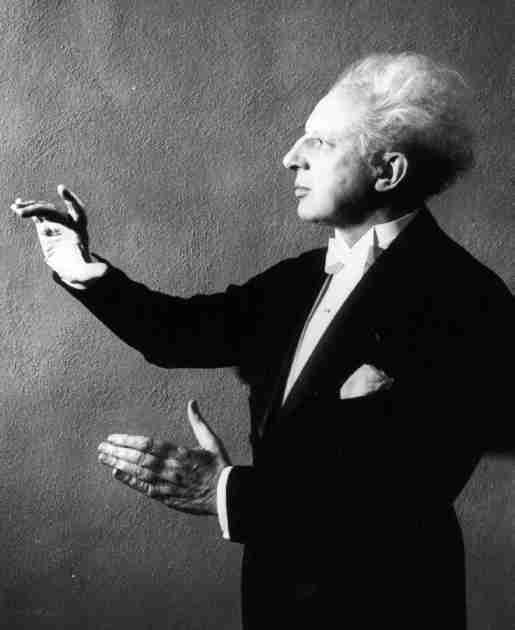
Preserved (or parodied) in all media, he could be as outrageous as he was revelatory. He brought to concert music a glamour and vitality that today it too often lacks. His wild hair and faux middle-European accent, his dove-like hands, his flamboyant experiments in sound, his pursuit of the novel and the cutting edge of technology, made him a celebrity, often to the chagrin of his critics. But the proof is in the pudding, and thankfully his recorded legacy is enormous. There is ample evidence to support all claims.
Stokowski died in 1977 at the age of 95. At 94, he signed his final recording contract, with Columbia Records, which would have kept him busy into his 100th year.
Here’s a documentary filmed when he was 88:
At around the 11:23 mark, he states, “We have a motto in the American symphony orchestra, which is ‘do better.’ And it would be a good motto for life all over the world today, when we are killing instead of loving. Do better, world!”
Well said. Happy birthday, Leopold!
One of my favorite live performances on YouTube, when it shows up (it keeps getting taken down), with Stokowski conducting Debussy at the age of 90.
Bach in Philadelphia in 1927
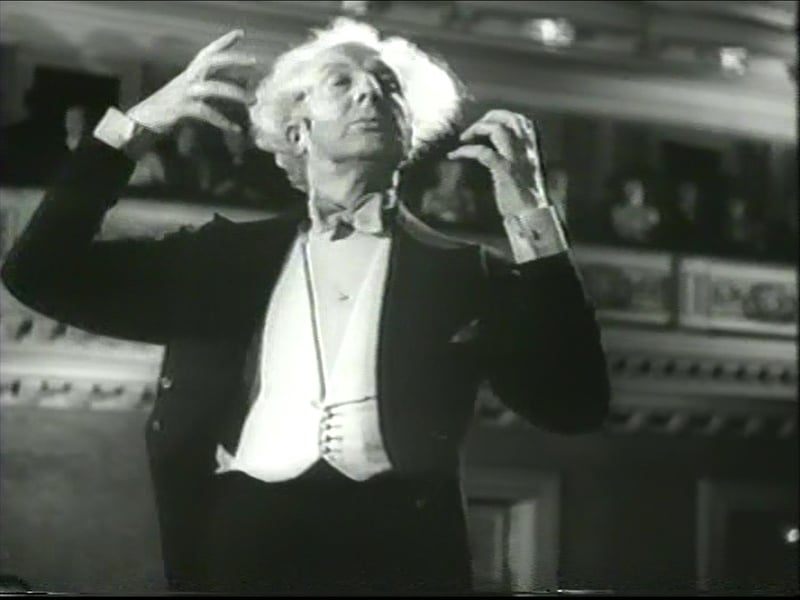
Conducting Tchaikovsky in the film “Carnegie Hall” (1947)
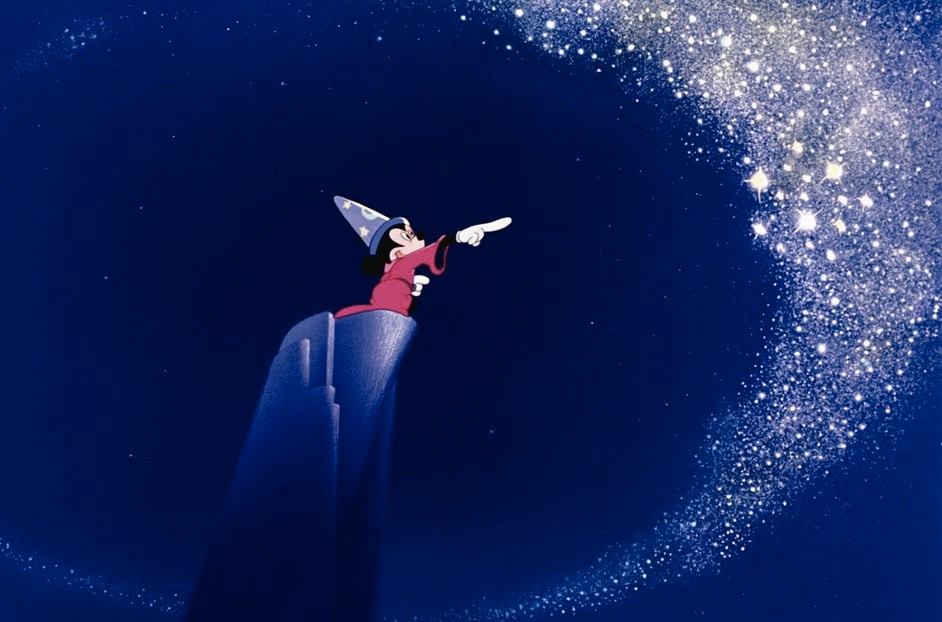
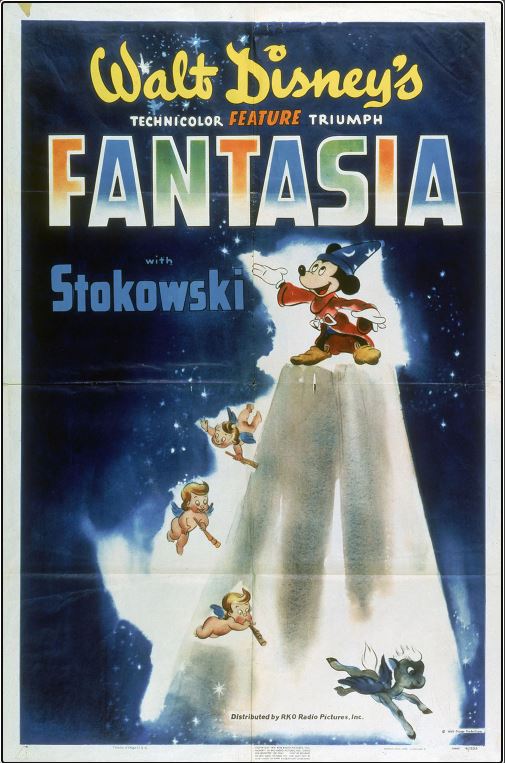
Shaking hands with Mickey Mouse in “Fantasia” (1940)
Parodied in “Long-Haired Hair” (1949)
“Daphnis and Chloe” Suite No. 2
London Phase 4 “The Firebird” finale