Tag: Female Composers

  • Kapralova & Smyth: Forgotten Female Composers

    Kapralova & Smyth: Forgotten Female Composers

    This week on “The Lost Chord,” the focus will be on outstanding works by two extraordinary female composers, from comparatively early in their respective careers.

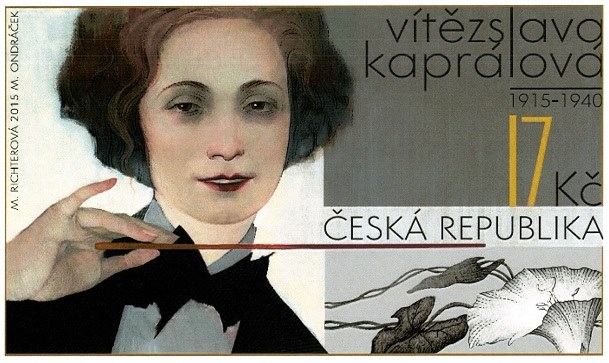
    Unfortunately, in the case of Vitězslava Kápralová (1915-1940), it was not to be a long one. One of the great hopes of Czech music, Kápralová undoubtedly would be much better known had she not died of tuberculosis at the age of 25. As it stands, her reputation is only beginning to emerge from the shadow of her teacher and lover, Bohuslav Martinu.

    Kápralová’s String Quartet was written while she was yet a student at the Prague Conservatory, where her teachers included Vitězslav Novák and Václav Talich. (She studied with Martinu later in Paris.) The work was completed in 1936, when Kápralová was about 21 years-old.

    More about Kápralová here, in this article written to mark her centenary in 2015:

    https://www.telegraph.co.uk/culture/music/classicalmusic/11365848/The-tragedy-of-Europes-great-forgotten-female-composer.html?fbclid=IwAR26f65euwM_lesL-fSWvTids3argkS6dbtmz5P3ruuP9cCYKUsn1F-IXC4

    Ethel Smyth (later DAME Ethel Smyth, 1858-1944) was one of the most vocal advocates of the women’s suffrage movement in England. She overcame early opposition to a career in music on the part of her father to receive the praise of George Bernard Shaw, who called her Mass “magnificent.”

    However, her works were often better-appreciated abroad. Her operas, in particular, were embraced in Germany. One of them, “Der Wald,” was the only opera by a woman composer mounted by New York’s Metropolitan opera for over a century!

    Smyth served time in prison for putting out the windows of politicians who opposed a woman’s right to vote. She also wrote for the cause “The March of the Women.” When Sir Thomas Beecham went to visit her in jail, he witnessed her conducting through the bars of her window with a toothbrush as her associates gathered for exercise in the courtyard.

    Smyth’s “Serenade in D” – a symphony in all but name – was her first orchestral score, composed in 1890, when she was about 32 years-old. In my opinion, it’s better than just about anything composed by her contemporary, Sir Hubert Parry, and much more compelling than the symphonies of Sir Charles Villiers Stanford.

    More about Smyth here, in this piece put together in connection with a revival of her opera, “The Wreckers,” by the great Leon Botstein:

    https://www.npr.org/sections/deceptivecadence/2015/07/23/410033088/one-feisty-victorian-womans-opera-revived?fbclid=IwAR0XG4Np46RjSJWuUIYwENZ9zFIdkoQYGL7vncYT7i5qFK5_sREFzI56gKw

    I hope you’ll join me for music by these two extraordinary women. That’s “A Woman’s Place is in the Concert Hall” on “The Lost Chord,” now in syndication on KWAX, the radio station of the University of Oregon!


    Remember, KWAX is on the West Coast, so there’s a three-hour difference for those of you listening in the East. Here are the respective air-times for all three of my recorded shows (with East Coast conversions in parentheses):

    PICTURE PERFECT, the movie music show – Friday on KWAX at 5:00 PM PACIFIC TIME (8:00 PM EST)

    SWEETNESS AND LIGHT, the light music program – ALL NEW! – Saturday on KWAX at 8:00 AM PACIFIC TIME (11:00 AM EST)

    THE LOST CHORD, unusual and neglected rep – Saturday on KWAX at 4:00 PM PACIFIC TIME (7:00 PM EST)

    Stream all three, at the times indicated, by following the link!

    https://kwax.uoregon.edu/


    Vitězslava Kápralová honored on a postage stamp; Ethel Smyth taken into custody
  • Kápralová and Smyth: Forgotten Female Composers

    Kápralová and Smyth: Forgotten Female Composers

    This Sunday night on “The Lost Chord,” the focus will be on outstanding works by two extraordinary female composers.

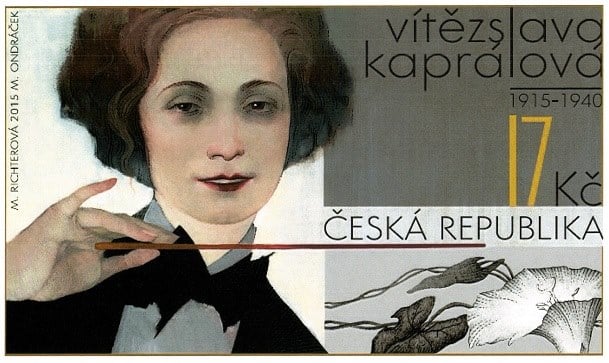
    Vitězslava Kápralová (1915-1940) was one of the great hopes of Czech music, a figure who undoubtedly would be much better known had she not died of tuberculosis at the age of 25. As it stands, her reputation is only beginning to emerge from the shadow of her teacher and lover, Bohuslav Martinu.

    Kápralová’s String Quartet was written while she was yet a student at the Prague Conservatory, where her teachers included Vitězslav Novák and Václav Talich. (She studied with Martinu later in Paris.) The work was completed in 1936, when Kápralová was about 21 years-old.

    More about Kápralová here, in this article written to mark her centenary in 2015:

    https://www.telegraph.co.uk/culture/music/classicalmusic/11365848/The-tragedy-of-Europes-great-forgotten-female-composer.html?fbclid=IwAR1EgKzOjglhAKe-58wHwivhYjI1LtTCPzgr0efhV0xuf0898oeeZYbJHU0

    Ethel Smyth (later DAME Ethel Smyth, 1858-1944) was one of the most vocal advocates of the women’s suffrage movement in England. She overcame early opposition to a career in music on the part of her father to receive the praise of George Bernard Shaw, who called her Mass “magnificent.”

    However, her works were often better-appreciated abroad. Her operas, in particular, were embraced in Germany. One of them, “Der Wald,” was the only opera by a woman composer mounted by New York’s Metropolitan opera for over a century!

    Smyth served time in prison for putting out the windows of politicians who opposed a woman’s right to vote. She also wrote for the cause “The March of the Women.” When Sir Thomas Beecham went to visit her in jail, he witnessed her conducting through the bars of her window with a toothbrush as her associates gathered for exercise in the courtyard.

    Smyth’s “Serenade in D” – a symphony in all but name – was her first orchestral score, composed in 1890, when she was about 32 years-old. In my opinion, it’s better than just about anything composed by her contemporary, Sir Hubert Parry, and much more compelling than the symphonies of Sir Charles Villiers Stanford.

    More about Smyth here, in this piece put together in connection with a revival of her opera, “The Wreckers,” by the great Leon Botstein:

    https://www.npr.org/sections/deceptivecadence/2015/07/23/410033088/one-feisty-victorian-womans-opera-revived?fbclid=IwAR2GIlgZ3p6rwkh8dFa-2H7X27tQPRRKFK_TLnuxWI67kayucG8tuXkOj5I

    I hope you’ll join me for music by these two extraordinary women – “A Woman’s Place is in the Concert Hall” – this Sunday night at 10:00 EDT, on WWFM – The Classical Network and wwfm.org.


    Vitězslava Kápralová honored on a postage stamp; Ethel Smyth taken into custody
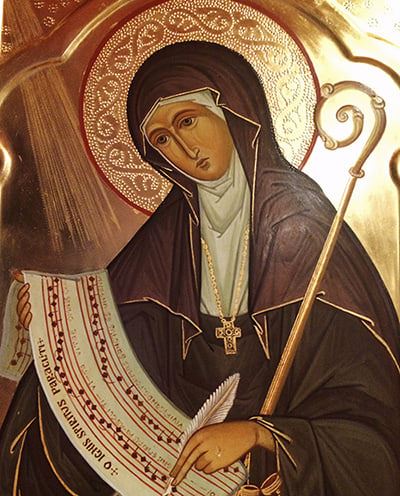
  • Hildegard von Bingen Renaissance Woman

    Hildegard von Bingen Renaissance Woman

    She was a true renaissance woman – before there was even a Renaissance!

    Hildegard von Bingen, the 12th century abbess, mystic, visionary, philosopher, scientist, medical theorist, artist, writer, poet, composer, and saint, was a pioneer who excelled in so many fields, it’s a wonder she wasn’t burned at the stake. Where ever did she come from, and why did she have no successors?*

    We’ll celebrate this extraordinary figure this afternoon on The Classical Network, as I continue to highlight the work of female composers, a month-long exploration precipitated by the Clara Schumann bicentennial. Tune in to experience music by Hildegard, interleaved with tributes by contemporary composers Aaron Jay Kernis and Christopher Theofanidis. The rest of the afternoon’s playlist will consist entirely of works by women.

    First, I hope you’ll join me for today’s Noontime Concert. Mezzo-soprano Chrystal E. Williams and pianist Laurent Philippe will perform songs by Robert Schumann, Federico Garcia Lorca, Benjamin Britten, George Gershwin, Jerome Kern, Harry T. Burleigh, and Hall Johnson.

    The concert was recorded this past May in Merkin Hall at Kaufman Music Center, 129 West 67th Street, in New York City. Merkin’s Tuesday Matinees series presents a new generation of critically acclaimed performers in a concert hall admired for its near-perfect acoustics. To learn more about this season’s offerings, visit kaufmanmusiccenter.org.

    Then belly up to the bar for Hildegard’s Feast Day. The table is set for great music, from 12 to 4 p.m. EDT, on WWFM – The Classical Network and wwfm.org.


    *Interestingly, in reading up on Hildegard, I happened to come across a history of Kassia, a Byzantine abbess and composer who flourished three centuries earlier!

    https://blogs.bl.uk/digitisedmanuscripts/2016/03/kassia.html

  • Nadia Boulanger Birthday & Legacy

    Nadia Boulanger Birthday & Legacy

    September is really a banner month for female composers. Amy Beach (9/5), Isabella Leonarda (9/6), Joan Tower (9/6), Clara Schumann (9/13), Francesca Caccini (9/18), Vivian Fine (9/28), and who knows how many others, were all born in September. But you’d have to go a long way, in terms of the influence of women on music, to beat today, the anniversary of the birth of Nadia Boulanger.

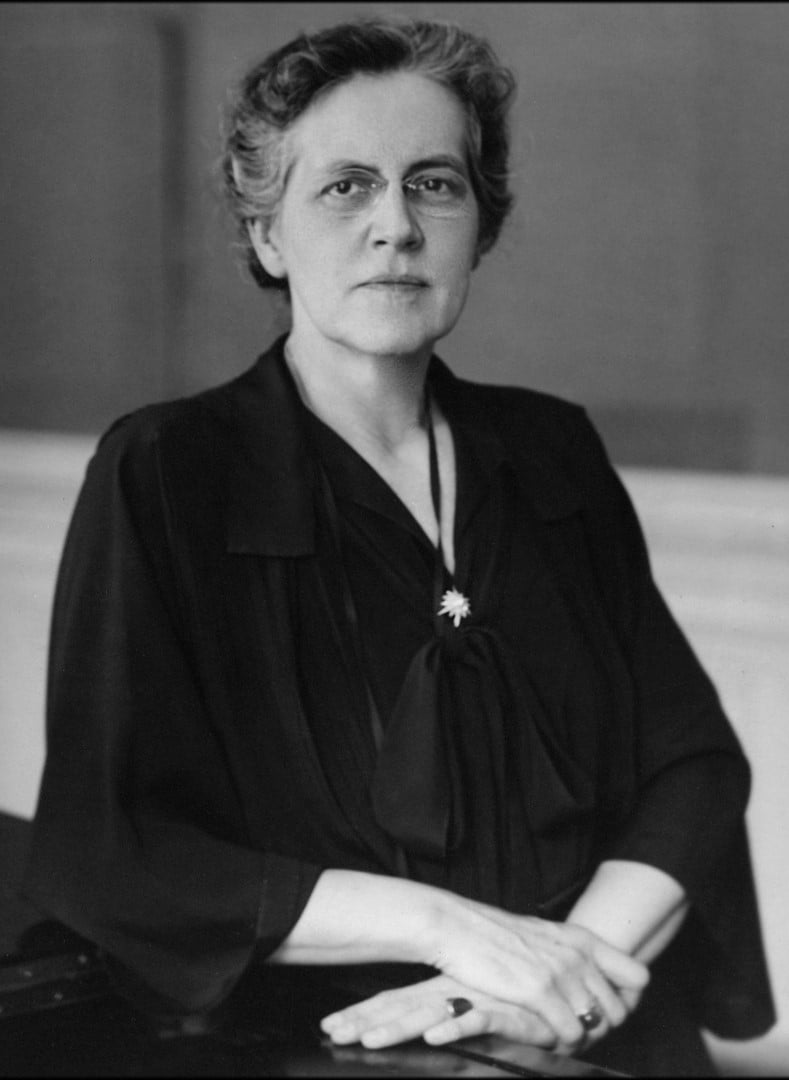
    Nadia Boulanger’s strong will, infallible objectivity, and blunt assessments made her perhaps the greatest – certainly the most influential – musical pedagogue of the 20th century.

    Her influence on American music, in particular, is incalculable. She taught composers from Aaron Copland and Virgil Thomson to Philip Glass and even Rob Kapilow. It was Thomson who quipped, “She was a one-woman graduate school, so powerful and permeating that legend credits every United States town with two things: a five and dime and a Boulanger pupil.” The five and dimes may have faded, but not so the legacy of the “Boulangerie.”

    Hopefuls flocked to her American Conservatory at Fontainebleau, where she accepted applicants from all backgrounds, provided they were determined to learn. When some failed to show up for their lessons during the Stavisky Riots of 1934, as demonstrators were being shot in the Place de la Concorde, she remarked dismissively that they didn’t take music seriously enough.

    Her methods engendered surprising loyalty and affection in those she taught. In certain respects, she could be quite conservative, drilling her students in the “Well-Tempered Clavier,” rejecting the dodecaphony of Schoenberg and his followers, and displaying all the sartorial splendor of Whistler’s mother.

    However, dodecaphony aside, she was accepting – perhaps astonishingly so – of a broad panoply of styles. She was unusually generous to students who displayed innate talent, and she nurtured their individuality. It’s to be remembered that among her pupils were Astor Piazzolla, Quincy Jones, and Michel Legrand.

    As a woman, she was a first in many respects, not only as a teacher, but as conductor and a performer. She was the first woman to conduct the Boston Symphony Orchestra, the New York Philharmonic (at Carnegie Hall), the Philadelphia Orchestra, and the National Symphony Orchestra. Even during the Cold War, she was welcomed everywhere. She was invited to the White House by the Kennedys and to Moscow to jury the International Tchaikovsky Competition.

    Curiously, her own views on women’s rights were about as current as her manner of dress. Though she performed on a couple of concerts in support of women’s equality in the early 1920s, she expressed bitter disappointment whenever a female student dropped out of school to get married. Those who did complete their studies included such important figures as Grazyna Bacewicz, Louise Talma, and Thea Musgrave.

    Later in life Boulanger came down hard in opposition to “feminism,” going so far as to state that women should not have the right to vote, because they lacked the necessary political sophistication. That was in the 1970s! A complex and outspoken personality, to be sure.

    But her actions belie her words. Beneath those grey hairs and pince-nez lurked an iron will that brooked no nonsense and recognized no impediments.

    Join me this afternoon for music and music-making by a mere handful of Boulanger’s hundreds of notable pupils, including composer and conductor Igor Markevitch, pianist Dinu Lipatti, and her exceptionally gifted sister, the sadly short-lived Lili Boulanger.

    We’ll hear Nadia Boulanger as pianist and conductor. We’ll also hear two works premiered by her. When Igor Stravinsky was sidelined with tuberculosis, she conducted the first performance of his “Dumbarton Oaks Concerto.” She was also the soloist for the first performances of Aaron Copland’s “Symphony for Organ and Orchestra,” a work about which the conductor, Walter Damrosch, famously – and one hopes facetiously – remarked, “If a gifted young man can write a symphony like that at the age of 23, within five years he will be ready to commit murder.”

    Boulanger has been described as the most influential teacher since Socrates. The Boulangerie will be baking overtime today, as we celebrate her on her birthday, from 4 to 7 p.m. EDT, on WWFM – The Classical Network and wwfm.org.

  • Forgotten Female Composers on WPRB

    Forgotten Female Composers on WPRB

    The “fair sex” wasn’t always treated so fairly. Join me this morning on WPRB, as we listen to neglected works by female composers, who labored at a time when the act of composition was still very much a man’s game.

    We’ll hear a symphony by the only female professor at the Paris Conservatory during the whole of the 19th century; a sizeable piece for piano and orchestra by a composer generally regarded as a miniaturist; music by a woman who tied with Ernest Bloch in a composition contest but finally gave up her creative aspirations due to general indifference to her work; and an assured “serenade” for orchestra by a suffragette who wouldn’t take no for an answer.

    It’s our musical salute to Women’s History Month, this morning from 6 to 11 ET, on WPRB 103.3 FM and at wprb.com. A woman’s place is in the concert hall, on Classic Ross Amico.


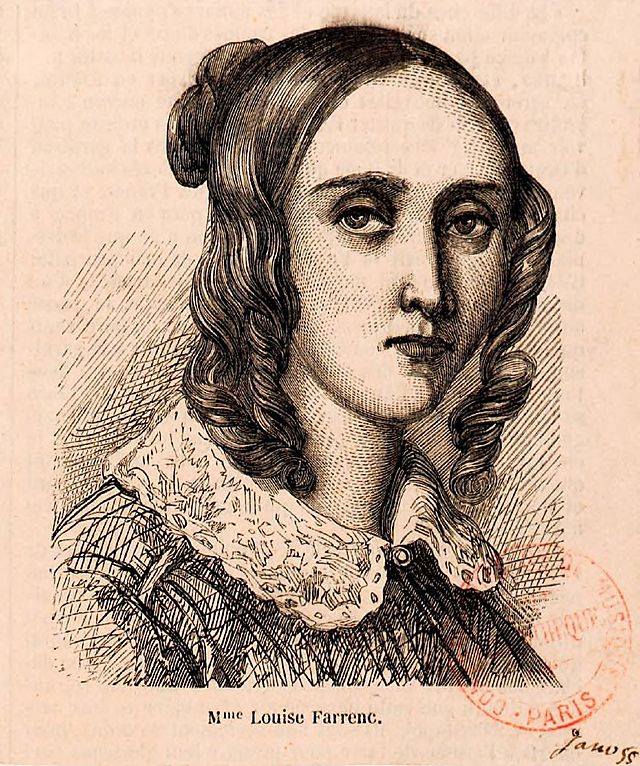
    PORTRAIT: Louis Farrenc was a professor of piano at the Paris Conservatory for 30 years, beginning in 1842. Of course she was only allowed to teach women…

Tag Cloud

Aaron Copland (92) Beethoven (94) Composer (114) Film Music (117) Film Score (143) Film Scores (255) Halloween (94) John Williams (185) KWAX (228) Leonard Bernstein (99) Marlboro Music Festival (125) Movie Music (132) Opera (197) Philadelphia Orchestra (86) Picture Perfect (174) Princeton Symphony Orchestra (106) Radio (86) Ralph Vaughan Williams (85) Ross Amico (244) Roy's Tie-Dye Sci-Fi Corner (290) The Classical Network (101) The Lost Chord (268) Vaughan Williams (101) WPRB (396) WWFM (881)

DON’T MISS A BEAT

Receive a weekly digest every Sunday at noon by signing up here


RECENT POSTS