Tag: Film noir

  • Film noir on “Picture Perfect”

    Film noir on “Picture Perfect”

    This week on “Picture Perfect,” as the shadows lengthen, we revisit the world of film noir, a genre notoriously slippery to define, but easy to know when you see it – with its long shadows and moral ambiguities; cock-eyed camera angles and snappy repartee; isolation and innuendo. It’s a genre wherein a pair of gams is an invitation to the gallows; wherein a man’s best friend – and sometimes his worst enemy – is his Colt .38, wherein only cigarettes and bourbon can ease the pain.

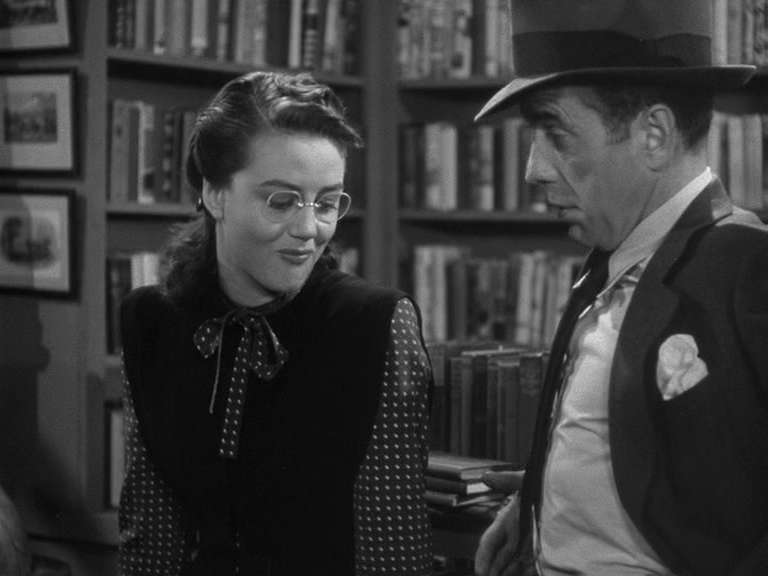
    The labyrinthine mystery at the heart of “The Big Sleep” (1946) is so disorienting, even the book’s author, Raymond Chandler, couldn’t tell whodunit. Who cares? Humphrey Bogart and Lauren Bacall get some more steamy dialogue to satisfy fans of “To Have and Have Not,” and there’s plenty of Bogie pounding the pavement and tossing off tart one-liners in pursuit of the truth. But my favorite scene involves Dorothy Malone, who runs the hottest bookstore in town.

    Whenever there are gallows to be built or gangsters to be beaten, Warner Bros. could be counted on to assign Max Steiner.

    “Touch of Evil” (1958) is often considered to be the last of the classic noirs. Yet another brilliant feature by Orson Welles, it was taken out of the master’s hands and re-edited by the studio. The film was restored only in 1998, to bring it closer to Welles’ original design.

    If you can get past Charlton Heston as a Mexican, “Touch of Evil” is one of the director’s best films. Welles himself is unforgettable as corrupt police captain Hank Quinlan. He’s joined by Janet Leigh, Joseph Calleia, Akim Tamiroff, and Marlene Dietrich, against a rogues’ gallery of memorable hoodlums and lowlifes.

    The film is celebrated, for, among things, a sustained and fluidly-executed tracking shot, which spans over three minutes – an eternity in film – documenting two threads of overlapping action. The score, by Henry Mancini, is equally arresting, as it often seems as if it’s diegetic – whatever music happens to be playing on a radio or in a nightclub – lending its own counterpoint to the seedy drama.

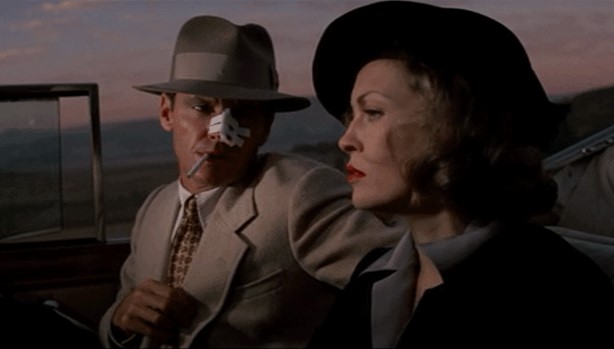
    “Chinatown” (1974) is one of the best of the neo-noirs of the 1970s. Jack Nicholson plays private dick J.J. Gittes, who takes on a seemingly routine case that begins to spiral out of control. When producer Robert Evans rejected Philip Lambro’s original score, Jerry Goldsmith stepped in as a last-minute replacement. The composer was hired with the understanding that he had only ten days to write and record new music. For his effort, Goldsmith received an Academy Award nomination.

    Finally, we’ll have music by the king of noir composers, Miklós Rózsa. Before he came to be stereotyped for his work on epic films like “Ben-Hur,” “King of Kings” and “El Cid,” Rózsa provided scores for genre classics such as “The Strange Love of Martha Ivers,” “The Killers, “Brute Force,” and “The Naked City.”

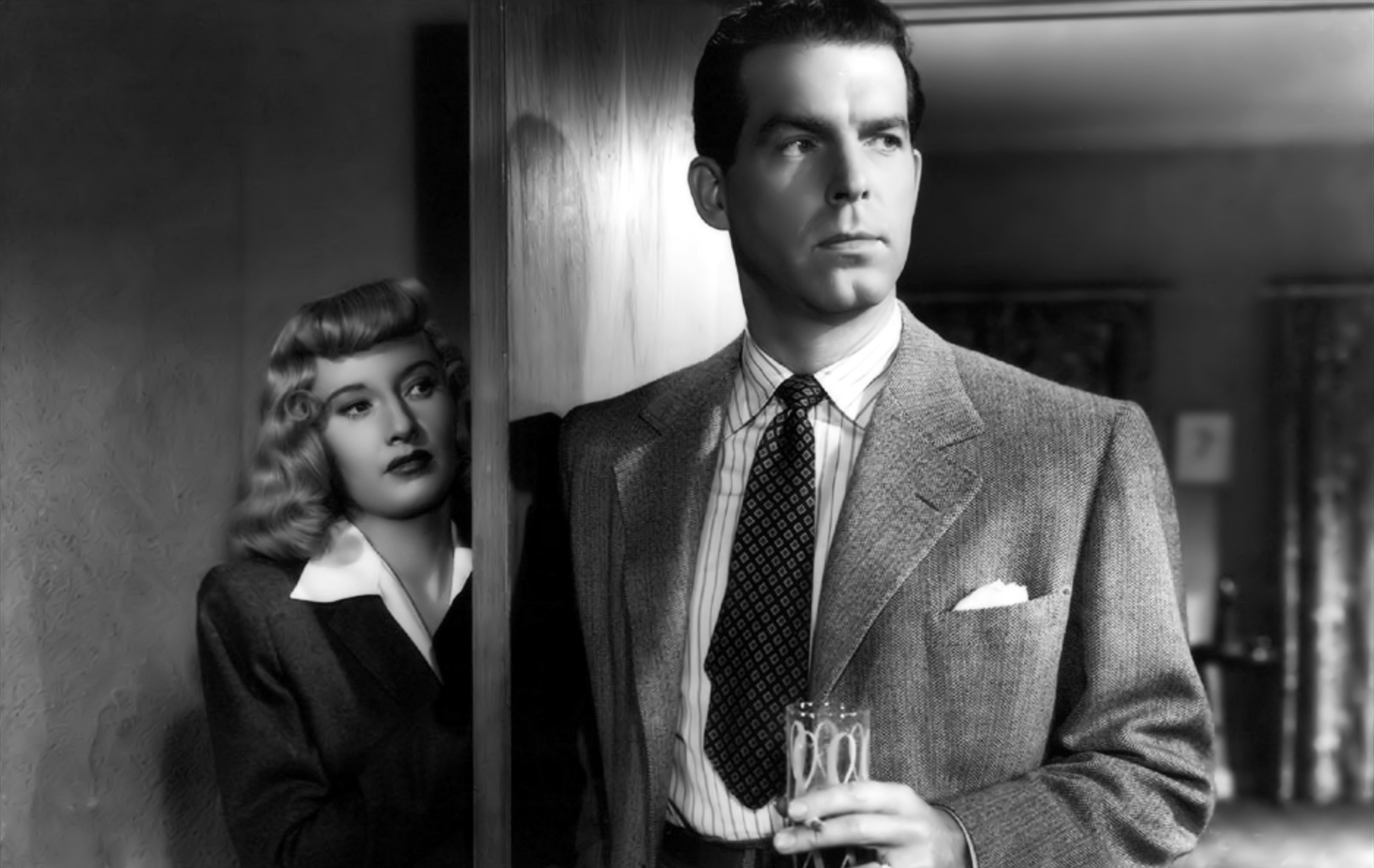
    We’ll hear an extended suite from “Double Indemnity” (1944). Sultry Barbara Stanwyck ensnares insurance salesman Fred MacMurray in a plot to bump off her husband for the insurance money, sparking an investigation by MacMurray’s boss, Edward G. Robinson. Director Billy Wilder shows how it should be done, in one of the high-water marks of the genre.

    Put on your rumpled linen suit, draw the Venetian blinds, and play the sap for nobody. We’ve got a nose for noir this week, on “Picture Perfect,” music for the movies, now in syndication on KWAX, the radio station of the University of Oregon!

    ——–

    Clip and save the start times for all three of my recorded shows:

    PICTURE PERFECT, the movie music show – Friday at 8:00 PM EST/5:00 PM PST

    SWEETNESS AND LIGHT, the light music program – Saturday at 11:00 AM EST/8:00 AM PST

    THE LOST CHORD, unusual and neglected rep – Saturday at 7:00 PM EST/4:00 PM PST

    Stream them, wherever you are, at the link!
    https://kwax.uoregon.edu

  • Film Noir: Shadows, Style, and Soundtracks

    Film Noir: Shadows, Style, and Soundtracks

    We haven’t even emerged from the midwinter holidays yet (tomorrow is Epiphany), but already, for my first show of the new year, the shadows are very long indeed.

    This week on “Picture Perfect,” we revisit the world of film noir, a genre notoriously slippery to define, but easy to know when you see it – with its long shadows and moral ambiguities; cock-eyed camera angles and snappy repartee; isolation and innuendo. It’s a genre where a pair of gams is an invitation to the gallows; where a man’s best friend – and sometimes his worst enemy – is his Colt .38; where only cigarettes and bourbon can ease the pain.

    The labyrinthine mystery at the heart of “The Big Sleep” (1946) is so disorienting, even the book’s author, Raymond Chandler, couldn’t tell whodunit. Who cares? Humphrey Bogart and Lauren Bacall get some more steamy dialogue to satisfy fans of “To Have and Have Not,” and there’s plenty of Bogey pounding the pavement and tossing off tart one-liners in pursuit of the truth. But my favorite scene involves Dorothy Malone, who runs the hottest bookstore in town. Whenever there are gallows to be built or gangsters to be beaten, Warner Brothers could be counted on to assign Max Steiner.

    “Chinatown” (1974) is one of the best of the neo-noirs of the 1970s. This time, Jack Nicholson plays private dick J.J. Gittes, who takes on a seemingly routine case that begins to spiral out of control. When producer Robert Evans rejected Philip Lambro’s original score, Jerry Goldsmith stepped in as a last-minute replacement. The composer was hired with the understanding that he had only ten days to write and record new music. For his effort, Goldsmith received an Academy Award nomination.

    The Coen Brothers clearly love noir, from their first feature, “Blood Simple,” to their Academy Award winners, “Fargo” and “No Country for Old Men,” to their unlikely and absurdly entertaining reimagining of “The Big Sleep,” “The Big Lebowski.” “Miller’s Crossing” (1990) was one of the more underappreciated of these. The film follows the well-worn device of an anti-hero playing two sides off of one another, until he is the last one standing – shades of Dashiell Hammett’s “Red Harvest,” with a healthy dose of “The Glass Key” thrown in, for good measure. The Irish-inflected score is by Coen regular Carter Burwell.

    Before he became stereotyped as a composer for epic films like “Ben-Hur,” “King of Kings,” and “El Cid,” Miklos Rozsa was the king of noir, providing scores for genre classics such as “Double Indemnity” and “The Strange Love of Martha Ivers.” We’ll hear a suite assembled from three such projects: “Brute Force” (1947), a hard-hitting prison drama, starring Burt Lancaster as a desperate inmate and a contemptible Hume Cronyn as a sadistic guard; “The Killers” (1946), also starring Lancaster as a marked boxer; and “The Naked City” (1948), with Barry Fitzgerald leading a police investigation into the murder of a young model. The suite is titled “Background to Violence.”

    Put on your rumpled linen suit, draw the Venetian blinds, and play the sap for nobody this week. It’s film noir in the gritty city, on “Picture Perfect,” music for the movies, now in syndication on KWAX, the radio station of the University of Oregon!

    BTW – Have you heard I’ve got a new show? Check out “Sweetness and Light,” now entering its third week, Saturday mornings on KWAX. It’s music calculated to charm and to cheer (the very opposite of noir, in fact), and this week it’s all inspired by books. That brings my tally at KWAX to three. See below for air times.


    Remember, KWAX is on the West Coast, so there’s a three-hour difference for those of you listening in the East. Here are the respective air-times for all three of my recorded shows (with East Coast conversions in parentheses):

    PICTURE PERFECT, the movie music show – Friday on KWAX at 5:00 PM PACIFIC TIME (8:00 PM ON THE EAST COAST)

    SWEETNESS AND LIGHT, the light music program – ALL NEW – Saturday on KWAX at 8:00 AM PACIFIC TIME (11:00 AM ON THE EAST COAST)

    THE LOST CHORD, unusual and neglected rep – Saturday on KWAX at 4:00 PM PACIFIC TIME (7:00 PM ON THE EAST COAST)

    Stream all three, at the times indicated, by following the link!

    https://kwax.uoregon.edu/


    PHOTO: Forget it, Jake; it’s Chinatown.

  • Film Noir Classics on WWFM This Week

    Film Noir Classics on WWFM This Week

    This week on “Picture Perfect,” as the shadows lengthen, we revisit the world of film noir, a genre notoriously slippery to define, but easy to know when you see it – with its long shadows and moral ambiguities; cock-eyed camera angles and snappy repartee; isolation and innuendo. It’s a genre wherein a pair of gams is an invitation to the gallows; wherein a man’s best friend – and sometimes his worst enemy – is his Colt .38, wherein only cigarettes and bourbon can ease the pain.

    The labyrinthine mystery at the heart of “The Big Sleep” (1946) is so disorienting, even the book’s author, Raymond Chandler, couldn’t tell whodunit. Who cares? Humphrey Bogart and Lauren Bacall get some more steamy dialogue to satisfy fans of “To Have and Have Not,” and there’s plenty of Bogie pounding the pavement and tossing off tart one-liners in pursuit of the truth. But my favorite scene involves Dorothy Malone, who runs the hottest bookstore in town.

    Whenever there are gallows to be built or gangsters to be beaten, Warner Bros. could be counted on to assign Max Steiner.

    “Touch of Evil” (1958) is often considered to be the last of the classic noirs. Yet another brilliant feature by Orson Welles, it was taken out of the master’s hands and re-edited by the studio. The film was restored only in 1998, to bring it closer to Welles’ original design.

    If you can get past Charlton Heston as a Mexican, “Touch of Evil” is one of the director’s best films. Welles himself is unforgettable as corrupt police captain Hank Quinlan. He’s joined by Janet Leigh, Joseph Calleia, Akim Tamiroff, and Marlene Dietrich, against a rogues’ gallery of memorable hoodlums and lowlifes.

    The film is celebrated, for, among things, a sustained and fluidly-executed tracking shot, which spans over three minutes – an eternity in film – documenting two threads of overlapping action. The score, by Henry Mancini, is equally arresting, as it often seems as if it’s diegetic – whatever music happens to be playing on a radio or in a nightclub – lending its own counterpoint to the seedy drama.

    “Chinatown” (1974) is one of the best of the neo-noirs of the 1970s. Jack Nicholson plays private dick J.J. Gittes, who takes on a seemingly routine case that begins to spiral out of control. When producer Robert Evans rejected Philip Lambro’s original score, Jerry Goldsmith stepped in as a last-minute replacement. The composer was hired with the understanding that he had only ten days to write and record new music. For his effort, Goldsmith received an Academy Award nomination.

    Finally, we’ll have music by the king of noir composers, Miklós Rózsa. Before he came to be stereotyped for his work on epic films like “Ben-Hur,” “King of Kings” and “El Cid,” Rózsa provided scores for genre classics such as “The Strange Love of Martha Ivers,” “The Killers, “Brute Force,” and “The Naked City.”

    We’ll hear an extended suite from “Double Indemnity” (1944). Sultry Barbara Stanwyck ensnares insurance salesman Fred MacMurray in a plot to bump off her husband for the insurance money, sparking an investigation by MacMurray’s boss, Edward G. Robinson. Director Billy Wilder shows how it should be done, in one of the high-water marks of the genre.

    Put on your rumpled linen suit, draw the Venetian blinds, and play the sap for nobody. We’ve got a nose for noir this week, on “Picture Perfect,” music for the movies, this Saturday evening at 6:00 EDT, on WWFM – The Classical Network and wwfm.org.


    If you enjoy either of my weekly shows (or both!), or any of the other music you hear on The Classical Network, please consider making a contribution today. We’re celebrating our 40th anniversary on the air and online. If you’re in a position to do so, why not make a donation right now at wwfm.org. Thank you in advance for your generosity and for your continued support of WWFM The Classical Network!

    https://wwwfm.secureallegiance.com/wwfm/WebModule/Donate.aspx?P=DEFAULT&PAGETYPE=PLG&CHECK=vOU2bz5JCWmgCDbf53nm9ezWDeZ%2beA1M

  • Movies About Music Fellini Corigliano Korngold

    Movies About Music Fellini Corigliano Korngold

    This week on “Picture Perfect,” get ready for an exercise in postmodern self-reflexivity, as we enjoy music from movies about music and musicians.

    Federico Fellini’s “Orchestra Rehearsal” (1978) is a mock-documentary that presents the symphony orchestra as a metaphor for the human condition. Full of political overtones, the film explores the joys, sorrows, frustrations and triumphs of the musicians, who struggle with the concepts of individual liberty, tyranny and the collective good. The project would mark the final collaboration between Fellini and Nino Rota. The two artists first came together in 1952 on Fellini’s “The White Sheik.” They would go on to create such classics as “La Strada,” “Nights of Cabiria,” “La dolce vita” and “8 ½.”

    We’ll also hear music from the Canadian art house hit “The Red Violin” (1998). The film traces the history of the fictional title instrument from its creation in 17th century Cremona to the present day. The violin passes through the hands of a child prodigy, into those of a romantic virtuoso in the Paganini mold; then to China during the Cultural Revolution; and finally to a Canadian auction house. John Corigliano wrote the Academy Award-winning music, which is performed on the soundtrack by violinist Joshua Bell.

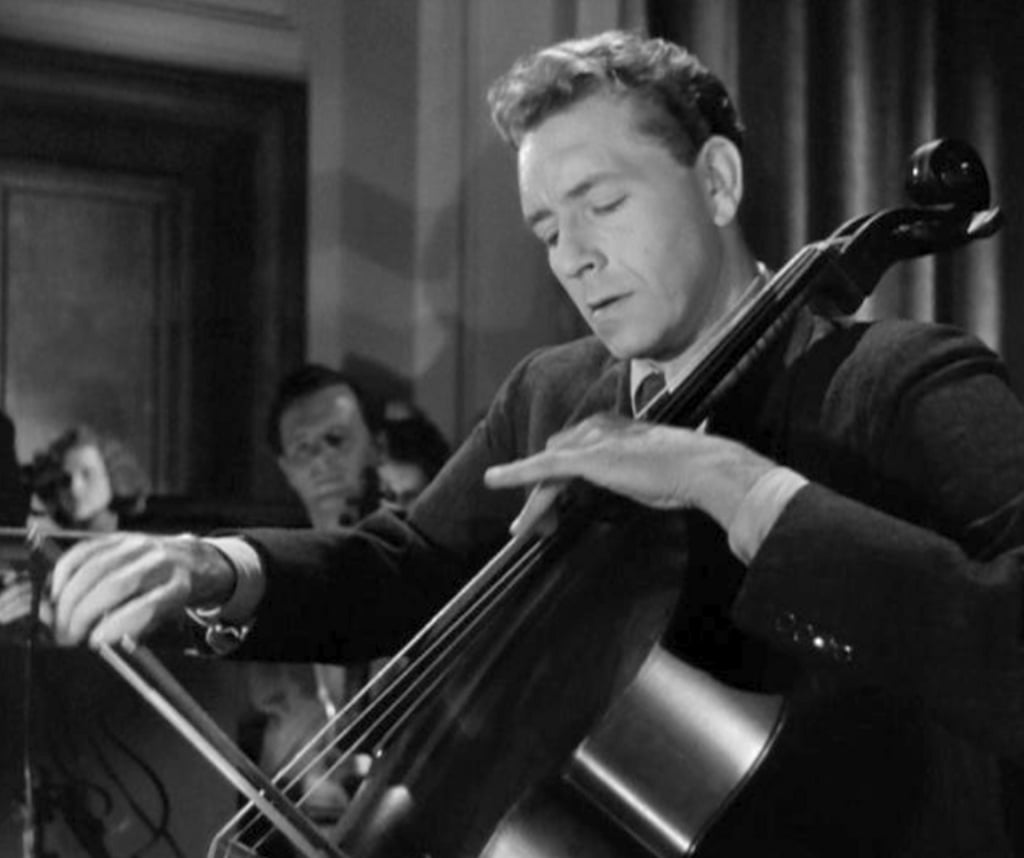
    Finally, we’ll turn to a classical music film noir from Hollywood’s Golden Age. “Deception” (1946) tells the tale of a dangerous love triangle between Bette Davis, Paul Henreid and Claude Rains. Much of the plot hinges on the premiere of a new cello concerto by a celebrated – though fictional – composer, played by Rains, who puts a fragile cellist, his rival in love, played by Henreid, through the psychological ringer. The music, which serves as both underscore and crux of the story, is by Erich Wolfgang Korngold. The composer subsequently published the on-screen concerto as his Op. 37.

    All aboard the musical ouroboros! Join me for music from movies about music and musicians, this Saturday evening at 6:00 EDT, on WWFM – The Classical Network and wwfm.org.


    The overheated trailer for “Deception”

    PHOTO: Henreid wore a special jacket to accommodate the arms of two professional cellists who stood behind him as he emoted. On the film’s soundtrack the concerto was performed by Eleanor Aller Slatkin, mother of Leonard Slatkin.

  • Film Noir Shadows & Moral Ambiguity

    Film Noir Shadows & Moral Ambiguity

    This week on “Picture Perfect,” as the shadows lengthen, we revisit the world of film noir, a genre notoriously slippery to define, but easy to know when you see it – with its long shadows and moral ambiguities; cock-eyed camera angles and snappy repartee; isolation and innuendo. It’s a genre where a pair of gams is an invitation to the gallows; where a man’s best friend – and sometimes his worst enemy – is his Colt .38; where only cigarettes and bourbon can ease the pain.

    The labyrinthine mystery at the heart of “The Big Sleep” (1946) is so disorienting, even the book’s author, Raymond Chandler, couldn’t tell whodunit. Who cares? Humphrey Bogart and Lauren Bacall get some more steamy dialogue to satisfy fans of “To Have and Have Not,” and there’s plenty of Bogey pounding the pavement and tossing off tart one-liners in pursuit of the truth. But my favorite scene involves Dorothy Malone, who runs the hottest bookstore in town.

    Whenever there are gallows to be built or gangsters to be beaten, Warner Brothers could be counted on to assign Max Steiner.

    “Chinatown” (1974) is one of the best of the neo-noirs of the 1970s. This time, Jack Nicholson plays private dick J.J. Gittes, who takes on a seemingly routine case that begins to spiral out of control. When producer Robert Evans rejected Philip Lambro’s original score, Jerry Goldsmith stepped in as a last-minute replacement. The composer was hired with the understanding that he had only ten days to write and record new music. For his effort, Goldsmith received an Academy Award nomination.

    The Coen Brothers clearly love noir, from their first feature, “Blood Simple,” to their Academy Award winners, “Fargo” and “No Country for Old Men,” to their absurdly entertaining reimagining of “The Big Sleep,” “The Big Lebowski.” “Miller’s Crossing” (1990) was one of the more underappreciated of these. The film follows the well-worn device of an anti-hero playing two sides off of one another, until he is the last one standing – shades of Dashiell Hammett’s “Red Harvest,” with a healthy dose of “The Glass Key” thrown in, for good measure. The Irish-inflected score is by Coen regular Carter Burwell.

    Before he became stereotyped as a composer for epic films like “Ben-Hur,” “King of Kings” and “El Cid,” Miklós Rózsa was the king of noir, providing scores for genre classics such as “Double Indemnity” and “The Strange Love of Martha Ivers.” We’ll hear a suite assembled from three such projects: “Brute Force” (1947), a hard-hitting prison drama, starring Burt Lancaster as a desperate inmate and a contemptible Hume Cronyn as a sadistic guard; “The Killers” (1946), also starring Lancaster as a marked boxer; and “The Naked City” (1948), with Barry Fitzgerald leading a police investigation into the murder of a young model. The suite is titled “Background to Violence.”

    Put on your rumpled linen suit, draw the Venetian blinds, and play the sap for nobody this week. It’s film noir in the gritty city, on “Picture Perfect,” music for the movies, this Saturday evening at 6:00 EST, on WWFM – The Classical Network and at wwfm.org.


    The theatrical trailer for “Brute Force”:

    PHOTO: Bogart and Malone talk literature

Tag Cloud

Aaron Copland (92) Beethoven (94) Composer (114) Film Music (117) Film Score (143) Film Scores (255) Halloween (94) John Williams (185) KWAX (228) Leonard Bernstein (99) Marlboro Music Festival (125) Movie Music (132) Opera (197) Philadelphia Orchestra (86) Picture Perfect (174) Princeton Symphony Orchestra (106) Radio (86) Ralph Vaughan Williams (85) Ross Amico (244) Roy's Tie-Dye Sci-Fi Corner (290) The Classical Network (101) The Lost Chord (268) Vaughan Williams (101) WPRB (396) WWFM (881)

DON’T MISS A BEAT

Receive a weekly digest every Sunday at noon by signing up here


RECENT POSTS